

Standout Online Savings Accounts
A high-yield savings account (HYSA) is a type of savings account that usually offers a significantly higher interest rate than a traditional savings account. These accounts are typically offered by online banks, credit unions, and some traditional banks, and they allow your money to grow faster while still keeping it safe and accessible.
With an HYSA, you’ll earn interest on your balance—often many times higher than the national average for standard savings accounts. They accounts we’ve featured here are FDIC- or NCUA-insured (up to legal limits), meaning your money is protected. Many accounts also have low or no monthly fees, though they may require an initial deposit to open.
High-yield savings accounts are a great option for building an emergency fund, saving for short-term goals, or simply maximizing the return on your cash without taking on investment risk.
The best online savings accounts offer high interest rates while being a great place to park your money. Because online banks don’t have the expense of maintaining branches, they can offer high-interest savings paying many times higher than the national average of 0.40%*. To make the search easier, we created this shortlist of standout picks from our partners. Check out the offers, from our partners, and start earning interest today.
Shopping for a high-yield savings account with NerdWallet makes it easy to find a great fit for your money. You can quickly compare APYs, fees, and bonuses side by side, so you can decide which accounts offer the most value. We have featured accounts rated by experts on key factors like monthly fees, overdraft charges, deposit options, and APY competitiveness, giving you a clear picture of what to expect. With NerdWallet’s breakdown, you’ll know which accounts have $0 monthly fees and how to maximize your earnings with the highest rates and sign-up bonuses. And when you’re ready, you can move directly from comparison to application in just a few clicks—bringing convenience and ease to your decision.
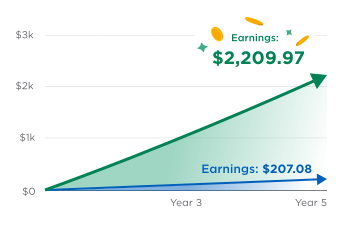
You could earn thousands with a high-yield savings account!
Earnings after 5 years, $10K initial deposit.
| Bank/institution | NerdWallet rating | APY | Bonus | Learn more |
|---|---|---|---|---|
4.5/5 | Up to 4.25% With $5,000 min. balance for APY | 0.50% APY Boost Earn up to 4.25% APY for 6 months on balances of $5,000 or more. Terms apply. | Learn moreon partner's site at CIT Bank, Member FDIC | |
 2026 Best Bank | 4.8/5 | Up to 4.40% With $0 min. balance for APY | $400 + 1.10% APY Earn up to $400 and +1.10% Boost on Savings APY. Terms apply. | Learn moreon partner's site at SoFi Bank, N.A., Member FDIC |
 Openbank High Yield Savings Learn moreon partner's site at Openbank, by Santander Bank, N.A., Member FDIC | 4.9/5 | Up to 4.35% With $500 min. balance for APY | N/A | Learn moreon partner's site at Openbank, by Santander Bank, N.A., Member FDIC |
 Marcus by Goldman Sachs Online Savings Account Learn moreon partner's site at Goldman Sachs Bank USA, Member FDIC | 4.6/5 | 3.50% With $0 min. balance for APY | N/A | Learn moreon partner's site at Goldman Sachs Bank USA, Member FDIC |
 E*TRADE Premium Savings Learn moreon partner's site at Morgan Stanley Private Bank, National Association, Member FDIC | 4.5/5 | 4.25% for 6mo With $0 min. balance for APY | Up to $800 Requirements to qualify | Learn moreon partner's site at Morgan Stanley Private Bank, National Association, Member FDIC |
3.9/5 | Up to 5.00% With $1,500 min. balance & $1,500 monthly direct deposits for APY | N/A | Learn moreon partner's site at Axos Bank®, Member FDIC | |
4.3/5 | 3.10% With $0 min. balance for APY | N/A | Learn moreon partner's site at Capital One, Member FDIC | |
5.0/5 | 4.20% With $0 min. balance for APY | N/A | Learn moreon partner's site at EverBank, N.A., Member FDIC | |
4.5/5 | 3.50% With $0 min. balance for APY | $200 $200 Bonus with qualifying activities. Terms Apply. | Learn moreon partner's site at Barclays, Member FDIC |
 Learn moreon partner's siteat CIT Bank, Member FDICNerdWallet rating4.5/5Learn moreon partner's siteat CIT Bank, Member FDIC
APY
Up to 4.25%
With $5,000 min. balance for APY
Bonus
0.50% APY Boost
Earn up to 4.25% APY for 6 months on balances of $5,000 or more. Terms apply.
- 2026 Best Bank
 Learn moreon partner's siteat SoFi Bank, N.A., Member FDICNerdWallet rating4.8/5Learn moreon partner's siteat SoFi Bank, N.A., Member FDIC
APY
Up to 4.40%
With $0 min. balance for APY
Bonus
$400 + 1.10% APY
Earn up to $400 and +1.10% Boost on Savings APY. Terms apply.
- Learn moreon partner's siteat Openbank, by Santander Bank, N.A., Member FDICNerdWallet rating4.9/5Learn moreon partner's siteat Openbank, by Santander Bank, N.A., Member FDIC
APY
Up to 4.35%
With $500 min. balance for APY
Bonus
N/A
- Learn moreon partner's siteat Goldman Sachs Bank USA, Member FDICNerdWallet rating4.6/5Learn moreon partner's siteat Goldman Sachs Bank USA, Member FDIC
APY
3.50%
With $0 min. balance for APY
Bonus
N/A
- Learn moreon partner's siteat Morgan Stanley Private Bank, National Association, Member FDICNerdWallet rating4.5/5Learn moreon partner's siteat Morgan Stanley Private Bank, National Association, Member FDIC
APY
4.25% for 6mo
With $0 min. balance for APY
Bonus
Up to $800
Requirements to qualify
 Learn moreon partner's siteat Axos Bank®, Member FDICNerdWallet rating3.9/5Learn moreon partner's siteat Axos Bank®, Member FDIC
APY
Up to 5.00%
With $1,500 min. balance & $1,500 monthly direct deposits for APY
Bonus
N/A
 Learn moreon partner's siteat Capital One, Member FDICNerdWallet rating4.3/5Learn moreon partner's siteat Capital One, Member FDIC
APY
3.10%
With $0 min. balance for APY
Bonus
N/A
 Learn moreon partner's siteat EverBank, N.A., Member FDICNerdWallet rating5.0/5Learn moreon partner's siteat EverBank, N.A., Member FDIC
APY
4.20%
With $0 min. balance for APY
Bonus
N/A
 Learn moreon partner's siteat Barclays, Member FDICNerdWallet rating4.5/5Learn moreon partner's siteat Barclays, Member FDIC
APY
3.50%
With $0 min. balance for APY
Bonus
$200
$200 Bonus with qualifying activities. Terms Apply.
How to Compare Different HYSAs
APY (Annual Percentage Yield):
Look for the highest rate, but don’t just chase the headline number—ensure it applies to your expected balance.
Minimum Balance & Opening Requirements:
Some banks require a set amount to open or to earn the advertised APY. Make sure you can meet those thresholds.
Fees:
Watch for fees, including monthly maintenance, transfer, or excess withdrawal fees that could reduce your earnings.
Access & Convenience:
Check how you can access your funds—online, via mobile app, or ATMs. Consider if you’re comfortable with an online-only bank.
Rate Stability & History:
Research whether the bank frequently adjusts rates and how quickly they react to Fed changes.
FDIC or NCUA Insurance:
Confirm that your deposits are fully insured up to $250,000 per depositor, per institution.
Promotions or Bonuses:
Some accounts offer sign-up bonuses, but weigh them against long-term APY competitiveness.
Provider Reputation & Usability:
Consider customer reviews, service quality, and ease of use of the mobile app or online platform.
Advantages and Disadvantages Of Opening a High-Yield Savings Account (HYSA)
Advantages
Significantly Higher Interest Rates
HYSAs often offer rates many times above traditional savings accounts—often in the 3.5%–4.5% APY range, compared to just 0.01% at big traditional banks.
Safe and Secure
Accounts on this page are insured by the FDIC (or NCUA for credit unions) up to $250,000 per depositor, per institution—adding a layer of security.
Low or No Fees
Most HYSAs have minimal or no monthly fees and low or no minimum balance requirements, making them a cost-effective way to grow your money.
Flexible, Easy Access
While not as fluid as checking, they're more accessible than CDs—the ability to transfer funds online (though some limits may apply) makes them suitable for emergencies.
Compound Interest
Interest compounds (often daily or monthly), helping your savings grow faster than in low-yield accounts.
Great for Short-Term Goals and Emergency Funds
Ideal for saving toward purchases or building a rainy-day fund due to the balance of return, safety, and liquidity.
Disadvantages
Variable Interest Rates
HYSA rates can fluctuate based on economic factors and Federal Reserve policy—meaning your earnings aren't guaranteed.
Limited Physical Access
Many are online only–no branches and limited ATM access, which may pose a hassle if you prefer face-to-face banking.
Transaction Restrictions
There can be limits on certain types of withdrawals or transfers, with potential fees if exceeded.
Lower Potential Returns Over The Long Term
HYSAs have generally shown better returns than regular savings accounts, but they offer lower potential returns over the long term as compared to higher risk investments like stocks and equity based mutual funds.
Potential Requirements/Fees
Some accounts may require a minimum balance to open or to earn the stated APY. Fees, though usually low, may still apply in some cases.
Interest Is Taxable
Earnings count as ordinary income and must be reported (Form 1099‑INT), potentially increasing your tax bracket.
*The national average annual percentage yield ("APY") is listed as 0.40% as reported by the Federal Deposit Insurance Corporation as of October 20, 2025.
**10x more interest based on the national average annual percentage yield ("APY") of 0.40% (as reported by the Federal Deposit Insurance Corporation as of October 20, 2025) as compared to online banks with interest-bearing savings account APYs of 0.40% or more. Estimated annual earnings result assumes principal and interest remain on deposit for one year and interest rates and APY do not change. Estimated annual earnings are for informational purposes only. Interest rates and APY are subject to change at any time without notice and specific results cannot be guaranteed.
NerdWallet's Standout Online Savings Accounts
- CIT Bank Platinum Savings: Up to 4.25% APY
- SoFi Checking and Savings: Up to 4.40% APY
- Openbank High Yield Savings: Up to 4.35% APY
- Marcus by Goldman Sachs Online Savings Account: 3.50% APY
- E*TRADE Premium Savings: 4.25% for 6mo APY
- Axos ONE® Savings: Up to 5.00% APY
- Capital One 360 Performance Savings™: 3.10% APY
- EverBank Performance® Savings: 4.20% APY
- Barclays Tiered Savings Account: 3.50% APY