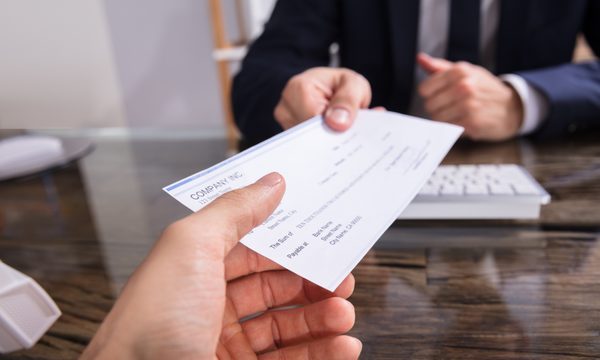





The fee to cancel, or “stop payment,” on a check can be $30 or more at many large banks. However, some banks and credit unions charge less, and the cost can vary depending on how you make the request. Here’s an overview of what you might pay.
» Want to start at the beginning? Find out how to cancel a check
Stop payment fees by financial institution
Here’s what it costs to request a stop payment for a personal check* at some of the bigger banks and credit unions:
Financial institution | Stop payment fee** |
|---|---|
Ally Bank | $15. |
Bank of America | $30 (waived for customers with Advantage Relationship Banking, Advantage with Tiered Interest Checking, Advantage Regular Checking accounts and BofA Rewards), $0 for recurring debit transactions. |
Chase | $25 via online, mobile or automated telephone banking; $30 via customer service call or at branch (waived for customers with Chase Sapphire Checking and Chase Private Client accounts). |
Citibank | $30 (waived for customers with Citigold and Citi Priority accounts, as well as Private Bank clients). |
Navy Federal Credit Union | $20 for a single item; $25 for a series of items. |
Wells Fargo | $0. |
Click for information on more banks' and credit unions' stop payment fees
Alliant Credit Union | $0. |
Bank5 Connect | $15. |
Capital One 360 | $0. |
Connexus Credit Union | $9. |
Consumers Credit Union | $30. |
HSBC Direct | $0. |
PenFed Credit Union | $20 for a single stop payment; $30 for two or more simultaneous stop payments. |
PNC Bank | $33 (waived for customers with Performance Select Checking). |
TD Bank | $30 for Complete Checking and Essential Checking (waived for customers with TD Beyond Checking). *** |
Truist | $35. |
U.S. Bank | $35 ($0 for members of the military). |
*A preauthorized series of electronic transfers can also be canceled. Cashier's checks and certified checks usually are not eligible for stop payments.
**This information is based on each financial institution's current deposit agreements and disclosures online.
***TD Bank is only available on the East Coast: CT, DC, DE, FL, MD, ME, MA, NC, NH, NJ, NY, PA, RI, SC, VT, VA.
Some requests cost more
Generally, you can ask for a stop payment through online banking, automated telephone banking or customer service at a branch or over the phone. Some financial institutions have the same fee no matter what; others charge more for personal assistance.
» MORE: How to write a check
Canceling multiple checks can be cheaper
Some institutions, including Navy Federal Credit Union and Pentagon Federal Credit Union, charge just a bit more to stop payment on a consecutive series of checks than they do for just one check. So if you lost or made errors on several checks recently, you can cancel them all at once at a lower cost than you could if you paid a separate fee for each one.
Renewing a stop payment costs money, too
When a check’s date is more than six months old, most banks will consider it “stale,” but some may still honor it. A stop payment on a check usually lasts six months, so if you’re afraid a check might still be cashed at a later date, you’ll need to pay a fee to renew the stop payment.