The Bank of Canada Finally Raised Rates. Why Now?


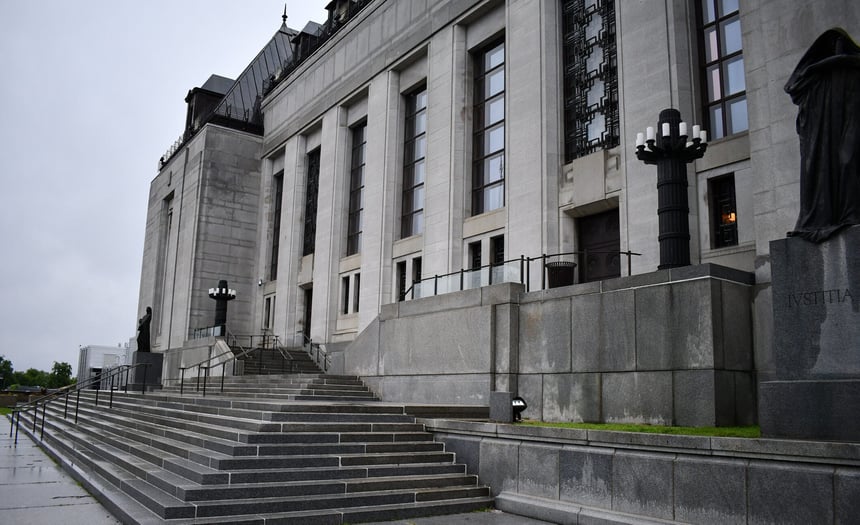
This morning, the Bank of Canada raised its policy rate from 2.25% to 2.5%, its first hike since July 2023. The reason? To keep high energy prices from spreading into everything else.
Businesses had already warned it that might happen. Roughly half the firms in the Bank's latest survey planned to pass along some or all of their cost increases tied to tariffs and the war in the Middle East. Those increases could reach customers over the next year. The Bank now expects inflation to average 3% in 2027, a full percentage point higher than it forecast in July, and not to get back to 2% until mid-2028.
Hours later, the U.S. Federal Reserve held its rate steady at 3.75% to 4%. Same day, different calls. The Fed had already raised rates in September, to a level well above Canada's. Today it chose to wait for more data, though two of its 12 voters wanted another hike. The Bank of Canada, starting from 2.25%, decided it couldn't wait.
Uncomfortable, if you’re both the shopper and the borrower: prices may keep climbing just as borrowing gets more expensive. The Bank can’t do much about oil prices or tariffs. You get to budget for those.
The awkward part: some of the measures the Bank watches were already near the target.
What changed since September
When the Bank held on September 2, it said the economy and inflation were tracking its forecast, but warned that the conflict in the Middle East had raised the risk of higher inflation. By late October, that risk was showing up: growth had come in stronger than expected, the conflict was in its eighth month with no clear end, and the Bank’s business survey showed firms planning to pass on more of their costs.
In July, the Bank could reasonably wait. By October, growth had come in stronger than it expected, the conflict in the Middle East was in its eighth month with no clear end, and its surveys showed businesses starting to pass on costs they’d been absorbing.
Still, in his opening statement, Governor Tiff Macklem laid out the case for waiting. Most of the price increases were still in energy and in services that burn a lot of it, like airfares. The economy had room to grow. New U.S. tariffs were expected to slow it down.
The Bank chose to move.
Ahead of the announcement, RBC expected a hike largely because of the Bank's communications, while arguing there was no urgency. Its economists pointed to weak housing, economic slack and higher bond yields, which already make borrowing more expensive.
An economist can correctly predict what the Bank will do and still think it should do something else.
Why “near target” doesn’t feel like it
Overall inflation was 3.1% last month, pushed up by gas prices. Inflation excluding gasoline was 2.2% in September. The Bank's core measures, which help it assess underlying price pressures, were also close to 2%.
Take groceries. Prices rose 1.7% over the past year, the slowest pace since May 2024. They're also up 33% since September 2020.
The Bank's target concerns how quickly prices rise. It doesn't promise to put them back where they were before everything got expensive. If a hypothetical basket went from $100 to $120, another 2% increase would take it to $122.40. The earlier increase is still in your bill.
Even "excluding gasoline" deserves a pause. Useful for investigating whether inflation is spreading. Less comforting if you still need to fill the tank.
» MORE: 5 Survival Strategies for Times of High Inflation
Businesses have plans, but customers have limits
Alrighty. Let’s get back to those businesses planning to pass costs on to you.
Some firms wanted to recover profit margins squeezed by earlier cost increases. Improved demand was giving them more room to try.
They'd, of course, like that money back. Wouldn’t we all…
Whether they can get it is another question. Several firms told the Bank that competition was limiting their ability to raise prices. More reported that constraint than in the previous quarter.
A planned increase still has to survive contact with customers who can walk away.
Businesses are also facing fresh pressure to raise prices. After Canada-U.S. trade talks broke down on August 21 and Canada announced counter-tariffs, firms told the Bank they expected higher inflation as tariffs and energy costs rose.
So how much of that pressure will businesses absorb, and how much will customers end up paying? The survey offers an early clue. Firms interviewed after the talks collapsed were more likely to say trade tensions had raised their costs than their selling prices. For now, businesses seem to be passing along only part of the increase. Consumer-facing firms, though, said they plan to keep passing on earlier cost increases over the next year.
What it means for you, and what to watch
By October 7, all six big banks had raised at least some advertised fixed mortgage rates since early September, according to Canadian Mortgage Trends. Increases ranged from about 0.10 to 0.50 percentage points. Fixed mortgage pricing responds to bond yields, which can move before the Bank's policy rate does.
If renewal is approaching, compare offers early. The Financial Consumer Agency of Canada (FCAC) recommends starting a few months ahead and using competing offers to negotiate.
» MORE: Mortgage renewal calculator
If you have a variable-rate mortgage, check what your contract says about rate increases. Some payments adjust. Others stay the same while more of the payment goes toward interest and less toward the balance.
For savers, higher rates can mean better returns. Getting them might be planning to make the switch to one of the best high-interest savings accounts in Canada.
Keep an eye on jobs. Unemployment has hovered around 6.5% for months, and the Bank says the economy still has room to spare. Canada's monetary policy agreement, which asks the Bank to support employment as well as keep inflation low, is up for renewal by year-end.
You don't have to decide whether the Bank made the right call. But when someone says inflation is under control, the economy is recovering, or a price increase is unavoidable, there's room for a follow-up.
The biggest thing to watch: whether those planned price increases stick at the checkout. If they do, this hike may not be the last. The Bank has already said it may need to raise rates again. Its next decision is December 9.


DIVE EVEN DEEPER


