How to Protect Your Home and Health When Air Quality Is Poor


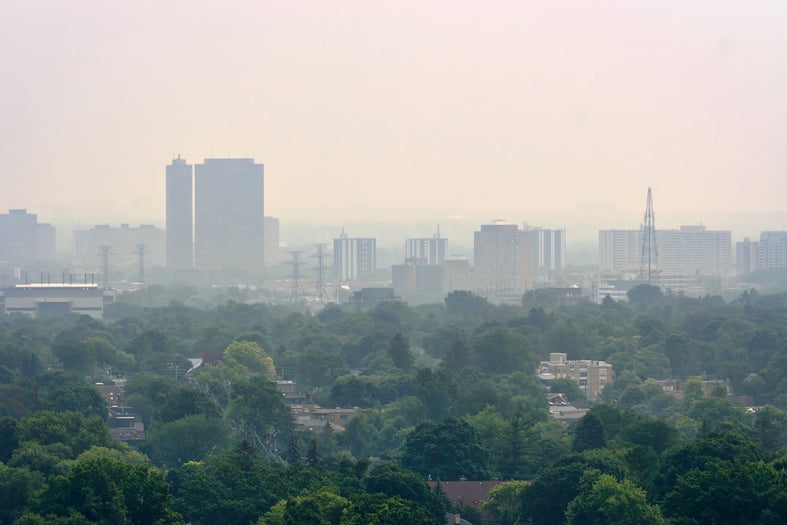
Climate change is increasing the likelihood of hotter, drier conditions — and with them, more wildfire smoke and haze in many parts of Canada. Add in urban smog and pollen season, and “bad air days” are becoming a more common part of summer (and sometimes spring and fall, too).
The good news: you don’t need to be close to a wildfire to take smart, simple steps that reduce exposure and keep your indoor air cleaner.
Monitor indoor and outdoor risk levels
BACK TO TOPStart with local air-quality updates so you can decide when to stay inside, limit exertion, or change your plans. In Canada, the Air Quality Health Index (AQHI) is a helpful baseline. Sites like IQAir can add detail, especially during smoke events.
Indoors, a basic air-quality monitor can help you spot when outdoor pollution is getting in. If smoke is the main issue, look for a monitor that tracks PM2.5 (fine particles that are common in wildfire smoke).
If your monitor shows PM2.5 rising indoors, treat it like a “leak alarm”: close windows/doors, run your purifier, and avoid activities that add indoor smoke or particles.
Check your carbon monoxide alarms
BACK TO TOPCarbon monoxide (CO) isn’t the same thing as wildfire smoke — but it becomes a higher risk if you’re sealing up the house and using fuel-burning appliances (or if there’s a power outage and people turn to generators or fireplaces).
A good rule of thumb is CO alarms on every level of the home and near sleeping areas, and to test them regularly.
Fire alarms and carbon monoxide monitors have expiration dates. You can often find the date printed on the outside of the device. Add it to your calendar so you replace the unit on time.
Wear a mask if you must go out
BACK TO TOPIf you have to be outdoors during smoky or polluted conditions, a well-fitting respirator mask (like a NIOSH-certified N95) can reduce exposure to fine particles.
Fit matters more than brand: gaps around the nose or cheeks let polluted air leak in. And if wearing a respirator makes it hard to breathe, you feel dizzy, or it isn’t safe for your situation, prioritize staying indoors and reducing exertion instead.
A quick fit check: put the mask on, then exhale sharply — if you feel air rushing out around the edges, adjust the nose bridge and straps.
Seal up obvious leaks
BACK TO TOPWhen outdoor air is poor, your goal is to make it harder for polluted air to sneak inside.
Do a quick walkthrough and check:
window and door frames
weather stripping
drafty baseboards
attic hatches and garage-to-house doors.
Affordable fixes like weather stripping and door sweeps can help immediately — and they pay off year-round with better energy efficiency.
If you can feel a draft with the back of your hand, smoke can get in there too.
Use HEPA-certified air filters
BACK TO TOPThere are two main ways to filter air:
Portable air purifier (often the easiest win)
A portable HEPA air cleaner can meaningfully reduce indoor smoke particles — especially in the rooms where you sleep or spend the most time.
Home HVAC system (if you have one)
If your furnace or central air system can handle it, upgrading to a higher-efficiency filter can help. Not every system is designed for very dense filters — if airflow drops noticeably, step down to a filter your system can support.
Also:
Replace filters on schedule (and sooner during smoke events).
Vacuum with a HEPA-filter vacuum if you have one.
Avoid adding indoor pollutants during smoke events (skip candles, incense, and high-smoke cooking if possible).
If you’re using a portable air purifier, use it like a “clean-air engine”: doors closed, purifier running, and the room kept as sealed as practical.
Find a cleaner-air space if you need one
BACK TO TOPIf your home is hard to keep comfortable — or if someone in your household is higher risk (asthma/COPD, heart conditions, older adults, infants, pregnancy) — consider spending time in a cleaner-air space during smoke events.
Your municipality may publish locations (sometimes called clean-air shelters or Cleaner Air Spaces). Libraries, community centres, malls, and other large public buildings can also be a temporary option if they’re well-ventilated and feel comfortable.
If you’re choosing between public spaces, prioritize the one that feels least smoky and has fewer doors constantly opening (big entrances can pull in outdoor air).
DIVE EVEN DEEPER


 Helen Burnett-Nichols
 Clay Jarvis