How to Buy a House in Canada



For many Canadians, buying a house is a dream scenario.
Not only does owning a home allow you to build wealth, it also gives you more control over your living circumstances compared to renting.
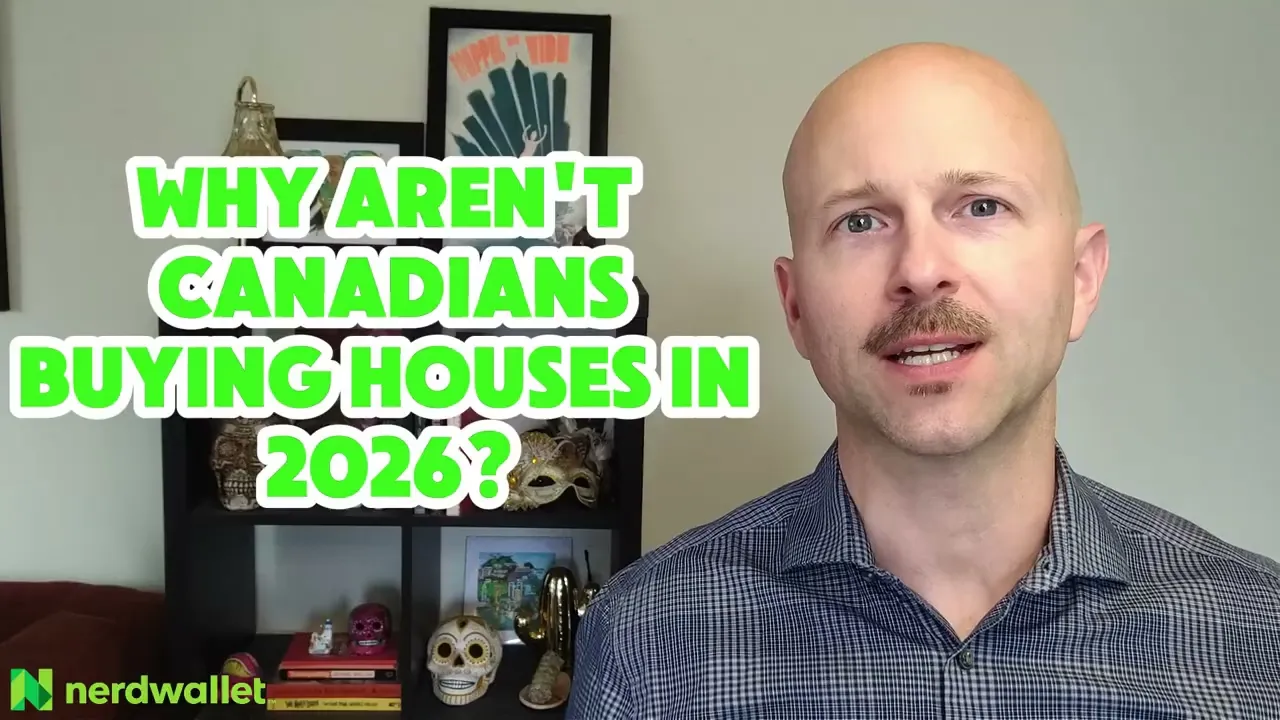
So it’s no surprise that so many of Canadians — 54% — say they plan to buy a home in the next five years, according to NerdWallet’s 2025 Canadian Home Buyer Report.
The home buying process itself, however, is pretty easy to understand. But that doesn't mean it won't be a challenge.
Here’s a quick guide for getting your mind — and your money — ready to buy a house in Canada.
First, decide if home ownership is for you
In a real estate-obsessed country like Canada, it’s easy to feel pressured to buy a house. But homeownership isn’t a shortcut to a worry-free future. It’s a lot like having children: It changes your lifestyle completely, requires daily sacrifices and can keep you up late at night worrying about the future. Oh yeah, it’s also really expensive.
One way to decide if the hard work and commitment will be worth it is to first consider why you want to buy a house.
Will it make you feel complete, or that you’ve accomplished one of the primary goals of adulthood? Is your motivation more financial, and you want your house to be part of your retirement plan, or the first piece of your real estate investing portfolio? There’s no real wrong answer.
Having a ‘why’ at the heart of your homeownership pursuit can keep you motivated through the saving and stress that goes with it. If it's hard to find a reason to own a home that you’d be willing to make significant financial sacrifices for, it might not be the right time for you.
Next, get your finances in home-buying shape
Because you’ll likely be paying for your home with a mortgage, your finances need to be in good enough condition for lenders to sign off on your home loan.
Here are three things you can do.
1. Maintain steady employment and maximize your income
Your income is one of the major factors that lenders look at, and they’ll ask you to prove it via a letter of employment for your mortgage application. If you have steady employment, lenders will use your income to determine how much they’ll lend you. They may consider where you are in your career and if your earning power is likely to increase in the future.
If you’re a freelancer or self-employed, you can still get a mortgage, but it might be difficult to prove that your income is consistent enough to afford one. Lenders will likely ask you for additional paperwork, such as your last two notices of assessment and tax returns.
If homeownership is a serious near-term goal, it’s important to drive as much income as you can. Asking for a raise, taking on a side hustle or finding a higher-paying position should all be considerations.
2. Save a down payment
Depending on the price of the house you want to buy, you may need to save between 5% and 20% for a minimum down payment. These examples show why so many Canadian home buyers struggle to get into their first property:
All homes worth less than $500,000 require a minimum down payment of 5%. For a home worth $450,000, for example, the minimum down payment is $22,500.
Homes worth between $500,000 and $1,499,999 require a 5% down payment for the first $500,000 and 10% on the amount above $500,000. For a home worth $800,000, the minimum down payment is $55,000.
Any home worth $1.5 million or more requires a 20% down payment. A $1.6 million home would require a minimum down payment of $320,000.
And those are just the legally-required minimums. Your lender may ask you to put more money down to make the numbers work once your income, debt and the mortgage stress test are taken into consideration.
If you’re still thousands of dollars away from a 5% down payment, it’s time to get moving. Be on the lookout for costs you can cut, or ways to make extra money, so you can save even more.
To speed up your down payment savings, consider using a First Home Savings Account, high interest savings account, or tax-free savings account.
3. Explore government programs and incentives
There are government programs and incentives that can help you become a homeowner, including
The Home Buyers’ Plan, which allows you to withdraw up to $60,000 tax-free from your Registered Retirement Savings Plan (RRSP). These funds will need to be paid back eventually, but you get 15 years to do so.
The First-Home Savings Account, in which you can make tax-deductible contributions and enjoy tax-free gains on your investments.
Many municipalities offer down payment assistance loans that can help get you into your first home. If you already have an idea of where you might like to buy your house, find out if any local assistance programs exist, and if you’re eligible for them.
Then, figure out your home buying budget
There isn’t much point looking at homes until you understand how much you can afford to spend. You don’t want to make a $700,000 bid on a townhouse only to find out that you can’t get approved for more than $600,000.
Make your own estimates
A simple way to gauge how much you can afford is to look at how much you pay in rent and how much of your income you have left over at the end of each month. If you’re paying $1,500 in rent and typically save $600 every month, you have roughly $2,100 to work with.
Once you have that number in mind, compare it to the estimated monthly mortgage payments generated by a mortgage payment calculator. This will still only give you a general idea of what your budget can handle, though. You’ll need to take things a step further if you want a more concrete idea of how much house you can afford.
Get pre-approved for a mortgage
Mortgage pre-approval will give you a clearer picture of how much funding you’ll have to work with. Lenders will check your credit score, income, debt and down payment — verifying each with documentation — and then decide how much they’ll loan you based on their current mortgage rates. With this info in hand, you can narrow your home search down to properties you can afford.
It’s worth noting that your mortgage pre-approval amount isn’t guaranteed. Lenders do a final check on your finances once you’ve purchased a home before approving your actual mortgage.
Best mortgage rates in Canada
Compare offers from Canada’s top mortgage lenders and brokers.
Then, search for a home to buy (the fun part!)
Once your pre-approval is sorted, you can start looking for homes. There’s a good chance you’ve already browsed a few properties online, but there’s generally a three-step process to follow before you can actually make an offer.
1. Find a real estate agent
Finding a good realtor, real estate agent or broker can be stressful, so ask friends and family for a recommendation. Generally speaking, you want someone you have a good connection with who is familiar with the communities you’re interested in.
Don’t be afraid to interview multiple agents before you pick one that works for you. And be sure to choose someone who does real estate full-time. Full-time agents have a lot to lose if they drop the ball, and they’ll generally have more experience and better resources at their disposal.
2. Establish your real estate goals
Once you’ve hired a real estate agent, expect to have a thorough discussion with them about what your home buying goals and desires are, including future plans and current needs.
They’ll look at your budget and let you know if your expectations are realistic or not. They’ll also be able to show you recently sold homes to give you an idea of what current market conditions are like.
3. View and bid
As you browse homes, you’ll hopefully come across a property you want to make an offer on. Consider your agent’s advice and keep your pre-approval amount in mind to avoid overbidding.
You may not win the first home you bid on, but don’t get discouraged. By the time you’re putting in offers, your finances will be in order and you’ll already be pre-approved for a mortgage, so you’ve done all you can do.
Stick with it, keep viewing properties and the market just might break your way.
Finally, get ready for closing day
When your offer is accepted, you move to the final step of the process: closing.
Closing is an umbrella term for the flurry of tasks that take place before you take possession of the home.
Most of these tasks involve additional costs. Put together, these closing costs can cost up to 4% of the home's sale price. Your mortgage won't cover these, so you'll want to keep a close eye on your cash accounts at this time. A closing costs calculator can help you get a clearer sense of what to expect.
Some of the major steps at closing include:
Home inspection: A thorough and professional examination of your property. The discovery of major issues may lead to further negotiations with the seller. You may also walk away with a list of home improvement projects to tackle now, and larger projects to start saving for.
Buying home insurance: You can't complete the purchase until you have insurance lined up. To get the best price, you'll want to get a few quotes, so don't leave this until the end.
Land transfer tax: These location-specific taxes can cost thousands. Plug in your location on a land transfer tax calculator to learn more. If you're a first-time home buyer, you may be exempt from this tax, depending on where you live.
DIVE EVEN DEEPER

 Clay Jarvis
 Clay Jarvis
 Clay Jarvis