When you apply for a new credit card, the card issuer takes your income into account, but it also considers a variety of other information, including your credit history and scores, your debt-to-income ratio, and even your monthly housing costs.
You may not need to earn a specific minimum income to qualify, for instance, but card issuers may look at indications that you can afford expenses like rent or a mortgage.
And your income — and how it compares to your other monthly payment obligations — can affect the credit limit you qualify for. (This is why it’s important to update your income on your existing credit card accounts if it increases. It might make it possible to qualify for a higher limit.)
Here are other things that low-income earners should consider before zeroing in on a credit card.
What to look for in a credit card for low-income earners
No annual fee and cash-back rewards
When every dollar counts, there’s no reason to spend money on credit card annual fees, especially when there are many choices that cost $0 per year. A no-annual-fee card is easy to carry for a long time, which can help bolster your credit history. That's because the average age of your accounts is among the factors that determine your credit scores — and the older, the better.
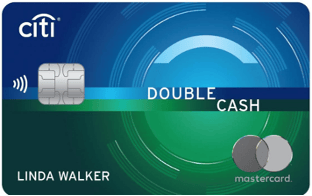
Even better than a card that doesn’t cost money is one that makes or saves money. Earning rewards on a cash-back credit card is like getting a discount every time you shop. The $0-annual-fee Citi Double Cash® Card earns 2% cash back on everything — 1% when you buy, 1% when you pay your bill. When it comes to flat-rate cash-back cards, 2% back is among the highest ongoing rewards rate available.
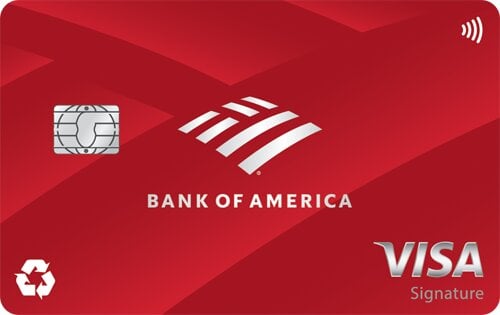
The Bank of America® Customized Cash Rewards credit card is a $0-annual-fee option with a slightly more complicated (but potentially more lucrative) rewards program:
- Earn 3% cash back in the category of your choice, including gas/EV charging stations, online shopping, dining, travel, drugstores or home improvement/furnishings.
- Earn 2% back at grocery stores and wholesale clubs.
- Earn 1% cash back everywhere else.
You can earn the higher cash-back rates on up to the first $2,500 in combined spending per quarter. Plus, there’s a sign-up bonus for new cardholders: $200 online cash rewards bonus after you make at least $1,000 in purchases in the first 90 days of account opening.
A preapproval process that won’t ding your credit score
Applying for a credit card means you’ll be subject to a hard credit inquiry, which can temporarily lower your credit score by a few points. Some credit cards allow you to get preapproved with just a soft inquiry, which can be helpful to anyone who prioritizes keeping their credit score intact while they shop around for a new card. You can get an idea of the terms you’d qualify for risk-free, so you can make a more informed decision about which card to apply for.
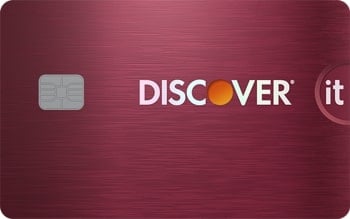
Discover, issuer of cash-back cards like the $0-annual-fee Discover it® Cash Back, offers a preapproval feature that will show you which of their cards you’ll qualify for and what interest rate you’ll pay if you carry a balance. The Discover it® Cash Back earns 5% cash back on up to $1,500 in spending in bonus categories that rotate each quarter (activation required; all other purchases earn 1% back). Previous bonus categories have included things like grocery stores, gas stations, restaurants and more. It also offers a unique welcome offer, phrased this way: "INTRO OFFER: Unlimited Cashback Match for all new cardmembers. Discover will automatically match all the cash back you’ve earned at the end of your first year! There’s no minimum spending or maximum rewards. You could turn $150 cash back into $300."
The Apple Card also preapproves you without a hit to your credit score. It charges no annual fee and earns:
Rewards | Categories |
|---|---|
3% cash back |
|
2% cash back | All other purchases made via Apple Pay. |
1% cash back | All purchases made with the physical Apple Card. |
Similarly, the $0-annual-fee Upgrade Cash Rewards Visa® also offers a preapproval process that won't hurt your credit scores.
The card is available to applicants with lower credit scores and combines elements of both a traditional credit card and a personal loan.
You can pay your balance off in equal monthly installments over a set period and fixed interest rate, which could be helpful for your budgeting.
What counts as income when you apply for a credit card?
Your paycheck is only part of the equation. For the purposes of applying for a credit card, if you’re over age 21, this includes not just your own earnings, but also income to which you have “reasonable expectation of access” — meaning a spouse or partner’s income, investment earnings, retirement benefits, rental property income and more. You can also opt in to including alimony payments and child support.
If you’re under 21, you can’t include another person’s income to which you have access. You can only report personal income.