How to Read a Cheque


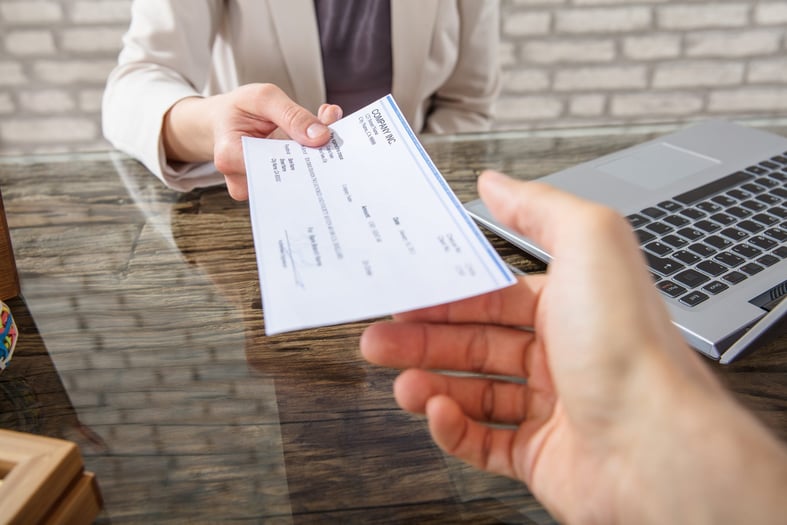
As mobile and online banking has become more popular, writing personal cheques has declined in favour of direct deposits, wire transfers and electronic funds transfers.
As technology has advanced and online banking has become more popular, writing personal cheques has become less common. Many transactions that once used cheques are now handled via direct deposits, wire transfers and electronic funds transfers.
Cheques, however, remain in use and it’s helpful to understand how to read a cheque, even if you typically do your banking online.
Reading the main parts of a cheque
A cheque is divided up into multiple parts. Each section is important and contains details about the account holder and their account. Let’s take a closer look at a personal cheque that you might write from your chequing account.
Personal information on a cheque
In the top left corner of the cheque, you’ll find information about the person who owns the account from which the cheque will withdraw money. In this case, that person is you.
The top line is your full name associated with your bank account.
The second line is your home street address.
The third line is your city, province and postal code.
If you have a joint bank account, the top line of the cheque will include both account owners’ names.
Personalised cheques already have this information written out. Some cheques — like starter or temporary cheques — may require you to write out the information yourself.
Bank information on a cheque
At the bottom of the cheque, you will notice a series of groups of numbers, known as your bank account and routing numbers. The first number at the bottom left is the number of the cheque (it’s three digits). The numbers that follow are your banking information.
Three important banking numbers are found on a cheque.
Your transit number. This is the five-digit number that follows the cheque number when you read the cheque from left to right. The transit number indicates the branch of a financial institution at which you opened your account.
Your institution number. This is a three-digit number and follows the transit number. Your institution number is a unique code assigned to each bank or financial institution to identify them. Note that your transit number plus your institution number is sometimes referred to as a “routing number.”
Your account number. This number will be at least seven digits, but could be up to 12 depending on your banking institution. The account number refers to which specific bank account the money from the cheque will be withdrawn from.
Other things to notice when reading a cheque
Any personal and banking information found on your cheque should be the same on every single cheque you write. The other information on the cheque, however, is different each time.
This includes:
The number of the cheque. These three digits can be found in the bottom left corner and the top right corner.
The date. You write this below the cheque number on the top right corner.
The payee. Your cheque will have a line with the words “pay to the order of” in front of it. This is where you write the name of the company or person who you are paying. This is the only company or person who can cash or deposit the cheque.
The payment amount. You write out the amount in two ways. On the line below the payee’s name, you write the amount in words. For example, “one hundred and eighty-seven dollars.” Beside that, in a small box, you write the amount again in numerals. So, using our example, $187.00.
Why it’s important to know how to read a cheque
Though cheques are increasingly less popular, they are by no means obsolete. Some businesses and people may prefer to receive cheques, and they are a good way to send money via mail, such as in a birthday card.
It’s also worth noting that after six months, many financial institutions in Canada will deem a cheque invalid and may refuse to cash it. Check the date of any cheque you receive (or find in the back of a drawer) to be sure you can cash or deposit it.
Additionally, you’ll use the banking numbers located on the bottom of the cheque to set up direct deposits or automatic payments from your banking accounts.
There are other places to find this information, such as the bank’s website or your latest bank statement, but looking at a cheque is an easy way to find it all in one place.


DIVE EVEN DEEPER


