Burned by Your Heating Bill? 3 Easy Changes to Save Energy


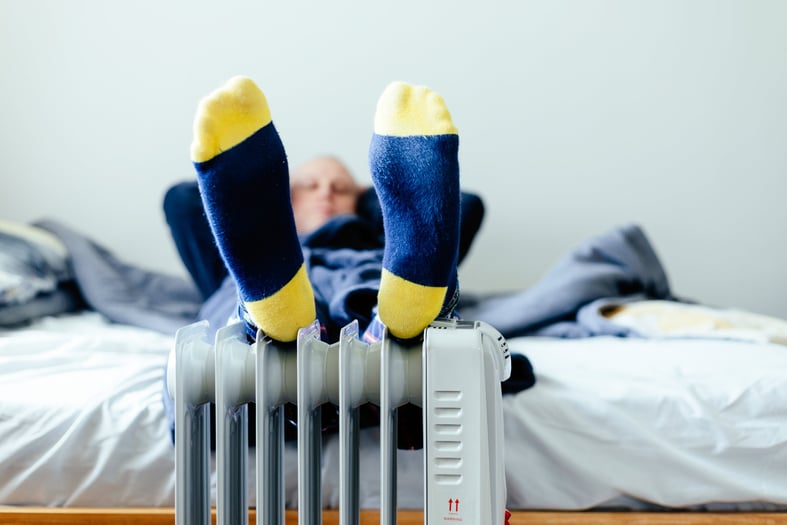
Although we’re still days away from the actual start of winter, sharp temperature drops and snow squalls have been the story of December thus far.
Sub-zero temps have Canadians cranking up the thermostat to ward off the chill. But with the cost of, well, just about everything already squeezing wallets, and holiday spending season in full swing, utility bill spikes are the last thing that’s needed.
Seventy-three percent of Canadians are watching their use of electricity this winter, according to recent survey data provided by Homestars.com, a home services platform.
Similarly, over half (53%) of Canadians admit to limiting their use of gas, and 58% are watching their water, according to the survey.
Proper insulation, energy-efficient windows, and an up-to-date HVAC system are must-haves if you want to pinch every penny you spend on heating and cooling.
Unfortunately, those things come with big price tags. And it might be a little late in the season to start a big renovation.
But don’t worry, there are some smaller, cheaper changes that can help, too.
Fiddle with your thermostat
Some people think it’s more efficient to pick a temperature and just leave it set there 24 hours a day. This isn’t actually the case.
Lowering the temperature while away or sleeping can shave a few dollars off your bill, without sacrificing comfort.
In fact, dropping the temperature just 1°C can save about 2% on your heating energy consumption over an eight-hour period, according to Natural Resources Canada.
👉 Pro tip: A programmable thermostat lets you schedule temperature changes so you don’t forget. Set a low temperature — say 18°C — during typical sleeping or working hours, and then a higher temperature for the hours you’ll be home in the evening or on weekends.
Replace your furnace filter ASAP
A dirty furnace filter makes it harder for your heating system to push air through your ducts, which means your home may feel less comfortable while your energy bills creep up.
Over time, that restricted airflow can also strain the furnace and shorten its lifespan.
HVAC pros typically recommend replacing or cleaning your furnace filter every one to three months, depending on the type of filter, how often your system runs, and whether you have pets or allergies.
Install draft-blocking thermal curtains
You can lose up to 35% of your total house heat through windows, doors, and skylights, according to Natural Resources Canada.
If your windows are inefficient, but you can’t afford to upgrade them right now, consider swapping your decorative curtains for thermal or insulated ones.
Thermal curtains are made from heavy fabrics to keep heat from escaping in winter, potentially reducing heating energy use by about 10%, according to Budget Blinds, a custom window covering company.
Insulating curtains work in a similar fashion, but may be preferable for year-round use — blocking light and heat in summer and retaining heat in the winter.
👉 Pro tip: Any room in the house can benefit from thermal curtains, but if you can only afford one or two sets, focus on the spaces with a lot of windows where you spend the most time — like the living room and bedrooms.


DIVE EVEN DEEPER


 Athena Cocoves
 Hannah Logan