Best Prepaid Credit Cards in Canada


A prepaid card, sometimes called a “prepaid credit card”, can serve as a budgeting tool or an easy way to make online or in-store purchases. Some even earn rewards.
Make the most of this widely accepted payment method by learning more about Canada’s best prepaid cards.
Best prepaid cards in Canada

 Rewards breakdown
Rewards breakdownCash back on all eligible purchases. You can also choose to earn stock or crypto back instead.
 NerdWallet's take
NerdWallet's takeThe Wealthsimple Card offers an impressive 2% cash back on everything, no foreign transaction fees and a suite of travel insurance. While the card’s $20 monthly fee can be waived, you’ll need to have at least $4,000 deposited into a Wealthsimple chequing account monthly to do so. Best for: Wealthsimple customers who spend big abroad.
Pros
- No FX fees.
- High 2% cash-back base rate.
Cons
- Must meet deposit minimums to get monthly fee waived.
- Must have a Wealthsimple chequing account to apply.
 Card details
Card details- General fees and features: Wealthsimple does not charge any fees to use the Wealthsimple Card.
- Currency conversion fee: Mastercard will determine the applicable exchange rate from the range of rates available in wholesale currency markets for the applicable processing date, which may vary from the rate Mastercard itself receives.
- ATM withdrawals: Wealthsimple does not charge any fees for withdrawing cash, but you may see a standard ATM withdrawal fee (usually about $3.00) when you make a withdrawal at an ATM. Clients can withdraw up to $3,000 CAD per transaction and $3,000 CAD per day, with a weekly limit of $10,000 CAD.
- Reload methods: Add funds to your card by making a deposit via a linked bank account, a wire transfer, your Visa or Mastercard debit card, or an institutional transfer to move an account from another institution.
- Rewards: Earn 1% cash back on eligible purchases. Cash back rewards can go directly into your Spend account, be added to the cash balance of a stock trading or crypto trading account, or be used to auto-purchase the cryptocurrency of your choice in your crypto trading account. Use the card anywhere Mastercard is accepted — in-store, in apps, or online. Pay bills, use direct deposit, and e-Transfer.
- The Wealthsimple Card is available as part of the everyday spending account, which comes with both a digital and physical card that you can manage right from the Wealthsimple app.
- Use the app to manage your rewards and spending preferences, or lock your card if something happens to it. Your balances are all updated in real-time, too — even if you’re using the physical card.
- Add your Wealthsimple Card to Apple, Samsung or Google Pay digital wallet.
- Use the Wealthsimple Cash app to send and receive payments to anyone else who uses the Cash app without paying fees. You can also send money to people who don’t have the Cash app yet. They will receive a prompt to download the app and claim the money you sent them.
- Your money is protected for up to $1,000,000 through CDIC.
- To be eligible, you must be a Canadian resident with a Social Insurance Number of the age of majority in the province or territory where you live.

NerdWallet's take
NerdWallet's takeA no-fee prepaid Mastercard linked to Neo Financial’s Everyday high-interest savings account. Cash back rates of up to 3% are on offer, but Neo Everyday account minimums are required to unlock higher rates. Best for: Cardholders with no or low credit who want cash back on everyday purchases.
Pros
- Earn up to 3% cash back on spending.
- No credit check required.
Cons
- Not a credit card, so you can’t build your credit.
- $10,000 Everyday account balance required to unlock the highest cash-back rates.
Card details
Card details- Get high interest on your savings and high cashback when you spend with your Neo Money™ card.
- Depending on your account balance, customers can earn cashback up to 3% on gas, 3% on groceries, and 1% on all other purchases (up to a yearly spend cap).
- Instant access to your balance with no card loading required.
- Free everyday transactions and no monthly fees.
- Withdraw from any ATM worldwide.
- 0.1% interest on every dollar.
- Enable the Auto-Save feature to set up automatic savings and register your email to instantly deposit Interac e-Transfer® requests in your Neo Everyday account.
- Take the pain out of bill pay by setting up automated payments from your Neo Everyday account.

Rewards breakdown
Rewards breakdownCash back on groceries.
Cash back on eating & drinking.
Cash back on transportation.
NerdWallet's take
NerdWallet's takeKOHO’s baseline prepaid tier earns 2% interest on card balances and 1% cash back on eligible dollars spent — no credit check required. But be ready to set up qualifying deposits to unlock the $0 fee; otherwise, you’ll pay to use this card monthly. Best for: Anyone with low or no credit who wants an instant-approval opportunity to earn cash back on everyday purchases.
Pros
- No credit check required.
- 1% cash back on groceries, transportation, food and drink purchases.
- Earns 2% interest on your card balance.
Cons
- Not a credit card, so you can’t build your credit.
- Must maintain at least $1,000 in monthly deposits to waive the card fee.
Card details
Card details- Earn 1% cash back on groceries, eating & drinking, and transportation. Up to 6.5% extra cash back at selected merchants.
- Earn 2% interest on both your spending and savings accounts. Your funds will also be eligible for CDIC insurance.
- Get access to a cash advance of up to $250* at 0% interest with Cover.
- Free Credit Score.
- Send money to 190+ countries with KOHO’s International Money Transfer feature and enjoy the best exchange rates, no hidden fees, and transfers that arrive within 30 minutes*.
- Grow your credit by an average of 31+ points in just 4 months with Credit Building* for $10 / month.
- Grow your credit by paying your rent with your KOHO card. KOHO will report monthly rental payments to Equifax and help grow your credit score.
- Grow your credit by paying your rent with your KOHO card. KOHO will report monthly rental payments to Equifax and help grow your credit score.
- All KOHO plans come with a free 30-day trial so you can see if it suits you.
- $48 annually.
- Get this plan for $0 when you set up a recurring Direct Deposit or deposit $1000 each month into your KOHO account.
- *Terms and conditions apply.

Rewards breakdown
Rewards breakdownCash back on everything you spend.
NerdWallet's take
NerdWallet's takeThis nifty prepaid card has no annual fee, earns 0.5% cash back on purchases, doesn’t charge a foreign transaction fee and reimburses ATM fees in Canada. But you can only fund the card from an EQ Personal Account. Best for: Travellers who bank with EQ and prefer using cash.
Pros
- No annual fee.
- No foreign exchange fees.
- Earn 0.5% cash-back on purchases.
Cons
- Must have an EQ Personal Account to apply.
- International ATM fees are not reimbursed.
Card details
Card details- Customers who add and maintain qualifying recurring direct deposits of at least $2000/month to a Personal Account or Joint Account are eligible to earn a bonus interest rate of 2.75% (the Base Rate plus an additional 1.75%) for the eligible accounts (the Personal Account, Joint Account, and the EQ Bank Card balance). Conditions apply. Please review the EQ Bank Bonus Interest Offer Terms and Conditions for details.
- Free withdrawals from any ATM in Canada.***
- Earn 0.50% cash back on every purchase.***
- Earn 1.00% interest right up until you spend.
- No FX fees, monthly fees, or other hidden fees.
- Use your card anywhere in the world where Mastercard® is accepted.
- Open and fund an EQ Bank Savings Plus Account to start.
Rewards breakdown
Rewards breakdownNerdWallet's take
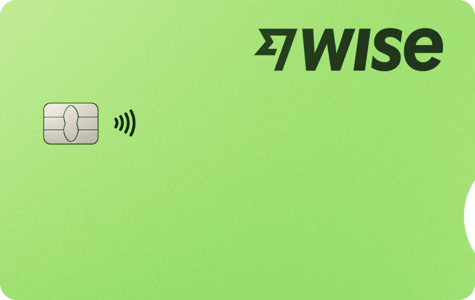
NerdWallet's takeThe Wise Card is a flexible prepaid card for frequent travellers. You get access to over 40 currencies around the world, as well as two free ATM withdrawals each month (up to $350 per transaction). However, converting currencies within your own account comes with fees and limits, as well as topping up external e-wallets. Best for: Globetrotters who want a prepaid solution that holds multiple currencies.
Pros
- No annual fee.
- No ATM fees (up to two withdrawals a month, under $350).
- Holds over 40 currencies.
Cons
- Fees for ATM withdrawals after limits are reached.
- Fee for converting currencies.
- Fees for topping up e-wallets.
Card details
Card details- Pay online and in stores in over 40 currencies and 160 countries.
- Freeze and unfreeze your card instantly.
- Generate digital cards for extra peace of mind.
- Get notifications for every transaction.
- Wise protects your details through strict standards and 2FA.
- Dedicated support in 14 languages.
- International safeguarding: Your money is held with a group of established financial institutions, separate from Wise’s.
- No annual fee.
NerdWallet's take
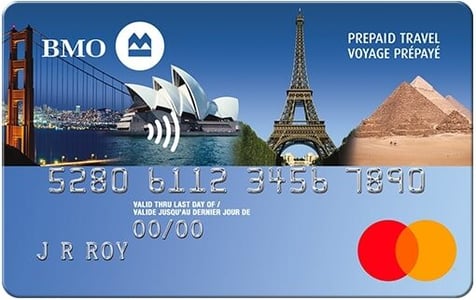
NerdWallet's takeBMO calls this a reloadable credit card, and honestly, it’s not a bad take. You add funds to the card and spend what you’ve deposited — no credit check required. There’s no risk of overspending, which makes this an optimal pick for budget-conscious cardholders. The downside is that you can’t use it to build or rehabilitate your credit. Best for: Those seeking secure, cash-like transactions, in person or digitally, without the commitment of credit.
Pros
- No interest charges.
- No credit check.
Cons
- Won’t help you build credit.
- No rewards.
Card details
Card details- General fees and features: $6.95 annual fee, $40 dishonoured payment charge, $3-$10 for card balance refund processing, and a $5 card inactivity fee after the card’s expiry date or until card balance has been reduced to $0.00.
- Purchases: No transaction or point-of-sale fees in Canada but a 2.5% foreign exchange fee applies to foreign currency transactions.
- ATM withdrawals: Use your prepaid credit card at any of the 30 million locations Mastercard is accepted, and get cash at over a million ATMs. Cash withdrawals will appear on your statement as a Cash Advance and are subject to a $5 cash advance fee.
- Reload methods: Transfer funds from a BMO chequing or savings account to your BMO Prepaid Mastercard account through online or mobile banking. Or, load directly from any bank account from most financial institutions via bill payment through online banking, ATM, phone banking or at a branch.
- Add the BMO Prepaid Mastercard to your Samsung Pay, Apple Pay or Google Pay digital wallet.
- Make purchases anywhere Mastercard is accepted while receiving protection against unauthorized use — making the BMO Prepaid card safer than carrying cash.
- Enjoy extended warranty and purchase protection.
- Zero Liability safeguards you if there is any monetary loss resulting from fraudulent card use.
- Mastercard Identity Check™ adds another layer of security to protect you when you shop online.
- BMO Alerts help confirm that your transactions are really yours.
- Can’t find your card? No worries, you can lock it, unlock it or report it lost or stolen at any time.
- Log in to your mobile or online banking for free, 24/7 access to CreditView with no impact to your credit score.
- Stay on top of your spending with a personalized look at your money.
- To be eligible, you must be the age of majority in the province or territory where you live. In addition, you can’t have declared bankruptcy in the last 7 years. If you do not have a Canadian address, you can open your account by applying at a branch.
Methodology
BACK TO TOPNerdWallet Canada selected the best prepaid cards based on overall consumer value and their suitability for specific kinds of consumers. Factors in our evaluation methodology include: features specific to prepaid cards (such as minimum and maximum deposit, maximum reload amount in a 24-hour period, ATM access, insurance benefits, digital wallet compatibility, and more); fees (such as annual fees, foreign exchange or conversion fees, among others); reward value (considering any earn rates, reward structures, and other benefits); and the intro offer (assessing any welcome bonus, waived fees, referral programs, and other promotions for new customers. Only reloadable prepaid cards that are available online were considered for this list.
Best Credit Cards in Canada
Compare all different credit cards side-by-side and find out the best card that will meet your need with special perks and benefits
What to know about prepaid cards
Prepaid cards are reloadable spending cards that look like credit cards — but don’t involve borrowing money.
Someone might want a prepaid card because they can be useful for making in-person and online purchases when you don’t have — or can’t get approved for — a traditional credit card or bank account. Prepaid cards don’t charge interest, so they won’t add to your overall debt load.
What can I do with a prepaid card?
Every prepaid card is different, but you can typically use one to:
Spend pre-loaded funds.
Pay bills.
Send e-Transfers.
Earn cash back (with select cards).
Track your spending using an app or dashboard.
Receive direct deposits, like paycheques or benefits.
What can’t I do with a prepaid card?
Prepaid cards have limitations. They generally:
Won’t impact your credit score or appear on your credit report.
Don’t earn rewards points or travel miles.
Lack built-in insurance coverage.
Don’t offer a credit line or revolving balance, so you can’t borrow funds or carry a balance.
Who is a prepaid card best for?
A prepaid card can be practical for many different people, including:
Those who are can't obtain a traditional credit card, or are struggling to qualify for one, due to their credit history.
Newcomers to Canada who may be ineligible for a traditional credit card and have yet to set up a Canadian bank account.
Kids or teens who aren’t old enough for a credit card or bank account — but want to practice budgeting their money — may also benefit from a prepaid card.
How to compare your prepaid card options
When choosing a prepaid card, keep the following features in mind. They can vary widely between providers.
Network. Some merchants do not accept cards from all networks (Visa, Amex or Mastercard, for example), so choose a card that works where you shop most.
Fees. Watch for monthly, activation, reload, foreign exchange and ATM fees — these vary by card.
Limits. Many prepaid cards have daily load, spending, cash withdrawal and transaction limits.
Loading options. Check how you can load funds — commonly, that will be in-person, online or through an app — and choose a card that makes the process convenient and quick.
Rewards. A few prepaid cards earn basic rewards, such as cash back.
Direct deposit. Some allow direct deposits, so your paycheques or other payments can go straight to your card.
Payment options. Certain cards let you pay bills, send Interac e-Transfers, use foreign currencies, or transfer money to others, similar to a mobile payment app.
Security features. Look for enhanced security features like chip-and-PIN or the ability to freeze your card. Gift cards typically lack these protections.
Spending insights. Some fintech or online-only bank-issued cards provide spending insights or budgeting tools to help boost your money management skills.
Virtual use. Many fintech prepaid cards include a virtual card (usually in the app) and support digital wallets like Google Pay.
Frequently asked questions
What is a prepaid credit card?
Prepaid credit cards aren’t technically credit cards — you’re not borrowing any money. Instead, prepaid cards function similarly to debit cards and gift cards because you can only spend the money you already have. Prepaid cards are also sometimes called “reloadable credit cards” and “pay-as-you-go” cards.
How do prepaid cards work?
You don’t borrow money — instead, you load funds onto a prepaid card and then use it to make purchases. Your spending limit is determined by how much money you load onto the card.
Once you’ve added funds to a prepaid card, you can use it to make online and in-person purchases wherever the card’s payment merchant (Visa, Mastercard or American Express, for example) is accepted.
What are the different types of prepaid cards?
The two primary types of prepaid cards include:
Closed-loop cards are preloaded with a fixed amount (like a store gift card).
Open-loop cards are reloadable and can be used anywhere the card’s payment network is accepted.
Prepaid cards can be further categorized by network or purpose:
Mastercard. Prepaid Mastercards can be used everywhere Mastercard is accepted, including Costco, which does not accept Visa and American Express for in-store purchases.
Visa. Prepaid Visa Cards can be used anywhere Visa is accepted. Visa also makes gift cards, which are sold (and accepted) at many retailers.
American Express. Prepaid Amex Cards come in set amounts and usually cannot be reloaded. You can only use them at merchants that accept American Express.
Travel. Prepaid travel cards are generally reloadable and may hold multiple foreign currencies or offer travel perks. With multi-currency cards, you lock in the exchange rate upfront to avoid carrying different physical currencies. Some also allow you to withdraw funds at foreign ATMs and limit foreign transaction fees.
Gift card. Prepaid gift cards can be tied to a specific merchant or network of retailers, or issued as a general-purpose Visa, Mastercard or Amex card. Most are not reloadable.
How do you use a prepaid card?
To use a prepaid card, you must:
Activate your card. Most prepaid cards become active once funds have been loaded, though some may require registration before activation.
Check your card’s balance. Balances are usually available through a website or mobile app.
Reload your card. You can typically reload funds using an app, your online account, or an Interac e-Transfer. Some cards let you reload your balance at select locations, like a post office. You may be able to transfer the balance of one gift card to another if they’ve been issued by the same merchant.
Where can you buy prepaid cards?
Online banks and credit unions often offer prepaid cards, which tend to carry more features, like rewards and spending insights. Applications are usually completed online in just a few minutes. The physical card is shipped to your address, and if the card has a virtual option, you typically get instant access to the virtual version.
You can also buy prepaid cards with fixed spending at many grocery stores, drug stores, and gas stations.
How much does a prepaid card cost?
Closed-loop cards (like gift cards) typically don’t have ongoing fees — you pay only the amount loaded onto the card. Though, some may charge a one-time flat-rate activation fee.
Open-loop cards, on the other hand, may charge activation, reload, monthly or annual fees — even if you don’t use the card regularly.
What are the pros of prepaid cards?
No overspending. Because you load money onto the card in advance, you can’t spend more than you have. Just make room in your budget for the cash you plan to spend.
Safer than cash. If you lose the money in your wallet, it’s usually gone — but some prepaid cards offer balance protection or recovery features. Unlike debit cards, which are linked to your bank account, prepaid cards aren’t connected to your personal funds — which can reduce risk if your card is lost or stolen.
Convenient to reload. You can usually reload funds in person, online, or through a mobile app.
What are the drawbacks of prepaid cards?
No credit building. Since prepaid cards aren’t credit cards, your credit score won’t improve just by using them unless the provider offers a credit-building program.
Limited rewards. While some prepaid cards give you cash back, don’t expect the extra perks that come with traditional credit cards, like travel insurance and mobile device protection and airport perks.
Potential fees. Some prepaid cards have activation and monthly fees that can eat into your balance over time.
What are some alternatives to prepaid cards?
Debit cards — both physical and virtual — give you direct access to your chequing account. Just be wary of how much you’re spending — you might run through your entire cash supply quicker than you think.
Secured credit cards work like traditional credit cards but require a refundable security deposit to open (and this deposit usually becomes your credit limit). Unlike prepaid cards, secured cards report to credit bureaus and can help you build your credit score. See our picks for the best secured cards in Canada.
Credit cards for building credit are another option. These unsecured cards are designed for people with low scores or limited credit history. Like secured cards, they can help you improve your credit over time — as long as you use them responsibly and pay your balance on time. If you’re ready to take that step, check out our picks for the best cards for bad or limited credit in Canada.
What does Reddit say about prepaid cards?
As of this writing, Redditors suggest that some of the best prepaid cards come from issuers like Wealthsimple, EQ Band and Neo Financial — all included in our top picks.
However, feelings are mixed on KOHO, largely due to reports of poor customer service.
DIVE EVEN DEEPER


 Clay Jarvis
 Georgia Rose
