How Merchant Category Codes Affect Your Credit Card Rewards


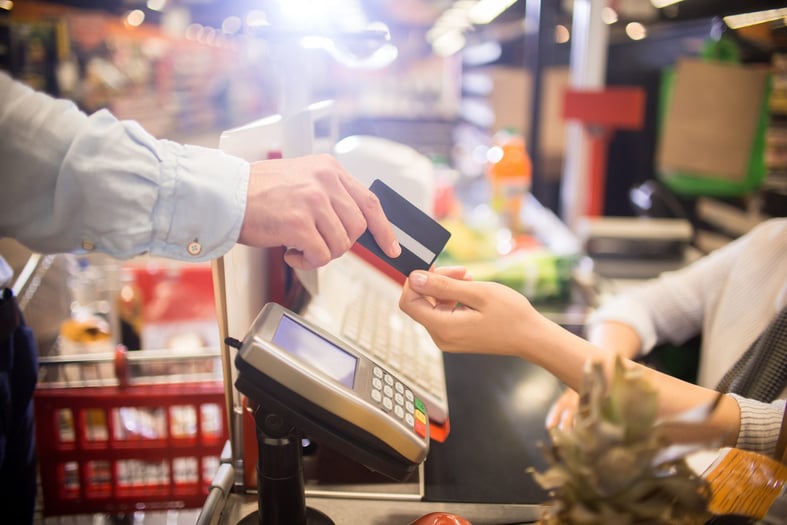
Have you ever wondered how credit card issuers tell the difference between your purchases so they can award the right amount of cash back or points?
Behind the scenes, each merchant is assigned a category code, often known simply as an MCC. These MCCs help classify the type of business you’re buying from, which can affect how much you earn with a rewards credit card.
Understanding how MCCs work can make it easier to see how your rewards are calculated — and help you earn more of them.
» MORE: The best rewards credit cards in Canada
What is a merchant category code (MCC)?
An MCC is a four-digit number used to classify a merchant by its primary line of business. The code is typically assigned by a merchant’s payment processor or acquiring bank using card-network rules.
That classification matters because purchases in different categories may earn different rewards rates.
MCCs affect cash-back cards, general rewards cards and travel cards alike. In general, it makes sense to use the card that offers the highest earn rate for the kind of merchant you’re shopping with.
While many merchant categories are straightforward, some can be less obvious. For example, warehouse clubs are typically classified differently from grocery stores, so a purchase that feels like groceries may not earn your card’s grocery rate.
Knowing how merchant categories work can help you maximize rewards. In many cases, the merchant’s overall classification matters more than the specific item you buy. So if a supermarket sells electronics or small appliances, that purchase may still be processed under the store’s grocery MCC rather than as an electronics purchase.
Card issuers don’t always publish which merchants qualify for bonus rewards, but you can often check your statement or rewards activity to see how a purchase was categorized.
Common rewards categories and their MCC codes
There are hundreds of merchant category codes, and some are very specific. Common examples include:
Grocery stores and supermarkets: 5411.
Service stations and automated fuel dispensers: 5541, 5542.
Drug stores and pharmacies: 5912.
Restaurants, bars and fast food: 5812-5814.
Entertainment: 7832 (movie theatres), 7941 (sports), 7996 (amusement parks).
Travel: 4411 (cruise lines), 3000-3299 (airlines), 3500-3999 (lodging).
When a business sets up card processing, its payment provider uses information about the goods and services it sells to assign the most appropriate MCC under the network’s rules.
Most businesses fall under broad MCCs, but some airlines, hotel brands and other merchants may have more specific classifications.
From a consumer perspective, the exact four-digit MCC matters less than the rewards category your card issuer applies to the purchase. Still, understanding MCCs can help explain why a transaction did — or didn’t — earn a bonus rate.
» MORE: How stacking credit card rewards could save you big
Do credit card networks categorize businesses the same way?
Not always. Major card networks — Visa, Mastercard, and American Express — use similar MCC frameworks, but merchants may not always be treated the same way across networks or issuers.
That can make bonus rewards less predictable than they seem. A big-box retailer that sells groceries, for example, may still be treated as a discount store, department store or warehouse club rather than a grocery store for rewards purposes. In some cases, how a merchant is treated can also vary by store format or issuer.
Issuers can also group categories differently when advertising earn rates.
For example, some cards offer bonus rewards on a combined category such as food and drinks, which may include grocery stores, restaurants and food delivery. Others separate groceries from dining and offer different rewards for each.
The same goes for transportation purchases. One card might group taxis and rideshares under travel, while another may treat them as a separate transportation category.
Many purchases fall neatly into one merchant category. But if you’re trying to maximize rewards, it’s worth checking how your card treats specific merchants — especially warehouse clubs, discount stores, food-delivery apps and merchants operating inside larger venues. One easy way to test this is to make a small purchase first, then check your statement or rewards activity before using that card for bigger spending.


DIVE EVEN DEEPER


 Georgia Rose