



Banks have strict instructions on how to endorse a check for mobile check deposit. You have to sign the back of the check in the endorsement box and you'll also likely need to add another phrase, too — something like "for mobile deposit only." You need to get this right to make sure your deposit is accepted.
How to endorse a check for mobile deposit at your bank
Find your bank in the table to see the exact words you need to write to properly endorse your check, plus where the mobile check deposit feature lives in the bank's app.*
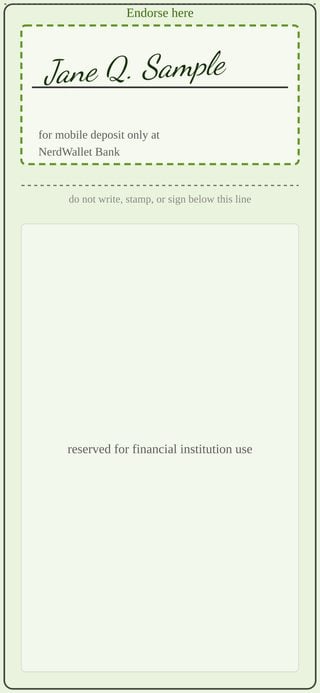
Standard sequence: Sign your name first, then write the required phrase below your signature. American Express National Bank wants a different order though — check the note in the table below.
Not sure where to sign and endorse? Here's a sample.
Flip your check over and you should see a spot at one of the ends that says "Endorse here."
Why do you have to write all this stuff after you sign?
The short answer is that it protects the banks against double deposits. If you write "For electronic deposit only at Chase" on the back of the check, you can't also walk into a branch and deposit it there. In 2018, the Federal Reserve said that if a bank requires this kind of "restrictive" wording in a mobile check deposit, then it can have the right to reject a duplicate attempt to cash the same check.
What to do if you make a mistake endorsing a check
If you make a small mistake endorsing a check, like you flub the spelling of a word, cross it out, initial near the mistake and try again.
If you make a larger mistake, like signing in the wrong spot, you have two good options:
Contact your bank for guidance on what to do with your specific mistake.
Ask the check issuer to send you a new check — which is maybe what your bank will ask you to do anyway.
What to do if your bank rejects your deposit
If your bank rejects your mobile check deposit, find out why. Some banks will give a reason when they send a rejection notice but if they don’t, call customer service. The issue could be as simple as a bad photo, which you can troubleshoot at home.
Common reasons to have your check rejected and what you can do about it include:
» Spot fraud: How to see if your check is real or fake
The upside of mobile check deposit for sleep-deprived parents

Where can you find your bank's mobile deposit limits?
Some banks make it easy and show you the limits when you start a mobile check deposit, including Wells Fargo and Capital One. So check there first.
Others put mobile check deposit limits on their websites, like KeyBank, Alliant Credit Union, Ally Bank and American Express National Bank:
KeyBank: The 30-day rolling limit ranges from $7,500 to $20,000, depending on which checking account you have.
Alliant: $100,000 per day; $250,000 on a rolling 30-day basis
Ally: $50,000 per day; $250,000 every 30 calendar days
American Express National Bank: $50,000 and a maximum of 6 checks on a rolling 7-day basis; $25,000 per check limit.
Others, like Popular Direct, won't publish it anywhere and ask you to contact customer service to find out your limit.
If you don’t know your mobile deposit limit, call your bank. This can save you from getting your mobile check deposit rejected or having your money put on hold.
Which checks are not eligible for mobile deposit?
Though this can vary by institution, checks that are often not eligible for mobile deposit include:
Checks older than six months
Foreign checks
Third-party checks (this is a check that's made out to someone else but has been endorsed over to you)
Traveler’s checks
Checks that have already been deposited (whether at that bank or a different institution)
Mobile check deposit best practices
A few things you should always do when making a mobile check deposit:
Don't use airport Wi-Fi: While banks encrypt your mobile deposits, it's still a safer idea to do your banking on a password-protected and trusted Wi-Fi connection.
Keep your check at least until you know it's officially deposited: Your bank will tell you when they've accepted your check for processing and when the money is actually available in your bank account. Those are two separate notifications. Keep the physical check until you know you have the money in the account, in case your deposit is rejected and you have to re-deposit it or show proof of the check. Some banks have their own recommendations for how long they want you to keep a check. TAB Bank’s service agreement says you agree to keep your check for 60 days, for example. Once you know the money is safely deposited, write "VOID" on the check to prevent accidentally re-depositing it. Then destroy the check (don't just recycle it).
Only endorse the check when you're depositing it: Endorsing a check early means opening yourself up to risk. If you endorse it, then get distracted by the oven alarm and walk away, you risk forgetting whether you've already deposited. And if you lose it or it’s stolen, you make it easier for someone else to cash your check.
» Understand how long it takes for your check to clear