









 Fact Checked
Shopping for homeowners insurance isn’t something you do every day. Once you’ve picked a policy, you’re likely to stick with it for at least a year. So when you do shop for a policy, it’s important to compare home insurance quotes and make sure you’re getting a good price.
Find top home insurance coverage near you
NerdWallet analyzed pricing data from more than 100 homeowners insurance companies and found that average annual rates can vary by several hundred dollars a year.
Our rate comparison tool shows which companies tend to have the cheapest homeowners insurance in your area for houses like yours. It also shows the star rating that our editorial team awarded to companies for their coverage and service, so that you can compare insurers side-by-side.
*
Company | NerdWallet rating | $1,000 deductible | $2,500 deductible |
|---|---|---|---|
| Cincinnati Insurance | 4.6/5 | $331 | $298 |
| Travelers | 4.4/5 | $563 | $507 |
| Progressive | 4.2/5 | $644 | $616 |
| Virginia Farm Bureau | Not rated | $685 | $373 |
| Homeowners of America | 4.0/5 | $727 | $745 |
| Mercury | 3.9/5 | $766 | $707 |
| Narragansett Bay | Not rated | $813 | $729 |
| Erie | 4.4/5 | $855 | $685 |
Note: The rates included here are benchmarks. The exact cost of your homeowners insurance will depend on your location, the size of your house and how much coverage you need.
Comparing home insurance quotes with NerdWallet
Rates paint a picture, but sharing a bit more will get you a unique homeowners insurance quote:
Tell us a bit about you and where you live.
Give us the basics about your house.
See if you're eligible for discounts.
From there we can show you personalized quotes. Or you can have a licensed insurance agent help you shop around.
In all, the process takes just a few minutes.

Why you should compare home insurance quotes
Each insurer has its own way of calculating rates, so the cost to insure the same home will vary from one company to another.
Average rates from the largest home insurers can vary by more than $1,000 a year, according to our most recent rates analysis. When we include regional insurers in our analysis, that difference becomes even bigger. That means you may be able to save hundreds of dollars a year just by shopping around.
You’ll also want compare the features and discounts offered by each insurer. You may find that some insurers stand out in ways that meet your specific needs.
How to compare home insurance quotes
1. Understand your coverage needs. You should have a rough idea of how much homeowners insurance you need before you start getting home insurance quotes. If you already have insurance, the declarations page of your current policy is a good starting point. You can see the coverage and extra features you have now, but also consider whether your needs have changed. For example, have you recently upgraded your kitchen or built an addition? You may need extra coverage.
2. Collect homeowners insurance quotes. We recommend getting at least three quotes. This gives you a good sample of what’s available for your home.
3. Check policy limits and deductibles. Make sure your quotes have similar coverage limits and deductibles so you can get an apples-to-apples comparison. It’s fine if they don’t match exactly, but make sure you understand the differences so you can assess the value of each policy to you.
4. Consider the whole package. Yes, you want the best price, but cost isn’t the only issue. You also want a policy that will meet your needs if disaster strikes. Make sure you trust the company and the coverage.
What you need to get homeowners insurance quotes
Before you can get home insurance quotes, insurers need details about you and your home. Here’s some of the information you should have on hand:
Your address and how long you’ve lived there.
The year the house was built, how it’s heated, and when its electrical and plumbing systems were last updated.
The age of the roof and what it’s made of, such as slate, shingles or metal.
The square footage, number of stories and exterior materials of the home.
Whether there are features like a garage, fireplace, burglar alarm or detached tool shed.
Whether you’ve filed any claims in the past five years.
The date you want your homeowners insurance coverage to begin.
Not sure when your house was built or its square footage? You may be able to get these details from your local tax assessor’s office — often through a free online search. Try searching for "tax assessor" or "property records" and the name of your county or city. If you bought your home recently, you can also check the real estate listing. Many insurers and agents can fill in some of this information once they have the home’s address.
Where to get home insurance quotes
There are three main ways to get homeowners insurance quotes: through comparison shopping sites, through an independent agent or broker, or directly from the insurer. Here are the advantages and disadvantages of each method.
Comparison sites let you shop with multiple companies at once, which can make the process more efficient. (NerdWallet offers its own comparison tool you can try.)
After you enter some basic information about yourself and your house, the site will match you with one or more insurers. Keep in mind that you may not see personalized rates at this stage. You’ll often need to visit each company’s website individually to provide more information and get your final price.
Best for: Homeowners with straightforward needs who want to shop online with several companies at once.
Not ideal for: Someone with complicated coverage needs or who prefers talking through options with a person. Homeowners in certain high-risk areas may find options to be limited.
If you want to discuss options without limiting yourself to one company, consider getting quotes from an independent insurance agent or broker.
Independent agents and brokers work with multiple insurers and can offer a wide range of quotes to compare. Because independent agents work on commission, they often try to provide the best customer service possible. However, they may also steer you toward more expensive policies.
Like independent agents, independent brokers also work on commission. But unlike agents, brokers may also charge a broker’s fee, which they generally must disclose to you. This transparency allows you to know exactly how much the broker is earning from your business.
Best for: People who want someone to shop around on their behalf for quotes from a range of insurers.
Not ideal for: Those who’d rather do their own research.
Many insurers will provide quotes directly to consumers. Some of the larger ones have quote tools on their website or app. If you’re happy with the quote, you can often complete the purchase online. (Some insurers let you begin a quote online but have you call an agent to finish the process.)
Other insurers, like Allstate, Farmers and State Farm, use captive agents, or agents who work for just that insurance company. You may also be able to call the insurer directly.
Best for: Someone who has a specific company in mind and wants to speak with an agent who knows its policies inside and out.
Not ideal for: Getting quotes from multiple companies because you’ll need to call an agent for each insurer. You’ll also be limited to the insurers you’re aware of, which means you may miss out on solid companies with smaller advertising budgets.
What to keep in mind when getting home insurance quotes
When shopping for home insurance quotes, it's a good idea to understand what coverage is available and how much you need.
Home insurance policies typically consist of six different coverage types. Your policy will likely include all of them.
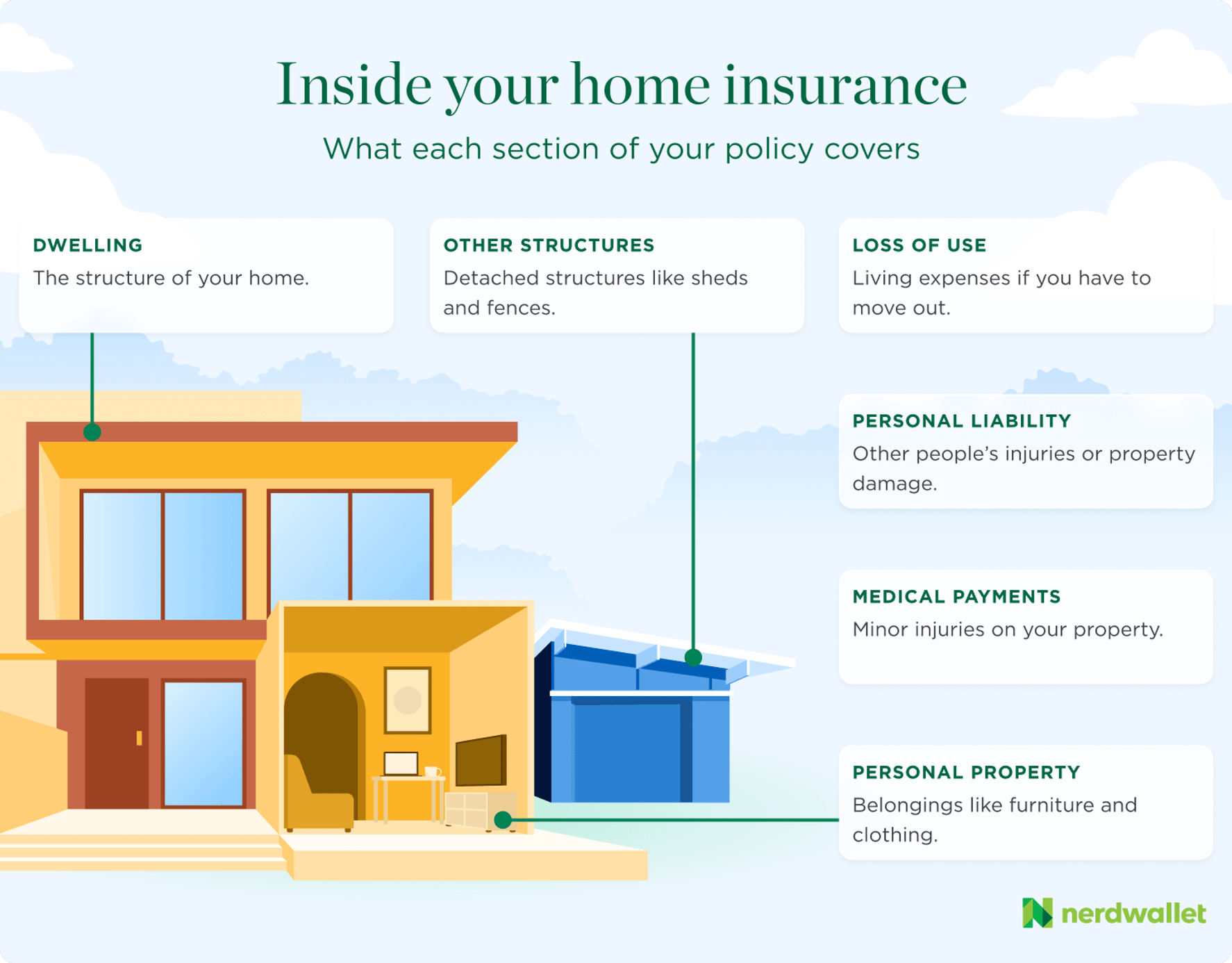

As you compare home insurance quotes, here are some considerations to keep in mind.
Dwelling coverage
Your dwelling coverage limit should be enough to cover the cost of rebuilding your home if it's destroyed. Most insurance companies will suggest a certain amount of dwelling coverage based on the specific features of your home. However, you can often choose a higher or lower amount. (This amount isn't necessarily the same as the market value of the home.)
If one company’s dwelling coverage is much higher or lower than those from other insurers, it could be a red flag. For example, one quote may be cheaper than the others because it offers $75,000 less coverage for the structure of your house. Those upfront savings might not be worth it if a house fire would leave you without enough to rebuild.
If you’re not sure how much coverage you need, build in a little wiggle room. Ask about extended replacement coverage. Here’s an example of how it could work:
Your home has a $200,000 dwelling limit and is covered up to 125% with extended replacement cost coverage. If your home is destroyed, you’d have up to $250,000 to rebuild ($200,000 plus an additional 25%, or $50,000).
Personal property coverage
Personal property coverage is the part of your policy that pays to replace belongings that are lost or stolen. Your insurer may cover your personal property on an actual cash value or replacement cost basis.
With actual cash value, you'll receive what your belongings are worth at the time of the loss. For older items, that amount might not be much. With replacement cost coverage, you'll get enough money to buy new replacements for your stolen or damaged stuff.
You may find a policy with replacement cost coverage to be worth paying a little extra for. Read more about actual cash value vs. replacement cost coverage.
Personal liability insurance
Personal liability insurance pays to defend you if someone sues you or files a claim against you. Say your dog bites someone at the park or a neighbor's child is injured on your backyard trampoline. Liability insurance can pay their medical expenses if they file a claim against you. If they sue you, your policy can cover your attorney fees and pay any legal damages.
Consider getting at least enough liability insurance to protect the value of your financial assets. These may include your home, bank accounts and investments. You may want a higher amount if your lifestyle puts you at greater risk of getting sued — for example, if you own a swimming pool or you enjoy hobbies like hunting.
Additional coverage
You may have certain needs that require more coverage than a standard policy offers. For instance, if you own expensive jewelry or art, you may want a scheduled personal property endorsement. To cover sump pump failure or damage from backed-up sewers, look into water backup coverage. Make sure to include these add-ons when you’re getting quotes.
Read more about what home insurance covers.
Deductibles
The deductible is the part of a claim you’re responsible for. Say you have a $1,000 deductible and a fallen tree does $10,000 worth of damage to your roof. The insurance company’s claim payout would generally be $9,000.
The higher the deductible, the lower your premium is likely to be. Be sure you’re comfortable with the deductibles on your policy before you buy it. If you wouldn’t have enough money put aside to cover a high deductible, it’s best to choose a lower one.
Depending on where you live, your insurance company may charge a separate deductible for certain types of claims. For example, you may have a $1,000 deductible for most disasters but a 3% deductible for hurricanes. On a house with $300,000 of dwelling coverage, you’d pay for $9,000 of hurricane damage before your insurance company would pay anything.
Example of home insurance quotes comparison
Below are three sample homeowners insurance quotes, as well some thoughts about how you might compare them.
Company A | Company B | Company C | |
|---|---|---|---|
Dwelling | $305,000 (with 125% replacement cost). | $315,000. | $263,000. |
Personal property | $183,000 (replacement cost). | $157,500 (replacement cost). | $136,500 (actual cash value). |
Liability | $300,000. | $300,000. | $300,000. |
Deductible | $1,000. | $2,500. | $1,000. |
Quoted price | $1,748/year. | $1,710/year. | $1,495/year. |
Our analysis: Company C wins on price, but that's because you’re getting significantly less coverage for your home and your belongings. The company is covering your stuff on an actual cash value basis, which pays what your belongings are worth at the time of the loss. Both of the other policies offer more generous replacement cost coverage.
Companies A and B offer dwelling and personal property coverage limits that are comparable. However, the quote from Company A includes extended replacement cost coverage. So your dwelling coverage limit from Company A would effectively be $381,250 (your $305,000 limit plus an extra 25%). You’ll save a little money each year with Company B, but you’ll also have lower limits and a higher deductible.
So which is right for you?
If you’re on a tight budget, Company C’s offer might be what you can afford. If you want to make sure you have enough coverage in a worst-case scenario, you might choose Company A.
There may also be other factors to consider, such as the company’s reputation, discounts or extra features. And if you’re insuring a car, you’ll want to compare the total price of both homeowners and auto insurance. Be sure to include any bundling discounts you might qualify for.
Buyer beware
Some cheaper policies offer replacement cost coverage for your entire house except the roof, which they cover on an actual cash value basis. This could leave you thousands of dollars short if your roof is damaged and needs to be replaced.
Say a brand-new roof would cost $10,000, but your existing roof is 12 years old. If a tree falls on your house and you need a new roof, here's how the insurer might pay out.
Replacement cost: The insurer would pay the full $10,000 for a new roof.
Actual cash value: Because the roof is older, the insurer will deduct a certain amount from your payout to reflect its loss of value over time. Your payout could be significantly less than $10,000.
What factors affect homeowners insurance quotes?
Many factors affect your home insurance quote, from the size of your house to the things in your closet. Companies weigh these factors in different ways. For instance, one insurer might be more lenient than another about your credit history or your backyard trampoline. To find the best rate, shop around with multiple insurers.
Here are some factors that can affect your homeowners insurance quote.
Rebuilding cost. The more it would cost to rebuild your home, the higher your home insurance quote is likely to be. The price to rebuild depends on the size of your home and on local material and labor costs.
Age of your home. Older homes generally cost more to insure, in part because they may not meet current safety codes. Older pipes and wiring may also be more likely to fail.
Materials. Homes built from materials like brick or stone are often cheaper to insure than houses made of wood, which is flammable.
Security features. Alarm systems, smoke detectors, deadbolt locks and other safety features reduce the likelihood of theft or damage. Your insurer may offer a discount if you have them.
Home renovations. Your quote may be higher after you remodel the kitchen, add a deck or make other improvements that increase the cost to rebuild.
Natural disaster risks. Rates tend to be higher in places prone to hurricanes, wildfires and other natural risks.
Local fire protection. If you’re near a hydrant or fire station, you’ll likely qualify for cheaper home insurance than someone who lives in a more remote area.
Neighborhood crime rates. If lots of burglaries happen in your neighborhood, your home insurance quotes may be higher.
Your insurance credit score. In most states, a home insurance quote tends to be higher for people with blemished credit. Insurers say people with poor credit are more likely to file claims. But in California, Maryland and Massachusetts, companies aren’t allowed to consider credit in setting homeowners insurance prices. Learn more about homeowners insurance and credit scores.
Your pet. Home insurance quotes can be high if you own a dog of a breed that’s considered aggressive. That’s because your liability insurance might have to pay if your dog bites someone and they sue you. Some companies may not be willing to sell you a policy at all. Learn more about pet liability insurance.
Your belongings. If you own a costly musical instrument, expensive jewelry or other valuables, you may need extra coverage.
Your backyard pool or trampoline. Owning these items can raise your home insurance quote because of the risk of injuries they pose. If someone is injured using them, even if they didn't have your permission, you could be liable. Learn more about insurance for trampolines.
Your wood-burning stove. Insurers may see your stove as a fire hazard, particularly if it wasn’t professionally installed or doesn’t meet code requirements.
Your home-based business. You may need extra coverage for business-related equipment, inventory and liability. Learn more about business owner’s policies.
Your previous claims. If you’ve filed a claim or two, insurers may view you as a risk and charge you higher premiums. You may even see higher rates if the previous owner of a house you’re buying filed a recent claim.
How much does home insurance cost?
We looked at pricing data from more than 100 homeowners insurance companies and found the average annual rates from some of the largest firms in the U.S. by market share. These rates can vary by several hundred dollars a year.
Company | Average annual cost | Average monthly cost |
|---|---|---|
$2,415 | $201 | |
$2,710 | $226 | |
$2,715 | $226 | |
$3,250 | $271 | |
$3,345 | $279 | |
$4,235 | $353 | |
USAA* | $1,940 | $162 |
*USAA membership is open only to active military, veterans, some federal employees and their families. | ||
The average cost of homeowners insurance in the U.S. is $2,490 per year, according to NerdWallet’s rate analysis. However, what you pay for home insurance largely depends on where you live. Homeowners in some parts of the country, such as the Gulf Coast or the Midwest, tend to pay more for home insurance than those in other parts of the U.S.
State
Average annual cost
Average monthly cost
National average
$2,490
$208
$4,285
$357
$1,385
$115
$3,415
$285
$4,955
$413
$1,820
$152
$3,910
$326
$2,135
$178
$1,365
$114
$2,845
$237
$3,225
$269
$900
$75
$2,195
$183
$3,240
$270
$2,985
$249
$3,765
$314
$5,455
$455
$3,795
$316
$2,020
$168
$1,525
$127
$2,375
$198
$1,645
$137
$2,415
$201
$3,615
$301
$4,445
$370
$3,805
$317
$3,765
$314
$6,015
$501
$1,635
$136
$1,500
$125
$1,480
$123
$2,800
$233
$1,710
$143
$3,025
$252
$3,510
$293
$2,080
$173
$7,255
$605
$1,705
$142
$1,720
$143
$2,230
$186
$3,205
$267
$3,965
$330
$4,220
$352
$4,915
$410
$1,810
$151
$1,170
$98
$2,265
$189
$1,880
$157
$1,645
$137
$2,465
$205
$2,175
$181
$1,805
$150
Your home insurance quote may be higher or lower than the average in your state, depending on where you live and what it would cost to rebuild your home. Check out the cheapest homeowners insurance in your state.
Which homeowners insurance companies should I consider?
There are hundreds of home insurance companies in the U.S., ranging from small regional carriers to well-known national brands. But they’re not all equally reliable. An insurer with poor customer service or iffy finances may not offer the support you need in a disaster.
Below are the insurers that earned the highest star ratings in NerdWallet’s latest home insurance company analysis. Click on each company’s name to read our full review.
Company | NerdWallet star rating | Why we picked it |
|---|---|---|
Best for high-value homes | ||
Best regional insurer | ||
Best coverage | ||
Best for consumer satisfaction | ||
Best for sustainability | ||
Best for discounts | ||
Best big national insurer | ||
USAA* | Best for military and veterans | |
*USAA membership is open only to active military, veterans, some federal employees and their families. | ||
For more details, see our roundup of the best home insurance companies.
If you have a few companies in mind, check out NerdWallet’s home insurance reviews to see each insurer’s strengths and weaknesses.
About 1 in 5 Americans with homeowners insurance (19%) shopped around for a new insurance company in the past 12 months, according to a 2026 NerdWallet survey.
How to get a cheap homeowners insurance quote
Shopping around is the best way to find the cheapest home insurance quotes, but you can also try these other tips.
Increase your deductible. If you agree to shoulder more of the cost after a potential claim, you'll likely pay less in premiums. Raising your deductible from $1,000 to $2,500 lowers your rate by an average of 9%, according to NerdWallet's rate analysis.
Bundle home and auto insurance policies. You can often get discounts for buying car and home insurance from the same company. Check out our picks for the best home and auto bundles.
Ask for discounts. Price breaks vary from company to company. You might get discounts for things like:
Having a smoke-free home.
Being retired.
Buying a new home.
Signing up for automatic payments.
Being claims-free.
Make your home safer. Features like smoke detectors, storm shutters and smart-home technology can result in discounts. You may also get cheaper home insurance quotes if you upgrade outdated heating, plumbing and electrical systems.
Build your credit. In most states, a good credit history can lead to lower home insurance quotes. Aim to make your credit card and loan payments on time and keep your debt as low as you can to build your credit score.
Drop coverage you no longer need. Review your policy documents to make sure you aren’t paying for unnecessary coverage. If you put extra insurance on that high-end computer a few years ago but it’s not worth much anymore, you’ll save money by reducing your coverage. Similarly, don’t forget to drop coverage for valuable items you no longer have, like a guitar you sold or a pricey ring you gave to a family member.
See more ways to lower home insurance costs.
Frequently asked questions
Shopping around for homeowners insurance quotes won’t affect your credit score. However, having poor credit is likely to raise your rates in most states. Learn more about how poor credit affects homeowners insurance.
Yes — and you should. If you have a mortgage, your lender will probably require you to have home insurance in effect on closing day. Shopping for quotes in advance gives you time to make the best decisions about coverage.
It depends. Getting a quote online can take just a few minutes, depending on where you’re shopping. But if you have complicated needs, you could spend significantly longer on the phone with an agent or insurance company. An independent agent or broker could save you time by shopping on your behalf.
Homeowners insurance star ratings methodology
NerdWallet’s homeowners insurance ratings reward companies for customer-first features and practices. Ratings are based on weighted averages of scores in several categories, including financial strength, consumer experience, coverage and discounts. These ratings are a guide, but we encourage you to shop around and compare several insurance quotes to find the best rate for you. NerdWallet does not receive compensation for any reviews. Read our full ratings methodology for home insurance.
Homeowners insurance rates methodology
NerdWallet calculated median rates for 40-year-old homeowners from various insurance companies in ZIP codes across all 50 states and Washington, D.C. All rates are rounded to the nearest $5.
Sample homeowners were nonsmokers with good credit living in a single-family, two-story home built in 1984. They had a $1,000 deductible and the following coverage limits:
$400,000 in dwelling coverage.
$40,000 in other structures coverage.
$200,000 in personal property coverage.
$80,000 in loss of use coverage.
$300,000 in liability coverage.
$1,000 in medical payments coverage.
We made minor changes to the sample policy in cases where rates for the above coverage limits or deductibles weren’t available.
These are sample rates generated through Quadrant Information Services. Your own rates will be different.

