


Moving is stressful enough without trying to calculate how many boxes you need to buy. There are things you can think about to get a tighter estimate of how many boxes you need to avoid buying too many — or making a last-minute trip to the store for more boxes the night before moving day.
Here’s what to consider if you’ll need moving boxes soon.
The bigger the box, the higher the price
The price of new moving boxes depends on where you get them, box sizes and whether you need regular or specialty boxes. Here’s an estimate of what you can expect to pay for some popular box types.
Although these prices may not seem cheap, the cost of moving an entire household can add up quickly — especially when you consider that you may need dozens of boxes.
If you’re on a really tight budget, spend a little extra time to look for free or cheap moving boxes instead of paying a big box store for new ones.
Budget for other packing materials

What determines how many boxes and which ones you need
You may need more or fewer boxes depending on how much stuff you are moving. For example, you’ll need a lot of small boxes if you have several full bookshelves. To determine how many boxes and which sizes will work best for you, consider these factors.
When thinking of how many boxes you’ll need, pay attention to:
Square footage. The larger your home, the more boxes you’ll likely need.
Time in your home. The longer you’ve lived at an address, the more stuff you’ve likely accumulated.
Extra spaces. Areas such as basements, attics or garage spaces will likely have a lot of items as well.
How many people live in your home. The more people living in a home, the more boxes you’ll probably need.
To figure out which box sizes you’ll need, think about:
Decorating style and collections. If most of your surfaces are covered with knick-knacks, you’ll likely need more small boxes. Heavy items like books usually require more small boxes as well to avoid overly heavy boxes.
Tools. Tools stored in your garage will probably make a box heavy quickly, so pay attention to how many you have and what size boxes they’ll need.
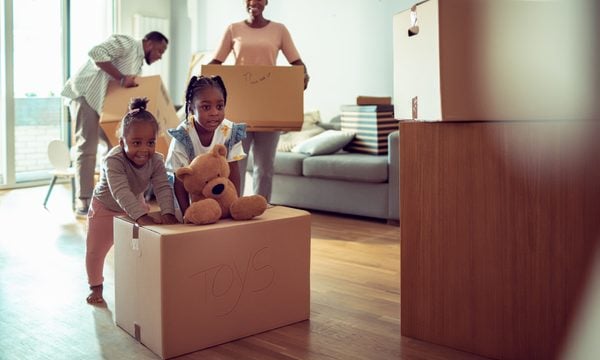
Kid stuff. If you’ve got young kids, a lot of their stuff is on the smaller side, and they can have a surprising amount of toys. Think about how you’ll need to pack them, especially if they have any that are large or oddly shaped, such as a rocking horse, that will need a big box.
You need more boxes than you think
To estimate how many boxes you’ll need, consider the type of home you live in and how many bedrooms you have. Here’s a rough idea of how many you might need based on your home size, and what you might expect to pay for them.
These are general estimates for how many boxes a home might need and their price ranges.
Alternatives to cardboard boxes
Making use of alternative containers you may already have at home can reduce the number of cardboard boxes you’ll need for your move. Here are a few to consider:
Suitcases, luggage, briefcases, duffle bags and backpacks. You need to bring your bags and cases with you anyway, so why not fill them up with your stuff? The fact that many of these cases have wheels for easy transport is an added plus. These containers work well for things like important documents, clothing, small electronics and chargers, wrapped artwork and toiletries.
Plastic moving boxes. You can rent these super-sturdy, stackable plastic boxes with locking lids from services like U-Haul’s Ready-to-Go Box and Stack Moves — or just purchase them yourself from various retailers. Plastic moving boxes keep moisture out much better than cardboard and are strong enough for larger, heavier items like books, dishes, tools and small electronics. They’re also great for clothing, bedding, toys and games. Be aware that depending on how many boxes you need to purchase or rent, this option may end up costing more than just going with cardboard, which you can often get for free.
Plastic storage bins. Those big plastic bins you probably already have in your closets, attic or basement are perfect for packing non-fragile items like clothing, linens, cleaning and craft supplies, toys, books and magazines. In some cases, they work for transporting the items you’ve already got stored in them. Just keep in mind that unlike plastic boxes made specifically for moving, storage totes aren’t designed to be stacked with heavy items, aren’t vacuum-sealed and may not have locking lids.
Dresser drawers. You may be able to leave lightweight, non-breakable items in your drawers if you secure them shut and if your mover allows this. Another option is to remove dresser drawers, pack them with lightweight clothing and accessories, and then wrap the drawer in strong plastic wrap to make sure nothing falls out during transit. Be sure not to put anything too heavy in drawers though, as this could put too much stress on the drawer frames when lifted. Additionally, if you’re using professional movers, check to make sure they’ll allow separate packed drawers on the truck.
Think (literally) outside the box for packing
Large trash cans. If you’re taking your trash cans with you, clean them out thoroughly before putting any belongings inside, and secure the lids with duct tape or bungee cords. Since trash cans are built to handle heavy loads, they make a good space to transport tools, sports equipment, pet supplies and non-breakable kitchen items (like pots and pans). They’re also great for items that don’t fit well in standard boxes — like rolled posters, curtain rods and floating wall shelves.
Plastic toy boxes and wooden chests. As long as you secure the lids, these sturdy containers work well for packing clothing, blankets, linens and, of course, toys.
For non-fragile items — particularly those that are going in your car rather than on the moving truck — you can get away with using containers that don’t have lids such as:
Milk or wooden crates.
Tote bags.
Laundry hampers.
Large planters.
If you’re planning on putting any of the above containers on a moving truck, be sure to seal the top closed with plastic wrap or a large piece of cardboard and strong tape.