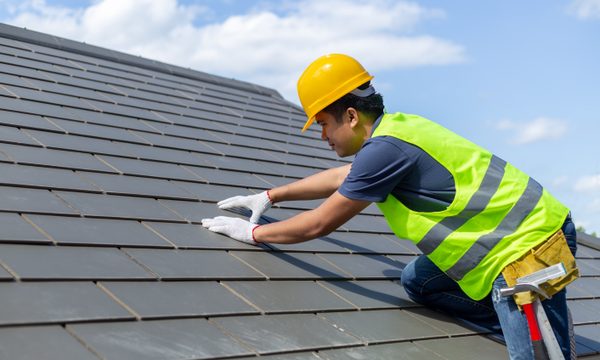


It’s a notice no homeowner wants to get: Your insurance company has decided not to renew your policy. The reason? Based on aerial photos of your home, your roof is in poor condition.
Your first response might be outrage. Is your insurance company spying on you? Can it really take photos of your house at any time?
The practice is usually legal — and in some ways it’s nothing new, according to insurance experts. Looking at aerial photos “is just another method of doing something that insurers have always been doing,” says Bob Passmore, vice president of personal lines at the American Property Casualty Insurance Association.
Inspecting homes is part of a process called underwriting, in which an insurer evaluates how likely you are to file a claim. In the past, many home insurance inspections were done in person. Someone might drive by your house to take photos or come inside for a thorough investigation.
These inspections still happen. But many insurers now rely on aerial images as a cheaper, more efficient way to see your property. To homeowners shocked by a non-renewal, it can feel like a violation.
In response, some states are taking action to give consumers a chance to fight back.
“Just because a technological opportunity exists doesn't mean it can or should be used without guardrails and consumer protections,” says Doug Heller, director of insurance at the Consumer Federation of America. “Using images that were gathered without consumer awareness, or let alone consent, is really problematic.”
How insurers use aerial images
Insurance companies study aerial photos for issues that could lead to future claims. Red flags may include:
Debris in your yard. “It could be home for vermin. It could be a trip-and-fall hazard,” says Karl Susman, owner of the Susman Insurance Agency in Los Angeles.
Trees hanging over your home. “That's a horrible, horrible fire risk,” Susman says. A tree could also crash onto your house in a storm.
Trampolines or swimming pools you didn’t tell the insurer about. These could be a lawsuit risk, Passmore says.
But the biggest issue may be the condition of your roof, says Alaina Hixson, director of sales and operations at the Churchill Agency in Brentwood, Tennessee. Because roofs are battered by severe weather and expensive to replace, they’re a major source of claims.
Insurers may check satellite images of your roof for moss, broken shingles or other signs of wear. Such issues could lead to a non-renewal notice.
Why insurers are dropping policies
In recent years, insurance companies have gotten pickier about which properties they cover. Insurers “want to keep their customers,” Passmore says, but “they also have to keep in mind what their exposure to risk is.”
Right now, insurers’ financial risks are significant. In 2025, the U.S. had 23 disasters that each caused at least $1 billion in damage, according to Climate Central, a nonprofit organization. Climate change is making hurricanes and wildfires more severe. Meanwhile, inflation has raised the cost of rebuilding homes.
As a result, many home insurers have paid more in claims than they made in premiums in some recent years. One way they’re trying to stem the losses is by dropping their riskiest policies — and aerial imagery can help them pinpoint those homes.
What you can do
“If you get a non-renewal notice, immediately contact the insurer and ask why,” Heller says. If the insurer used aerial images, ask to see them, and find out when they were taken.
If the photos are outdated or inaccurate
Aerial images don’t always reflect reality. In some cases, insurers have flagged the wrong house or mistaken skylights for roofing material, according to consumer advocate Amy Bach of United Policyholders. If something looks wrong, you may be able to contest your insurer’s decision.
Say the photos are from six months ago and feature an overhanging tree that you’ve since trimmed back. “If you can show documentation that something isn't what they think it is,” Hixson says, “an insurer will often work with you.”
For example, you can submit your own photos taken by a licensed roofer or a receipt from a contractor for a recent service. You may also be able to request an in-person inspection from your insurance company.
If the photos are accurate
Even if the issue in the photo is legitimate, an insurer may extend your policy if you fix the problem, Hixson says.
Unfortunately, not everyone has the budget for pricey home repairs. If you can’t address the issue, search immediately for new coverage. Having a non-renewal in your history can make it harder to find another policy, Hixson warns.
An independent insurance agent can help you shop around with other carriers. Keep in mind, though, that a new company’s home inspection may flag the same problem the old one did.
If you think your insurer handled your non-renewal unfairly, file a complaint with your state’s department of insurance, Passmore suggests.
Where states are stepping in
Several states have set limits on how insurance companies can use aerial images for coverage decisions. Here are a few examples.
Georgia: An insurer can cancel or non-renew a homeowners policy based on aerial imagery, but the photos may be no more than a year old. The homeowner must have a chance to see the images, plus at least 60 days to fix any issues with their property.
Indiana: When using aerial images as the only reason not to renew a policy, the insurer must let the policyholder know how they can see copies of the photos. The images can’t be older than two years. The policyholder must have at least 60 days to fix any issues identified in the photos.
Louisiana: Insurers may not use aerial images taken more than two years ago as the sole reason for a cancellation or nonrenewal.
Maryland: Insurers can’t use unclear or outdated images to justify canceling or not renewing a policy. Instead, they must perform further investigation on the property. The insurance department encourages insurers to share images with policyholders and give them a chance to dispute them or make fixes to their property.
Check with your state’s insurance department to see which protections apply where you live.
Prevent insurance issues
You can’t keep an insurer from taking aerial photos of your home, but you can make it more attractive to insure. “Number one is keep your house maintained,” Passmore says.
This includes ridding your yard of debris, trimming trees and monitoring your roof’s condition, Hixson says.
About two months before your policy renews each year, get home insurance quotes from a few other insurers, Heller says. “Know what your options will be in case you find yourself in the midst of a non-renewal problem.”
Article sources
- 1.Climate Central. U.S. Billion-Dollar Weather and Climate Disasters in 2025. Accessed Jul 9, 2026.