





A student credit card can be perplexing. In some instances, you don’t have to be a student to apply for one. And being a student doesn’t automatically qualify you for one.
Student credit cards are designed for people ages 18-21 who have limited or no credit history. Understanding how these cards work will help you choose one that's best for you.
Determine whether you're eligible
Age and income requirements
Before the Credit Card Act of 2009, college students as young as 17 and 18 were bombarded with T-shirts, beach towels and other trinkets to entice them to sign up for a credit card when they set foot on campus. The Card Act put the kibosh on that.
Now, applicants younger than 21 must provide proof of independent income — from a part-time or full-time job, for example — or find a co-signer who agrees to pay the bill if they can't. Many issuers don’t allow co-signers on credit card applications, but some do.
🤓Nerdy Tip
Applicants over 21 also must report income, but they can include any income to which they have a reasonable expectation of access, such as the income of a partner or spouse.Credit history requirements and more
Depending on the card issuer, you may also need at least some existing credit history to qualify. Some issuers are more transparent upfront about this requirement than are others, but it's possible to find student cards that will approve those with thin or nonexistent credit files.
Typically, you'll also need to provide a U.S. Social Security number — or at least an Individual Taxpayer Identification Number — when applying for any credit card, student or otherwise. This may pose a particular obstacle to international students, although there are ways to apply for a credit card without a Social Security number.
Trying to get approved for a card?
Create a NerdWallet account for insight on your credit score and personalized recommendations for the right card for you.

Look for must-have features
If you meet the above requirements, then your main goal with a student credit card is to establish a credit history. Don't get distracted by rewards and perks, which are nice to have but not essential initially.
Some items to check off your list include:
- No annual fee. A good student credit card won't charge you a fee to carry it. This will be important now, while you're on a student budget, but also in the future, when you may be able to qualify for a card with better features. You'll be able to hold on to your starter credit card at no ongoing cost, preserving the length of your credit history — which is a major factor in your credit scores.
- Reporting to all three credit bureaus. Ideally, your student credit card will report to all three major credit bureaus — TransUnion, Equifax and Experian. These companies collect the information used to calculate your credit scores. The higher your credit scores, the greater your financial opportunities. A good FICO credit score of 690 or higher can qualify you for lower interest rates on auto or home loans, saving you money over time. It may also help you qualify for your first apartment.
- No foreign transaction fees. Some credit cards charge this fee — usually 1% to 3% of the transaction — on purchases made in a foreign currency. If you plan to study abroad or travel internationally, consider cards that don’t charge this pesky fee.
If you can also get incentives like rewards and welcome bonuses on top of these features, even better. Student credit cards tend to be less generous with rewards and perks, but some exceptions exist.
These options hit many of these marks:
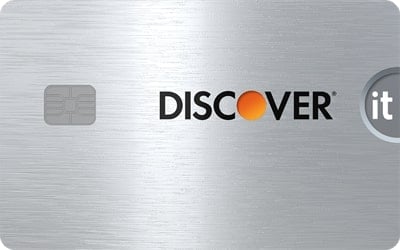
The Discover it® Student Chrome has a $0 annual fee, reports to all three credit bureaus and doesn't require a FICO credit history. It’s also forgiving of your first late payment; you’ll pay no annual fee and the interest rate won’t go up (after the first late payment the fee is up to $41). The rewards structure is straightforward: Earn 2% cash back at gas stations and restaurants (on up to $1,000 in combined purchases each quarter) and 1% on everything else. And it offers a welcome bonus, phrased this way: "INTRO OFFER: Unlimited Cashback Match for all new cardmembers. Discover will automatically match all the cash back you’ve earned at the end of your first year! There’s no minimum spending or maximum rewards. You could turn $50 cash back into $100. Or turn $100 cash back into $200." Discover also says that no FICO credit history is required to apply. If you’re planning to study abroad, though, Discover's limited merchant acceptance overseas may cause some hiccups.
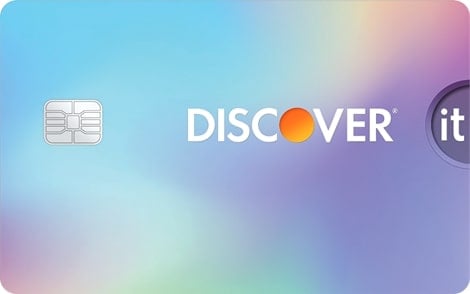
The $0-annual-fee Discover it® Student Cash Back also reports to all three credit bureaus and doesn't require a FICO credit history. It earns 5% cash back on rotating bonus categories on up to $1,500 in purchases each quarter when you activate (1% back on all other purchases). Previous bonus categories have included grocery stores, gas stations, home improvement stores and more. This card also offers a cash-back match at the end of your first year. Again, though, as a Discover card, it may mean you face somewhat limited merchant acceptance abroad.
Alternatives to student credit cards
If you’re not eligible for a student credit card, other options may exist that can help you build credit.
Consider the following:
- Get a co-signer: This person agrees to pay the bill if you can’t, allowing you to get your own credit card account backed by their income and credit history. Only a few issuers offer this option.
- Become an authorized user: In this scenario, someone agrees to add you as a user of their account and is legally responsible for any debt you accrue. You’ll get your own card, and you may even benefit from the primary cardholder's credit history.
- Apply for a secured credit card: You’ll have to pay a security deposit, which ultimately sets your credit limit. These cards are easier to qualify for because the deposit limits the risk to the issuer. You can use it to build credit and eventually get your deposit back with responsible credit use.
Regardless of the route you take to establish credit, you’ll have to determine whether you’re ready for the responsibility. If you can pay your bill on time each month, preferably in full to avoid interest, you may be up to the task.
🤓Nerdy Tip
Already have a student credit card? Find out what you can do with it once you graduate.