» Update
The Lane Healthcare Spending Card has stopped accepting new applications and new transactions from existing cardholders. According to the company, cardholders have been notified and the Lane portal remains open only for repayments and account management.
The Healthcare Spending Card — offered by financial technology company Lane Health and issued by Lead Bank — can be useful for those who need to finance a medical-related expense not covered by insurance. The $0-annual-fee card allows holders to link their Healthcare Savings Account (HSA) to pay for medical expenses over time and doesn't charge interest on hospital and health care-related spending.
However, holders can potentially incur hefty fees if they don't meet repayment time frames. Plus, the card can only be used for health care-related spending and doesn’t earn rewards. If you don’t have a pending medical bill to pay, or if you already have a significant amount of money in your HSA, then you’re better off with a rewards-earning credit card instead.
Here’s what to know about the Lane Healthcare Spending Card.
1. Applying won't initially impact credit scores
Applying for the card won’t initially trigger a hard pull on your credit or negatively impact your credit scores like applying for a traditional credit card typically does. That’s because Lane Health offers a preapproval process that won't affect credit scores when you first apply for the card, which means there's no risk to your credit for being declined.
Once you officially apply for the card and accept the terms offered, there is a credit check that results in a hard pull that can temporarily cause your credit scores to drop. They can bounce back eventually as long as you manage your credit responsibly.
Relatedly, Lane says it starts reporting payments to credit bureaus within 60 to 90 days as of this writing. This means that your Healthcare card account and payment history are recorded on your credit report. Your credit report is used to calculate your credit scores, which can affect your ability to get another loan product later.
Note that the company uses nontraditional underwriting to determine what credit limit you get. Credit limits for holders range from $500 up to $10,000 — the higher your income, the higher your credit line will be.
2. You can avoid interest, but terms vary ...
The Lane Healthcare Spending card offers 0% financing when you use it for qualifying hospital and health care-related expenses and pay back what you owe within a certain amount of time. Unlike other medical credit cards that charge what’s called deferred interest, purchases made with the Lane Healthcare card won’t accrue any interest retroactively.
However, there are caveats, starting with the fact that not all expenses will be treated the same when it comes to financing. Most notably, the card makes a clear distinction between qualifying hospital bills (those incurred from hospital services at general hospitals, psychiatric hospitals and specialty hospitals) as opposed to other eligible (but non-hospital) health care expenses, and your financing offer can vary depending on which of those two main categories you're paying for.
Here's more about how the 0% financing works:
Repayment plans of one, four and 12 months are possible, depending on the kind of expense.
Qualifying hospital bills paid back within 12 months get 0% financing. When you use your card to pay for bills from such services, you won’t be charged any interest over the course of repayment.
0% financing also applies to dental bills repaid over 12 months; however, you must be a Delta Dental member to qualify. If you use your Lane Healthcare card for dental-related spending and you’re not a member of the Delta Dental insurance provider, your purchase doesn't qualify for 0% financing over 12 months.
Any other qualified health care expense is eligible for 0% percent financing when repaid in one- or four-month repayment plans. Qualified health care expenses include a wide breadth of services and products such as dental and vision procedures; medications; pharmaceutical products; medical equipment and supplies like orthopedic goods and prosthetic devices; urgent care centers; and more.
Note that there’s a $3 minimum amount due each month, regardless of your loan term.
3. ... And you can incur costly fees
The card’s 0% interest offer can help you pay off large medical expenses faster and without carrying any debt afterward. But holders can still incur non-interest-related fees that can make carrying a balance with the card costly.
That’s because any (non-hospital) health care-related purchases made with the card (like those highlighted above) that are not paid back within four months will incur a 5% loan origination fee and periodic finance fees. For example, if you use your card to pay for a drug prescription or for a visit to urgent care and you don’t pay it off within four months, you’re on the hook for an additional 5% of what the original purchase cost was, in addition to quarterly fees.
Periodic finance fees vary based on how much you owe. Generally, they total between 5% to 8% of the original loan amount and are charged quarterly until you pay off what you owe.
(Keep in mind that these fees apply only to non-hospital health care-related spending. Your purchase type will be determined by the associated merchant category code or MCC).
4. Holders can link their Health Savings Accounts
Cardholders who have an HSA can link their account to the Lane credit card.
An HSA allows you to pay for health-related expenses with tax-free dollars, and by linking your account to the credit card, you can simultaneously finance those health-related expenses over time if you need to, using one of the aforementioned no-interest installment plans.
Note that you don’t need an HSA to get the card.
5. The card is limiting for most
The Healthcare Spending card can be a helpful tool for financing large medical expenses not covered by insurance. But the card is generally limiting when it comes to everyday use.
To start with, you can use the card for health care-related expenses only, so it’s not valuable for general spending. And you won’t earn rewards on those medical expenses. Other medical cards, like the CareCredit Rewards Mastercard, reward holders for both health care-related purchases and everyday spending.
Plus, if you already have a significant amount of money in your HSA account and don’t need to finance a medical procedure, the card might not make sense for you. Rather than get the card, you can simply pay your medical bill in full directly from your HSA.
Or, even better, you can use a rewards-earning card to pay your medical bill, and then pay your balance back in full with your HSA funds. This means that you’ll get the benefit of both pre-tax dollars and credit card rewards. And because you’re paying your balance back in full, you won’t incur interest.
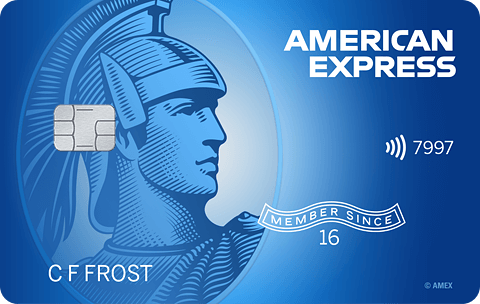
If you have a planned medical expense and are unable to cover it, consider a credit card with a 0% intro APR for purchases — which can help you pay down your balance, interest-free. For example, the $0-annual-fee Blue Cash Everyday® Card from American Express has a long interest-free period: 0% intro APR for 15 months on purchases and balance transfers, and then the ongoing APR of 19.74%-28.74% Variable APR. And, unlike the Lane card, you’ll earn rewards on your spending. (Terms apply.)