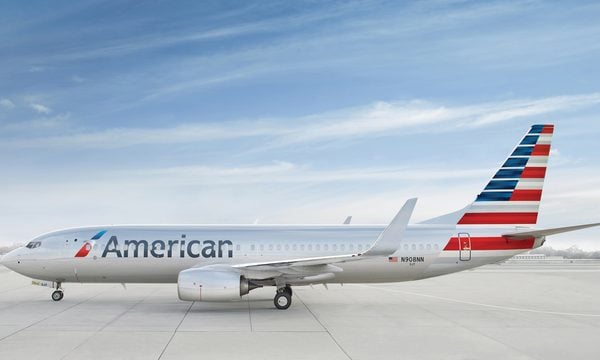
When booking a domestic flight, U.S. travelers often choose between three major legacy carriers: Delta Air Lines, United Airlines and American Airlines. While budget airlines and other carriers certainly have their place, these industry giants offer the most extensive route networks and premium cabin options, not to mention robust loyalty programs — making them the go-to choice for millions of travelers.
But which one deserves your business and, if you're a frequent traveler, your loyalty?
The answer isn't straightforward. Each airline has distinct strengths and weaknesses that can significantly impact your travel experience and wallet. To determine which comes out on top, we evaluated five key factors: route networks, operational reliability, add-on fees, rewards rates and overall travel experience.
Here's how the U.S.'s three largest airlines stack up against each other.

Subscribe to our free TravelNerd newsletter for inspiration, tips and money-saving strategies, delivered straight to your inbox.
By signing up, you will receive newsletters and promotional content and agree to our Terms of Use and acknowledge the data practices in our Privacy Policy. You may unsubscribe at any time.
Routes and destinations
Winner: United
Including its partner airlines, United serves slightly more destinations than American. That said, American serves slightly more domestic destinations, though United's advantage lies in its international reach bolstered by its membership in Star Alliance, the world's largest airline alliance.
All three legacy carriers offer extensive networks with hundreds of domestic destinations and international service to dozens of countries. The right choice often depends on your home airport and proximity to a hub. Outside of major markets like New York and Los Angeles, where all three airlines compete, each carrier concentrates its operations in different cities.
United
Chicago-based United Airlines flies to around 200 U.S. destinations in addition to roughly 138 international destinations across 71 countries covering Europe, Asia, Oceania, India, South America and parts of Africa.
United's airport hubs can be found in:
- Chicago-O'Hare.
- Denver.
- Guam.
- Houston-Intercontinental.
- Los Angeles.
- Newark.
- San Francisco.
- Washington-Dulles.
United is a founding member of the Star Alliance, the world's largest airline alliance with 25 member carriers and a network spanning 190 countries — a partnership that significantly extends United's global reach.
American
Dallas-Fort Worth-based American Airlines operates a network of nearly 400 destinations, including more than 200 domestic and more than 150 international destinations (served by American and its partner airlines). The carrier's international focus centers on the Caribbean, Europe and South America while leveraging Oneworld partnerships to connect passengers to destinations in Asia and Oceania.
American Airlines' hubs are found in:
- Charlotte.
- Chicago-O’Hare.
- Dallas-Fort Worth.
- Los Angeles.
- Miami.
- New York-John F. Kennedy.
- New York-LaGuardia.
- Philadelphia.
- Phoenix.
- Washington-National.
American Airlines is a founding member of the Oneworld alliance. While the smallest of the three major alliances at 16 member carriers, Oneworld includes noteworthy partners such as Alaska Airlines, British Airways, Finnair, Japan Airlines, Qantas and Qatar Airways.
Delta
Atlanta-based Delta Air Lines operates a network of more than 300 destinations, including more than 200 domestic and more than 100 international destinations served by Delta and its partner airlines.
Delta's U.S. hubs and key markets include:
- Atlanta.
- Boston.
- Detroit.
- Los Angeles.
- Minneapolis-St. Paul.
- New York-John F. Kennedy.
- New York-LaGuardia.
- Salt Lake City.
- Seattle.
Delta is a founding member of the SkyTeam, which is made up of 18 airlines, including Aeromexico, Air France, KLM, Korean Air and Virgin Atlantic.
» Learn more: Your guide to airline alliances
Reliability
Winner: Delta
Delta leads the pack when it comes to operational reliability, earning the highest overall score among the three legacy carriers in NerdWallet's analysis of U.S. Department of Transportation data.
Delta excelled across all three key metrics: on-time performance, cancellations and baggage handling. However, it's worth noting that while Delta finished second overall among the major U.S. carriers we analyzed (behind Southwest Airlines), United and American lagged further behind in fourth and sixth place, respectively.
Delta
Delta operated 80.27% of its flights on time, the best performance among the big three and second-best overall. It also mishandled just 0.46% of checked bags — meaning roughly 1 in every 217 bags was lost, damaged or delayed.
While Delta's cancellation rate of 1.37% was slightly higher than United's, the carrier's strong performance in on-time arrivals and baggage handling secured its second-place finish overall.
United
United landed in the middle of the pack with a fourth-place rank overall from the six airlines we analyzed. The carrier operated 78.84% of its flights on time and actually edged out Delta with a 1.34% cancellation rate — the best among the three legacy carriers.
Where United struggled was baggage handling, with a 0.69% mishandled bag rate that placed it ahead of only American among the major carriers.
American
American trailed both competitors across the board. The Dallas-based carrier's 75.31% on-time performance was the lowest among major airlines, and its 2.00% cancellation rate is more than double Southwest Airlines' industry-leading rate of 0.82%.
American also finished in last place for baggage handling, mishandling 0.71% of checked bags — the worst performance among all carriers analyzed.
» Learn more: Avoid airline cancellations: How to book better
Fees
Winner: Delta
While all three carriers charge similar baggage fees for standard economy — $45 for the first bag and $55 for the second when prepaid — American's fees are slightly higher at the airport ($50/$60 without prepay), and American Basic Economy passengers pay an additional $5 per bag. Delta takes the win with the lowest total cost when seat selection is also factored in.
Delta
- Checked bag fees: Delta charges $45 for the first checked bag and $55 for the second on domestic flights. Travelers with an eligible Delta credit card, elite status or eligible active military status can avoid these charges.
- Seat assignment fees: Main Basic and Comfort Basic passengers must pay to select a seat; otherwise, they'll get a randomly assigned seat at check-in. All other fares include free standard seat selection.
- Change fees: Delta doesn't charge change fees for most trips originating in the United States, Canada and the Caribbean. Fees vary in other regions. If you purchase a Basic fare, you'll need to pay a fee to change or cancel.
American
- Checked bag fees: American charges $45 if you pay online (or $50 at the airport) for your first checked bag and $55 prepaid (or $60 at the airport) for the second on domestic routes. For tickets purchased on or after May 18, 2026, basic economy flyers will be charged an additional $5 per bag. Elite members and eligible credit cardholders can check bags for free.
- Seat assignment fees: All American fares include free standard seat selection except basic economy. Basic economy travelers can pay to select a seat any time after booking. Note that as of May 18, 2026, even AAdvantage elite status members must pay for seat selection on Basic Economy fares.
- Change fees: American has eliminated change fees for flights originating in the Americas. Most basic economy tickets are non-changeable, except for cancellations within 24 hours of purchase and flights originating in most European countries, which you can change for a fee.
United
- Checked bag fees: United charges $45 if you prepay for your first checked bag or $50 if you pay at the airport. The second bag costs $55 (or $60 at the airport). These fees are waived for elite members and those with certain United co-branded credit cards.
- Seat assignment fees: United basic economy passengers must pay to select or change their seat, as well as those traveling on a Polaris or Premium Plus base fare. All other fare types include free standard seat selection.
- Change fees: United eliminated change fees for flights within the U.S., as well as flights between the U.S. and Mexico, the Caribbean and other international itineraries. However, basic economy and other base fares cannot be changed without first upgrading your fare.
Loyalty program
Winner: American
American Airlines edges out its competitors in the rewards category, offering a 6.5% return on base spending — the highest among the big three. This advantage comes from AAdvantage miles being valued slightly higher than Delta and United's.
That said, the gap is almost negligible, so factors like home airport options, elite status benefits and credit card perks may outweigh the small redemption value differences for many travelers. It's also worth noting that all three legacy carriers trail behind other major U.S. airlines' earning rates.
American
According to our analysis, AAdvantage miles are valued at 1.3 cents each — the highest among the three legacy carriers. Combined with a base earning rate of 5 miles per dollar, American offers a 6.5% return on spending.
American offers four consumer credit cards and one business credit card through Citi. Depending on which one you choose, you may enjoy benefits like free checked bags, priority boarding and even Admirals Club lounge access. You can even earn elite benefits through everyday credit card spending, with each purchase earning Loyalty Points toward your status.
Delta
Delta SkyMiles are valued at 1.2 cents each, putting Delta in a tie with United for redemption value. With a base earning rate of 5 miles per dollar, SkyMiles members earn a 6% return on spending.
Where Delta distinguishes itself is through its credit card offerings. Partnered with American Express, Delta offers seven co-branded credit cards across four tiers, with both consumer and business options. Most Delta cards include valuable perks like a free checked bag and a 15% discount on award redemptions booked with miles.
AmEx's more premium Delta offerings also offer benefits more suited to frequent travelers, such as an annual companion certificate, elite status credits and airport lounge access.
United
United MileagePlus miles are valued at 1.2 cents each, matching Delta. General members earn 5 miles per dollar spent, resulting in a 6% return on spending — tied for the lowest among the big three.
United's edge comes from its Star Alliance membership, the world's largest airline alliance with 26 member carriers. This gives MileagePlus members more redemption options globally than Delta or American loyalty programs.
United currently offers five Chase-issued credit cards — three consumer and two business — and all of them offer chances to work toward elite status. Depending on the card you choose, you may also enjoy other perks, like annual travel credits, award flight discounts, complimentary Premier upgrades on award tickets and airport lounge access.
» Learn more: Basic economy vs. main cabin: Which is for you?
Collect airline miles quickly
Among the three legacy carriers, airline miles can be redeemed for award flights starting at just 5,000 miles for a one-way ticket, depending on the loyalty program. But before you start using miles to book award flights, you have to earn them.
Beyond flying, another way to amass a large number of points and miles is to earn a sign-up bonus from a co-branded airline credit card.
Top airline cards from "The Big Three"
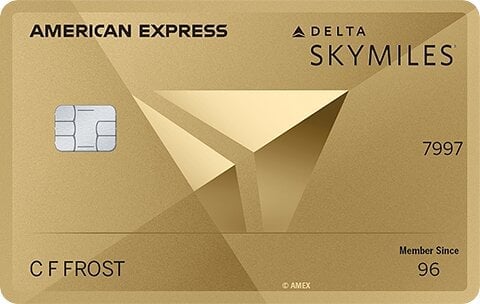
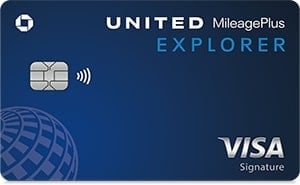

Annual fee
- $0 intro for the first year, then $150
- $0 intro for the first year, then $150
- $99, waived for the first 12 months
Rates and fees
see rates and fees
Still not sure?
If you value flexibility over loyalty, consider a general travel credit card instead of an airline-specific card. General travel cards let you book flights on any carrier while earning bonus rewards, rather than locking you into a single airline's ecosystem.
Premium travel cards often include perks like airport lounge access and automatic elite status with certain programs. However, airline-branded cards offer tangible benefits that can quickly pay for themselves, particularly free checked bags, which can save a family of four $360 on a single round-trip flight.
The right choice depends on your travel patterns: frequent flyers on a single airline often benefit more from branded cards, while those who fly multiple carriers may prefer the flexibility of general travel cards.
» Learn more: The best airline credit cards right now
The in-flight experience
Winner: Delta
If you care about what you are doing (and what you are eating) at 30,000 feet, the gap between these airlines widens significantly. It's here where Delta really dominates with both strong in-flight entertainment options viewable on seatback screens, solid Wi-Fi and good food.
In the Point.me 2026 Best Airline Food & Drinks Survey, Delta absolutely dominated its domestic peers, winning the overall coffee wars via its partnership with Starbucks (favored by 24.8% of travelers), beating out Lavazza served on American (preferred by 18.9% of travelers) and Illy served on United (preferred by 16% of travelers).
Delta also wins out with its snack selection, which includes crowd-pleasing items that vary by flight but can include Cheez-Its, Biscoff cookies and gluten-free MadeGood bars. In that same survey, respondents called out American's meager options of Biscoff cookies and mini pretzels as being unimpressive.
Who wins: Delta, United or American?
Based on NerdWallet's analysis, Delta Air Lines emerges as the best of the big three U.S. airlines, finishing second overall among all major carriers, ahead of both American (third place) and United (fifth place).
Delta's victory comes from consistent performance across multiple categories. The Atlanta-based carrier topped all airlines in lowest fees, placed second in operational reliability and offers a solid route network. While Delta's rewards rate trails American's by a slim margin and its route network is smaller than United's, its well-rounded performance and superior operations give it the edge.
For travelers prioritizing reliability and lower costs, Delta is the clear choice. However, your personal winner may vary depending on which airline hubs you're closest to and whether you value United's expansive international network or American's slightly better rewards rate.
For rates and fees of the Delta SkyMiles® Gold American Express Card, please visit American Express' rates and fees page.
How to maximize your rewards
You want a travel credit card that prioritizes what’s important to you. Here are some of the best travel credit cards of 2026:
- Flexibility, point transfers and a large bonus: Chase Sapphire Preferred® Card
- No annual fee: Wells Fargo Autograph® Card
- Flat-rate travel rewards: Capital One Venture Rewards Credit Card
- Bonus travel rewards and high-end perks: Chase Sapphire Reserve®
- Luxury perks: American Express Platinum Card®
- Business travelers: Ink Business Preferred® Credit Card
Explore more on