It’s a terrible feeling to arrive at a checkout screen and realize that the cost far exceeds the original listed price.
This practice of adding fees throughout the checkout process is called “drip pricing,” and the travel industry is one of the worst offenders. Airlines add baggage and seat selection fees. Hotels drop resort fees at the last minute. And Airbnb listings carry cleaning fees, service fees and taxes that can balloon the cost of a booking, making it harder to answer the question: “How much is an Airbnb?”
NerdWallet analyzed 1,000 Airbnb bookings across major cities in the U.S. to understand the prevalence and impact of Airbnb fees on prices. For each booking, the base cost of the room was collected, along with additional taxes and fees.
Overall, base price accounted for 68% of the total cost of bookings, with taxes and fees making up the remaining 32%. This discrepancy means that travelers looking to comparison shop on the vacation rental platform should essentially ignore base prices and focus instead on the total charge at checkout.
For comparison, baked-in fees on hotel rooms average 4.4% of the total cost, according to our analysis of hotel resort fees. Hotels do carry other annoying fees, such as those for parking and pets. Yet overall the difference between the listed price and final price on hotels is less dramatic than on Airbnb listings.

How Airbnb prices are displayed
Airbnb likes to tweak its interface, changing how prices and fees are displayed, making it hard to know exactly how prices will appear on any given search. In general, the base price of a property is displayed prominently. On desktop, the total price for the reservation is also included, while on the mobile app it is hit or miss.
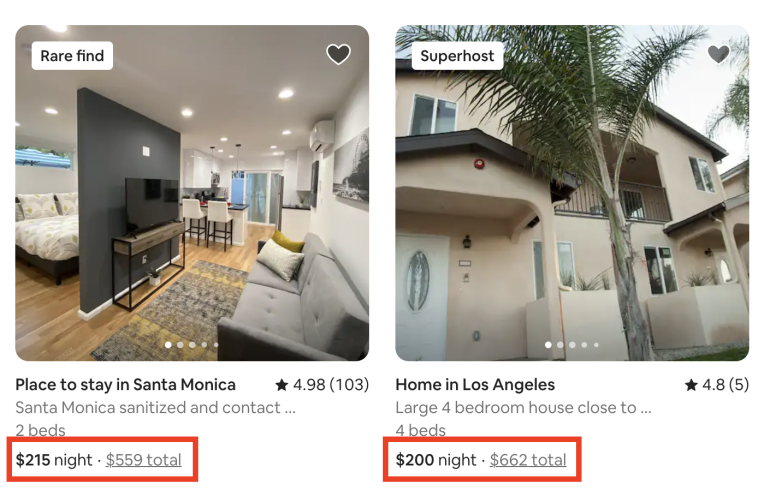
Take two Airbnb properties in the Los Angeles area for example. One has a slightly higher base price at $215 than the other at $200. Yet the total price, which includes taxes and fees over two nights, is actually lower for the “higher” priced property, $559 vs. $662. Essentially, the base price is unhelpful in understanding the real cost.
Unlike many hotel brand search engines, which include a “display total price” option or similar, Airbnb does not allow users to search by total price. Instead, you can see only the base price before fees and taxes are added.
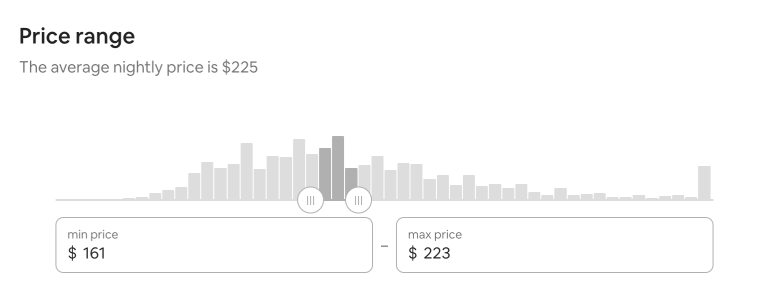
Even the property detail page will usually exclude taxes. So, it takes a few taps or clicks to see the total price. This makes it difficult to compare these prices between properties, especially when using the mobile app, where switching between tabs isn’t an option.
Here are some tips to help compare total costs:
Always compare costs on the final checkout screen.
Open multiple tabs, if possible.
Avoid the mobile app for comparison shopping.
How to minimize Airbnb fees
The most straightforward way to avoid extra Airbnb fees is to follow through with the steps outlined above. By comparing final prices rather than base prices, you can make sure you’re accounting for the impact of fees on your trip. You’ll end up choosing properties with lower fees by carefully comparing total prices.
Here’s another tip, if it’s feasible: Stay longer. Although longer stays will cost more overall, the impact of cleaning fees will be lower compared to single-night stays.
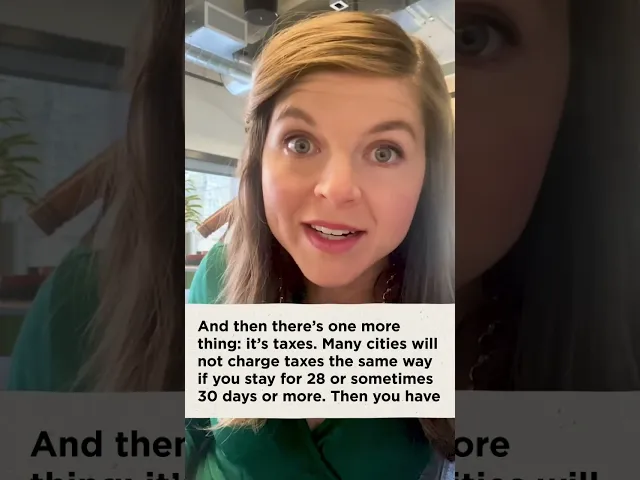
Furthermore, taxes are lower or waived for stays of 30 days or more in some locations. So the impact of taxes and fees on these longer-term stays is less pronounced. And many properties offer discounts for longer stays.
Not everyone is planning to stay a month in an Airbnb, of course. So if none of these strategies work and you can’t find a short-term rental without huge fees, it’s always worth considering a hotel. Although resort fees and other add-ons can pop up during hotel bookings, the lack of a cleaning fee makes hotels the more budget-friendly option in some short-term situations.

By signing up, you will receive newsletters and promotional content and agree to our Terms of Use and acknowledge the data practices in our Privacy Policy. You may unsubscribe at any time.
Airbnb pricing, recapped
It’s annoying to find a higher rate at checkout than you anticipated, but it doesn’t have to be the end of the world. Since service fees, taxes and cleaning fees are built into nearly every Airbnb booking, they might as well be baked into the base nightly cost — but they’re not.
As long as you’re comparing total costs, it shouldn’t matter if the base price is $1 and the cleaning fee is $99 or the other way around. It might feel yucky to pay more in fees than the cost of the “room,” but from a financial perspective, it’s a wash.
Don’t get sucked in by low base prices and ignore the final price. Compare the cost per night across listings by doing a little math after seeing total charges. And consider staying longer at one booking rather than jumping between several if the fees are adding up.