The Chase Freedom Flex® and the Chase Sapphire Preferred® Card are two different beasts.
In a head-to-head rewards battle, it's a close call. The Chase Freedom Flex® could well out-earn the Sapphire Preferred for many cardholders, since it offers lucrative bonus earnings on rotating categories throughout the year. And you won’t pay an annual fee to hold the card.
But for travelers, the Chase Sapphire Preferred® Card shines more brightly. That's because it unlocks impressive travel perks — including transfer partners, plus the opportunity for elevated point values for bookings of select hotels and airline tickets through Chase's travel portal — that you won't get with the Chase Freedom Flex® alone.
If you’re trying to decide between these two cards, we'll tell you what you need to know. But, pro tip? You may want to consider both. (More on that later.)
At a glance
Even though the Chase Freedom Flex® is considered a cash-back card, both it and the Chase Sapphire Preferred® Card technically earn points in a currency called Chase Ultimate Rewards®. Those points are worth 1 cent each when redeemed for cash back, but you'll have other redemption options, too.
Here's how the cards stack up:
How the cards compare
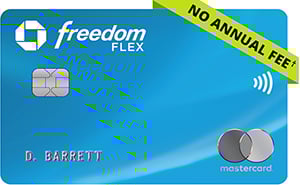
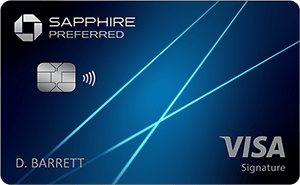
Annual fee
$0
$95
Sign-up bonus
Chase Freedom Flex®
Earn a $200 Bonus after you spend $500 on purchases in your first 3 months from account opening.
Chase Sapphire Preferred® Card
Earn 75,000 bonus points after you spend $5,000 on purchases in the first 3 months from account opening.
Ongoing rewards
Chase Freedom Flex®
- 5% cash back in rotating bonus categories that you activate, on up to $1,500 in combined spending per quarter.
- 5% back on travel purchased through Chase.
- 3% back at restaurants.
- 3% back on drugstore purchases.
- 1% back on all other purchases.
Chase Sapphire Preferred® Card
- 5 points per $1 spent on travel booked through Chase.
- 3 points per $1 spent on eligible dining, select streaming services and select online grocery purchases.
- 2 points per $1 spent on all other travel.
- 1 point per $1 spent on all other purchases.
Foreign transaction fee
3% of each transaction in U.S. dollars
$0
APR
Chase Freedom Flex®
0% intro APR on Purchases and Balance Transfers for 15 months, and then the ongoing APR of 18.24%-27.74% Variable APR.
Chase Sapphire Preferred® Card
The ongoing APR is 19.24%-27.49% Variable APR.
Additional benefits
Chase Freedom Flex®
- Cell phone protection.
Chase Sapphire Preferred® Card
- $50 statement credit each account anniversary year for hotel stays purchased through Chase.
- 10% anniversary bonus, based on prior year spending.
Enhanced offers
Chase Freedom Flex®
- Through Sept. 30, 2027, all cardholders can earn a total of 2% back on qualifying Lyft rides.
- Cardholders get 6 free months of access to DoorDash's subscription delivery service, DashPass. After that, you'll be automatically enrolled in DashPass at the current monthly rate. (You must activate the offer by Dec. 31, 2027.)
Chase Sapphire Preferred® Card
- Through Sept. 30, 2027, all cardholders can earn a total of 5 points on Lyft rides paid with the card.
- Through Dec. 31, 2027, cardholders get a free DashPass membership for 12 months. (You must activate the offer by Dec. 31, 2027 to qualify.) Also receive $10 per month to save on groceries, retail orders and more on DashPass through Dec. 31, 2027.
- Earn 5 points per $1 spent on eligible Peloton equipment and accessory purchases over $150 through Dec. 31, 2027.
Still not sure?
Why the Chase Sapphire Preferred® Card is better for travelers
Points are potentially more valuable and flexible
Generally, points earned with the Chase Sapphire Preferred® Card are worth a penny apiece when redeemed for cash. But if you redeem them for select hotels and airlines through Chase, the per-point value can potentially be higher, thanks to Chase's Points Boost program.
Plus, booking a trip through Chase’s Expedia-like tool isn’t your only option with the Sapphire Preferred. You can also transfer your points to more than a dozen travel partner programs at a 1:1 ratio. (Marriott, Hyatt, United and Southwest are examples.) For experienced travel hackers, this is a handy feature that could help wring out a lot of value from your points.
With the Chase Freedom Flex®, you don't have those options. Although the card technically earns Chase Ultimate Rewards® points, you won’t be able to redeem them for travel directly. You can cash them out as a deposit into an eligible Chase account, receive a statement credit, redeem them for gift cards or make purchases on Amazon, but the card has no Points Boost features or travel partners.
Welcome bonus gives you more upfront
The Chase Sapphire Preferred® Card wins easily in this category for new cardmembers: Earn 75,000 bonus points after you spend $5,000 on purchases in the first 3 months from account opening.
That’s an eye-popping bonus, even if you choose to use it for cash back.
The Chase Freedom Flex® currently offers the following: Earn a $200 Bonus after you spend $500 on purchases in your first 3 months from account opening.
Extra benefits add extra value
While the Chase Sapphire Preferred® Card comes with a $95 annual fee, it also comes with extras that can help offset that cost for travelers:
- Anniversary bonus: On top of solid ongoing rewards in several popular spending categories, the Chase Sapphire Preferred® Card adds an extra kicker. Each year, you’ll get a bonus equal to 10% of your total purchases made in the previous year. So if you spent $20,000 in purchases on the card, for instance, you’d earn 2,000 points on top of the regular earnings.
- $50 hotel credit: Your statement will automatically be credited up to $50 each year when you book a hotel directly through the Chase travel portal.
- Primary rental car coverage: When you use your Chase Sapphire Preferred® Card to pay for your rental car, you’re fully protected against theft and collision damage for most rental cars, both in the U.S. and overseas. The Chase Freedom Flex® also offers rental car coverage, but it’s secondary to your personal insurance.
🤓 Nerdy Tip
If you hold hotel elite status but book a room through a third party like Chase, you likely won’t be entitled to your elite benefits for that stay. Less frequent travelers may prefer the Chase Freedom Flex®
It can have more earning power
In a rarity among cash-back cards, the Chase Freedom Flex® offers both rotating bonus categories and fixed bonus categories. Its earning structure is more complicated than that of the Sapphire Preferred, but if your spending aligns well with the rotating bonus categories, the card could be more rewarding for you.
Both cards offer 5x on travel booked through Chase and 3x on dining, a powerhouse spending category for many folks. But if you tend to make a significant number of purchases at drugstores regularly, the Chase Freedom Flex® gives better rewards in that spending category.
Here's a look at the calendar for categories that earn 5% back:
| Chase Freedom® and Chase Freedom Flex® bonus rewards categories for 2026 | ||
|---|---|---|
| Q1 (Jan. 1-March 31) |
| |
| Q2 (April 1-June 30) |
| |
| Q3 (July 1-Sept. 30) | TBD. (In 2025: Gas/EV charging; live entertainment; Instacart.) | |
| Q4 (Oct. 1-Dec. 31) | TBD. (In 2025: Chase Travel℠; department stores; Old Navy. December only: PayPal.) | |
It's also the less expensive option (if you don't travel internationally)
The Chase Freedom Flex® offers all of its impressive rewards-earning power for an annual fee of $0.
The Chase Sapphire Preferred® Card, on the other hand, charges an annual fee of $95, and it's not waived in the first year.
An annual fee can absolutely be worth paying as long as you're earning enough rewards and/or perks to offset it, and the Chase Sapphire Preferred® Card offers several. Still, the Chase Freedom Flex® is cheaper to carry overall.
The major exception is if you travel overseas frequently. The Chase Sapphire Preferred® Card is likely a better pick in this case because it charges no foreign transaction fee. The Chase Freedom Flex®, meanwhile, will tack an extra 3% onto every purchase you make abroad.
It offers a 0% intro APR period and other perks
The Chase Freedom Flex® offers a 0% intro APR on Purchases and Balance Transfers for 15 months, and then the ongoing APR of 18.24%-27.74% Variable APR. This offer could be used to finance a large purchase or dig your way out of debt. The Chase Sapphire Preferred® Card has no such APR promotion.
Also, because the Chase Freedom Flex® is a World Elite Mastercard, it offers some side perks you might find useful, including cell phone insurance, as well as discounts and special incentives on services like DoorDash and Lyft.
The Chase Sapphire Preferred® Card runs on the Visa payment network, which offers its own side perks, including various insurance benefits and protections — but not for your cell phone. Visa also lacks the kind of targeted deals with specific merchants that Mastercard can offer.
Why not both?
If you want to use your Chase Ultimate Rewards® for cash back, the $0-annual fee Chase Freedom Flex® makes the most sense.
If you want to use your points for travel, the Chase Sapphire Preferred® Card is a better choice for your wallet.
But you don't necessarily have to choose one or the other. In fact, having both cards can be the sweet spot.
You can move points that you earn with the Chase Freedom Flex® to your Chase Sapphire Preferred® Card and then either transfer those points to Sapphire travel partners or potentially redeem them for travel through Chase at a higher value.
With their powers combined, you’ll have a winning formula for both earning and burning your rewards.
» MORE: What is the "Chase trifecta"?