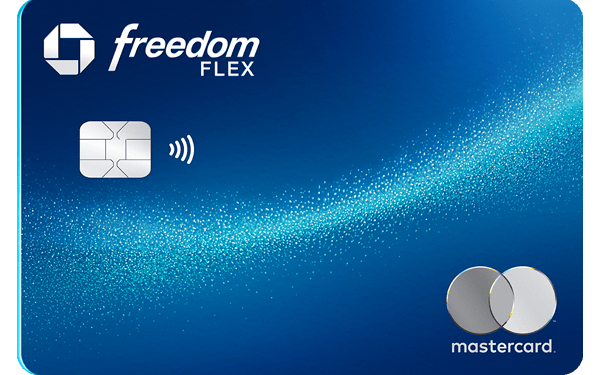
The Chase Freedom Flex® is aptly named and, as flexes go, it's a pretty major one.
Rotating 5% bonus categories? Check.
Ongoing bonus rewards in popular categories like dining and travel? Check.
Annual fee of $0? Check.
If you're looking to beef up your wallet, the Chase Freedom Flex® is absolutely worth considering — assuming you're eligible, you don't already have these bases covered, and a few other factors.
Here are four things to think about.
Chase Freedom Flex®: Factors to consider
1. Are you eligible for the Chase Freedom Flex®?
If you have good credit — a FICO score of 690 or higher — you're likely eligible. That is, as long as you aren’t afoul of Chase’s "5/24 rule."
Chase limits the number of new personal credit cards you can open in a rolling 24-month window. If you’ve opened more than five personal cards in the past two years — even if the cards are from issuers other than Chase — you won’t be approved for a new card.
If you already have a different member of the Freedom family — either the discontinued Chase Freedom® or the Chase Freedom Unlimited® — you should still be able to apply for the Chase Freedom Flex®, again assuming you aren't over the 5/24 rule.
And if you already have both of those other, older Freedom products? You can, in theory, still apply for the Chase Freedom Flex® and collect all three. But should you? Let's consider that.
2. Do you need the Chase Freedom Flex®?
It depends on your scenario:
If you don't have any kind of Chase Freedom card ...
Then the Chase Freedom Flex® could be a great choice, as long as you don't mind keeping track of rotating bonus categories and activating them each quarter.
If you already have only the Chase Freedom Unlimited® ...
Then applying separately for the Chase Freedom Flex® would add 5% rotating bonus categories to your arsenal. (The Unlimited card doesn't offer rotating categories.) But there'd be some redundancy; both cards offer the same fixed, ongoing bonus categories and rates on dining, drugstore purchases and travel booked via Chase.
If you already have only the original Chase Freedom® ...
Then applying separately for the Chase Freedom Flex® would give you fixed bonus tiers — dining, drugstores, and travel purchases through Chase — that your Chase Freedom® doesn't offer. But there'd still be redundancy: These two cards share the same quarterly bonus calendar, so the 5% rotating categories would be duplicative — unless you think you'd be able to spend $1,500 per card every three months (for a total of $3,000 quarterly) in those rotating categories.
If you already have both the Chase Freedom Unlimited® and the Chase Freedom® ...
Then applying separately for the Chase Freedom Flex® can snag you the sign-up bonus, but otherwise doesn't do much for you long term. Between those two older Freedom cards, you’re already getting most of the benefits that the Chase Freedom Flex® would provide.
One exception, however, is that unlike its two predecessors, the Chase Freedom Flex® runs on the Mastercard payment network, not Visa. Let's look at that, too.
» MORE: The 3 levels of Mastercard credit card benefits
» MORE: The 3 levels of Visa credit card benefits
3. Does the fact that it's a Mastercard matter?
In terms of daily use and acceptance, there’s not much difference between Visa and Mastercard. When it comes to rewards and perks, what's more important is the issuing bank (Chase, in this case), and not the payment network the card runs on.
But the Visa and Mastercard payment networks do offer secondary perks of their own, and some may matter to you. The Chase Freedom Flex®, as a World Elite Mastercard, comes with the following:
Discounts and incentives via services like Lyft, Fandango, Boxed and more.
Hotel perks via the Mastercard Luxury Hotel and Resorts program.
Another thing to consider: If you decide to switch your credit card from an existing Freedom product to the Chase Freedom Flex®, your account number will change. It has to, because you'll be moving from Visa (where all card numbers start with "4") to Mastercard (which usually start with a "5").
As with most product changes, your account history won't be affected — but unlike most product changes, you won't retain your old account number. You'll need to update your number for any bills that you autopay, which can be a minor hassle.
4. Do you still need to carry a Chase travel credit card, too?
Chase's two popular Sapphire rewards products — the Chase Sapphire Preferred® Card and the Chase Sapphire Reserve® — already earn bonus rewards on dining and travel. But unlike the Freedom products, they charge annual fees.
And now, both the Chase Freedom Flex® and the Chase Freedom Unlimited® earn bonus rewards on dining and travel that equal or even exceed the rates offered by either Sapphire card.
When a Freedom product can get you 3X back on dining and 5X back on travel booked through Chase — for no annual fee — is it still worth having a Chase Sapphire credit card? If you're a traveler who wants to squeeze the most value out of your Chase points, the answer is yes.
If you have a Freedom-branded card and an eligible Sapphire-branded card, you can pool your points and redeem them for travel at a higher value than the normal penny apiece. (You do this by moving points earned on your Freedom card to your Sapphire card account, and then using the points to book travel through Chase.)
Also unlike the Freedom cards, the Sapphire cards unlock the power to transfer your points to travel partners — including Marriott, Southwest and United — at a 1:1 ratio.
The ability to transfer points among cards to get greater value has prompted many people to carry both the Flex and a Sapphire card as part of a rewards-maximizing "Chase trifecta." If that's not your thing and you'd rather carry one or the other, see our comparison article on Flex versus Sapphire Preferred.
» MORE:
Information related to the Chase Freedom® has been collected by NerdWallet and has not been provided or reviewed by the issuer of this card.