

Every time.
We believe everyone should be able to make financial decisions with confidence. While we don't cover every company or financial product on the market, we work hard to share a wide range of offers and objective editorial perspectives.
So how do we make money? Our partners compensate us for advertisements that appear on our site or when you click to or take an action on their website. This compensation helps us provide tools and services - like free credit score access and monitoring. With the exception of mortgage, home equity and other home-lending products or services, partner compensation is one of several factors that may affect which products we highlight and where they appear on our site. Other factors include your credit profile, product availability and proprietary website methodologies.
However, these factors do not influence our editors' opinions or ratings, which are based on independent research and analysis. Our partners cannot pay us to guarantee favorable reviews. Here is a list of our partners.
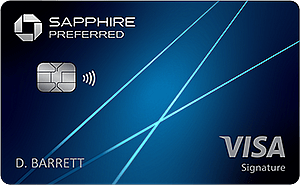
Chase Sapphire Preferred Review: Strong Option for Travel Rewards


The Bottom Line
4.7
The big sign-up bonus and high-value points have long made this a favorite among travelers.
Nerdwallet best-of awards
Nerdwallet best-of awards
Rates, fees and offers
Rates, fees and offers
Annual fee
$95
Rewards rate
1x-5x
Bonus offer
Earn 75,000 bonus points after you spend $5,000 on purchases in the first 3 months from account opening.
Intro APR
N/A
Ongoing APR
APR: 19.24%-27.49% Variable APR
Cash Advance APR: 28.49%, Variable
Penalty APR: Up to 29.99%
Balance transfer fee
Either $5 or 5% of the amount of each transfer, whichever is greater.
Foreign transaction fee
$0
More details from Chase
More details from Chase
- Earn 75,000 bonus points after you spend $5,000 on purchases in the first 3 months from account opening.
- Enjoy benefits such as 5x on travel purchased through Chase Travel℠, 3x on dining, select streaming services and online groceries, 2x on all other travel purchases, 1x on all other purchases
- Earn up to $50 in statement credits each account anniversary year for hotel stays through Chase Travel℠
- 10% anniversary points boost - each account anniversary you'll earn bonus points equal to 10% of your total purchases made the previous year.
- Count on Trip Cancellation/Interruption Insurance, Auto Rental Collision Damage Waiver, Lost Luggage Insurance and more.
- Complimentary DashPass which unlocks $0 delivery fees & lower service fees for a min. of one year when you activate by 12/31/27. Plus, a $10 promo each month on non-restaurant orders.
- Member FDIC

Pros and Cons
Pros
New cardholder bonus offer
Bonus categories
Primary rental car coverage
Flexible rewards redemption
Transfer partners
Cons
Has annual fee
Requires good/excellent credit
Complicated rewards
Detailed Review
For travelers, the $95-annual-fee Chase Sapphire Preferred® Card stands out as a versatile and valuable choice.
With this card, you can earn rewards — known as Ultimate Rewards® points — in a variety of ways and redeem them strategically for travel. Options include using your points to book travel directly through Chase, or transferring them to more than a dozen loyalty programs, including heavy hitters such as United Airlines, Southwest Airlines, Marriott and Hyatt. And it works hand-in-hand with other Chase cards that also earn Ultimate Rewards® points.
Overall, it might not be the easiest card to use — a Swiss Army knife compared with the butter knife that simpler cards are. But it’s long been a go-to card for travelers who delight in finding ways to reap big value from their rewards.
Chase Sapphire Preferred® Card: Basics
Card type: Travel.
Annual fee: $95.
Sign-up bonus: Earn 75,000 bonus points after you spend $5,000 on purchases in the first 3 months from account opening.
Ongoing rewards:
5 points per $1 spent on all travel purchased through Chase.
3 points per $1 spent on dining (including eligible delivery services and takeout).
3 points per $1 spent on select streaming services.
3 points per $1 spent on online grocery purchases (not including Target, Walmart and wholesale clubs).
2 points per $1 spent on travel not purchased through Chase.
1 point per $1 spent on other purchases.
Through September 2027: 5 points per $1 spent on Lyft.
Interest rate: The ongoing APR is 19.24%-27.49% Variable APR.
Foreign transaction fees: None.
Other benefits:
A $50 annual credit on hotel stays purchased through Chase.
Each account anniversary, cardmembers will earn bonus points equal to 10% of total purchases made the previous year.
Hotel and airline transfer partners.
Until Dec. 31, 2027: Complimentary DashPass membership. Terms apply; see details here.
Access to The Shops at Chase.
How much is a point worth?
The value of Chase Ultimate Rewards® points earned on this card depends on how you redeem them. Options include:
If you redeem for cash back or statement credit: Points are worth 1 cent apiece.
If you use them to book travel through Chase: Points can be worth as much as 1.75 cents apiece, although in most cases it will be less. See details about Chase's "Points Boost" feature below.
If you transfer them to an airline or hotel loyalty program: Value is dependent on how you redeem them within the partner program.
How 'Points Boost' works
Prior to June 23, 2025, points on this card were always worth 1.25 cents apiece when redeemed for travel booked through Chase. But the issuer has now switched to a system it refers to as "Points Boost." When you search for flights and hotel stays in Chase's travel portal, select bookings will be highlighted as eligible for Points Boost. On Points Boost bookings, points have a redemption value of 1.5 cents apiece (rising to 1.75 cents for select premium cabin airline tickets). Bookings not eligible for Points Boost have a redemption value of 1 cent.
Cardholders who applied for the Chase Sapphire Preferred® Card prior to June 23, 2025, have a two-year transition period before their points are fully subject to the Points Boost rules. For these cardholders, points earned before Oct. 26, 2025, will have a minimum redemption value of 1.25 cents until Oct. 26, 2027. (When you book a flight or hotel eligible for Points Boost, you will get the higher value; otherwise, you'll get a value of 1.25 cents.) For points earned after Oct. 26, 2025, regular Points Boost rules apply. And after Oct. 26, 2027, the Points Boost rules will apply to all redemptions, regardless of when the points were earned.
MORE NERDY PERSPECTIVES
 | This was the card that got me into the points-and-miles game. I opened it when planning my wedding and turned catering deposits into a big sign-up bonus to put toward a honeymoon in Maui. I probably didn't "optimize" points as well as I would now, but this card is forgiving for award travel newbies. Sara Rathner, writer/spokesperson, credit cards |
 | Sapphire Preferred lacks some of the flashy perks that competitors offer. But it’s often my recommendation to friends who want their first travel credit card (and a staple in my own wallet), thanks to its extensive travel protections, rewarding bonus categories and great transfer partners. Caitlin Mims, editor, credit cards and travel rewards |
 | Sapphire Preferred is the travel card I have on hand for transferring to Chase partners. I'm more than willing to pay the reasonable annual fee for the ability to transfer points to Hyatt, Southwest or Flying Blue when I need to. Meghan Coyle, editor, travel rewards |
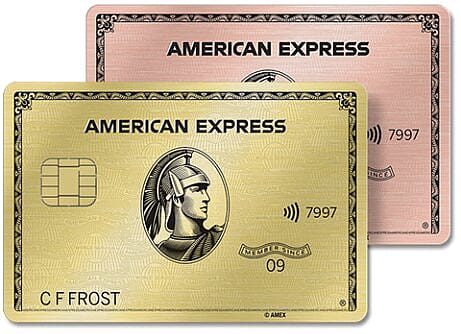
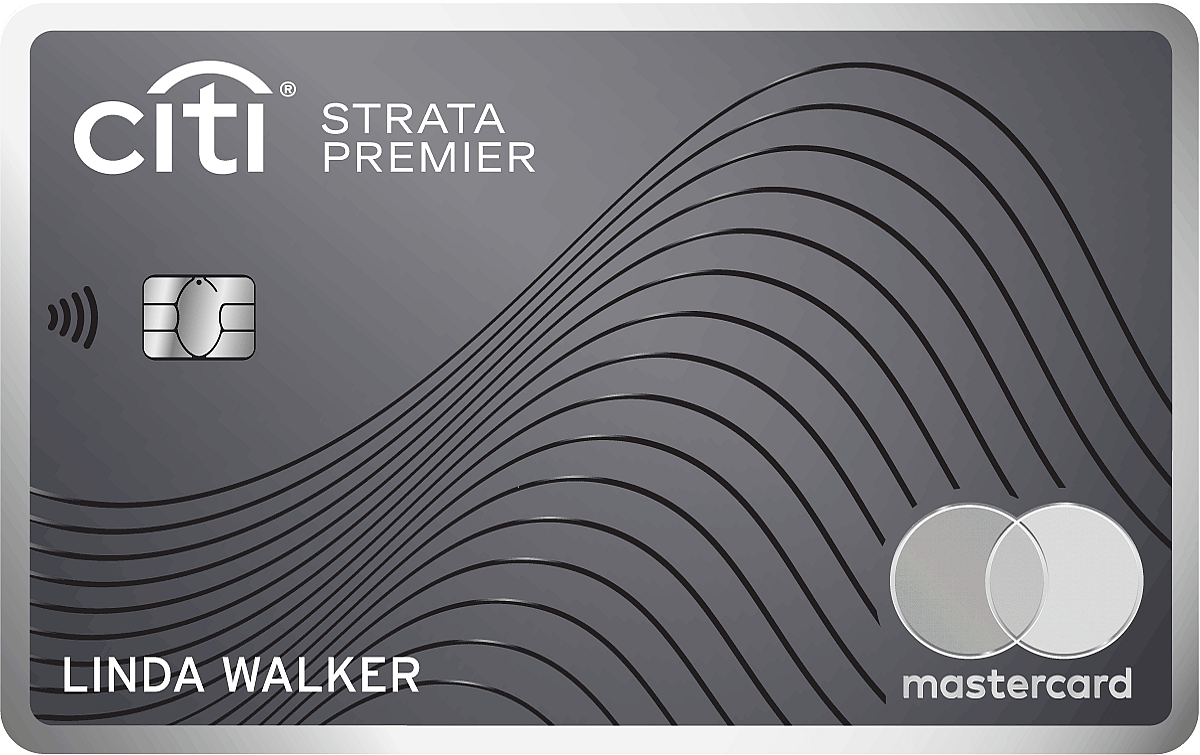
Compare to Other Cards
Vacation more, spend less. Subscribe to our free newsletter for inspiration, tips, and money-saving strategies – delivered straight to your inbox.
By signing up, you will receive newsletters and promotional content and agree to our Terms of Use and acknowledge the data practices in our Privacy Policy. You may unsubscribe at any time.
Benefits and Perks
The Chase Sapphire Preferred® Card offers versatility for travelers that's hard to find at a similar price point.
Solid sign-up bonus
The card features a generous sign-up bonus: Earn 75,000 bonus points after you spend $5,000 on purchases in the first 3 months from account opening.
Bonus rewards in multiple categories
You earn extra points in a bunch of spending categories, which is good, but also makes it complicated:
5 points per $1 spent on all travel purchased through Chase.
3 points per $1 spent on dining (including eligible delivery services and takeout).
3 points per $1 spent on select streaming services.
3 points per $1 spent on online grocery purchases (not including Target, Walmart and wholesale clubs).
2 points per $1 spent on travel not purchased through Chase.
1 point per $1 spent on other purchases.
Through September 2027: 5 points per $1 spent on Lyft.
Each account anniversary, cardmembers will earn bonus points equal to 10% of total purchases made the previous year.
Triple points on dining and streaming services is useful, while online grocery purchases may or may not be, depending on your lifestyle. Travel-related purchases are far more lucrative if you’re willing to book through Chase's travel portal. Even if you’re not, Chase’s definition of "travel" is fortunately broad; in addition to airfare and hotel stays, you can also earn bonus rewards on expenses like parking garage fees, bus fares and campgrounds. And these bonus rewards aren’t just available for travel and dining in the U.S., they can be earned worldwide.
Those earnings rates are, in effect, slightly higher because of the 10% anniversary bonus boost. For example, streaming services rewards effectively have a rewards rate of 3.1%. (The anniversary bonus applies to dollars spent, not points earned.)
And if you’re willing to use points to book travel through the Chase portal, your points can potentially be worth more. (See the "Points Boost" explanation above.)
Transfer partners
This card’s valuable 1:1 transfer partners make it a keeper, especially if you're willing to look for good redemption opportunities. Say you spot a nice deal with one of Chase’s airline transfer partners — maybe a flight that normally costs thousands of dollars going for a mere 50,000 miles plus taxes and fees. With this card, you have the ability to transfer your Chase Ultimate Rewards® points into that airline’s loyalty program and pounce on that deal.
Here are the transfer partners:
Full list of Chase transfer partners
Airlines
Aer Lingus (1:1 ratio).
Air Canada (1:1 ratio).
Air France-KLM (1:1 ratio).
British Airways (1:1 ratio).
Iberia (1:1 ratio).
JetBlue (1:1 ratio).
Singapore (1:1 ratio).
Southwest (1:1 ratio).
United (1:1 ratio).
Virgin Atlantic (1:1 ratio).
Hotels
Hyatt (1:1 ratio).
IHG (1:1 ratio).
Marriott (1:1 ratio).
Wyndham (1:1 ratio).
Complementary cards
The Chase Sapphire Preferred® Card is an excellent companion to other cards in the Chase Ultimate Rewards® family. That’s because you can move points to this card from your other cards that earn Chase Ultimate Rewards®, potentially opening up more redemption options.
Consider the Chase Freedom Flex®. It earns 5% cash back on rotating quarterly categories (on up to the first $1,500 in purchases, upon activation) in addition to rewards for other spending. You could potentially move the rewards you earn on that card to the Chase Sapphire Preferred® Card. From there, you could get more value out of your points by transferring them at a 1:1 ratio to other loyalty programs or by redeeming for "Points Boost" travel booked through Chase. (See our comparison article on Flex versus Sapphire Preferred.)
» MORE: What is the ‘Chase Trifecta’?
The Chase Sapphire Preferred® Card and its more upscale sibling, the Chase Sapphire Reserve®, have had their rewards, perks and bonuses tweaked over the years as the issuer has worked to keep them at the top of travelers' wallets. See our Chase Sapphire cards news page for a rundown.
Sapphire Preferred vs. Sapphire Reserve
If you have your eye on the Chase Sapphire Preferred® Card, you might also be checking out the pricier Chase Sapphire Reserve®. A premium travel card, the Chase Sapphire Reserve® comes with an annual fee of $795 and several rich perks and benefits, including airline lounge access and an annual $300 travel credit. If you travel enough, going for the more expensive option could be well worth the cost.
Read NerdWallet’s full comparison of these two cards to learn more about the differences.
Here’s a look at how the cards stack up on their major features:
| Empty Table Header | Chase Sapphire Preferred® Card | Chase Sapphire Reserve® |
|---|---|---|
Annual fee | $95. | $795. |
Sign-up bonus | Earn 75,000 bonus points after you spend $5,000 on purchases in the first 3 months from account opening. | Earn 150,000 bonus points after you spend $6,000 on purchases in the first 3 months from account opening. |
Rewards |
|
|
Other benefits |
|
|
Learn more |
Drawbacks and Considerations
It's complicated
All those reward categories with different rates, an anniversary bonus and variable values for point redemptions through Chase? Dizzying.
Additionally, the best rewards and redemptions are tightly tied to using the Chase portal to book travel or to transferring points to a different loyalty program, which is more to figure out. And to really boost your points, many people will use the card in conjunction with other Chase cards.
Phew.
In the end, making the most of the Chase Sapphire Preferred® Card requires a learning curve and an ongoing juggling act that some consumers simply don’t want to deal with. If you're interested in earning travel rewards, but want something a little easier to use, the $95-annual-fee Capital One Venture Rewards Credit Card has a much simpler rewards structure.
You'll earn 5 miles per dollar on hotels, vacation rentals and car rentals booked through Capital One Travel. Other purchases earn 2 miles per dollar. But like the Chase Sapphire Preferred® Card, there's multiple ways to redeem rewards with this card, including transferring them to travel partners. If you want something even more straightforward, consider a cash-back credit card.
Few premium perks
The Chase Sapphire Preferred® Card is an excellent card for travelers in general. It even has a few travel perks, such as primary rental car insurance, trip cancellation/interruption insurance and lost luggage insurance.
But for those who love to travel in style, the more expensive Chase Sapphire Reserve® could be a better fit.
The Chase Sapphire Reserve®, with an annual fee of $795, comes with an annual $300 travel credit and Priority Pass Select access, which gets you into several airport lounges for free and includes meal credits for certain airport eateries. It comes with a credit for TSA PreCheck or Global Entry (or NEXUS), as well as hundreds of dollars a year in other credits.
To see how these cards compare to the competition, check out NerdWallet's list of best credit cards to get.
How To Decide If It's Right For You
Using the Chase Sapphire Preferred® Card for simple rewards — say, earning cash back — would be akin to buying a top-of-the-line multipurpose tool just to use the nail file. The card can offer outstanding value, but to fully appreciate it, a traveler needs to take advantage of its versatility. If that appeals to you, this card is an excellent choice.
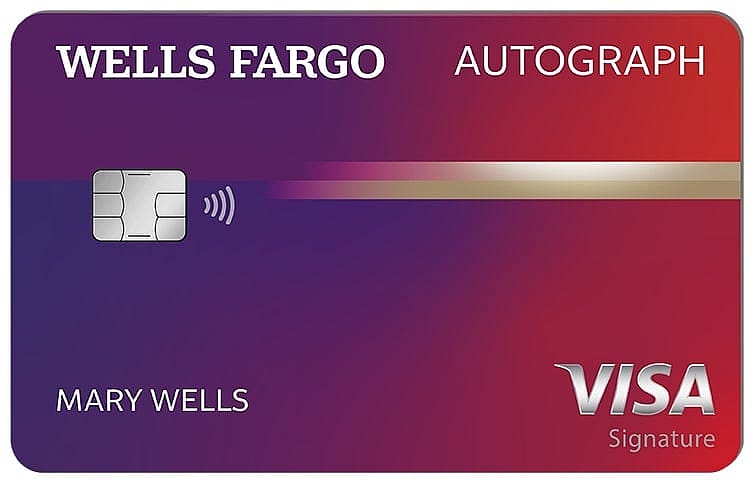
3X points in a wide range of categories
The Wells Fargo Autograph® Card gives you 3 points per dollar on travel and dining — but also on transit, on gas and EV charging, on popular streaming services and on select phone plans. Points are flexible and can be redeemed for travel or statement credit, among other options. It comes with a new-cardmember bonus offer, and the annual fee is $0.
Looking For Something Else?
Methodology
NerdWallet reviews credit cards with an eye toward both the quantitative and qualitative features of a card. Quantitative features are those that boil down to dollars and cents, such as fees, interest rates, rewards (including earning rates and redemption values) and the cash value of benefits and perks. Qualitative factors are those that affect how easy or difficult it is for a typical cardholder to get good value from the card. They include such things as the ease of application, simplicity of the rewards structure, the likelihood of using certain features, and whether a card is well-suited to everyday use or is best reserved for specific purchases. Our star ratings serve as a general gauge of how each card compares with others in its class, but star ratings are intended to be just one consideration when a consumer is choosing a credit card. Learn how NerdWallet rates credit cards.
Frequently asked questions
What are the rewards on the Chase Sapphire Preferred?
What are the rewards on the Chase Sapphire Preferred?
Rewards are: 5 points per $1 spent on all travel booked through Chase, 3 points per $1 spent on dining (including eligible delivery services and takeout), 3 points per $1 spent on select streaming services, 3 points per $1 spent on online grocery purchases (not including Target, Walmart and wholesale clubs), 2 points per $1 spent on travel not booked through Chase and 1 point per $1 spent on other purchases. Occasionally, the issuer may offer bonus rewards in specific categories for a limited time.
How much are points worth on the Chase Sapphire Preferred?
How much are points worth on the Chase Sapphire Preferred?
That depends on how you redeem them. If you redeem them for cash back, they’re worth 1 cent apiece. If you use them to book travel through Chase — such as for airfare or hotel stays — you may be able to get more value through the "Points Boost" feature. You can also transfer points to about a dozen airline and hotel loyalty programs; the value you get depends on how you redeem them in those programs.
Do rewards on the Chase Sapphire Preferred expire?
Do rewards on the Chase Sapphire Preferred expire?
As long as your account is open, your points won’t expire. There’s no limit to the number of points you can earn.
What’s the difference between Sapphire Preferred and Sapphire Reserve?
What’s the difference between Sapphire Preferred and Sapphire Reserve?
The Chase Sapphire Reserve® has a much higher annual fee — $795, compared with $95 for the Chase Sapphire Preferred® Card — but it offers richer rewards and more perks. Those perks include an annual $300 travel credit that offsets a big slice of the annual fee. See our comparison article for more details.
What credit score do I need to get the Chase Sapphire Preferred?
What credit score do I need to get the Chase Sapphire Preferred?
If you have good to excellent credit and you’re in line with Chase’s 5/24 rule, you could be approved for the Chase Sapphire Preferred® Card. Good credit is generally defined as a FICO of 690 or higher, although issuers also take into account your income, existing debts and other information.
About the authors

Gregory Karp
Senior Writer
Claire Tsosie
Managing Editor
