

Every time.
We believe everyone should be able to make financial decisions with confidence. While we don't cover every company or financial product on the market, we work hard to share a wide range of offers and objective editorial perspectives.
So how do we make money? Our partners compensate us for advertisements that appear on our site or when you click to or take an action on their website. This compensation helps us provide tools and services - like free credit score access and monitoring. With the exception of mortgage, home equity and other home-lending products or services, partner compensation is one of several factors that may affect which products we highlight and where they appear on our site. Other factors include your credit profile, product availability and proprietary website methodologies.
However, these factors do not influence our editors' opinions or ratings, which are based on independent research and analysis. Our partners cannot pay us to guarantee favorable reviews. Here is a list of our partners.
Best College Student Credit Cards of October 2026


The best student credit cards set you on a path to building strong credit — something that might not seem pressing while you're still in school but will matter a lot down the road. Many college student credit cards are specifically designed for those new to credit, but simply being a student doesn't guarantee approval. Other options include secured credit cards and cards that build your credit with baby steps.
Read MoreShow Less
What matters most in a college student credit card
By and large, college students are just getting started with credit. So the most important considerations in choosing a student credit card are not rewards and perks, but rather how flexible the card issuer is with approvals and how well the card helps you build a strong credit profile.
For an easier credit journey, look for a card that doesn’t require an established credit history to apply, doesn’t charge an annual fee and reports payments to all three major credit bureaus (TransUnion, Equifax and Experian). The ability to apply with no credit history removes one of the biggest hurdles to getting a card. A card with no annual fee can be kept open long-term, maximizing its benefit to your credit profile. Credit bureaus are companies that collect the information used to calculate credit scores, which will open up opportunities in the future.
In general, credit cards designed for college students are for building credit from scratch, not for rebuilding credit after past setbacks like missed payments. If you have bad credit rather than no credit or “thin credit,” look to a card specifically designed for rebuilding. And, of course, if you're not a student at all, you probably won't qualify. (Student cards are generally available to those in college, trade school or other post-secondary education or training.)
Starting the clock on your credit history as soon as possible can position you for more financial opportunities after graduation. If you want to rent an apartment, save on insurance and utilities, or get a car loan, you’ll have an easier and cheaper time doing so if you’ve taken the time to establish good credit.
How NerdWallet chose these college student credit cards
The credit cards we chose for this page are either specifically designed for college students or have features that make them a good starting point for building credit. We prioritized cards that are especially friendly to those with no credit or a thin file, since some issuers do require a pre-existing credit history even for student cards. Learn more about our picks or see more about our methodology.
Expert tip: Choosing a student credit card
Melissa Lambarena, credit cards writer: "While fees and credit-building help are the priority features of a credit-building card, you should still weigh the value of rewards and any other perks. If the choice is between two credit cards that both hit the mark on fees and accessibility, lean toward the one with rewards that best align with your spending. Any savings you can get in the form of rewards is a win on a student budget. If you’re eligible, you may even find a card that checks all of the boxes. Also, if you have plans to study abroad, seek a card with no foreign transaction fees that works on the Visa or Mastercard network."
Our pick for: Going out & staying in
 Apply Nowon Capital One's websiteon Capital One's websiteAnnual fee$0Minimum depositN/ARecommended credit scoreRegular APR18.74%-28.74% Variable APRRewards rate1%-8%CashbackIntro offer$50
Rewards breakdown
8%Cash back on entertainment purchases when you book through the Capital One Entertainment portal.5%Cash back on hotels, vacation rentals and rental cars booked through Capital One Travel.3%Cash back on dining.3%Cash back on entertainment.3%Cash back on popular streaming services.3%Cash back at grocery stores (excluding superstores like Walmart® and Target®).1%Cash back on all other purchases.Card details
- Earn unlimited 3% cash back at grocery stores (excluding superstores like Walmart® and Target®), on dining, entertainment and popular streaming services, plus 1% on all other purchases
- Early Spend Bonus: Earn $50 when you spend $100 in the first three months
- Enjoy peace of mind with $0 Fraud Liability so that you won't be responsible for unauthorized charges
- Enjoy no annual fee, foreign transaction fees, or hidden fees
- Earn unlimited 5% cash back on hotels, vacation rentals and rental cars booked through Capital One Travel
- Earn up to $500 a year by referring friends and family when they're approved for a Capital One credit card
- Earn 8% cash back on entertainment purchases when you book through the Capital One Entertainment portal
- Build your credit with responsible card use
- Whether you're at a 4-year university, community college or other higher education institution, this card might be an option for you
- Top rated mobile app
- View Rates & Fees
NerdWallet's take
The Capital One Savor Student Cash Rewards Credit Card is an ideal dinner-and-a-movie card, whether that means going out (3% cash back on dining and entertainment) or staying in (3% cash back at grocery stores and on popular streaming services). It offers the same rewards, in fact, as the non-student Savor, which is one of the most popular cards on the market. And with a $0 annual fee, you can hold onto this card for the long term.
Read full reviewPros$0 annual fee.
Rewards: 8% cash back on entertainment purchases when you book through the Capital One Entertainment portal; 3% cash back on dining, entertainment purchases, eligible streaming services and purchases at grocery stores; and 1% back on other purchases.
Bonus offer: Early Spend Bonus: Earn $50 when you spend $100 in the first three months.
No foreign transaction fees.
No upgrading or actions are necessary after graduation; you’ll keep the same card and terms.
ConsKeeping track of bonus categories can be challenging when you’re just getting started with credit.
No late payment forgiveness, unlike with some other options.
2026 Best credit card for college students
Annual fee$0Minimum depositN/ARecommended credit scoreRegular APR16.74%-25.74% Variable APRRewards rate1%-2%CashbackIntro offerCashback Match™Rewards breakdown
2%Cash back at Gas stations on up to $1,000 in combined purchases each quarter, automatically.2%Cash back at Restaurants on up to $1,000 in combined purchases each quarter, automatically.1%Cash back on all other purchases.Card details
- 0% intro APR on purchases for 6 months, then the standard variable purchase APR of 16.74% - 25.74% applies
- INTRO OFFER: Unlimited Cashback Match for all new cardmembers. Discover will automatically match all the cash back you’ve earned at the end of your first year! There’s no minimum spending or maximum rewards. You could turn $50 cash back into $100. Or turn $100 cash back into $200
- Earn 2% cash back at Gas Stations and Restaurants on up to $1,000 in combined purchases each quarter, automatically. You'll still earn unlimited 1% cash back on all other purchases
- Redeem cash back for any amount
- No annual fee
- Terms and conditions apply
- View Rates & Fees
NerdWallet's take
The Discover it® Student Chrome has long been a NerdWallet favorite because it provides an excellent introduction to credit for busy college students. No, the cash back rates aren't the highest you can earn, but the rewards program doesn't require any maintenance (unlike on Discover's other student card). There's no annual fee, students without a credit history are welcome to apply; there's forgiveness for your first late payment; and you can keep the card long-term. Discover's "regular" non-student Chrome card isn't much to write home about, but the student version checks all the boxes.
Read full reviewPros$0 annual fee.
Rewards: 2% cash back at restaurants and gas stations, on up to $1,000 in combined purchases per quarter, and 1% cash back on all other purchases. (Unlike with Discover's other student card, you don't have to “activate” bonus rewards each quarter.)
INTRO OFFER: Unlimited Cashback Match for all new cardmembers. Discover will automatically match all the cash back you’ve earned at the end of your first year! There’s no minimum spending or maximum rewards. You could turn $50 cash back into $100. Or turn $100 cash back into $200.
0% intro APR on Purchases for 6 months, and then the ongoing APR of 16.74%-25.74% Variable APR.
No credit history required to apply.
First late payment is forgiven.
No upgrading or actions are necessary after graduation; you’ll keep the same card and terms.
ConsYou have to wait a full year to collect your bonus.
There are no foreign transaction fees, but Discover isn’t as widely accepted overseas.
Our pick for: Rotating bonus categories
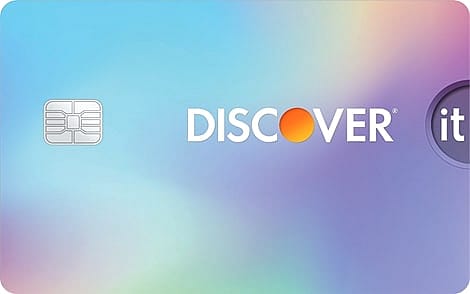 Apply Nowon Capital One's websiteon Capital One's websiteAnnual fee$0Minimum depositN/ARecommended credit scoreRegular APR16.74%-25.74% Variable APRRewards rate1%-5%CashbackIntro offerCashback Match™
Rewards breakdown
5%Cash back on everyday purchases at different places you shop each quarter like grocery stores, restaurants, gas stations, and more, up to the quarterly maximum when you activate.1%Cash back on all other purchases.Card details
- 0% intro APR on purchases for 6 months, then the standard variable purchase APR of 16.74% - 25.74% applies
- INTRO OFFER: Unlimited Cashback Match for all new cardmembers. Discover will automatically match all the cash back you’ve earned at the end of your first year! There’s no minimum spending or maximum rewards. You could turn $50 cash back into $100. Or turn $100 cash back into $200
- Earn 5% cash back on everyday purchases at different places you shop each quarter like grocery stores, restaurants, gas stations, and more, up to the quarterly maximum when you activate. Plus, earn unlimited 1% cash back on all other purchases
- Redeem cash back for any amount
- No annual fee
- Terms and conditions apply
- View Rates & Fees
NerdWallet's take
The primary downside to the Discover it® Student Cash Back is that the rewards program requires ongoing maintenance, which might be more than you want to deal with when you're just getting started with credit and have a busy student schedule to manage. If you're up for the task of tracking and activating bonus categories, though, you'll benefit from high cash back in common spending categories. Students without a FICO credit score history are welcome to apply; there's forgiveness for your first late payment; and with no annual fee, it's a card you can hold onto for the long term.
Read full reviewPros$0 annual fee.
Rewards: 5% cash back in rotating categories that you activate, on up to $1,500 in spending per quarter; other spending earns 1% cash back.
INTRO OFFER: Unlimited Cashback Match for all new cardmembers. Discover will automatically match all the cash back you’ve earned at the end of your first year! There’s no minimum spending or maximum rewards. You could turn $50 cash back into $100. Or turn $100 cash back into $200.
A 0% intro APR on Purchases for 6 months, and then the ongoing APR of 16.74%-25.74% Variable APR.
A credit history isn’t required to apply.
The first late payment is forgiven.
No upgrading or actions are necessary after graduation; you’ll keep the same card and terms.
ConsTracking and activating quarterly bonus categories can be challenging when you’re just getting started with credit.
Bonus categories may not align with your spending habits as a student.
You have to wait a full year to collect your bonus.
There are no foreign transaction fees, but Discover isn’t as widely accepted overseas — something to keep in mind if you're studying abroad.
Our pick for: No credit history + Chase banking customers
Annual fee$0Minimum depositN/ARecommended credit scoreRegular APR18.24%-27.74% Variable APRRewards rate1.5%CashbackIntro offer$25Rewards breakdown
1.5%Cash back on all purchases.Card details
- Increase your approval chances - Having a Chase checking or savings account with a balance of at least $250 will increase your chances of getting approved for Chase Freedom Rise®
- Earn Cash Back - With Chase Freedom Rise®, you can establish credit while earning 1.5% cash back on all purchases. Cash Back rewards do not expire as long as your account is open and there is no minimum to redeem for cash back.
- Earn a $25 statement credit after signing up for automatic payments within the first three months of opening your account. With automatic payments, just pick a date and dollar amount to make sure your Credit Card gets paid on time.
- Credit Limit Increase - As a Freedom Rise® cardmember, you'll be evaluated for a credit line increase in as soon as 6 months. Your credit line is the maximum amount of money you can spend on your Freedom Rise® Card
- Free Credit Score - Track your credit score and learn how to build it with Chase Credit Journey.
- No Annual Fee - You won't have to pay an annual fee for all the great features that come with your Freedom Rise® Card.
- Member FDIC
- View Rates & Fees
NerdWallet's take
Although the Chase Freedom Rise® isn't specifically marketed as a "student" card, it's a great option for students looking for a way to get started building credit. You don't need a credit history to apply, and you can boost your chances of approval by opening a bank account with Chase. Once you have your card, you'll be evaluated periodically for credit limit increases or upgrades, and there's even an incentive for setting up automatic payments so that you never miss your due date and incur a late fee (which is in incentive in itself). All the while, you're earning rewards while paying no annual fee.
Read full reviewPros$0 annual fee.
Rewards: 1.5% cash back on purchases.
Bonus offer: Earn a $25 statement credit after signing up for automatic payments within the first three months of opening your account.
No credit history required to apply.
Accounts automatically evaluated every year to potentially upgrade to another card within Chase's portfolio.
You can be evaluated for a credit limit increase in as soon as six months.
ConsYou can’t qualify with bad credit.
Your odds of approval are higher if you have, or are willing to open, a Chase checking or savings account, but the $250 balance requirement may be an obstacle on a student budget.
No late payment forgiveness, unlike with some other options.
Foreign transaction fees apply, so studying or traveling abroad with this card is expensive.
Our pick for: Travel rewards (for established credit)
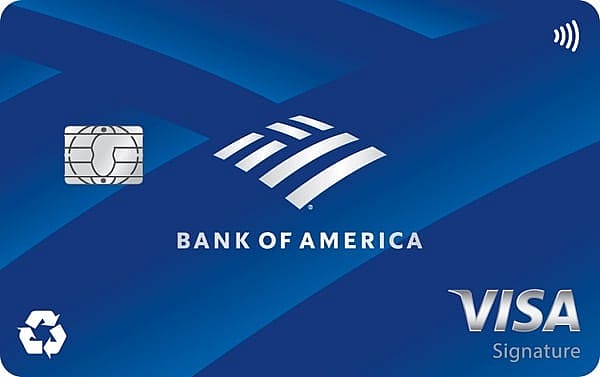 Apply Nowon Bank of America's websiteon Bank of America's websiteAnnual fee$0Minimum depositN/ARecommended credit scoreRegular APR17.74%-27.74% Variable APRBalance transfer intro APR0% intro APR on Balance Transfers for 15 billing cycles for any balance transfers made in the first 60 daysRewards rate1.5x-3xPointsIntro offer25,000points
Rewards breakdown
3xPoints per $1 spent on travel purchases booked through BofA Travel.1.5xPoints per $1 spent on everyday purchases.Card details
- 25,000 online bonus points after you make at least $1,000 in purchases in the first 90 days of account opening - that can be a $250 statement credit toward travel purchases.
- Earn unlimited 1.5 points per $1 spent on everyday purchases, with no annual fee and no foreign transaction fees and your points don't expire as long as your account remains open.
- Earn 3 points per $1 spent on travel purchases booked through BofA Travel.
- Turn daily purchases into everyday wins. Simply use your Travel Rewards credit card for the things you already buy - from gifts to getaways - BofA Rewards™ members earn more points.
- Use your card to book your trip how and where you want - you're not limited to specific websites with blackout dates or restrictions.
- Redeem points for a statement credit to pay for travel or dining purchases, such as flights, hotel stays, car and vacation rentals, baggage fees, and also at restaurants, including takeout.
- 0% Intro APR for 15 billing cycles for purchases, and for any balance transfers made in the first 60 days. After the Intro APR offer ends, a Variable APR that’s currently 17.74% - 27.74% will apply. A 3% Intro balance transfer fee will apply for the first 60 days your account is open. After the Intro balance transfer fee offer ends, the fee for future balance transfers is 5%. Balance transfers may not be used to pay any account provided by Bank of America.
- When handled responsibly, a credit card can help you build your credit history, which could be helpful when looking for an apartment, a car loan, and even a job.
- This offer may not be available elsewhere if you leave this page. You can take advantage of this offer when you apply now.
NerdWallet's take
Student credit cards from Bank of America® are largely identical to the non-student versions the bank offers to, well, non-students. That includes their rewards, bonus offers and intro APR promotions. The catch is that you need to have already started building credit to qualify for them. If you have, the Bank of America® Travel Rewards credit card for Students is a good option for simple, straightforward travel rewards with no annual fee. Every purchase earns points, and those points can be used to pay for a wide variety of travel expenses.
Read full reviewPros$0 annual fee.
Rewards: 1.5 points per dollar on spending (rising to 3 points per dollar on eligible travel booked through the issuer).
Bonus offer: 25,000 online bonus points after you make at least $1,000 in purchases in the first 90 days of account opening - that can be a $250 statement credit toward travel purchases.
A 0% Intro APR for 15 billing cycles for purchases, and for any balance transfers made in the first 60 days. After the Intro APR offer ends, a Variable APR that’s currently 17.74%-27.74% will apply.
No foreign transaction fees.
ConsGood credit is required to qualify, posing a significant roadblock to credit beginners.
If you do have good credit, you can potentially qualify for more lucrative travel credit cards if you’re willing to pay an annual fee.
Minimum redemption requirements apply.
No late payment forgiveness, unlike with some other options.
After graduation the card retains its terms, but if you want to remove the “student” label, you must directly request it.
Our pick for: Accessibility + travel rewards
Annual fee$0Minimum depositN/ARecommended credit scoreRegular APR26.99%-29.99% Fixed APRRewards rate3%CashbackIntro offerN/ARewards breakdown
3%Cash back on air travel purchasesCard details
- No annual fee. Ever.
- Apply in under 5 minutes, get a quick decision
- $350 and up credit limit
- 26.99%-29.99% APR remains fixed for life of the card
- Earn unlimited 3% cash back on airfare.
- Pay on time to skip interest.
- We welcome everyone new to credit
- Globally friendly. Apply without SSN. If you have an SSN you must provide it.
- Neu Card issued by Cross River Bank, Member FDIC, pursuant to a license from Visa U.S.A. Inc.
NerdWallet's take
Although the Neu Card 2 offers rewards (and they aren't bad if you fly regularly), the card's primary value proposition is accessibility for those who can't qualify for other options. You don't need a credit history to apply, and there's no security deposit requirement. International students may even be able to qualify without a Social Security number. The annual fee is $0, so you can hold onto the card for the long term for a robust credit history. (Holding onto it or closing it are pretty much your only options, as there is no good upgrade path.)
Read full reviewPros$0 annual fee.
3% cash back on most air travel purchases.
No credit history required.
No security deposit required.
You may be able to qualify without a Social Security number.
ConsNo upgrade path to a better card when you're ready. (The company's other card — the Neu Card 1 — carries a monthly fee.)
Aside from air travel, there are no other ongoing rewards.
If you do have a Social Security number or ITIN, you have better options.
Our pick for: No hard credit check
Annual fee$0 intro first year, $25 thereafter†Minimum deposit$100Recommended credit scoreRegular APR27.49% Variable†Rewards rateNoneIntro offerN/ACard details
- With no credit check or prior credit required, anyone can start building credit. Fund your card with a minimum security deposit of $100 and use it anywhere Visa® is accepted in the U.S. Build credit by making on-time payments and maintaining a low credit utilization ratio. Every on-time payment helps build credit history.
- If you don’t have the $100 security deposit today, consider a Credit Builder Account² starting at $25 a month⁴ . Consistent, on-time payments help you build credit and build savings to secure the secured Self Visa® Credit Card³.
- †$0 annual fee for the first year only, $25 annual fee thereafter. Variable APR of 27.49%. Offer valid for new customers only.
- *The secured Self Visa®Credit Card is issued by Lead Bank, Sunrise Banks, N.A., or First Century Bank, N.A., each Member FDIC.
- ²Credit Builder Accounts & Certificates of Deposit made/held by Lead Bank, Sunrise Banks, N.A., First Century Bank, N.A., each Member FDIC. Subject to credit approval.
- ³Qualification for the secured Self Visa® Credit Card is based on meeting eligibility requirements, including income and expense requirements and establishment of security interest. Criteria Subject to change.
- ⁴$25/mo, 24 mos, 15.92% APR; $35/mo, 24 mos, 15.69% APR; $48/mo, 24 mos, 15.51% APR; $150/mo, 24 mos, 15.82% APR. See self.inc/pricing
NerdWallet's take
We'll start by acknowledging that The secured Self Visa® Credit Card doesn't offer the kinds of rewards and benefits that some of the other cards on this page do. It also charges an annual fee and lacks the straightforward upgrade options of a card from a major issuer. But it's also more accessible than the others, and when you're struggling simply to get on the credit-building path, accessibility can be the most important feature. It's a secured card, meaning you have to provide a cash security deposit, but the minimum deposit is lower than what most secured cards require. Especially important: No credit history is required, and there is no credit check.
Read full reviewProsThe $100 minimum security deposit is low compared with other secured cards.
No credit check.
No credit history required.
ConsAnnual fee of $0 intro first year, $25 thereafter†.
No bonus offer or rewards.
There’s an upgrade path to an unsecured credit card, but it’s not as seamless as what other cards offer.
The card can’t be used internationally, so you’ll need an alternative payment method if you’re studying or traveling abroad.
No late payment forgiveness.
Our pick for: International students
Annual fee$0Minimum depositN/ARecommended credit scoreRegular APR19.50%-39.50% Variable APRRewards rate1%-10%CashbackIntro offer$15Rewards breakdown
1%unlimited cashback on all spends.Card details
- $15 Welcome Points after completion of tasks and milestone activities detailed in the application process.
- $100+ Overall Annual Benefits.
- 1% Unlimited Cashback on all spends.
- Up to 10% Cashback on 7k+ merchants.
- No SSN or prior credit history required.
- Build credit history from Day 1 in the US.
NerdWallet's take
International students who want to build credit in the U.S. encounter a potential roadblock on nearly every credit card application: You typically need a Social Security number to apply. The Zolve Classic Credit Card offers a way around that obstacle by allowing you to apply with alternative documentation such as a passport, visa or Form I-20. There’s no credit history requirement, nor do you have to provide a security deposit. The card has no annual fee and even offers a modest rewards program. There’s no upgrade option, though, and if you do have a Social Security number, far better options exist.
Read full reviewPros$0 annual fee.
No credit history required to apply.
No security deposit required.
Potentially qualify without a Social Security number (you can apply with a passport, visa or alternative documents).
Modest rewards.
ConsNo clear upgrade path.
No bonus offer.
Potentially high APR.
Our pick for: Flat-rate cash back
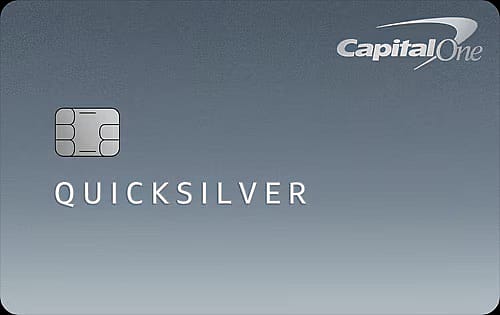 Apply Nowon Capital One's websiteon Capital One's websiteAnnual fee$0Minimum depositN/ARecommended credit scoreRegular APR18.74%-28.74% Variable APRRewards rate1.5%-5%CashbackIntro offer$50
Rewards breakdown
5%Cash back on hotels, vacation rentals and rental cars booked through Capital One Travel.1.5%Cash back on every purchase, every day.Card details
- Earn unlimited 1.5% cash back on every purchase, every day
- Early Spend Bonus: Earn $50 when you spend $100 in the first three months
- Enjoy peace of mind with $0 Fraud Liability so that you won't be responsible for unauthorized charges
- Enjoy no annual fee, foreign transaction fees, or hidden fees
- Lock your card in the Capital One Mobile app if it's misplaced, lost or stolen
- Earn up to $500 a year by referring friends and family when they're approved for a Capital One credit card
- Build your credit with responsible card use
- Whether you're at a 4-year university, community college or other higher education institution, this card might be an option for you
- Top rated mobile app
- View Rates & Fees
NerdWallet's take
We've found that when someone is just getting started with credit cards, simpler is better. The Capital One Quicksilver Student Cash Rewards Credit Card is an excellent pick for that reason. There are no hoops to jump through — no bonus categories to keep track of, no activation requirements, no caps on how much spending is eligible for certain rewards. Use the card, get 1.5% cash back on every purchase, pay your bill in full every month, and you build credit as you go. The annual fee is $0, so you can keep on using the card long after graduation.
Read full reviewProsA $0 annual fee.
Rewards: 1.5% cash back on purchases.
Bonus offer: Early Spend Bonus: Earn $50 when you spend $100 in the first three months.
No foreign transaction fees.
No upgrading or actions are necessary after graduation; you’ll keep the same card and terms.
ConsIf you’re willing to track bonus categories, other student cards can offer higher rates on certain spending.
There's no late payment forgiveness, unlike with some other options.
Compare the Best College Student Credit Cards
| Credit card | Rating | Annual fee | Minimum deposit | Rec. credit score Rec. credit score | Learn more |
|---|---|---|---|---|---|
| Capital One Savor Student Cash Rewards Credit Card Apply Nowon Capital One's website on Capital One's website | Best for Going out & staying in | $0 | N/A | 630-689 (Fair) | Apply Nowon Capital One's website on Capital One's website |
2026 Best credit card for college students 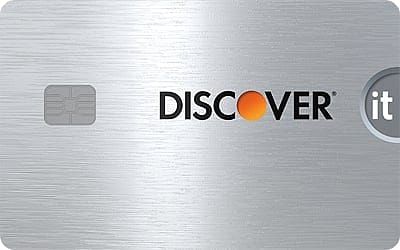 Discover it® Student Chrome Discover it® Student ChromeApply Nowon Capital One's website on Capital One's website | Best for Simplicity and value | $0 | N/A | 630-689 (Fair) | Apply Nowon Capital One's website on Capital One's website |
| Discover it® Student Cash Back Apply Nowon Capital One's website on Capital One's website | Best for Rotating bonus categories | $0 | N/A | 630-689 (Fair) | Apply Nowon Capital One's website on Capital One's website |
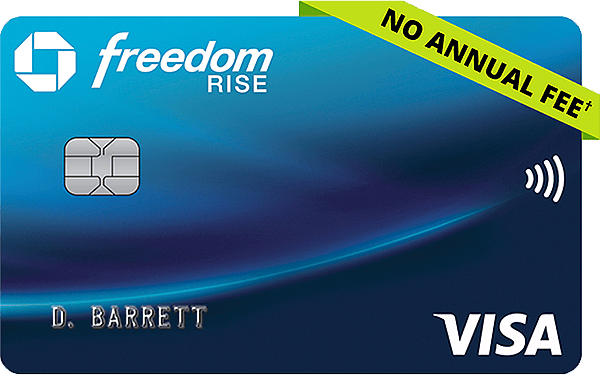 Chase Freedom Rise® Chase Freedom Rise®Apply Nowon Chase's website on Chase's website | Best for No credit history + Chase banking customers | $0 | N/A | 690-850 (Good - Excellent) | Apply Nowon Chase's website on Chase's website |
| Bank of America® Travel Rewards credit card for Students Apply Nowon Bank of America's website on Bank of America's website | Best for Travel rewards (for established credit) | $0 | N/A | 690-850 (Good - Excellent) | Apply Nowon Bank of America's website on Bank of America's website |
 Neu Card 2 Neu Card 2Apply Nowon Neu's website on Neu's website | Best for Accessibility + travel rewards | $0 | N/A | 350-850 (Poor - Excellent) | Apply Nowon Neu's website on Neu's website |
 The secured Self Visa® Credit Card The secured Self Visa® Credit CardApply Nowon Self's website on Self's website | Best for No hard credit check | $0 intro first year, $25 thereafter† | $100 | 300-607 (Poor) | Apply Nowon Self's website on Self's website |
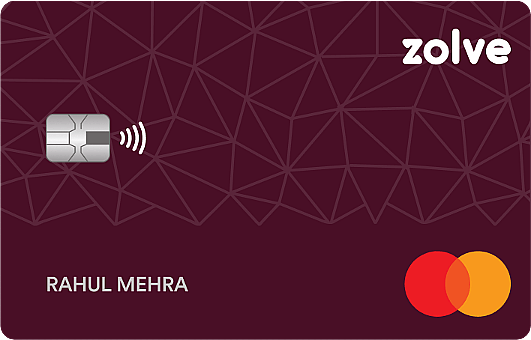 Zolve Classic Credit Card Zolve Classic Credit CardApply Nowon Zolve's website on Zolve's website | Best for International students | $0 | N/A | 350-850 (Poor - Excellent) | Apply Nowon Zolve's website on Zolve's website |
| Capital One Quicksilver Student Cash Rewards Credit Card Apply Nowon Capital One's website on Capital One's website | Best for Flat-rate cash back | $0 | N/A | 630-689 (Fair) | Apply Nowon Capital One's website on Capital One's website |
More about our picks: Best college student credit cards
The primary purpose of opening a credit card while you're still a student is to start building credit. Getting a credit card specifically designed for (and marketed to) students makes perfect sense, but it's not the only option. In addition to dedicated student cards, young people can look to secured cards as well as cards from alternative issuers that base approval decisions on more than just traditional credit scoring factors, or that mitigate risk by limiting how the card can be used. Regardless of the type of card, applicants generally need to have a source of income to be approved. That can be a job or even an allowance from parents.
None of the cards on this page will be the hands-down best card for every student. But each of them is, in our opinion, the best option for a specific kind of consumer. This page is not a ranked list ordered from best to worst; it's a roundup of all the best options. Below, we dive a little deeper on the cards featured on this page — what makes them stand out and what kind of cardholder would benefit most from them. If you're still unsure about your decision, this additional context may help.
BEST COLLEGE STUDENT CREDIT CARDS OF OCTOBER 2026
Discover it® Student Chrome: Our pick for simplicity and value
Discover it® Student Cash Back: Our pick for rotating bonus categories
Capital One Savor Student Cash Rewards Credit Card: Our pick for going out & staying in
Capital One Quicksilver Student Cash Rewards Credit Card: Our pick for flat-rate cash back
Bank of America® Travel Rewards credit card for Students: Our pick for travel rewards (for established credit)
Chase Freedom Rise®: Our pick for no credit history + Chase banking customers
Discover it® Secured Credit Card: Our pick for secured card + rewards and bonus offer
The secured Self Visa® Credit Card: Our pick for no hard credit check
Zolve Classic Credit Card: Our pick for international students
Neu Card 2: Our pick for accessibility + travel rewards
Discover it® Student Chrome
Our pick for: Simplicity and value
The Discover it® Student Chrome checks so many boxes for a starter credit card that it was named the best college student card in NerdWallet's annual Best-Of Awards for every year but one from 2020 to 2026. You don't need a FICO credit history to apply, it has a $0 annual fee so you can keep it open long after graduation, it reports payments to all three major credit bureaus, and it has a simple rewards structure that doesn't require management. There are incentives rarely found on student cards, such as an intro APR period and a bonus offer for new cardholders. The card even waives your first late fee, a welcome spot of forgiveness for those just getting started with credit. The downsides of the card are minor, but still worth taking into account. One is the rewards, which are fairly meager compared with what you can get on other student cards, including from Discover. Another is Discover's limited acceptance outside the U.S., which can be an issue if you plan to study abroad. Read our review of the Discover it® Student Chrome.
» For broader acceptance abroad: Bank of America® Travel Rewards credit card for Students
Discover it® Student Cash Back
Our pick for: Rotating bonus categories
The Discover it® Student Cash Back comes with all the essentials for beginners learning to manage credit and and build a strong credit file. There's no credit history requirement to apply. There's no annual fee, which which makes it easy to keep open after graduation. It reports payments to all three major credit bureaus. It even waives the first late fee — a nice benefit to have in your back pocket while learning how to use credit but hopefully not something you'll ever use. It offers the same ongoing rewards as Discover's flagship card, including bonus cash back in rotating categories that you must activate. While this structure can be more rewarding than the simpler cash back of Discover's other student card, the categories might not always align with a student's spending. Having to activate and track categories also adds a level of complexity that many students may not be ready to bother with. Other standout perks for a student card include an intro APR period and a bonus offer. There's no foreign transaction fees, but Discover's limited acceptance abroad makes it an iffy proposition for studying abroad. Read our review Discover it® Student Cash Back.
» For broader acceptance outside the U.S.: Bank of America® Travel Rewards credit card for Students
Capital One Savor Student Cash Rewards Credit Card
Our pick for: Going out & staying in
The Capital One Savor Student Cash Rewards Credit Card is a strong choice for students in college or other post-secondary education. Features that make it a great starter card include a $0 annual fee (see rates and fees), payments being reported to all three major credit bureaus, and automatic reviews for a higher credit line in as little as six months. The spending rewards, up to 3% cash back in categories that include restaurants and grocery stores, are the same as on the regular Savor cards for people with good to excellent credit. (They might not be a good fit for everyone, though.) As with Capital One's other student card, accessibility is something of a question mark. Some competing cards for those building credit are very clear that people with no credit history are welcome to apply; others don't run a credit check. Read our review of the Capital One Savor Student Cash Rewards Credit Card.
» For simpler rewards: Capital One Quicksilver Student Cash Rewards Credit Card
Capital One Quicksilver Student Cash Rewards Credit Card
Our pick for: Flat-rate cash back
The Capital One Quicksilver Student Cash Rewards Credit Card merits a close look if you’re a student in college or another post-secondary institution. The spending rewards are the same as what you'll find on the regular Quicksilver cards for people with good or excellent credit, and the 1.5% cash back rate on purchases is higher than what many other starter cards offer. (That said, some student cards pay richer rewards in specific categories). With no security deposit requirement and an annual fee of $0 (see rates and fees), there's no out-of-pocket cost. To help you build credit, the card reports to all three major credit bureaus, and you can be considered for a higher credit line in as little as six months. A potential hangup with this card is accessibility. While some credit-builder cards explicitly encourage people to apply even if they have no credit history and others do not run a credit check, Capital One is less clear about eligibility requirements. Read our review of the Capital One Quicksilver Student Cash Rewards Credit Card.
» For elevated rewards in common categories: Capital One Savor Student Cash Rewards Credit Card
Bank of America® Travel Rewards credit card for Students
Our pick for: Travel rewards (for established credit)
The best thing about the Bank of America® Travel Rewards credit card for Students is that it's nearly identical to the regular Bank of America® travel card in terms of its rewards, bonus offer and intro APR period. It's not simply a watered-down version of the card for college students. It's effectively the same credit card. Maybe the worst thing about the Bank of America® Travel Rewards credit card for Students is that ... it's nearly identical to the regular Bank of America® travel card in terms of its credit profile requirements. While some student cards state explicitly that you don't need a FICO score history to qualify and others encourage even those with thin credit files to apply, this card generally requires you to have already established good credit. If you have, though, it's a strong choice. You get a good rewards rate of 1.5 points per dollar on all purchases; those points can be redeemed for qualifying travel expenses at a value of 1 cent apiece without the kinds of restrictions imposed by branded airline or hotel cards; and the definition of expenses that qualify as travel is broad. Read our review of the Bank of America® Travel Rewards credit card for Students.
» For less stringent application requirements: Discover it® Student Chrome
Chase Freedom Rise®
Our pick for: No credit history + Chase banking customers
The Chase Freedom Rise® is ideal for those just starting out with credit because it doesn’t require a security deposit and you don't need a credit history to qualify. It has essential credit-building features, including reporting to major credit bureaus, periodic reviews for credit limit increases and annual reviews for a potential upgrade to a better Chase card. It also has a $0 annual fee, which makes it easy to keep open over the long term. Although it doesn't require a deposit like a secured card, you can strengthen your odds of approval by opening a Chase checking or savings account and depositing at least $250. There are rewards, too, as the card earns 1.5% cash back on all purchases. That matches what you'll find on many cards for people with good credit, although it's possible to find elevated rewards in specific categories, even on cards for beginners. Note, however, that while this is a great card for building credit, it's not for rebuilding credit. If your credit has been damaged from missed payments, defaults or a bankruptcy, you'll need to look elsewhere. Read our review of the Chase Freedom Rise®.
» For a rewards option for bad credit: Discover it® Secured Credit Card
Discover it® Secured Credit Card
Our pick for: Secured card + rewards and bonus offer
A strong combination of features earned the Discover it® Secured Credit Card the title of "best card for building credit" in the NerdWallet Best-Of Awards every year from 2018 to 2026. It was one of the first secured cards with rewards and a bonus offer. It has a $0 annual fee. It reports to all three credit bureaus. It gives you free access to a FICO credit score. And it offers the possibility to upgrade to an unsecured Discover card. The upgrade path, however, is not as clearly marked as it once was. For years, this card advertised that it conducted automatic account reviews beginning after seven months. That will no longer be the case. (Upgrades will still be possible, but the industry-leading transparency about the process is going away.) Even without automatic reviews, though, it's still a top-notch secured card. The $200 minimum security deposit may be a barrier for some, but it can be more cost-effective than paying ongoing monthly or annual fees on other cards. Plus, you can get your deposit back when you upgrade or close the account in good standing. Read our review of the Discover it® Secured Credit Card.
» For a potentially lower security deposit: Capital One Platinum Secured Credit Card.
The secured Self Visa® Credit Card
Our pick for: No upfront deposit or hard credit check
The secured Self Visa® Credit Card is an interesting option for people who want to build credit but aren't a good fit for more traditional secured cards. It doesn't require a hard credit check, and the $100 minimum security deposit requirement is lower than the industry standard of $200 to $300. You also have the option of funding the deposit by making payments on a secured loan. It's more complicated than the usual secured card, there are no rewards, and there's an annual fee after the first year. But for those struggling to establish a credit history, it can be efficient and effective. Read our review of The secured Self Visa® Credit Card.
» For a traditional secured card with rewards: Discover it® Secured Credit Card
Zolve Classic Credit Card
Our pick for: International students
The Zolve Classic Credit Card boasts a lot of desirable features in a card for beginners to credit, especially those who are new to the U.S. For one thing, it's possible to qualify without a Social Security number. (The card allows you to apply with a passport, visa or alternative documents to determine eligibility.) In addition, it doesn't require a credit history or a security deposit, the annual fee is $0, and it reports to all three major credit bureaus. It even earns modest rewards. For those who aren't starting completely from scratch, though, other options offer higher rewards and better upgrade possibilities. It's not a great card for everyone, but it might be the perfect card for some. Read our review of the Zolve Classic Credit Card.
» For no credit check or bank account required: opensky® Secured Visa® Credit Card
Neu Card 2
Our pick for: Accessibility + travel rewards
The primary selling point of the Neu Card 2 is accessibility. It doesn't require a security deposit; it doesn't charge annual fees or monthly fees; there's no security deposit; and the issuer says you don't need a credit history to apply. In fact, you might even be able to get it without a Social Security number. (If you don't have a tax ID, you can apply with other documents, including a passport and a visa that's valid for a minimum of six months.) It's also a sneaky-good (or at least sneaky-not-bad) travel card: It earns 3% cash back on air travel, including airfare purchased directly from airlines, as well as incidentals like checked bags and upgrades. It has no foreign transaction fees, and because it runs on the Visa network, it's widely accepted abroad. You don't have good upgrade options once your credit improves, but with a $0 annual fee, it's not like it costs you anything to hold onto it. Read our review of the Neu Card 2.
» For cash back on all purchases with similar accessibility: Zolve Classic Credit Card
Why it’s wise to build credit as a student
Building credit might not seem like an urgent priority when you're still in school, but the earlier you start the clock on your credit history, the better. Having good credit will be important down the road when you want to buy a home or get a car loan, but there are even more immediate benefits. For example, good credit can improve your chances of landing a job or renting an apartment.
Your credit history, detailed in your credit report and summarized by credit scores, shows how well you've handled borrowed money — and using a credit card responsibly is one of the quickest and easiest ways to build credit. Among the situations in which good credit comes in handy:
Borrowing money. Whether you’re applying for a credit card, car loan, personal loan, mortgage or other loan, good credit can be the difference between approval and rejection. Further, good credit can qualify you for lower interest rates, which saves you money.
Renting an apartment. When you submit an application to rent an apartment, the landlord may look at your credit score to gauge how likely you are to pay your rent on time.
Setting up utilities. Utility companies commonly check customers' credit history. If you have bad credit or no credit history, your power company or water utility might require you to pay a deposit or get a letter of guarantee from someone who agrees to pay your bill if you can't.
Getting hired: Depending on your profession, you might need good credit to pass an employment screening. Some employers check credit, especially for jobs that require handling other people's money.
Starting a business: Some creditors look at your personal credit score when you’re trying to establish business credit. If you dream of starting a business or want to keep the door open to this possibility, a good credit score can keep interest rates affordable.
Who should apply for a student credit card
Simply being a college student isn't enough by itself to qualify for a student card. Here's what you need to know.
Student status might (or might not) matter. Check the card's terms and conditions on the issuer's website for application eligibility.
Federal law limits who can get credit cards under age 21. Issuers are prohibited from providing cards to people under 21 unless they have proof of independent income or a co-signer — someone who agrees to be responsible for the debt if the primary cardholder doesn't pay the bill. This can be a roadblock since most major credit card issuers don’t allow co-signers.
Those 21 or over are also required to provide proof of income. However, they can list any income to which they have “reasonable expectation of access.”
Bad credit is usually a dealbreaker. Student credit cards are designed for people with little or no credit history. If you have bad credit because of missed payments or other missteps, you probably won’t qualify for a student card on your own. In that case, look to a card specifically designed for people with bad credit.
Alternatives to student cards (and options for non-students)
If you're under 21 and can't qualify on your own: Have a parent add you as an authorized user on one of their cards. Authorized user status can help you build a credit history. You'll get a card with your name on it that you can use for purchases, but your parent is legally responsible for the debt.
If you're over 21 and still have trouble qualifying: Even with a full-time income, it can be hard to qualify for a traditional credit card if you lack a credit history.
Some startup companies have begun offering credit cards for people with no credit or limited credit. These issuers use alternative methods to evaluate applications — looking at income, employment status and assets rather than credit history, for example.
Secured credit cards are another excellent option. They're easier to qualify for because they require a security deposit, which reduces the risk for credit card issuers. Use one to build a credit history, then move up to a better card. See our best secured credit cards.
If you can’t clear any of these hurdles and you want to start building credit: Some rent-reporting services will report your rent payments to credit bureaus for a fee. It can be more affordable than coming up with a deposit for a secured credit card. Being able to prove a good payment history might even help you qualify for a credit card in the future.
If you've already established credit and have independent income: Consider bypassing student cards entirely. You might qualify for a credit card that offers better rewards, a generous sign-up bonus or lower interest. If you don't yet meet the criteria for such cards, you can look forward to these options once you establish good credit.
How to compare student credit cards
Student credit cards generally don't offer the same degree of benefits as “regular” credit cards. That's OK — the main purpose of student cards is to build credit with the goal of qualifying for better cards down the line. A good student credit card will save you money and report to all three credit bureaus (more on that below); rewards on top of that are just a bonus.
Here are some factors to consider as you shop around.
Credit reporting
Annual fee
Introductory and ongoing interest rates
Rewards
Foreign transaction fees
International acceptance
Security deposit (for secured cards)
Making the most of your student credit card
Once you've been approved for a credit card, you’re ready to get to work building credit. Here’s how to use your card to your advantage:
Buy only what you can afford. It can be tempting to charge a night out with friends, for example, when you don't have the cash on hand to cover it. But if such spending becomes a habit, it will be costly.
Pay on time and in full every month to avoid interest. Use your card as a tool for building good credit, not for spending money you don't have. Use it for small purchases you can afford to pay back on time and in full every month to keep your card’s grace period in effect. You’ll maintain control of your budget and save money on interest.
If you can’t pay your full balance, pay more than the minimum. In circumstances when it’s not possible to pay your full balance, at least pay more than the minimum amount due. You’ll make more progress toward eliminating your debt.
Use only a portion of your available credit. Your card might have a credit limit of, say, $1,000, but it's not wise to use the full $1,000. Keep your balance under 30% of your limit to maintain a good credit utilization ratio and protect your score. As a student, you probably won’t get a high credit limit anyway, so use your card primarily for smaller purchases.
Be strategic with your sign-up bonus and rewards. If your student credit card offers a sign-up bonus, planning your application around upcoming expenses can help you meet the bonus requirements without additional spending. Choosing a credit card with rewards that match your spending will also prove more fruitful for your wallet.
Keep your account open if possible. If your credit card doesn’t charge an annual fee, keep it open to maintain the length of your credit history and your credit score. Closing a credit card can end up hurting the score you’ve worked hard to build.
What to do with your student credit card after graduation
Once you boost your credit score into the good-to-excellent range, you're more likely to be approved for regular, non-student credit cards with richer rewards and enhanced features. After you graduate and begin working (or move on to graduate school), consider your options with your student credit card:
Keep using it. In most cases, you can hold onto your student card even after you graduate. If there's no annual fee on the card, there's no harm in keeping the account open and continuing to use it. However, a different card might provide better rewards or a lower interest rate.
Upgrade it. Ask your issuer whether you can switch your account to a different card through a so-called product change. Doing so allows you to move to a card that better suits your needs while keeping the account open. That's beneficial to your credit score because it helps preserve the length of your credit history.
Replace it. If you're paying an annual fee on a student card you don't plan to continue using, and the issuer won't upgrade you, you're probably better off applying for a better card and (once approved) closing the student card account.
Keep it — but in a drawer. If you can't (or choose not to) upgrade the card but you aren't paying an annual fee, it's smart to keep the account open even after you apply for other cards. Your credit score will benefit. Use a simple "autopay and everyday" strategy to keep your account active with one purchase — or several — throughout the year.
This page includes information about the Discover it® Secured Credit Card, which is not currently available on NerdWallet and the offer details may be out of date.
Frequently asked questions
What makes college student credit cards different from regular credit cards?
In general, college student cards can be easier to qualify for than regular cards because they are specifically designed for people just starting out with credit. If you don’t have much of a credit history — if you’re a so-called “thin file” consumer — you’ll have trouble getting approved for many credit cards. The approval process for a student card, on the other hand, might de-emphasize credit history in favor of other criteria that suggest you’re a good credit risk, including your income and the fact that you’re in college studying toward a career.
Often, college student cards offer features of special interest to people new to credit. These include incentives for responsible behavior, like a reward for always paying on time. They may also come with a free credit score and tools to help you learn to manage credit responsibly.
Note, however, that while student cards might be more forgiving of an applicant with no credit history, they’re not for people with bad credit. If your credit score has taken a serious hit from mistakes you’ve made or from simple bad fortune, look to a card designed for “rebuilding” credit, such as a secured card, rather than a card for “establishing” credit, like a student card.
Is it easy to get a student credit card?
It’s harder than it used to be to get a credit card as a student, especially for those who don’t have significant income they can report on their application.
There was a time when college students had very little trouble getting credit cards. Looking to build relationships with a desirable demographic — college-educated consumers with high earning potential — issuers flooded campuses with applications and would even offer incentives like a free pizza or T-shirt for opening an account. Students could get approved for a wallet full of cards even without income. Millions of students got started building credit this way, but many also ended up getting into trouble, running up debts they couldn’t repay.
This kind of marketing ended with the Credit Card Act of 2009, a federal law that prohibited issuers from giving cards to people under 21 unless those people had independent income or a co-signer to guarantee their debt.
How old do I have to be to get a student credit card?
In general, you need to be at least 18 to get a credit card account in your own name. (People younger than that can be an authorized user on someone else’s account.) However, there are special rules that apply to credit card applicants under age 21.
If you’re under 21 years old, you must be able to show on your application that you have independent income (such as from a job, allowance or scholarships and grants), or you must have someone else agree to co-sign your application. (A co-signer is someone who agrees to pay your bill if you don’t.) This is a requirement in federal law, designed to prevent issuers from giving credit cards to young people who have no means of paying for their charges.
If you’re 21 or over, you still have to show that you have income, but you can include all income to which you have “reasonable expectation of access.” That includes your own income but also income from a spouse, partner or other member of your household.
Do I need a job to get a student credit card?
Having a job may improve your chances for being approved for a student credit card, but what’s most important is having income. If you’re under 21, you’ll need to show that you have independent income (such as from a job, allowance or scholarships and grants), or you’ll need to get a co-signer for your application. If you’re 21 or older, you can include any income that you have access to. Learn more about which income you can include on a credit card application.
What should I do if I can't get a student credit card?
Alternatives to getting a student credit card include:
Becoming an authorized user. An authorized user is essentially piggybacking on someone else's credit card account (usually a parent's). You get a card with your name on it, but the primary cardholder is legally responsible for paying the bill. Authorized-user status can help you build credit if the issuer reports activity on the account in your name as well as in the name of the primary cardholder.
Finding a co-signer. A co-signer on a credit card is someone who agrees to pay the debt on the card if the primary cardholder does not. Most major credit card issuers no longer allow co-signers, but smaller banks and credit unions often do. Having a co-signer can make it possible to qualify for a card you couldn't get on your own.
Applying for a secured card. Secured cards are designed for people with bad credit or no credit. You put down a cash security deposit, and you get a card with a credit limit that's usually equal to your deposit. The card works like any other credit card — you charge purchases and then pay them off — but if you fail to pay your bill, the issuer can take your deposit to satisfy the debt. When you close or upgrade the account, you can get your deposit back. See NerdWallet's best secured cards.
Using a prepaid debit card. If your primary concern is the convenience of paying with a card rather than cash or checks, a prepaid debit card can be a suitable alternative. With prepaid debit, you "load" money onto the card, and your purchases are paid for out of that money. However, because a prepaid debit card does not involve borrowing money, it won't build your credit like a credit card would. See NerdWallet's best prepaid debit cards.
How we choose the best credit cards
Our team of credit card experts has developed a rigorous methodology to determine how much value a card delivers and how it stacks up against its competitors.
400+
Cards reviewed

400+
Cards reviewed
NerdWallet’s experts have reviewed more than 400 cards, from the most popular options at the biggest banks to store cards to niche cards from startups and small issuers.
8
Categories scored

8
Categories scored
Credit cards are so diverse that properly rating them with a single formula is impossible. We’ve built eight rubrics, plus variations, so we can score each card on what matters.
50+
Data points analyzed

50+
Data points analyzed
Our ratings consider not just a card’s rates, fees, rewards and perks, but also how easy or hard it is to get that card, manage it and enjoy its advertised benefits.
Star rating categories
What you want out of, say, a cash back credit card is fundamentally different from what you’re looking for in a balance transfer card or a card for building credit. That’s why we have different scoring models that put weight on different features.
Cash back cards
General travel cards
Balance transfer cards
Branded airline cards
Branded hotel cards
Credit builder cards
College student cards
Small business cards
Cash back cards
Our formula looks at how much cash back you could expect to earn from typical household spending. We consider rewards rates and categories, bonus offers and the cash value of other benefits, as well as any annual fee. The rating is also influenced by the complexity of the rewards structure.
General travel cards
We consider how many points you could expect to earn from typical household spending, along with per-point values and redemption options. We add in the cash value of bonus offers and other benefits, subtract annual fees and other costs, and take into account the complexity of the rewards structure.

Balance transfer cards
Our balance transfer rubric calculates how much money a card could save you with a low or 0% interest rate. Primary factors include the length and structure of the introductory APR period and the balance transfer fee. We also consider long-term value, such as whether the card offers rewards.

Branded airline cards
We calculate how many miles you could expect to earn from typical household spending and what those miles are worth based on our valuations. We add in the cash value of bonus offers and perks such as free checked bags and lounge access, and we subtract annual fees and other costs.

Branded hotel cards
We calculate how many points you could expect to earn from typical household spending and what those points are worth based on our valuations. We add in the cash value of bonus offers and perks such as free nights and automatic elite status, and we subtract annual fees and other costs

Credit builder cards
Our rubric focuses on accessibility (such as whether a credit check is required), out-of-pocket costs (such as annual fees or minimum security deposits), credit-building features (such as bureau reporting and access to a free credit score) and upgrade options when you’re ready to move on.

College student cards
Our formula calculates the rewards you could expect to earn on spending typical for a college student and takes into account the cash value of bonus offers and other benefits. Accessibility to students without established credit is a key consideration, as is the effort required to manage the card.

Small business cards
Our star ratings criteria for small business credit cards are similar to those for consumer cards, although they account for potentially higher spending levels and higher credit limits, as well as rewards structures and bonus categories tailored specifically to entrepreneurs and business operators.

NerdWallet's Credit Cards team selects the best credit cards for college students based on overall value, as evidenced by star ratings, as well as their suitability for specific kinds of students. Factors in our evaluation include annual fees, rewards programs (both earning rates and redemption options), promotional and ongoing APRs, bonus offers for new cardholders, incentives for responsible behavior, free credit scores and other credit education, availability to applicants with thin or no credit history, and other noteworthy features such as a path to upgrade to a different product later on. Because different consumers can have markedly different needs, preferences and spending habits, we recognize that there is rarely a single credit card that is "best" for everyone. That's why this page includes a variety of options to suit an array of circumstances. Also, a single card is eligible to be chosen as among the "best" in multiple categories.
Our star ratings provide a quick way to compare credit cards. We assess the features of a card, score those features according to how they compare with other options on the market, and assign the card a rating of 1 to 5 stars based on those features. In general, a card that rates 4.5 stars will be a better value for more people than a card that rates 4.0 stars. However, the 4.0 card might be better than the 4.5 card for an individual consumer depending on that person’s circumstances. Further, ratings are only comparable within categories. If you're looking for rewards, for example, a 3.5-star cash back card will be of greater value than a 5.0-star balance transfer card or a 4.5-star credit-builder card. Star ratings are an important consideration in which cards appear on our "best" pages, but they are not the sole determining factor. Learn how NerdWallet rates credit cards.
