


If you get a letter saying your home warranty is expiring, read the details before making a payment. It might be a scam.
Homeowners are receiving letters urging them to renew their home warranty plans immediately to avoid being stuck with expensive repair bills. The letters look official because they include correct information, such as the names of homeowners’ mortgage lenders. But these letters are a scam to gain consumers’ personal information and potentially swindle homeowners out of money.
How the home warranty division scam works
Scammers mail you a letter that looks like an official notice from the ‘home warranty division’ of your mortgage company or a home warranty company. The letter says your current home warranty plan is about to expire and that you’ll be responsible for expensive repairs if you don’t purchase a new plan.
The letter uses terms like “final notice” and “immediate response requested” to scare you into making a payment before confirming the information. These letters often emphasize the repair costs you would be responsible for if you don’t respond quickly, sometimes referring to a “lapse of coverage.”
When you call the phone number in the letter, the scammers will ask you for personal or financial information, such as a credit card number. Scammers can then use that information to steal your identity.
How to know it's a home warranty scam letter
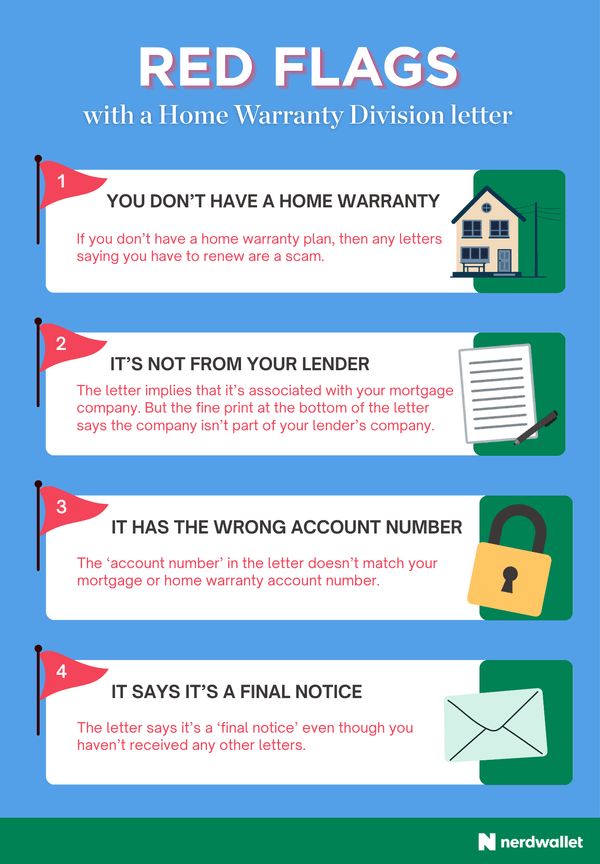
Letters that are part of home warranty scams often look official and might be difficult to spot as a scam right away. There are a few red flags you can look for to figure out if you’ve received a genuine offer or a potential scam. Be wary if your letter:
States in fine print that it’s not affiliated with your mortgage company. Some letters appear to be from your mortgage company at first glance. But read the small print at the bottom of the letter. If it says that they are not associated with a mortgage company, the letter is a scam. This is one of the fastest ways to determine if the letter is truly an offer from your lender or a potential scam.
Talks about coverage you’ve never purchased. If the letter says your coverage is about to expire but you’ve never purchased a home warranty, it’s a scammer’s way of trying to get you on the phone.
Includes information related to your mortgage company or county offices. The letter might look like the company is associated with your lender or a county deed office, and include the name of your lender. But scammers can find this information in public records. So it’s never a guarantee that the letter is from a source you can trust. And home warranties usually aren’t tied directly to a mortgage or mortgage company.
Uses the wrong account number. If the letter has a reference or account number that doesn’t match your loan number or current home warranty account number, it’s a scam.
Says it’s a final notice but you haven’t gotten any other letters in the mail. Scammers hope the wording will make you think you’ve missed important letters and need to respond quickly. But if you haven’t received any communication about the home warranty from your mortgage lender or current home warranty company, the letter is a scam.
Tips to protect yourself from home warranty scams
Even if you think the letter you’ve received might really be from your mortgage company or home warranty provider, it’s a good idea to take a step back and ensure you’re not falling for a scam. Here are four ways you can protect yourself from home warranty division scams.
Confirm the letter is from your mortgage company. If a letter sounds like it’s associated with your mortgage company, call your lender directly and ask about it. Do not use the number provided in the letter. The same goes for your current home warranty company if you have an active plan. Your mortgage company or home warranty provider will tell you if it’s a legitimate offer or something to avoid.
Look for personal information that doesn’t match. Letters might include information like an account number to make them appear official. If the number's not correct, you’re likely looking at a scam.
Recognize high-pressure language. A common scam tactic is to make a situation feel urgent, which is why the letters often say you’ll have to pay a lot of money for repairs if you don’t respond. Read letters carefully to identify wording that makes you feel like you must respond immediately, and ask yourself if that’s likely the case.
Don’t give out personal or financial information. If you’re not certain who’s asking, don’t give away sensitive information. Listen to your gut if something feels off, and don’t give in to pressure to provide information or make a purchase.
Don’t rely on the information in the letter to verify it.

How to report a home warranty scam
If you think you’ve received a home warranty scam letter, it’s best to report it to both your attorney general’s office and the Federal Trade Commission (FTC).
Your state’s attorney general’s office will want to know when residents receive calls and letters from home warranty scammers.
The FTC also asks consumers to report scams so they can keep track of trends and help other agencies shut down scammers.
Are all home warranties scams?
Not all home warranties are scams. Many are legitimate service plans for a home’s systems and appliances offered by real companies. But just because a particular home warranty plan isn’t a scam doesn't mean that all homeowners need to purchase it or will benefit from signing up.
Some home warranties have limited coverage that won't fit your situation — and home warranties usually have price caps on how much they’ll pay out annually, even if an issue is covered.
If you’re considering a home warranty, it’s important to read plan contracts carefully to see which ones (if any) might offer you a true benefit.