


Every time.
We believe everyone should be able to make financial decisions with confidence. While we don't cover every company or financial product on the market, we work hard to share a wide range of offers and objective editorial perspectives.
So how do we make money? Our partners compensate us for advertisements that appear on our site or when you click to or take an action on their website. This compensation helps us provide tools and services - like free credit score access and monitoring. With the exception of mortgage, home equity and other home-lending products or services, partner compensation is one of several factors that may affect which products we highlight and where they appear on our site. Other factors include your credit profile, product availability and proprietary website methodologies.
However, these factors do not influence our editors' opinions or ratings, which are based on independent research and analysis. Our partners cannot pay us to guarantee favorable reviews. Here is a list of our partners.
Best Credit Cards of May 2026


The best credit card is one that's best aligned with your specific needs. NerdWallet's credit card experts have reviewed and rated hundreds of options for the best credit cards of 2026 — from generous rewards and giant sign-up bonuses to long 0% APR periods and credit-building help, so you can find the best fit for your needs.
Our pick for: All-around cash back
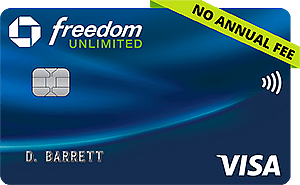
Annual fee$0Rewards rate1.5%-5%CashbackIntro offer$250Recommended credit scorePurchase intro APR0% intro APR on purchases for 15 monthsBalance transfer intro APR0% intro APR on balance transfers for 15 monthsRegular APR18.24%-27.74% Variable APRRewards breakdown
5%Cash back on travel purchased through Chase Travel℠.3%Cash back on drugstore purchases.3%Cash back on dining at restaurants, including takeout and eligible delivery services.1.5%Cash back on all other purchases.Card details
- Limited Time Offer: Earn a $250 Bonus after you spend $500 on purchases in your first 3 months from account opening
- Enjoy 5% cash back on travel purchased through Chase Travel℠, our premier rewards program that lets you redeem rewards for cash back, travel, gift cards and more; 3% cash back on drugstore purchases and dining at restaurants, including takeout and eligible delivery service, and 1.5% on all other purchases.
- No minimum to redeem for cash back. You can use points to redeem for cash through an account statement credit or an electronic deposit into an eligible Chase account located in the United States!
- Enjoy 0% Intro APR for 15 months from account opening on purchases and balance transfers, then a variable APR of 18.24% - 27.74%.
- No annual fee – You won't have to pay an annual fee for all the great features that come with your Freedom Unlimited® card
- Keep tabs on your credit health, Chase Credit Journey helps you monitor your credit with free access to your latest score, alerts, and more.
- Member FDIC
- View Rates & Fees
NerdWallet's take
Read full reviewPros- No annual fee
- Intro APR period
- High rewards rate
- No minimum redemption amount
Cons- Requires good/excellent credit
Our pick for: Simple travel rewards
 Apply Nowon Capital One's websiteon Capital One's websiteAnnual fee$95Rewards rate2x-5xMilesIntro offer75,000milesRegular APR19.49%-28.49% Variable APRRecommended credit score
Rewards breakdown
5xEarn 5X miles on hotels, vacation rentals and rental cars booked through Capital One Travel.2xMiles on every purchase, every day.Card details
- Enjoy a one-time bonus of 75,000 miles once you spend $4,000 on purchases within 3 months from account opening, equal to $750 in travel
- Earn unlimited 2X miles on every purchase, every day
- Earn 5X miles on hotels, vacation rentals and rental cars booked through Capital One Travel
- Miles won't expire for the life of the account and there's no limit to how many you can earn
- Receive up to a $120 credit for Global Entry or TSA PreCheck®
- Use your miles to get reimbursed for any travel purchase—or redeem by booking a trip through Capital One Travel
- Enjoy a $50 experience credit and other premium benefits with every hotel and vacation rental booked from the Lifestyle Collection
- Transfer your miles to your choice of 15+ travel loyalty programs
- Top rated mobile app
- View Rates & Fees
NerdWallet's take
Read full reviewPros- High rewards rate
- Flexible rewards redemption
Cons- Has annual fee
- Requires good/excellent credit
Our pick for: Longest Intro APR period for transfers and purchases
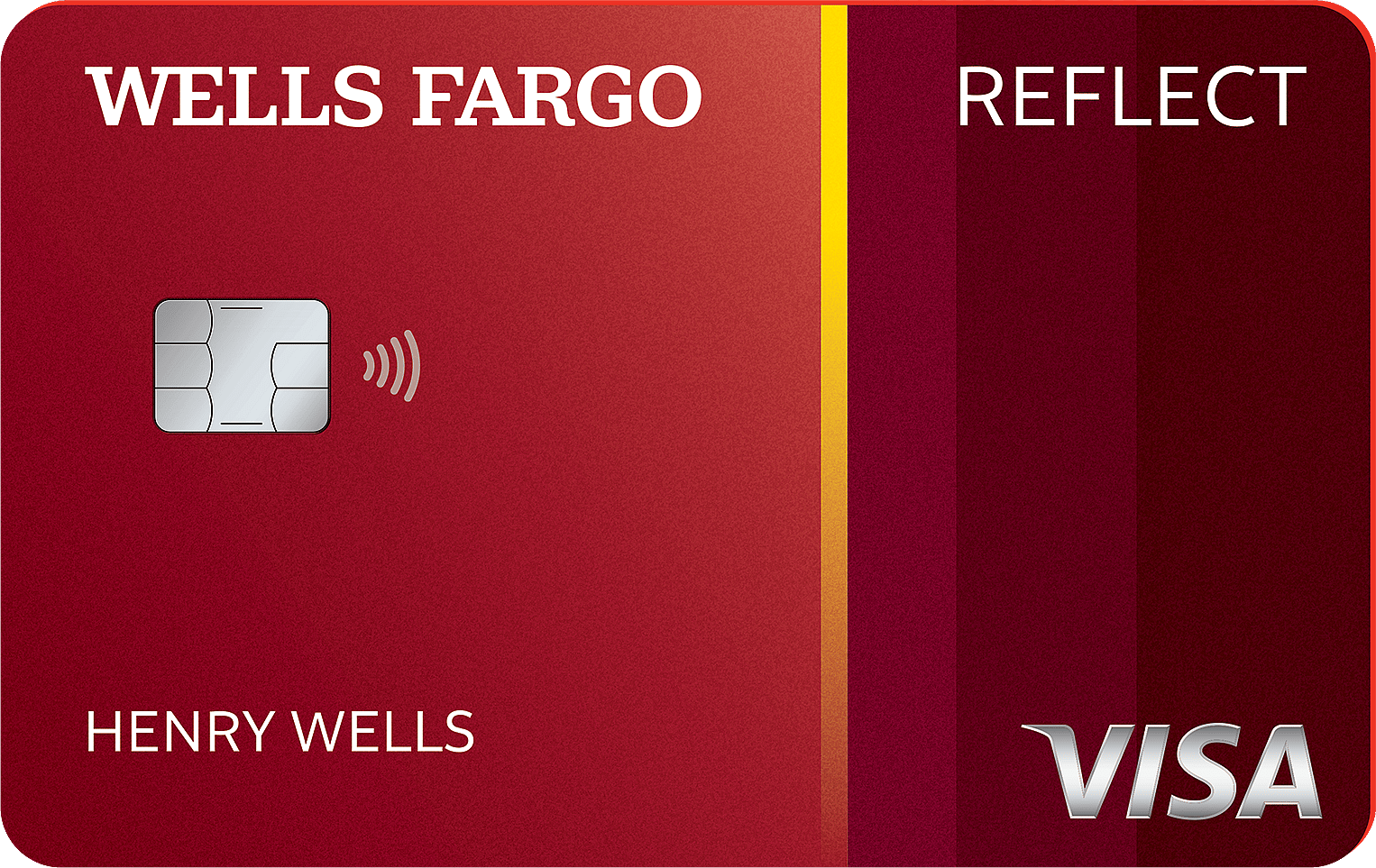
Annual fee$0Rewards rateN/AIntro offerN/ARecommended credit scorePurchase intro APR0% intro APR for 21 months from account opening on purchasesBalance transfer intro APR0% intro APR for 21 months from account opening on qualifying balance transfersRegular APR17.49%, 23.99%, or 28.24% Variable APRCard details
- Apply Now to take advantage of this offer and learn more about product features, terms and conditions.
- 0% intro APR for 21 months from account opening on purchases and qualifying balance transfers. 17.49%, 23.99%, or 28.24% variable APR thereafter; balance transfers made within 120 days qualify for the intro rate, BT fee of 5%, min: $5.
- $0 annual fee.
- Up to $600 of cell phone protection against damage or theft. Subject to a $25 deductible.
- Through My Wells Fargo Deals, you can get access to personalized deals from a variety of merchants. It's an easy way to earn cash back as an account credit when you shop, dine, or enjoy an experience simply by using an eligible Wells Fargo credit card.
- View Rates & Fees
NerdWallet's take
Read full reviewPros- No annual fee
- Intro APR period
Cons- No rewards
2026 Best all-purpose travel rewards credit card
Annual fee$95Rewards rate1x-5xPointsIntro offer75,000pointsRegular APR19.24%-27.49% Variable APRRecommended credit scoreRewards breakdown
5xPoints on travel purchased through Chase Travel℠.3xPoints on dining.3xPoints on select streaming services.3xPoints on online groceries.2xPoints on all other travel purchases.1xPoint on all other purchases.Card details
- Earn 75,000 bonus points after you spend $5,000 on purchases in the first 3 months from account opening.
- Enjoy benefits such as 5x on travel purchased through Chase Travel℠, 3x on dining, select streaming services and online groceries, 2x on all other travel purchases, 1x on all other purchases
- Earn up to $50 in statement credits each account anniversary year for hotel stays through Chase Travel℠
- 10% anniversary points boost - each account anniversary you'll earn bonus points equal to 10% of your total purchases made the previous year.
- Count on Trip Cancellation/Interruption Insurance, Auto Rental Collision Damage Waiver, Lost Luggage Insurance and more.
- Complimentary DashPass which unlocks $0 delivery fees & lower service fees for a min. of one year when you activate by 12/31/27. Plus, a $10 promo each month on non-restaurant orders.
- Member FDIC
- View Rates & Fees
NerdWallet's take
Read full reviewPros- New cardholder bonus offer
- Bonus categories
- Primary rental car coverage
- Flexible rewards redemption
- Transfer partners
Cons- Has annual fee
- Requires good/excellent credit
- Complicated rewards
Our pick for: Luxury travel perks
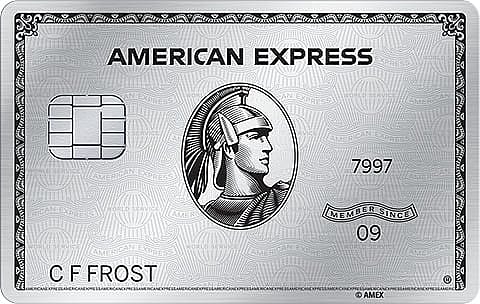 Apply Nowon American Express' websiteon American Express' websiteAnnual fee$895Rewards rate1x-5xPointsIntro offerAs High As 175,000 Points. Find Out Your Offer.APRSee Pay Over Time APRRecommended credit
Rewards breakdown
5xMembership Rewards® Points on flights purchased directly from airlines or through American Express Travel® on up to $500,000 on these purchases per calendar year.5xMembership Rewards® Points on prepaid hotel bookings through American Express Travel®, including Fine Hotels + Resorts® and The Hotel Collection bookings.1xMembership Rewards® Points on other purchases.Card details
- You may be eligible for as high as 175,000 Membership Rewards® points after you spend $12,000 in eligible purchases on your new Card in your first 6 months of Card Membership. Welcome offers vary and you may not be eligible for an offer. Apply to know if you’re approved and find out your exact welcome offer amount – all with no credit score impact. If you’re approved and choose to accept the Card, your score may be impacted.
- Get more for your travels with 5X Membership Rewards® points on all flights and prepaid hotel bookings through American Express Travel®, including Fine Hotels + Resorts® and The Hotel Collection bookings. You earn 5X points on flights purchased directly from airlines or through American Express Travel® on up to $500,000 on these purchases per calendar year.
- With over 1,550 airport lounges - more than any other credit card company on the market* - enjoy the benefits of the Global Lounge Collection®, over $850 of annual value, with access to Centurion Lounges, 10 complimentary Delta Sky Club® visits when flying on an eligible Delta flight (subject to visit limitations), Priority Pass Select membership (enrollment required), and other select partner lounges.* As of 07/2025.
- $200 Uber Cash + $120 Uber One Credit: With the Platinum Card® you can receive $15 in Uber Cash each month plus a bonus $20 in December when you add your Platinum Card® to your Uber account to use on rides and orders in the U.S when you select an Amex Card for your transaction. Plus, when you use the Platinum Card® to pay for an auto-renewing Uber One membership, you can get up to $120 in statement credits each calendar year. Terms apply.
- $300 Digital Entertainment Credit: Experience the latest shows, news and recipes. Get up to $25 in statement credits each month when you use your Platinum Card® for eligible purchases on Disney+, a Disney+ bundle, ESPN streaming services, Hulu, The New York Times, Paramount+, Peacock, The Wall Street Journal, YouTube Premium, and YouTube TV when you purchase directly from one or more of the providers. Enrollment required.
- $600 Hotel Credit: Get up to $300 in statement credits semi-annually on prepaid Fine Hotels + Resorts® or The Hotel Collection* bookings through American Express Travel® using the Platinum Card®. *The Hotel Collection requires a minimum two-night stay.
- $400 Resy Credit + Platinum Nights by Resy: Get up to $100 in statement credits each quarter when you use the Platinum Card® to make eligible purchases with Resy, including dining purchases at U.S. Resy restaurants. Enrollment required. Plus, with Platinum Nights by Resy, you can get special access to reservations on select nights at participating in demand Resy restaurants with the Platinum Card®. Simply add your eligible Card to your Resy profile to book and discover Platinum Nights reservations near you.
- $209 CLEAR+ Credit: CLEAR+ helps get you to your gate faster by using your face to verify you are you at 55+ airports nationwide. You can cover the cost of a CLEAR+ Membership* with up to $209 in statement credits per calendar year after you pay for CLEAR+ with your Platinum Card®. *Excluding any applicable taxes and fees. Subject to auto-renewal.
- $200 Airline Fee Credit: Select one qualifying airline and then receive up to $200 in statement credits per calendar year when incidental fees, such as checked bags and in-flight refreshments, are charged by the airline to the Platinum Card® Account. American Express relies on airlines to submit the correct information on airline transactions to identify incidental fee purchases. If you do not see a credit for a qualifying incidental purchase on your eligible Card after 8 weeks, simply call the number on the back of your Card. Qualifying airlines are subject to change. See terms & conditions for more details.
- Start your vacation sooner, and keep it going longer. When you book Fine Hotels + Resorts® through American Express Travel®, enjoy noon check-in, when available, and guaranteed 4PM check-out.
- $300 lululemon Credit: Enjoy up to $75 in statement credits each quarter when you use the Platinum Card® for eligible purchases at U.S. lululemon retail stores (excluding outlets) and lululemon.com. That’s up to $300 in statement credits each calendar year. Enrollment required.
- $155 Walmart+ Credit: Receive a statement credit* for one monthly Walmart+ membership (subject to auto-renewal) after you pay for Walmart+ each month with the Platinum Card®.* Up to $12.95 plus applicable local sales tax. Plus Ups not eligible.
- Whenever you need us, we're here. Our Member Services team will ensure you are taken care of. From lost Card replacement to statement questions, we are available to help 24/7.
- $895 annual fee.
- Terms Apply.
- View Rates & Fees
NerdWallet's take
Read full reviewPros- Bonus categories
- Transfer partners
- Luxury perks
- Lounge membership
- Automatic elite status
Cons- Has annual fee
- Complicated rewards
- Requires good/excellent credit
2026 Best balance transfer credit card
Annual fee$0Rewards rateN/AIntro offerN/ARecommended credit scorePurchase intro APR0% intro APR on purchases for 18 monthsBalance transfer intro APR0% intro APR on balance transfers for 18 monthsRegular APR17.49%-28.24% Variable APRCard details
- 0% Intro APR on balance transfers and purchases for 18 months from date of account opening. After that, the variable APR will be 17.49% - 28.24%, based on your creditworthiness. Balance transfers must be completed within 4 months of account opening.
- There is an intro balance transfer fee of 3% of each transfer (minimum $5) completed within the first 4 months of account opening. After that, your fee will be 5% of each transfer (minimum $5).
- No Late Fees, No Penalty Rate, and No Annual Fee... Ever
- $0 liability on unauthorized charges.
- View Rates & Fees
NerdWallet's take
Read full reviewPros- No annual fee
- Intro APR period
Cons- No rewards
- No new cardholder bonus offer
- Requires good/excellent credit
2026 Best premium travel credit card
 Apply Nowon Capital One's websiteon Capital One's websiteAnnual fee$395Rewards rate2x-10xMilesIntro offer75,000milesRegular APR19.49%-28.49% Variable APRRecommended credit score
Rewards breakdown
10xMiles on hotels and rental cars booked through Capital One Travel.5xMiles on flights and vacation rentals booked through Capital One Travel.2xMiles on all other purchases.Card details
- Earn 75,000 bonus miles when you spend $4,000 on purchases in the first 3 months from account opening, equal to $750 in travel
- Receive a $300 annual credit for bookings through Capital One Travel, where you'll get Capital One's best prices on thousands of trip options
- Get 10,000 bonus miles (equal to $100 towards travel) every year, starting on your first anniversary
- Earn unlimited 10X miles on hotels and rental cars booked through Capital One Travel and 5X miles on flights and vacation rentals booked through Capital One Travel
- Earn unlimited 2X miles on all other purchases
- Enjoy access to 1,300+ lounges worldwide, including Capital One Lounge and Landing locations and participating Priority Pass™ lounges, after enrollment
- Use your Venture X miles to easily cover travel expenses, including flights, hotels, rental cars and more—you can even transfer your miles to your choice of 15+ travel loyalty programs
- Enjoy a $100 experience credit and other premium benefits with every hotel and vacation rental booked from the Premier Collection
- Receive up to a $120 credit for Global Entry or TSA PreCheck®
- Top rated mobile app
- View Rates & Fees
NerdWallet's take
Read full reviewPros- High rewards rate
- New cardholder bonus offer
- Lounge membership
- Anniversary perk
- Flexible rewards redemption
Cons- High annual fee
- Requires excellent credit
2026 Best all-purpose cash back credit card
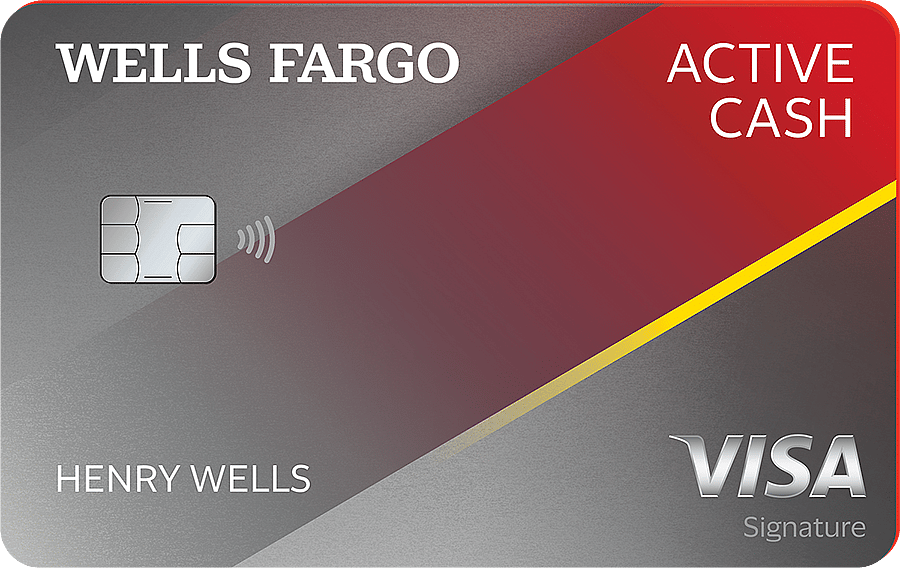 Apply Nowon Wells Fargo's websiteon Wells Fargo's websiteAnnual fee$0Rewards rate2%CashbackIntro offer$200Recommended credit scorePurchase intro APR0% intro APR for 12 months from account opening on purchasesBalance transfer intro APR0% intro APR for 12 months from account opening on qualifying balance transfersRegular APR18.49%, 24.49%, or 28.49% Variable APR
Rewards breakdown
2%Unlimited Cash rewards on purchases.Card details
- Apply Now to take advantage of this offer and learn more about product features, terms and conditions.
- Earn a $200 cash rewards bonus after spending $500 in purchases in the first 3 months.
- Earn unlimited 2% cash rewards on purchases.
- 0% intro APR for 12 months from account opening on purchases and qualifying balance transfers. 18.49%, 24.49%, or 28.49% variable APR thereafter; balance transfers made within 120 days qualify for the intro rate and fee of 3% then a BT fee of up to 5%, min: $5.
- $0 annual fee.
- No categories to track or remember and cash rewards don’t expire as long as your account remains open.
- Find tickets to top sports and entertainment events, book travel, make dinner reservations and more with your complimentary 24/7 Visa Signature® Concierge.
- Up to $600 of cell phone protection against damage or theft. Subject to a $25 deductible.
- View Rates & Fees
NerdWallet's take
Read full reviewPros- High rewards rate
- No annual fee
- Intro APR period
Cons- No bonus categories
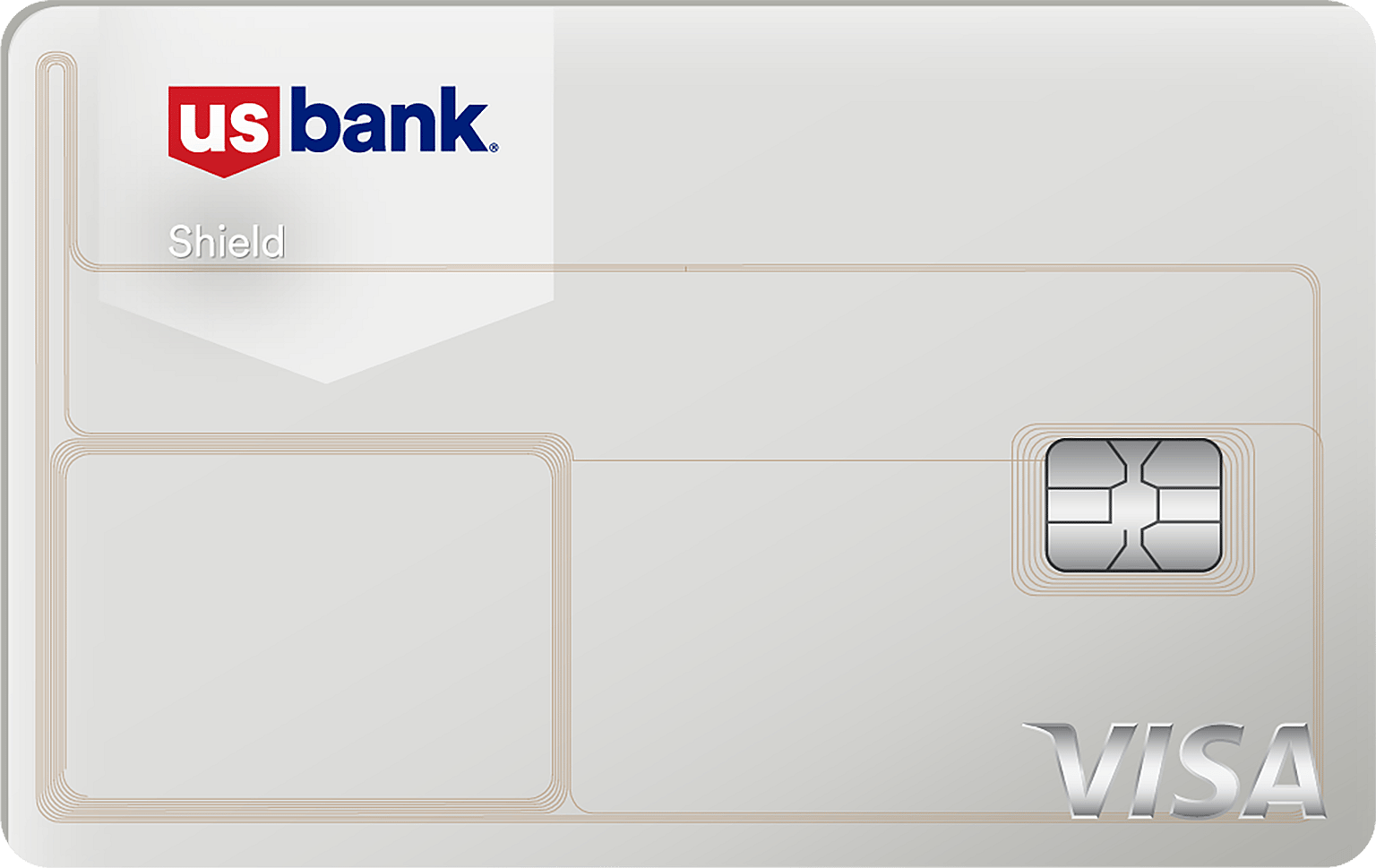
Our pick for: Long intro APR period + side perks
Annual fee$0Rewards rate4%CashbackIntro offerN/ARecommended credit scorePurchase intro APR0% intro APR on purchases for 21 billing cyclesBalance transfer intro APR0% intro APR on balance transfers for 21 billing cyclesRegular APR16.99%-27.99% Variable APRRewards breakdown
4%Cash back on prepaid air, hotel and car reservations booked directly in the Travel Center.Card details
- 0% intro APR on purchases and balance transfers for 21 billing cycles. After that, a variable APR currently 16.99% - 27.99%.
- 4% cash back on prepaid air, hotel and car reservations booked directly in the Travel Center when you use your card.
- Get a $20 annual statement credit for 11 consecutive months of purchases.
- No annual fee.
- Cell Phone Protection: Your eligible cell phone can be reimbursed up to $600 in the event it is stolen or damaged when you pay your monthly cell phone bill with your card.
- Terms and conditions apply.
- View Rates & Fees
NerdWallet's take
Read full reviewPros- No annual fee
- Intro APR period
- Rewards
- Cell phone insurance
Cons- Requires good/excellent credit
- No bonus offer
2026 Best credit card for dining
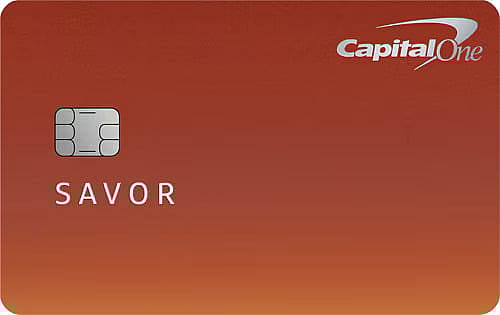 Apply Nowon Capital One's websiteon Capital One's websiteAnnual fee$0Rewards rate1%-8%CashbackIntro offer$200Recommended credit scorePurchase intro APR0% intro on purchases for 12 monthsBalance transfer intro APR0% intro on balance transfers for 12 months; balance transfer fee appliesRegular APR18.49%-28.49% Variable APR
Rewards breakdown
8%Cash back on Capital One Entertainment purchases.5%Cash back on hotels, vacation rentals and rental cars booked through Capital One Travel.3%Cash back on dining.3%Cash back on entertainment.3%Cash back on popular streaming services.3%Cash back at grocery stores (excluding superstores like Walmart® and Target®).1%Cash back on all other purchases.Card details
- Earn a one-time $200 cash bonus once you spend $500 on purchases within the first 3 months from account opening
- $0 annual fee and no foreign transaction fees
- Earn unlimited 3% cash back at grocery stores (excluding superstores like Walmart® and Target®), on dining, entertainment and popular streaming services, plus 1% on all other purchases
- Earn 8% cash back on Capital One Entertainment purchases
- Earn unlimited 5% cash back on hotels, vacation rentals and rental cars booked through Capital One Travel
- No rotating categories or sign-ups needed to earn cash rewards; plus cash back won't expire for the life of the account and there's no limit to how much you can earn
- 0% intro APR on purchases and balance transfers for 12 months; 18.49% - 28.49% variable APR after that; balance transfer fee applies
- Top rated mobile app
- View Rates & Fees
NerdWallet's take
Read full reviewPros- No annual fee
- Intro APR period
- Bonus categories
- No foreign transaction fees
Cons- Requires good/excellent credit
Our pick for: Long intro period + quarterly categories
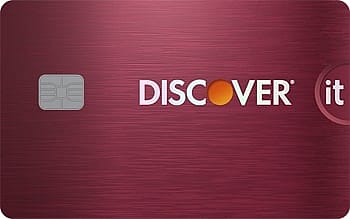 Apply Nowon Discover's websiteon Discover's websiteAnnual fee$0Rewards rate1%-5%CashbackIntro offerCashback Match™Recommended credit scorePurchase intro APR0% intro APR on purchases for 6 monthsBalance transfer intro APR0% intro APR on balance transfers for 18 monthsRegular APR17.49%-26.49% Variable APR
Rewards breakdown
5%Cash back on everyday purchases at different places you shop each quarter like grocery stores, restaurants, gas stations, and more, up to the quarterly maximum when you activate.1%Cash back on all other purchases.Card details
- INTRO OFFER: Unlimited Cashback Match for all new cardmembers. Discover will automatically match all the cash back you’ve earned at the end of your first year! There’s no minimum spending or maximum rewards. You could turn $150 cash back into $300.
- Earn 5% cash back on everyday purchases at different places you shop each quarter like grocery stores, restaurants, gas stations, and more, up to the quarterly maximum when you activate. Plus, earn unlimited 1% cash back on all other purchases.
- Redeem cash back for any amount. No annual fee.
- Get a 0% intro APR for 18 months on balance transfers. Then 17.49% to 26.49% Standard Variable APR applies, based on credit worthiness.
- Terms and conditions apply.
- View Rates & Fees
NerdWallet's take
Read full reviewPros- No annual fee
- Intro APR period
- Bonus categories
- Cash rewards
Cons- Complicated rewards
- Spending caps on bonus rewards
- Lower acceptance abroad
2026 Best credit card for groceries
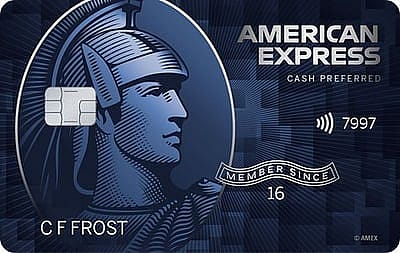 Apply Nowon American Express' websiteon American Express' websiteAnnual fee$0 intro annual fee for the first year, then $95.Rewards rate1%-6%CashbackIntro offerAs High as $300 cash back. Find Out Your Offer.Recommended creditPurchase intro APR0% intro APR on purchases for 12 months from the date of account openingBalance transfer intro APR0% intro APR on balance transfers for 12 months from the date of account openingAPR19.49%-28.49% Variable APR
Rewards breakdown
6%Cash Back at U.S. supermarkets on up to $6,000 per year in purchases (then 1%).6%Cash Back on select U.S. streaming subscriptions.3%Cash Back at U.S. gas stations and on transit (including taxis/rideshare, parking, tolls, trains, buses and more).1%Cash Back on other purchases.Card details
- Apply and find out your welcome offer. As High As $300 cash back* after you spend $3,000 in purchases on your new Card within the first 6 months of Card Membership. Welcome offers vary and you may not be eligible for an offer. Apply, and if approved: 1. Find out your offer amount 2. Accept the Card with your offer 3. Spend $3,000 in 6 months 4. Receive the cash back. *Cash back is received in the form of Reward Dollars that can be redeemed for a statement credit or at Amazon.com checkout.
- $0 intro annual fee for the first year, then $95.
- Enjoy 0% intro APR on purchases and balance transfers for 12 months from the date of account opening. After that, your APR will be a variable APR of 19.49%-28.49%.
- Plan It®: Buy now, pay later with Plan It. Split purchases of $100 or more into equal monthly installments with a fixed fee so you don’t have the pressure of paying all at once. Simply select the purchase in your online account or the American Express® App to see your plan options. Plus, you’ll still earn rewards on purchases the way you usually do.
- Earn 6% cash back at U.S. supermarkets on up to $6,000 per year in eligible purchases (then 1%), 6% cash back on select U.S. streaming subscriptions, 3% cash back at eligible U.S. gas stations and on transit (including taxis/rideshare, parking, tolls, trains, buses and more) purchases and 1% cash back on other purchases. Cash Back is received in the form of Reward Dollars that can be redeemed as a statement credit and at Amazon.com checkout.
- Get up to a $10 monthly statement credit after using your enrolled Blue Cash Preferred® Card for a subscription purchase, including a bundle subscription purchase, at DisneyPlus.com, Hulu.com, or Stream.ESPN.com U.S. websites. Subject to auto-renewal.
- Terms Apply.
- View Rates & Fees
NerdWallet's take
Read full reviewPros- High rewards rate
- Bonus categories
- Intro APR period
- Cash rewards
Cons- Has annual fee
- Requires good/excellent credit
- Spending caps on bonus rewards
Our pick for: Going out & staying in
 Apply Nowon Capital One's websiteon Capital One's websiteAnnual fee$0Rewards rate1%-8%CashbackIntro offer$50Regular APR18.49%-28.49% Variable APRRecommended credit score
Rewards breakdown
8%Cash back on entertainment purchases when you book through the Capital One Entertainment portal.5%Cash back on hotels, vacation rentals and rental cars booked through Capital One Travel.3%Cash back on dining.3%Cash back on entertainment.3%Cash back on popular streaming services.3%Cash back at grocery stores (excluding superstores like Walmart® and Target®).1%Cash back on all other purchases.Card details
- Earn unlimited 3% cash back at grocery stores (excluding superstores like Walmart® and Target®), on dining, entertainment and popular streaming services, plus 1% on all other purchases
- Early Spend Bonus: Earn $50 when you spend $100 in the first three months
- Enjoy peace of mind with $0 Fraud Liability so that you won't be responsible for unauthorized charges
- Enjoy no annual fee, foreign transaction fees, or hidden fees
- Earn unlimited 5% cash back on hotels, vacation rentals and rental cars booked through Capital One Travel
- Earn up to $500 a year by referring friends and family when they're approved for a Capital One credit card
- Earn 8% cash back on entertainment purchases when you book through the Capital One Entertainment portal
- Build your credit with responsible card use
- Whether you're at a 4-year university, community college or other higher education institution, this card might be an option for you
- Top rated mobile app
- View Rates & Fees
NerdWallet's take
Read full reviewPros- No annual fee
- Bonus categories
- No rewards caps
- Reports to the three major credit bureaus
Cons- High APR
Compare the Best Credit Card Offers of May 2026
| Credit card | Rating | Annual fee | Rewards rate | Intro offer | Learn more |
|---|---|---|---|---|---|
 Chase Freedom Unlimited® Chase Freedom Unlimited®Apply Nowon Chase's website on Chase's website | Best for All-around cash back | $0 | 1.5%-5% | $250 | Apply Nowon Chase's website on Chase's website |
| Capital One Venture Rewards Credit Card Apply Nowon Capital One's website on Capital One's website | Best for Simple travel rewards | $95 | 2x-5x | 75,000 miles | Apply Nowon Capital One's website on Capital One's website |
 Wells Fargo Reflect® Card Wells Fargo Reflect® CardApply Nowon Wells Fargo's website on Wells Fargo's website | Best for Longest Intro APR period for transfers and purchases | $0 | N/A | N/A | Apply Nowon Wells Fargo's website on Wells Fargo's website |
2026 Best all-purpose travel rewards credit card 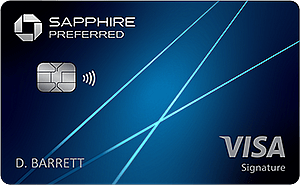 Chase Sapphire Preferred® Card Chase Sapphire Preferred® CardApply Nowon Chase's website on Chase's website | Best for Bonus travel rewards | $95 | 1x-5x | 75,000 points | Apply Nowon Chase's website on Chase's website |
| American Express Platinum Card® Apply Nowon American Express' website on American Express' website | Best for Luxury travel perks | $895 | 1x-5x | As High As 175,000 Points. Find Out Your Offer. | Apply Nowon American Express' website on American Express' website |
2026 Best balance transfer credit card 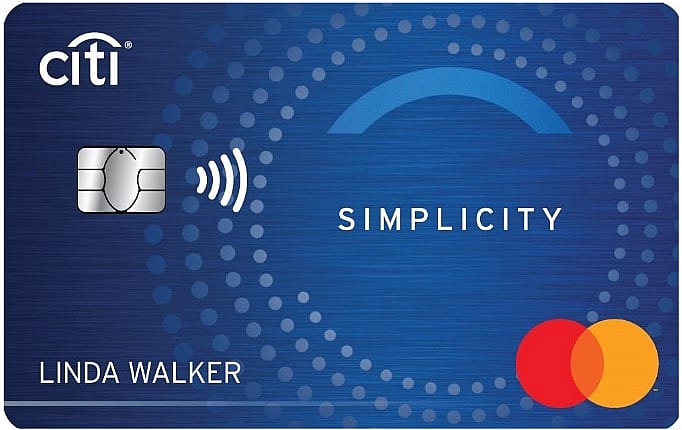 Citi Simplicity® Card Citi Simplicity® CardApply Nowon Citibank's application on Citibank's application | Best for Balance transfers + no late fees | $0 | N/A | N/A | Apply Nowon Citibank's application on Citibank's application |
2026 Best premium travel credit card Capital One Venture X Rewards Credit CardApply Nowon Capital One's website on Capital One's website | Best for Travel portal benefits | $395 | 2x-10x | 75,000 miles | Apply Nowon Capital One's website on Capital One's website |
2026 Best all-purpose cash back credit card Wells Fargo Active Cash® CardApply Nowon Wells Fargo's website on Wells Fargo's website | Best for 2% cash back | $0 | 2% | $200 | Apply Nowon Wells Fargo's website on Wells Fargo's website |
 U.S. Bank Shield™ Visa® Card U.S. Bank Shield™ Visa® CardApply Nowon U.S. Bank's website on U.S. Bank's website | Best for Long intro APR period + side perks | $0 | 4% | N/A | Apply Nowon U.S. Bank's website on U.S. Bank's website |
2026 Best credit card for dining Capital One Savor Cash Rewards Credit CardApply Nowon Capital One's website on Capital One's website | Best for Food and entertainment | $0 | 1%-8% | $200 | Apply Nowon Capital One's website on Capital One's website |
| Discover it® Cash Back - 18 Month Intro Balance Transfer Offer Apply Nowon Discover's website on Discover's website | Best for Long intro period + quarterly categories | $0 | 1%-5% | Cashback Match™ | Apply Nowon Discover's website on Discover's website |
2026 Best credit card for groceries Blue Cash Preferred® Card from American ExpressApply Nowon American Express' website on American Express' website | Best for Families & households | $0 intro annual fee for the first year, then $95. | 1%-6% | As High as $300 cash back. Find Out Your Offer. | Apply Nowon American Express' website on American Express' website |
| Capital One Savor Student Cash Rewards Credit Card Apply Nowon Capital One's website on Capital One's website | Best for Going out & staying in | $0 | 1%-8% | $50 | Apply Nowon Capital One's website on Capital One's website |
A beginner's guide to credit cards
The idea behind credit cards is simple: When you use a credit card, you are borrowing money to pay for something. Later on, you must repay what your borrowed. If you take time to pay it back (rather than pay it in full when your credit card statement comes), you'll be charged interest. The whole credit cards industry rests on this basic premise.
How credit cards work
A basic credit card transaction works like this:
1. You use your card.
You use your card at the cash register by running it through a card reader (or, if you're online, you enter your card information on the checkout page).
2. The purchase is authorized.
The card reader contacts your credit card company to make sure the card is valid for the purchase amount. Assuming everything is OK, the transaction is authorized.
3. The merchant gets paid.
The bank that issued your credit card sends money for the purchase to the merchant where the transaction took place.
4. You pay.
The transaction shows up on your credit card statement, and you repay the bank for the purchase.
» MORE: What is a credit card?
How credit card rewards work
Many of the best credit cards of 2026 give you rewards for your spending. Rewards programs come in two basic flavors (cash back and points/miles), with two basic structures (flat rate and bonus rewards).

Cash back
You can use cash back to directly reduce your balance. In some cases, you can have your cash back deposited in a bank account or sent to you as a check.

Points or miles
Points and miles can be redeemed for travel, gift cards, merchandise or other things. You may also have the option of redeeming points for credit on your statement, just like cash back.

Flat rate
You get the same rewards rate on all spending done with the card, regardless of what you spend money on. You might get 2 points per dollar on all purchases, or 1.5% cash back on everything.

Bonus rewards
You earn a base rate on all spending (typically 1 point per dollar or 1% cash back) and then higher rates in certain categories — 5% cash back at gas stations, for example, or 3 points per dollar spent on travel.
Many credit card users carry multiple cards with bonus rewards in different categories, plus a flat-rate card for purchases that fall outside those categories.
Different types of credit cards
Credit card companies in 2026 offer different kinds of cards to meet different consumer needs. Some people put a lot of money on their cards every month and then pay them off immediately; those people benefit from a card that returns a portion of their spending in the form of rewards. Others tend to carry a balance from month to month; they're better served with a card that offers a low ongoing interest rate. Still others are working to improve their credit; issuers have cards designed for those people, too.
Rewards credit cards
Interest-saving credit cards
Credit-building credit cards
Choosing the best credit card for you in 2026
If you're a beginner to credit cards, see our step-by-step guide to choosing a credit card. It starts by helping you figure out what cards you can qualify for, then walks you through deciding what kind of card best fits your needs. The process in short:
- 1.Check your credit
The higher your credit score, the more likely you are to qualify for the best credit cards of 2026. NerdWallet offers free access to credit scores.



Comparing credit card features
Every credit card delivers value in its own way, through its own unique combination of features. And there are trade-offs involved. If you want rewards, for example, you'll probably have to accept a higher interest rate. If you want high-value perks, you'll likely pay an annual fee. If you want a low interest rate and no fees, you shouldn't expect much else from the card. In other words, you're unlikely to find a single card that offers a high rewards rate, a long 0% period, a rock-bottom ongoing interest rate, generous perks and no annual fee.
Here are the main points of comparison when looking at credit cards.
Annual fee
Introductory interest rate
Ongoing interest rate
Rewards
Sign-up bonus
Perks
Credit-building help
How many credit cards should you have?
Just as there is no single best credit card for everyone, there is no perfect number of credit cards to have. It depends on your needs and how much effort you want to put into managing your credit cards.
There's no limit to how many cards you can have. Each lender evaluates your credit on its own term, but there's no hard limit where you have "too many cards."
You don't need to have multiple cards to maintain good credit score. Credit scoring formulas tend to reward you for having different types of accounts — credit cards, mortgages, loans, etc. — but it's not necessary to have multiple accounts of each type. One credit card, responsibly managed, is enough.
Advantages of carrying multiple cards

One card may pay you a higher rewards rate on groceries. Another may reward you handsomely at restaurants, or on gas purchases, or for spending on travel. Having multiple cards allows you to maximize your total rewards.
Some cards are more widely accepted than others. It’s good to have a backup in situations where one card isn’t accepted. Additionally, if a card is lost, stolen or compromised, you'll have another option while you wait for a replacement.
A key factor in your credit score is your credit utilization, or how much of your available credit you're using. Ideally, you’ll want to keep utilization below 30%. If you have a $500 balance on a card with a $1,000 limit, your utilization is 50%. If you have $500 in balances spread across three cards with limits of $1,000 each, your utilization about is 17%.
Risks of carrying multiple cards

The more cards you have, the harder it is to remember how much you’ve spent on which card.
Multiple due dates increase the risk of missing a payment, which can trigger a late fee or (if it's late enough) even damage your credit.
Methodology
NerdWallet's Credit Cards content team selected the best credit cards of 2026 in each category based on overall consumer value, as evidenced by star ratings, as well as their suitability for specific kinds of consumers. This page includes selections across multiple categories, and a single card is eligible to be chosen as among the "best" in more than one category. Learn how NerdWallet rates credit cards. Factors in our evaluations include:
For cash back cards
For travel rewards cards
For balance transfer and 0% APR cards
For college student cards
For credit-building cards
For business cards
Frequently asked questions
What's the best credit card?
No single credit card is the best for everyone. It all depends on how you use credit and how strong your credit is.
A rewards credit card gives you a little something back with each purchase you make — usually cash back or travel points or airline miles. These cards are best for people who can pay their credit card bill in full each month. If you carry a balance from one month to the next, the interest you pay will eat up the value of your rewards.
A zero-percent credit card is ideal if you're looking to finance a big purchase or pay down high-interest debt by way of a balance transfer. If you tend to carry a balance month to month, look for a card with low ongoing interest rate.
A credit-building card is designed for people who are just starting out with credit or are trying to bounce back from damaged credit. Rewards cards and zero-percent cards are available mostly to people with good to excellent credit; for those who aren't there yet, there are credit-building cards. There are options for bad credit, for fair or average credit and for people with no credit history.
What's the easiest credit card to get?
Secured credit cards require you to provide a cash security deposit to open an account. Because that deposit protects the card company from risk, secured cards are much easier to qualify for than other cards. You're not guaranteed approval for a secured card, but the bar is much lower than for regular cards. Store credit cards are also generally easier to qualify for than bank cards.
What's the best credit card company?
Just as there is no single best card for everyone, consumers have widely different opinions about the best (and worst) credit card issuers. One person could get the runaround from customer service rep and rate a bank zero stars as a result, while another has nothing but positive experiences and gives it five stars across the board. Still, some trends emerge in customer satisfaction surveys.
J.D. Power conducts an annual study of satisfaction among major national and regional credit card issuers. It regularly rates Discover and American Express at the top among mass-market issuers. In the most recent study, USAA and Navy Federal Credit Union had the highest ratings of all, but keep in mind that only people affiliated with the military are eligible for USAA or Navy Federal products.
