

Every time.
We believe everyone should be able to make financial decisions with confidence. While we don't cover every company or financial product on the market, we work hard to share a wide range of offers and objective editorial perspectives.
So how do we make money? Our partners compensate us for advertisements that appear on our site or when you click to or take an action on their website. This compensation helps us provide tools and services - like free credit score access and monitoring. With the exception of mortgage, home equity and other home-lending products or services, partner compensation is one of several factors that may affect which products we highlight and where they appear on our site. Other factors include your credit profile, product availability and proprietary website methodologies.
However, these factors do not influence our editors' opinions or ratings, which are based on independent research and analysis. Our partners cannot pay us to guarantee favorable reviews. Here is a list of our partners.
Best Credit Cards for a 600 Credit Score of October 2026


A credit score of 600 is generally defined as bad credit — although it's not that far from the next level up, "fair" credit. If you have a 600 credit score, you're unlikely to get approved for top-tier credit cards, but that doesn't mean you have no options. Multiple issuers, including some of the bigger names in the industry, make cards available to people with credit scores in the 600 range.
Our pick for: Rewards and upgrading
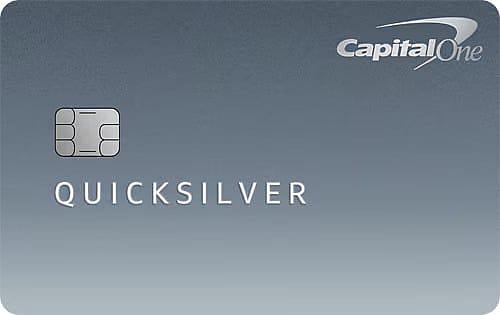 Apply Nowon Capital One's websiteon Capital One's websiteAnnual fee$0Minimum deposit$200Recommended credit scoreRegular APR29.24% Variable APRRewards rate1.5%-5%CashbackIntro offerN/A
Rewards breakdown
5%Cash back on hotels, vacation rentals and rental cars booked through Capital One Travel.1.5%Cash back on every purchase, every day.Card details
- No annual or hidden fees, and you can earn unlimited 1.5% cash back on every purchase, every day. See if you're approved in seconds
- Put down a refundable $200 security deposit to get at least a $200 initial credit line
- Building your credit? Using a card like this responsibly could help
- Enjoy peace of mind with $0 Fraud Liability so that you won't be responsible for unauthorized charges
- You could earn back your security deposit as a statement credit when you use your card responsibly, like making payments on time
- Be automatically considered for a higher credit line in as little as 6 months with no additional deposit needed
- Earn unlimited 5% cash back on hotels, vacation rentals and rental cars booked through Capital One Travel
- Monitor your credit score with CreditWise from Capital One. It's free for everyone
- Top rated mobile app
- View Rates & Fees
NerdWallet's take
The $0-annual-fee Capital One Quicksilver Secured Cash Rewards Credit Card offers rewards on par with cards for people with good credit, plus opportunities to boost your credit limit or even convert to a regular unsecured card.
Read full reviewProsYou'll earn 1.5% cash back on every purchase, which is as good as you'll find on a lot of cards for those with much higher credit scores. Capital One will review your credit limit after six months to see if you're eligible for an increase. Use the card responsibly — by making payments on time, for example — and you may have your deposit returned to you and your account converted to a regular Quicksilver card.
ConsThere's a $200 minimum deposit to start, which may be a stretch for some applicants. Meanwhile, the maximum deposit can be as low as $1,000; the issuer determines your max based on creditworthiness.
Our pick for: No credit check or bank account
 Apply Nowon Capital Bank's websiteon Capital Bank's websiteAnnual fee$0Minimum deposit$300Recommended credit scoreRegular APR28.24% Variable APRRewards rate1%-10%CashbackIntro offerN/A
Card details
- No annual fee – keep more money in your pocket!
- No credit check required – 89% approval rate with zero credit risk to apply!
- Earn up to 10% cash back on everyday purchases
- Boost your credit score fast—2 out of 3 opensky® cardholders see an average increase of 47 points after 6 months
- Track your progress with free access to your FICO® score in our mobile app
- Build your credit history with reporting to all three major credit bureaus: Experian, Equifax, and TransUnion
- Seamless payments—add your card to Apple Pay, Google Pay, and Samsung Pay
- Start with as little as $300 – Secure your line with a refundable security deposit
- Fast and easy application—apply in minutes with our mobile-first experience
- Flexible payment options—pick a due date that works for you
- More time to fund—spread your security deposit over 60 days with layaway
- Join 2 million+ cardholders who have used opensky® to build better credit!
- View Rates & Fees
NerdWallet's take
The opensky® Plus Secured Visa® Credit Card doesn't require a credit check or a bank account. The "Plus" in the name refers to the fact that, unlike the regular opensky card, it doesn't charge an annual fee — although it has a higher APR and usually requires a higher deposit than that card.
Read full reviewProsThe benefits are largely the same as with the standard annual-fee opensky card: The issuer doesn’t run a credit check, and you can make your deposit and pay your bills with a debit card, wire transfer, check or money order, making it an option for those without a traditional bank account. On top of that, there's no annual fee.
ConsThe minimum security deposit on this card is usually higher than on opensky's standard card. The APR is also considerably higher, so avoid carrying a balance. Also, your options for upgrading to an unsecured card are limited.
Our pick for: No upfront deposit or hard credit check
Annual fee$0 intro first year, $25 thereafter†Minimum deposit$100Recommended credit scoreRegular APR27.49% Variable†Rewards rateNoneIntro offerN/ACard details
- With no credit check or prior credit required, anyone can start building credit. Fund your card with a minimum security deposit of $100 and use it anywhere Visa® is accepted in the U.S. Build credit by making on-time payments and maintaining a low credit utilization ratio. Every on-time payment helps build credit history.
- If you don’t have the $100 security deposit today, consider a Credit Builder Account² starting at $25 a month⁴ . Consistent, on-time payments help you build credit and build savings to secure the secured Self Visa® Credit Card³.
- †$0 annual fee for the first year only, $25 annual fee thereafter. Variable APR of 27.49%. Offer valid for new customers only.
- *The secured Self Visa®Credit Card is issued by Lead Bank, Sunrise Banks, N.A., or First Century Bank, N.A., each Member FDIC.
- ²Credit Builder Accounts & Certificates of Deposit made/held by Lead Bank, Sunrise Banks, N.A., First Century Bank, N.A., each Member FDIC. Subject to credit approval.
- ³Qualification for the secured Self Visa® Credit Card is based on meeting eligibility requirements, including income and expense requirements and establishment of security interest. Criteria Subject to change.
- ⁴$25/mo, 24 mos, 15.92% APR; $35/mo, 24 mos, 15.69% APR; $48/mo, 24 mos, 15.51% APR; $150/mo, 24 mos, 15.82% APR. See self.inc/pricing
NerdWallet's take
The The secured Self Visa® Credit Card offers those with a credit score of 600 (or worse) a unique credit-building path. Unlike typical secured cards, it doesn't require an upfront security deposit or a hard credit check. But it does make you jump through some hoops that other secured cards don't.
Read full reviewProsInstead of requiring a traditional deposit, this card has you open a Self Credit Builder Account and make regular payments on a secured installment loan. (See our review for more detail on how it works.) Your payments essentially go into a certificate of deposit; once you have enough saved up with Self, you can use that money as a deposit on the card. The minimum deposit is just $100, lower than on most secured cards. There's no hard credit check, either.
ConsThere's a one-time account set-up fee of $9 and an annual fee of $0 intro first year, $25 thereafter†. And it needs to be said: The process of opening the Credit Builder Account, making payments and then funding the card deposit can be a hassle. But for those struggling to build credit, it can be worth the effort.
Our pick for: Building credit with subscriptions
Annual fee$0Minimum depositN/ARecommended credit scoreRegular APRNoneRewards rateNoneIntro offerN/ACard details
- Connect a bank account to apply for a Grow Credit interest-free Mastercard.
- Signing up is easy and completely free.
- Use your Grow Credit Mastercard to pay for your existing subscriptions or browse for new ones.
- Just sit back, relax and watch your credit score grow!
- Grow Credit is not taking new applications at this time.
NerdWallet's take
The Grow Credit Mastercard helps you build credit through qualifying subscriptions and bill payments you're already making. There's no hard credit check, no interest charges and a no-annual-fee option.
Read full reviewProsDepending on which membership plan you choose, you can use the card for $17 to $150 a month in qualifying subscriptions and/or bill payments. Eligible payments include streaming services like Netflix and Spotify, as well as certain wireless phone providers. Your bill must be paid in full each month, so you can't carry a balance and therefore won't pay interest. The card reports to all three major credit bureaus.
ConsThis card rates lower than other options on this page because of its limited usability. It's can help you build credit, but beyond subscriptions, you can't put so much as a pack of gum on it. There's a plan with no membership fee, but your monthly spending limit with that plan is $17, enough to cover (maybe) one subscription. Those who can't qualify for the free plan have to pay $2.99 a month plus provide a $17 deposit. To get a higher monthly limit, you'll need to pay a monthly fee of $4.99 (for a $50 limit) to $9.99 (for $150).
Compare the Best 600 Credit Score Credit Cards
| Credit card | Rating | Annual fee | Minimum deposit | Rec. credit score Rec. credit score | Learn more |
|---|---|---|---|---|---|
| Capital One Quicksilver Secured Cash Rewards Credit Card Apply Nowon Capital One's website on Capital One's website | Best for Rewards and upgrading | $0 | $200 | 300-629 (Poor) | Apply Nowon Capital One's website on Capital One's website |
| opensky® Plus Secured Visa® Credit Card Apply Nowon Capital Bank's website on Capital Bank's website | Best for No credit check or bank account | $0 | $300 | 300-850 (Poor - Excellent) | Apply Nowon Capital Bank's website on Capital Bank's website |
 The secured Self Visa® Credit Card The secured Self Visa® Credit CardApply Nowon Self's website on Self's website | Best for No upfront deposit or hard credit check | $0 intro first year, $25 thereafter† | $100 | 300-607 (Poor) | Apply Nowon Self's website on Self's website |
 Grow Credit Mastercard Grow Credit Mastercard | Best for Building credit with subscriptions | $0 | N/A | 300-850 (Poor - Excellent) |
More about our picks
Discover it® Secured Credit Card
Our pick for: Rewards and bonus offer
A strong combination of features earned the Discover it® Secured Credit Card the title of "best card for building credit" in the NerdWallet Best-Of Awards every year from 2018 to 2026. It was one of the first secured cards with rewards and a bonus offer. It has a $0 annual fee. It reports to all three credit bureaus. It gives you free access to a FICO credit score. And it offers the possibility to upgrade to an unsecured Discover card. The upgrade path, however, is not as clearly marked as it once was. For years, this card advertised that it conducted automatic account reviews beginning after seven months. That will no longer be the case. (Upgrades will still be possible, but the industry-leading transparency about the process is going away.) Even without automatic reviews, though, it's still a top-notch secured card. The $200 minimum security deposit may be a barrier for some, but it can be more cost-effective than paying ongoing monthly or annual fees on other cards. Plus, you can get your deposit back when you upgrade or close the account in good standing. Read our review of the Discover it® Secured Credit Card.
» For a potentially lower security deposit: Capital One Platinum Secured Credit Card.
Capital One Quicksilver Secured Cash Rewards Credit Card
Our pick for: Rewards and upgrading
For building credit as quickly and efficiently as possible, a secured card from a major issuer is often the way to go, and the Capital One Quicksilver Secured Cash Rewards Credit Card is one of the best available. It earns the same 1.5% cash back as the regular Quicksilver card, and the annual fee is $0 (see rates and fees). If you're financially stressed, the biggest obstacle might be pulling together the security deposit, which determines your initial credit limit on the card. The minimum is $200. But Capital One does let you pay that in increments and gives you 35 days from card approval to fully fund it. Admittedly, $200 isn’t a ton of spending power, but if you demonstrate responsible credit habits, you could be considered for a credit limit increase, without depositing any additional money, within six months. (You also have the option of simply depositing more money, and getting a higher initial credit line, when you open the card.) As with all secured cards, you can get your deposit back if you close the account in good standing or if Capital One upgrades you to an unsecured card. Read our review of the Capital One Quicksilver Secured Cash Rewards Credit Card.
» For no minimum security deposit: Secured Chime Visa® Credit Card
Secured Chime Visa® Credit Card
Our pick for: No credit check + easy account management
Offered by one of the most popular financial technology platforms, the Secured Chime Visa® Credit Card boasts an array of features that make it attractive to those looking to build or rebuild their credit. There's no annual fee, no credit check is required, and you can automate your payments so you're never late. Unlike typical secured cards, which require a deposit that locks in your credit limit at a certain amount, this one is secured by your balance in a linked account. It doesn't let you spend more than you have available, and it doesn't let you carry a balance from month to month, so it puts up pretty strong guardrails against getting into debt (as well as avoiding interest). In fact, the card does such a good job of getting in the way of the negative consequences of credit mismanagement that one could argue that it doesn't teach you how to use credit without a safety net. There's also the possibility of earning rewards, depending on what level of status you have with your Chime® Checking Account, which is required to get the card. There isn't an upgrade path, though, so when you're ready to move up to a better card, you'll have to do it somewhere else. Read our review of the Secured Chime Visa® Credit Card.
» For a card with upgrade potential: Capital One Platinum Secured Credit Card
See more from Chime®
Chime says the following:
The secured Chime Visa® Credit Card is issued by The Bancorp Bank, N.A. or Stride Bank, N.A., pursuant to a license from Visa U.S.A. Inc. and may be used everywhere Visa credit cards are accepted. Please see the back of your card for its issuing bank.
Based on a representative study conducted by Experian® in Sept 2025, the top 10% of members who made their first purchase with Credit Builder, an earlier version of Secured Chime Visa® Credit Card, between April and August 2024, observed a FICO® Score 8 increase of 71 points after approximately 8 months. Average increase of 28 points across all participants in the study. Credit score improvement not guaranteed. Paying on time may increase your score, while late payment may decrease your score. Other credit activity can impact your score. Credit score is one of many factors creditors may consider in evaluating credit applications.
On-time payment history can have a positive impact on your credit score. Late payment may negatively impact your credit score. Chime will report your activities to Transunion®, Experian®, and Equifax®. Impact on your credit may vary, as Credit scores are independently determined by credit bureaus based on a number of factors including the financial decisions you make with other financial services organizations.
Money added to the Secured Chime Visa® Credit Card will be held in a secured deposit account as collateral for your Secured Chime Visa® Credit Card, and you can spend up to this amount. You can use money deposited in your Secured Deposit Account to pay off your charges at the end of every month.
Out-of-network ATM withdrawal and OTC advance fees may apply. View The Bancorp agreement or Stride agreement for details; see back of card for issuer.
SpotMe® on Credit is an optional, no interest / no fee overdraft line of credit tied to the Secured Deposit Account available to qualifying members with an active Secured Chime Visa® Credit Card. To qualify for the SpotMe on Chime Card service, you must receive $200 or more in qualifying direct deposits to your Chime® Checking Account each month and have activated your physicalSecured Chime Visa® Credit Card or Chime Visa® Debit Card. Qualifying members will be allowed to overdraw their Secured Deposit Account up to $20, but may later be eligible for a higher limit of up to $200 or more based on Chime account history, direct deposit frequency and amount, spending activity and other risk-based factors. The SpotMe on Chime Card Limit will be displayed within the Chime mobile app and is subject to change at any time, at Chime’s or its banking partners’ discretion. Although Chime does not charge any overdraft fees for SpotMe on Chime Card, there may be out-of-network or third-party fees associated with ATM transactions and fees associated with OTC cash withdrawals. SpotMe on Chime Card won’t cover non-card transactions. SpotMe on Chime Card Terms and Conditions.
With qualifying direct deposits, earn 5% cash back as a Chime Prime member or 2% cash back as a Chime Plus member on up to $1,500 of eligible Secured Chime Visa® Credit Card purchases. See the Secured Chime Visa® Credit Card - Cash Rewards Program Addendum for limitations and details on earning cash back on your monthly selected category.
See more from Chime®
Chime says the following:
The secured Chime Visa® Credit Card is issued by The Bancorp Bank, N.A. or Stride Bank, N.A., pursuant to a license from Visa U.S.A. Inc. and may be used everywhere Visa credit cards are accepted. Please see the back of your card for its issuing bank.
Based on a representative study conducted by Experian® in Sept 2025, the top 10% of members who made their first purchase with Credit Builder, an earlier version of Secured Chime Visa® Credit Card, between April and August 2024, observed a FICO® Score 8 increase of 71 points after approximately 8 months. Average increase of 28 points across all participants in the study. Credit score improvement not guaranteed. Paying on time may increase your score, while late payment may decrease your score. Other credit activity can impact your score. Credit score is one of many factors creditors may consider in evaluating credit applications.
On-time payment history can have a positive impact on your credit score. Late payment may negatively impact your credit score. Chime will report your activities to Transunion®, Experian®, and Equifax®. Impact on your credit may vary, as Credit scores are independently determined by credit bureaus based on a number of factors including the financial decisions you make with other financial services organizations.
Money added to the Secured Chime Visa® Credit Card will be held in a secured deposit account as collateral for your Secured Chime Visa® Credit Card, and you can spend up to this amount. You can use money deposited in your Secured Deposit Account to pay off your charges at the end of every month.
Out-of-network ATM withdrawal and OTC advance fees may apply. View The Bancorp agreement or Stride agreement for details; see back of card for issuer.
SpotMe® on Credit is an optional, no interest / no fee overdraft line of credit tied to the Secured Deposit Account available to qualifying members with an active Secured Chime Visa® Credit Card. To qualify for the SpotMe on Chime Card service, you must receive $200 or more in qualifying direct deposits to your Chime® Checking Account each month and have activated your physicalSecured Chime Visa® Credit Card or Chime Visa® Debit Card. Qualifying members will be allowed to overdraw their Secured Deposit Account up to $20, but may later be eligible for a higher limit of up to $200 or more based on Chime account history, direct deposit frequency and amount, spending activity and other risk-based factors. The SpotMe on Chime Card Limit will be displayed within the Chime mobile app and is subject to change at any time, at Chime’s or its banking partners’ discretion. Although Chime does not charge any overdraft fees for SpotMe on Chime Card, there may be out-of-network or third-party fees associated with ATM transactions and fees associated with OTC cash withdrawals. SpotMe on Chime Card won’t cover non-card transactions. SpotMe on Chime Card Terms and Conditions.
With qualifying direct deposits, earn 5% cash back as a Chime Prime member or 2% cash back as a Chime Plus member on up to $1,500 of eligible Secured Chime Visa® Credit Card purchases. See the Secured Chime Visa® Credit Card - Cash Rewards Program Addendum for limitations and details on earning cash back on your monthly selected category.
opensky® Plus Secured Visa® Credit Card
Our pick for: No credit check or bank account
The opensky® Plus Secured Visa® Credit Card works pretty much just like the non-"Plus" secured card from opensky. The key differences are that the Plus card has a $0 annual fee (as opposed to $35 for the regular card), a higher minimum deposit ($500, compared with $200 for the regular card), and a higher ongoing interest rate. No credit check is required to get the card, which removes one of the most significant obstacles for people with bad credit. Then again, the $500 deposit minimum presents a different kind of obstacle. You also don't need a bank account, making this one of the few credit cards accessible to the "unbanked"; you can fund the card or pay your bill with a money order or Western Union payment. As with the regular card, there's a lack of good upgrade options, meaning that when you've improved your credit and want to move on to a better card, you'll either have to close this account or keep it open with your $500-or-more deposit tied up indefinitely. Read our review of the opensky® Plus Secured Visa® Credit Card.
» For no annual fee plus rewards: Capital One Quicksilver Secured Cash Rewards Credit Card
The secured Self Visa® Credit Card
Our pick for: No upfront deposit or hard credit check
The secured Self Visa® Credit Card is an interesting option for people who want to build credit but aren't a good fit for more traditional secured cards. It doesn't require a hard credit check, and the $100 minimum security deposit requirement is lower than the industry standard of $200 to $300. You also have the option of funding the deposit by making payments on a secured loan. It's more complicated than the usual secured card, there are no rewards, and there's an annual fee after the first year. But for those struggling to establish a credit history, it can be efficient and effective. Read our review of The secured Self Visa® Credit Card.
» For a traditional secured card with rewards: Discover it® Secured Credit Card
Grow Credit Mastercard
Our pick for: Building credit with subscriptions
The Grow Credit Mastercard is a less risky (but also less flexible) option for credit beginners worried about overspending or debt. It limits spending to eligible subscription services like Netflix and Spotify, and you can't carry a balance month to month, so there's no interest to worry about. As you pay your bill each month, you build credit. Depending on your eligibility, it offers three different subscription plan options that charge a monthly fee, and you may need a security deposit. Those costs can make it more expensive to hold than other credit cards for beginners. It also lacks a path to upgrade to a better credit card with the same issuer once you’ve established a credit history. Read our review of the Grow Credit Mastercard.
» For debt-proof guardrails without monthly or annual fees: Current Build Card
Unsecured credit cards for bad credit
Although there are some exceptions, unsecured credit cards marketed to people with credit scores of 600 or lower generally charge high fees and high interest while offering low credit limits. The main advantages to such cards are that approval is usually pretty easy and that you don't have to provide an upfront security deposit. But the fees you're charged in the first couple of years can easily top the $200 minimum deposit on many secured cards. And unlike a security deposit, which you can get back if you upgrade the card or close it in good standing, these fees are gone for good once you pay them.
NerdWallet generally doesn't recommend high-fee unsecured cards, but the choice is ultimately yours. Here are some of the better-known unsecured cards for bad credit:
Card | Key details | More information |
|---|---|---|
Reflex® Platinum Mastercard® |
| |
Revvi Card |
| |
Surge® Platinum Mastercard® |
| |
Total Visa® Credit Card |
|
This page includes information about the Discover it® Secured Credit Card, which is not currently available on NerdWallet and the offer details may be out of date.
How to build credit with a credit card
Getting approved for a card with a 600 credit score is the just the first step toward building credit to the point where you can qualify for better cards with richer rewards and lower rates and fees. Here's a quick guide to your next steps:
1Fund the security deposit, if necessary
2Use the card — but don't use it too much
3Pay your bill on time every month
4Monitor your credit scores
5Upgrade when the time is right
How we choose the best credit cards
Our team of credit card experts has developed a rigorous methodology to determine how much value a card delivers and how it stacks up against its competitors.
400+
Cards reviewed

400+
Cards reviewed
NerdWallet’s experts have reviewed more than 400 cards, from the most popular options at the biggest banks to store cards to niche cards from startups and small issuers.
8
Categories scored

8
Categories scored
Credit cards are so diverse that properly rating them with a single formula is impossible. We’ve built eight rubrics, plus variations, so we can score each card on what matters.
50+
Data points analyzed

50+
Data points analyzed
Our ratings consider not just a card’s rates, fees, rewards and perks, but also how easy or hard it is to get that card, manage it and enjoy its advertised benefits.
Star rating categories
What you want out of, say, a cash back credit card is fundamentally different from what you’re looking for in a balance transfer card or a card for building credit. That’s why we have different scoring models that put weight on different features.
Cash back cards
General travel cards
Balance transfer cards
Branded airline cards
Branded hotel cards
Credit builder cards
College student cards
Small business cards
Cash back cards
Our formula looks at how much cash back you could expect to earn from typical household spending. We consider rewards rates and categories, bonus offers and the cash value of other benefits, as well as any annual fee. The rating is also influenced by the complexity of the rewards structure.
General travel cards
We consider how many points you could expect to earn from typical household spending, along with per-point values and redemption options. We add in the cash value of bonus offers and other benefits, subtract annual fees and other costs, and take into account the complexity of the rewards structure.

Balance transfer cards
Our balance transfer rubric calculates how much money a card could save you with a low or 0% interest rate. Primary factors include the length and structure of the introductory APR period and the balance transfer fee. We also consider long-term value, such as whether the card offers rewards.

Branded airline cards
We calculate how many miles you could expect to earn from typical household spending and what those miles are worth based on our valuations. We add in the cash value of bonus offers and perks such as free checked bags and lounge access, and we subtract annual fees and other costs.

Branded hotel cards
We calculate how many points you could expect to earn from typical household spending and what those points are worth based on our valuations. We add in the cash value of bonus offers and perks such as free nights and automatic elite status, and we subtract annual fees and other costs

Credit builder cards
Our rubric focuses on accessibility (such as whether a credit check is required), out-of-pocket costs (such as annual fees or minimum security deposits), credit-building features (such as bureau reporting and access to a free credit score) and upgrade options when you’re ready to move on.

College student cards
Our formula calculates the rewards you could expect to earn on spending typical for a college student and takes into account the cash value of bonus offers and other benefits. Accessibility to students without established credit is a key consideration, as is the effort required to manage the card.

Small business cards
Our star ratings criteria for small business credit cards are similar to those for consumer cards, although they account for potentially higher spending levels and higher credit limits, as well as rewards structures and bonus categories tailored specifically to entrepreneurs and business operators.

NerdWallet's Credit Cards team selects the best credit cards in various categories based on overall consumer value, as evidenced by star ratings, as well as their suitability for specific kinds of consumers. Factors in our evaluations include fees, promotional and ongoing APRs, and sign-up bonuses; for rewards cards, we consider earning and redemption rates, redemption options and redemption difficulty. Because different consumers can have markedly different needs, preferences and spending habits, we recognize that there is rarely a single credit card that is "best" for everyone. That's why this page includes a variety of options to suit an array of circumstances. Also, a single card is eligible to be chosen as among the "best" in multiple categories.
Our star ratings provide a quick way to compare credit cards. We assess the features of a card, score those features according to how they compare with other options on the market, and assign the card a rating of 1 to 5 stars based on those features. In general, a card that rates 4.5 stars will be a better value for more people than a card that rates 4.0 stars. However, the 4.0 card might be better than the 4.5 card for an individual consumer depending on that person’s circumstances. Further, ratings are only comparable within categories. If you're looking for rewards, for example, a 3.5-star cash back card will be of greater value than a 5.0-star balance transfer card or a 4.5-star credit-builder card. Star ratings are an important consideration in which cards appear on our "best" pages, but they are not the sole determining factor. Learn how NerdWallet rates credit cards.
