

Every time.
We believe everyone should be able to make financial decisions with confidence. While we don't cover every company or financial product on the market, we work hard to share a wide range of offers and objective editorial perspectives.
So how do we make money? Our partners compensate us for advertisements that appear on our site or when you click to or take an action on their website. This compensation helps us provide tools and services - like free credit score access and monitoring. With the exception of mortgage, home equity and other home-lending products or services, partner compensation is one of several factors that may affect which products we highlight and where they appear on our site. Other factors include your credit profile, product availability and proprietary website methodologies.
However, these factors do not influence our editors' opinions or ratings, which are based on independent research and analysis. Our partners cannot pay us to guarantee favorable reviews. Here is a list of our partners.
CareCredit Credit Card Review: Medical Financing, but Not Much Else

The Bottom Line
2.7
It’s an option if you need to cover the cost of an expensive medical procedure, but it’s worth comparing it with other funding options, many of which might be more flexible.
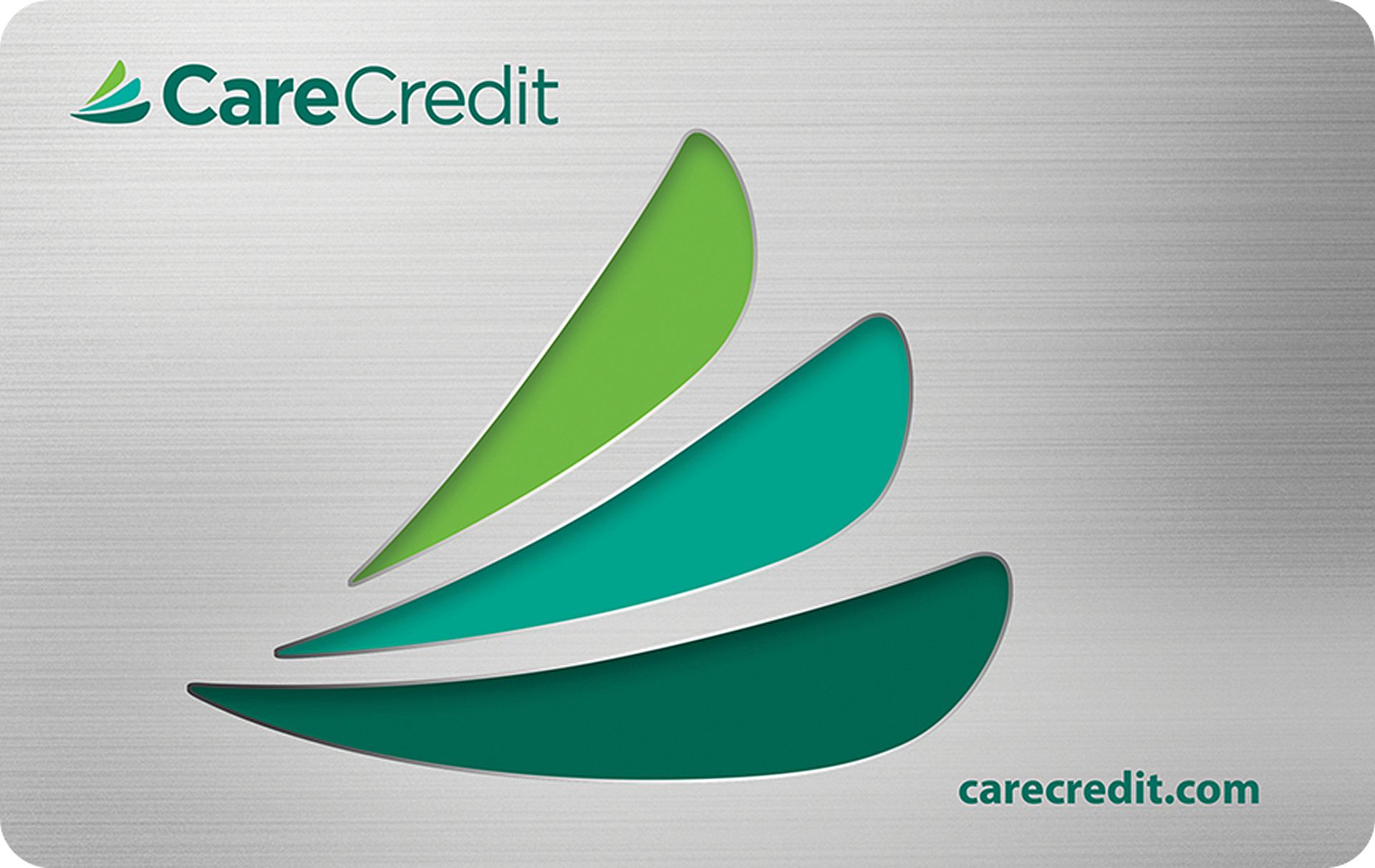
Rates, fees and offers
Rates, fees and offers
Annual fee
$0
Rewards rate
N/A
Bonus offer
N/A
Intro APR
N/A
Ongoing APR
APR: 32.99% APR
Penalty APR: 39.99%
Foreign transaction fee
N/A
More details from Synchrony Bank
More details from Synchrony Bank
- Health and Wellness financing for you and your family
- CareCredit is a health and wellness credit card with flexible financing options so you can pay over time for care you want or need*
- No annual fee**
- Promotional financing options available in the CareCredit network*
- Accepted at over 260,000 CareCredit network locations, and if approved for the CareCredit Rewards Mastercard® everywhere else that accepts Mastercard. Mastercard and the circles design are registered trademarks of Mastercard International Incorporated.
- Earn points on eligible purchases if approved for the CareCredit Rewards Mastercard
- When you apply, you will be considered first for the CareCredit Mastercard and then for the CareCredit credit card.
- *Subject to credit approval. Minimum monthly payments required
- **For New Accounts as of 5/30/2024: Purchase APR 32.99%. Penalty APR 39.99%. Min Interest Charge $2. CareCredit Rewards Mastercard: Cash APR 32.99% and 4% Fee ($10 min). Bal Trans APR 32.99% and 5% Fee ($5 min). Foreign Trans Fee 3%. Existing cardholders: See credit card agreement terms.
Pros and Cons
Pros
No annual fee
Financing options
Cons
Limited acceptance
No rewards
High ongoing APR
Detailed Review
The CareCredit Credit Card, issued by Synchrony, is designed to provide financing for people who are faced with medical expenses that aren’t covered by insurance. Medical bills are a big issue for Americans, and sometimes taking on debt is the only way to handle those costs, especially since they can often come as a surprise. Twenty-one percent of adults had major unexpected medical expenses in the prior 12 months, with the median cost between $1,000-$1,999, according to the Federal Reserve’s Report on the Economic Well-Being of U.S. Households in 2025.
Note, however, that there are actually two versions of the CareCredit product. The CareCredit Credit Card is a “closed-loop” product. It’s accepted within CareCredit’s network of more than 285,000 health care providers — and can also be used for eligible health and wellness purchases on Walmart.com — but it can’t be used anywhere else.
Its sibling card, the CareCredit Rewards Mastercard®, is the "open-loop" version that can be used both within CareCredit’s network as well as anywhere else Mastercard is accepted.
Here’s how these cards compare:
| Empty Table Header | CareCredit Rewards Mastercard® | CareCredit Credit Card |
|---|---|---|
Annual fee | $0. | $0. |
Where you can use it | Anywhere Mastercard is accepted. | Within the CareCredit network, and for eligible health and wellness purchases on Walmart.com. |
Promotional financing | Available for eligible purchases of $200 or more from a provider in the CareCredit network or a select retailer. | Available for eligible purchases of $200 or more from a provider in the CareCredit network or a select retailer. |
Rewards |
| None. |
If you apply online, you’ll be considered for the CareCredit Rewards Mastercard® first. If you don’t qualify for that card, you may instead qualify for the baseline CareCredit Credit Card. (Note that if you apply over the phone, you’ll be considered for the CareCredit Credit Card only.)
CareCredit Credit Card: Basics
Card type: Low interest.
Annual fee: $0.
Sign-up bonus: N/A.
Rewards: None.
Interest rate: The ongoing APR is 32.99% APR.
Foreign transaction fee: 3%.
Other perks: Deferred-interest and low-interest financing for eligible purchases of $200 or more. Purchases must be from a provider in the CareCredit network or a select retailer.
Compare to Other Cards
Benefits and Perks
You can use it at a variety of providers and partners
If you’re anticipating a medical expense that you’d like to finance, you can search for CareCredit providers in your area.
Enrolled providers include, but aren't limited to:
Medical specialists, dentists, eye doctors, dermatologists and cosmetic surgeons.
Hospitals, surgical centers, medical imaging and lab work.
Medical equipment, supplies and pharmacies.
Routine and emergency veterinary care.
Funeral, cremation and burial services.
CareCredit is also accepted by several partners, including pet insurance providers, drugstores and prescription discount programs.
It can help you finance eligible expenses
The CareCredit Credit Card offers these short-term financing options:
No interest if paid in full within six, 12, 18 or 24 months, on purchases of $200 or more. (This is what's known as a deferred interest promotion, which comes with risks. More on those below.)
A reduced interest rate and fixed monthly payments until your balance is paid in full. Repayment periods for this financing can be 24, 36, 48 or 60 months long, depending on the amount financed. (Generally speaking, this is safer than a deferred interest promotion, though you will incur interest regardless under this plan.)
Here’s an example of how these options could look. Let’s say you’d like to finance a $1,000 bill from a provider that accepts CareCredit. If you choose the no-interest promotional financing option, suggested payments would be anywhere from $42 per month for 24 months to $167 per month for six months. If you opted for the low-interest financing, you’d pay anywhere from $50 per month for 24 months at 17.90% APR to $31 per month for 48 months at 19.90% APR. (Figures accurate as of June 2026.)
Instantly available upon approval
You can’t always predict when you’ll be subject to a big medical bill, but you can use a new CareCredit Credit Card account the moment your application is approved, even if your physical card hasn’t arrived in the mail yet. That means you can apply from the doctor’s office and, if approved, use the card to pay your bill.
Drawbacks and Considerations
Limited acceptance and no rewards
Unlike the CareCredit Rewards Mastercard®, the CareCredit Credit Card earns no rewards and isn’t accepted everywhere. That gives it exactly one purpose: financing eligible purchases.
Deferred-interest financing
The no-interest financing offered by the CareCredit Credit Card is a deferred interest promotion, not a true 0% intro APR offer. If you choose this option, interest will still accrue in the background, meaning that if you don't pay off the balance in full by the end of the promotion — even if you owe only a few cents — you'll be charged the card's ongoing interest rate on the full amount of the purchase, retroactive to the purchase date.
In the case of credit cards with 0% intro APR offers, however, interest would truly be waived, not merely deferred. If you still owe a balance when this kind of offer ends, you'll be charged interest only on that remaining amount, and only from that point on.
When you’re dealing with an unexpected emergency, you may not have time to shop around for the best way to pay. But for a planned medical expense or upcoming bills from a recent procedure, you can weigh the CareCredit Credit Card against cards with 0% intro APR offers.
High standard APR
Outside of the promotional financing above, the CareCredit Credit Card charges a jaw-dropping annual percentage rate. The ongoing APR is 32.99% APR. For comparison, the Federal Reserve notes that the average APR charged for credit card accounts that incurred interest was 22.15% as of May 2026.
Moreover, if you make a late payment, a penalty APR of nearly 40% will kick in — and it may not go back down.
Depending on your situation, you may want to consider other choices. First, explore ways to lower costs. You may be eligible for discounts on certain procedures, health care products and wellness programs through your health insurance plan. Also, before you pay a medical bill, make sure you’re being correctly charged, as errors can cost you. You may be able to negotiate a reduced cost with the provider as well.
Once you have your final bill, here are additional ways to pay:
A payment plan. You may qualify for a monthly payment plan directly through your provider, possibly without fees or interest. Contact your provider to discuss eligibility.
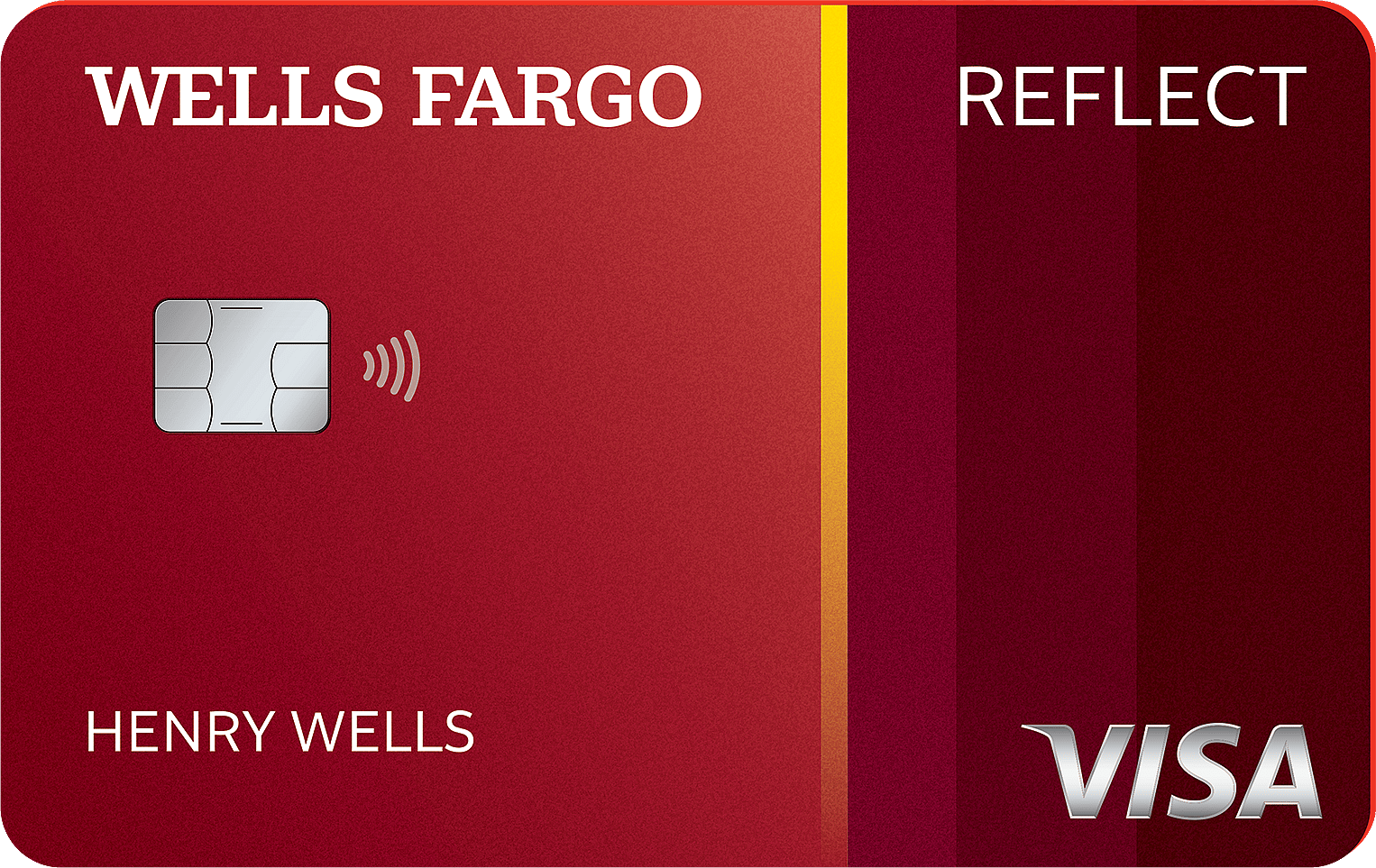
A credit card with a 0% APR promo. For planned medical expenses, a credit card charging 0% interest on new purchases can give you time to pay down a balance. The Wells Fargo Reflect® Card, for example, has one of the longest interest-free periods: 0% intro APR for 21 months from account opening on purchases and qualifying balance transfers, and then the ongoing APR of 17.74%, 24.24%, or 28.49% Variable APR. And as noted above, these kinds of cards won’t charge you interest on the original amount borrowed if you don’t pay off your debt in time. Instead, you’ll owe interest only on the remaining balance.
A balance transfer credit card. If you already charged a medical bill to a credit card, you can move that debt to a balance transfer credit card charging 0% interest for a period of time. You typically need good or excellent credit (generally, FICO scores of 690 or higher) to qualify, and you'll likely owe a transfer fee. But again, if you have a balance left after the 0% APR promo ends, you’ll owe interest only on that balance, not on the total original transferred amount.
Flexible financing options from an existing credit card. Some large credit card issuers allow you to either turn your available credit line into an installment loan (at a lower ongoing APR), or break up an individual card transaction into predictable monthly payments.
A personal loan. The CareCredit Credit Card offers longer loan terms for lower interest rates, but depending on your credit history and financial situation, you may qualify for even better rates with a personal loan.
How To Decide If It's Right For You
If you’re able to pay off your full balance before the promotional financing period ends, the CareCredit Credit Card could be ideal, especially since it grants you instant access to financing.
But if you’re able to comparison-shop for other financing options, you may qualify for something without the risk of sky-high interest if you can’t pay off your balance in time.
No annual fee and
Get nearly two years to pay down a balance at 0% APR. And because it's not deferred-interest financing, if you still owe a balance at the end, you'll only pay interest on what's left, not what you originally borrowed.
Looking For Something Else?
Methodology
NerdWallet reviews credit cards with an eye toward both the quantitative and qualitative features of a card. Quantitative features are those that boil down to dollars and cents, such as fees, interest rates, rewards (including earning rates and redemption values) and the cash value of benefits and perks. Qualitative factors are those that affect how easy or difficult it is for a typical cardholder to get good value from the card. They include such things as the ease of application, simplicity of the rewards structure, the likelihood of using certain features, and whether a card is well-suited to everyday use or is best reserved for specific purchases. Our star ratings serve as a general gauge of how each card compares with others in its class, but star ratings are intended to be just one consideration when a consumer is choosing a credit card. Learn how NerdWallet rates credit cards.
About the author

Sara Rathner
Senior Writer/Spokesperson
