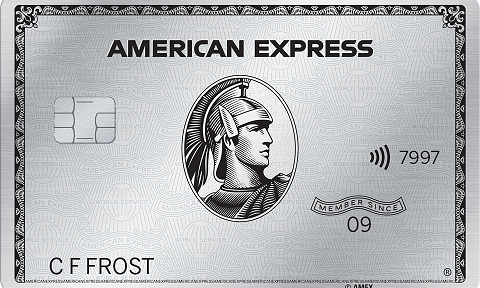
One of the perks of holding the American Express Platinum Card® is a $25 per month digital entertainment credit. Enrollment required. Terms apply.
For fans of Baby Yoda or Wordle addicts, the digital entertainment credit can go a long way in justifying up to $300 of the card's $895 annual fee (see rates and fees). However, the fee doesn't just cover any sort of streaming service. And, it has other limitations, such as how frequently you get the credit.
That said, here's exactly how the digital entertainment credit of the American Express Platinum Card® works — and how you can maximize it. Terms apply.
How does the American Express Platinum Card®’s digital entertainment credit work?
American Express advertises this credit as a "$300 Digital Entertainment Credit." However, it's not an actual annual $300 credit. Instead, AmEx will provide up to $25 in statement credits each calendar month when cardholders use an enrolled card to make purchases directly from eligible merchants. Terms apply.
Which merchants qualify for the AmEx digital entertainment credit?

The American Express streaming credit, or AmEx digital entertainment credit, isn't limited to just streaming providers. However, the downside is that AmEx limits the $300 digital entertainment credit to only the following merchants:
Disney+.
The Disney+ Bundle.
ESPN+.
Hulu.
Paramount+
Peacock.
The New York Times.
The Wall Street Journal.
YouTube Premium.
YouTube TV.
Terms apply.
Make sure your subscription is made directly with an eligible merchant. Payments made through a third party — like Apple — won't qualify for the credit.

By signing up, you will receive newsletters and promotional content and agree to our Terms of Use and acknowledge the data practices in our Privacy Policy. You may unsubscribe at any time.
How to enroll in the AmEx digital entertainment credit
To get started using the AmEx streaming credit, you first need to enroll your American Express Platinum Card® in this benefit. To do so, log in to your American Express account and navigate to this $300 digital entertainment credit page.
Read through the terms and then scroll down to click the "Enroll now" button. After going through the enrollment process, it's worth a few more seconds to return to confirm that there's a checkmark and that your status is "enrolled" at the top of your benefits page.
Both primary cardmembers and authorized users — which AmEx calls "Additional Card Members" — can make purchases to utilize the streaming credit. However, each primary account is limited to a credit of just $25 per month. Authorized users do not get their own $25 per month credit. Terms apply.
Ways to maximize the streaming credit of the American Express Platinum Card®
American Express Platinum Card® holders have plenty of ways to maximize this $300 digital entertainment credit. The strategy for you is going to depend on your entertainment priorities. Let's look at a few ways you can maximize this $25 per month credit. Terms apply.
Don't get both Paramount+ and Peacock
Unless Paramount+ and Peacock are the only streaming services you use (or you can't stomach ads), don't expense both of these to the American Express Platinum Card®, since you already have access to one of these two subscriptions through a different perk.
The American Express Platinum Card® reimburses you for a Walmart+ membership, which comes with a free subscription to either Peacock Premium or Paramount+ Essential. Both of these plans do come with ads, so if you prefer to pay a premium for an ad-free plan, it might still be worth using the digital entertainment credit for this. But if ads aren't an issue for you, get one plan through Walmart+ and charge the other to the American Express Platinum Card® to take advantage of the digital entertainment credit.
Watch cable TV with YouTube TV
If cable TV is more your speed than streaming, the digital entertainment credit can cut the cost of a YouTube TV plan by $25. The base plan starts at $82.99 a month, so you'll still be on the hook for most of the cost. Still, though, $57.99 a month for cable isn't a bad deal.
Get a newspaper subscription
Other cardholders of the American Express Platinum Card® might want to use their digital entertainment credit to keep up with current events.
So, for example, you can support journalism at The New York Times by subscribing to the newspaper. The New York Times is currently offering a basic digital access subscription for just $4 per month for the first year of service — and then $25 per month after that.
You can also consider a subscription for The Wall Street Journal, which regularly offers deals for both digital and print access.
» Learn more: The best credit cards for streaming
AmEx digital entertainment credit recapped
Utilizing the digital entertainment credit is key to getting the maximum value out of your American Express Platinum Card® membership.
For some, the fact that AmEx makes this a monthly credit may be a letdown. After all, many annual subscriptions cost less per month than paying for a subscription monthly. With this credit, you'll likely find yourself taking the monthly option.
Either way though — if you're a current member of the American Express Platinum Card® — confirm that you're enrolled in the AmEx digital entertainment credit. Then, review the list of eligible merchants to see which makes the most sense for you. Just ensure you set up auto-pay using your card. Terms apply.
If you don't have the American Express Platinum Card® but currently pay for one of these services, factor in the AmEx streaming credit when determining the value you can get from the card.
How to maximize your rewards
You want a travel credit card that prioritizes what’s important to you. Here are some of the best travel credit cards of 2026:
Flexibility, point transfers and a large bonus: Chase Sapphire Preferred® Card
No annual fee: Wells Fargo Autograph® Card
Flat-rate travel rewards: Capital One Venture Rewards Credit Card
Bonus travel rewards and high-end perks: Chase Sapphire Reserve®
Luxury perks: American Express Platinum Card®
Business travelers: Ink Business Preferred® Credit Card