Credit card travel portals, like the AmEx or Chase travel portal, occupy a somewhat obscure corner of the rewards world. Unless you’re a true points and miles obsessive, you’re probably only familiar with one or two of these travel search tools. And even then, you might not be sure when you need to book through them or what they’re for.
Credit card travel portals serve two basic functions:
Booking travel travel with points. For example, if you want to use Chase Ultimate Rewards® points to book a flight directly (rather than transferring to a travel partner), you’ll do so through Chase's travel portal.
Earning extra points on travel paid for in cash. At least one American Express card, for example, earns 5x points on prepaid hotels booked through AmexTravel.com. Terms apply.
Since these booking platforms act as literal portals between your points and travel, their functionality and performance matter quite a bit. The value of any collection of credit card points depends not only on the raw dollar amount you can get for those points, but also on how useful the tools are for redeeming them.
With that in mind, we compared four major travel portals, provided by issuers American Express, Chase, Capital One and Citi. For the sake of simplicity, we focused on booking air travel rather than hotels through each portal, and rated three key components of each:
Airfare price.
Load time.
Usability.
There are more considerations to keep in mind when choosing a credit card rewards program, such as the quality of customer service and the value of the rewards points themselves. But this comparison provides a high-level view of which programs have created a consumer-friendly product and which have not.

By signing up, you will receive newsletters and promotional content and agree to our Terms of Use and acknowledge the data practices in our Privacy Policy. You may unsubscribe at any time.
Lowest airfare prices: Citi and Chase portals (Tie)
Airline search tools are ubiquitous and powerful these days, so it’s easy to assume they all reveal roughly the same fares on the same airlines. But that wasn’t what we found when it came to credit card travel portals.
We compared cash prices for the same nine round-trip routes for the same dates. This is not a comprehensive data analysis, but does provide a telling snapshot.
Effectively, Chase and Citi tied, with Capital One fares coming in slightly higher and American Express fares coming in more than $100 more expensive than Chase and Citi, on average.
What’s going on here? Why is the AmEx travel portal more expensive?
American Express didn’t provide any basic economy fares in our searches, meaning the results were for main cabin or regular economy seats. In some sense, this makes the difference more understandable, since a $100 markup for main cabin seats is typical.
On the other hand, it’s not clear why AmEx chose not to offer these rock-bottom fares for customers. Although they’re not for everyone, basic economy fares do make sense under certain circumstances. So, why doesn’t AmEx even offer them?
Also, as further discussed in the usability section below, AmEx lists its so-called “insider fares” at the top of all search results. These fares, which can be booked with either cash or points, are presumably discounted for Membership Rewards members. But they were usually not the lowest fares overall in our searches, which meant that the top search results were often hundreds of dollars more expensive than the most affordable fares available on AmEx searches.
Since we always selected the lowest available fares, these insider fares (which were sometimes higher in cost) didn’t affect our data analysis. But the way these fares are displayed is a major hurdle for AmEx users trying to find affordable airfare, since it requires scrolling past several suboptimal fares to find the best ones.
» Learn more: AmEx points vs. Chase points
Best load time: Citi ThankYou
If you haven’t used credit card travel portals much, you might consider this a strange category to include. Most travel apps and websites are pretty fast these days, so how much could this really matter?
But load times can be a major issue for travel portals, especially when trying to find the best prices across a range of dates or other variables. For all but the most dedicated frugal travelers, long load times can make the difference between finding the absolute best route and price and settling for something subpar.
AmEx once again drops to the back with its abysmal 19.5-second load time. This is a serious technical issue that needs to be resolved before travelers can usefully search on AmEx Travel. Though 10 or 20 seconds might not sound like much, in internet time, it can feel like an eternity.
We collected these load time data ourselves, which means the speed of our internet at the time of collection could affect the raw numbers. However, we started our watches when the search loading screen appeared (not when we clicked "search"), and the relative difference between portals should remain the same, regardless of internet speed.
That is, the AmEx portal will load more slowly than the Citi portal, regardless of the speed of one's internet connection.
Most user-friendly: Capital One Travel
This is the most subjective of the three categories. As we searched for flights on each platform, we noted which offered intuitive interfaces and powerful features and which didn’t.
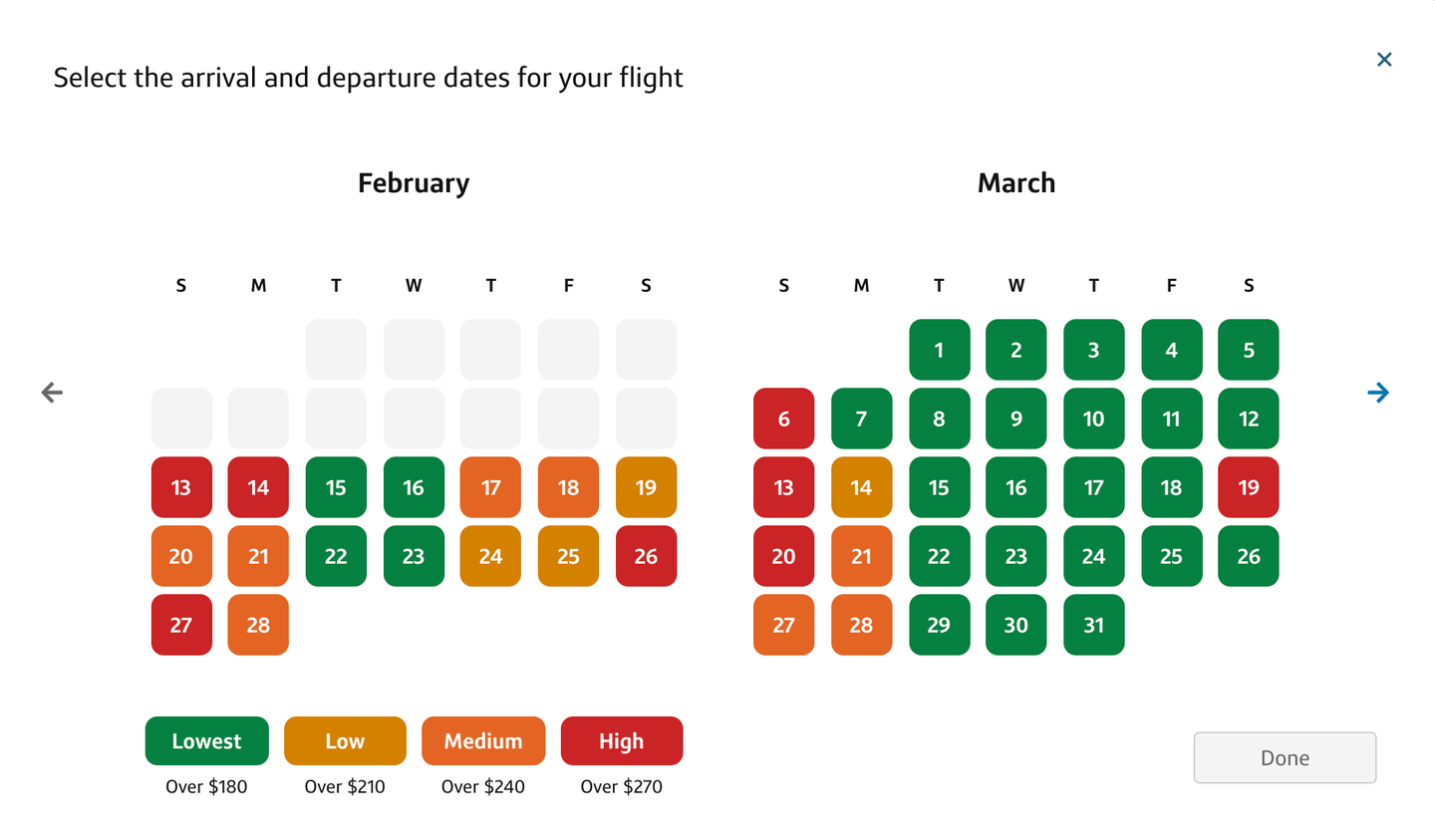
Capital One Travel was the clear winner here. Because of its integration with Hopper, a travel booking app, Capital One’s portal offers some slick features, such as a flight calendar view that quickly reveals the cheapest dates for travel.
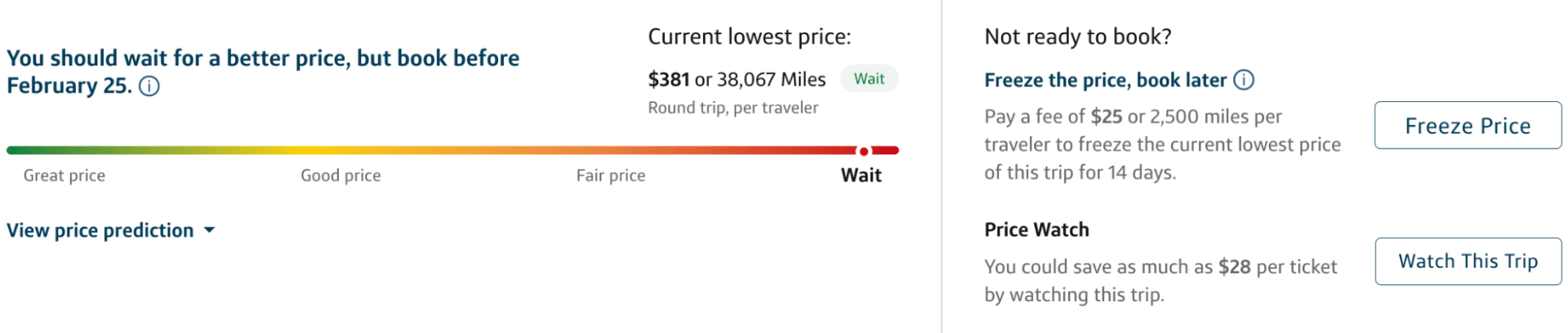
Capital One’s Hopper integration also supports advanced features, like price prediction and price alerts.
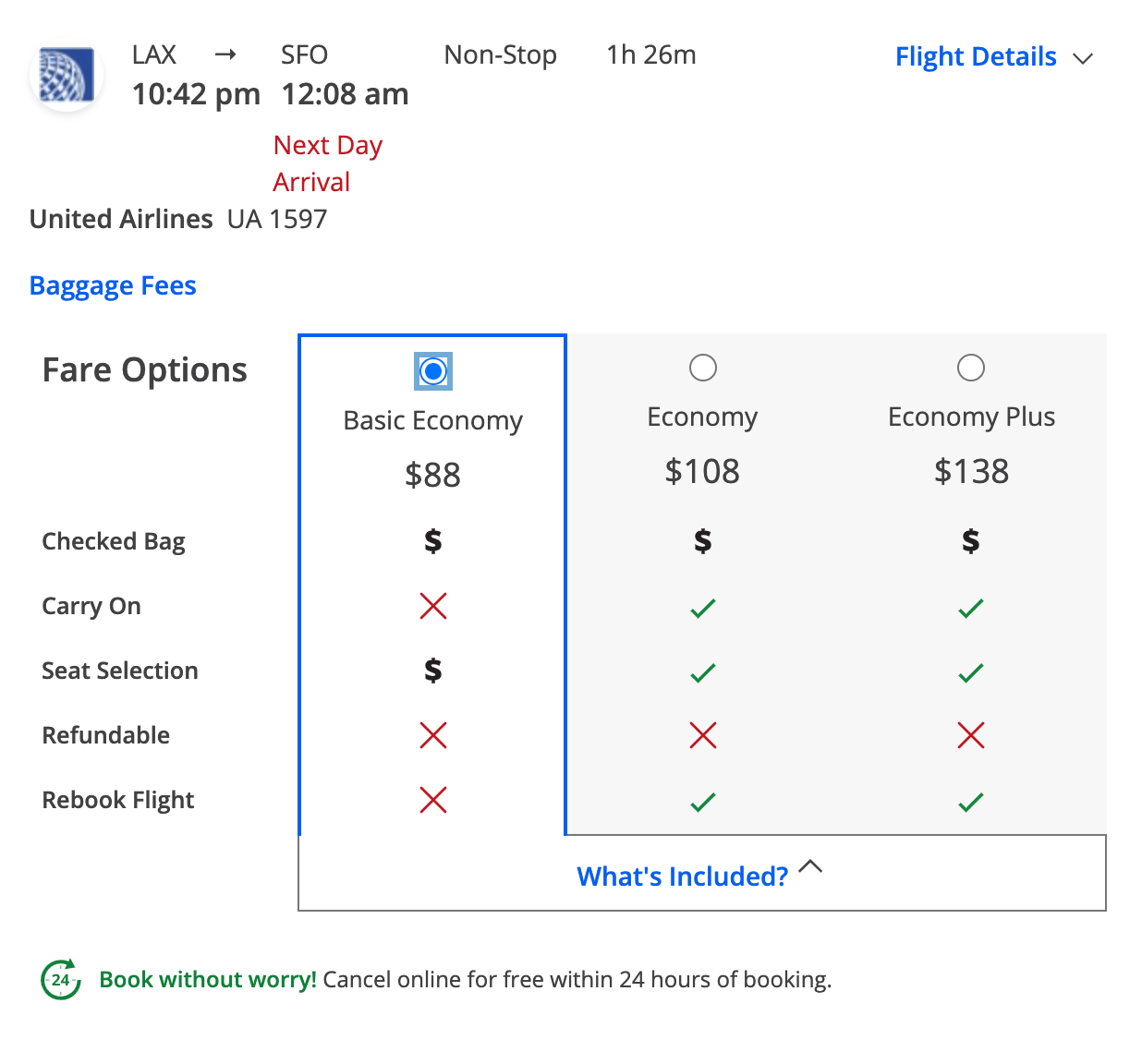
The Citi and Chase travel portals also feature intuitive interfaces, but without all the bells and whistles. Both credit card portals helpfully break down the differences between tickets — particularly for main cabin and basic economy fares. Since every airline has its own rules for these fares, this can save travelers a headache.
Here’s how this looks for a Chase travel booking:
And bringing up the rear in our usability category is — you guessed it — AmEx. Its travel portal offers none of these features, making it difficult to find the lowest fare or understand the difference between fares. And, most egregiously, it automatically lists its “insider fares” at the top of airfare search results, even when these are not the lowest priced or best options.
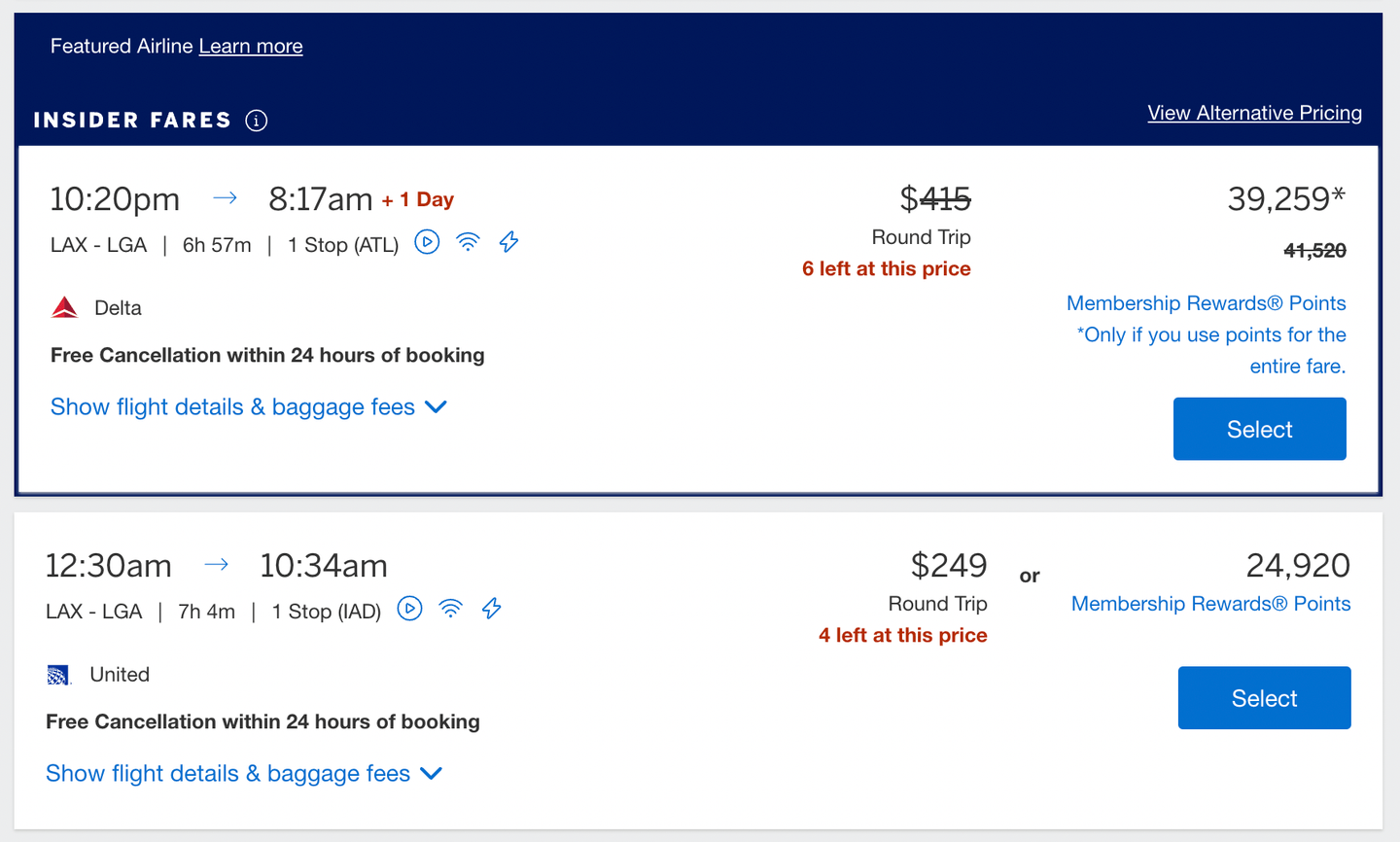
This means you have to wade through several promotional fares to find the one you might actually want to book. And since the real price of these fares is hidden, comparing between them takes multiple clicks and the patience of a zen monk. (Have we mentioned the load times in the AmEx travel portal?)
All this, combined with a generally clunky interface, places AmEx at the bottom of this category.
Best travel booking portal overall: Citi ThankYou
When we rank each program across each category, Citi edges out Chase for best travel portal overall.
Price | Load time | Usability | Average | |
|---|---|---|---|---|
Citi | 1. | 1. | 2. | 1.3. |
Chase | 1. | 2. | 2. | 1.7. |
Capital One | 3. | 3. | 1. | 2.3. |
American Express | 4. | 4. | 4. | 4. |
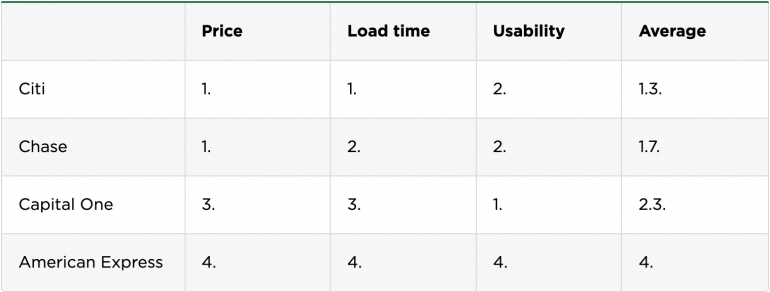
(These are ranks, so lower is better.)
The Citi ThankYou portal isn’t the slickest or nicest to look at, but it gets the job done, as the numbers show. If you’re considering getting a card that earns Citi ThankYou points, you won’t have to worry about the performance of its travel portal.
In general, these results are a mixed bag, with the best three programs edging each other out in each category. But then there is AmEx, which ranked dead last in each category. Ranking last in any single category wouldn’t be a red flag, but doing so in every category certainly is. It shows that AmEx needs to do some serious work overhauling its flight search capabilities and interface in order for the AmEx travel portal to compete.
Final thoughts on the best travel portals
Credit card travel portals are, in some ways, walled gardens that keep some or all of your travel booking in one place. This means that the quality of the portal can have a direct impact on the quality of the flights you’re able to book — not to mention the quality of your life while you do so.
Capital One, Chase and Citi-issued cardholders should be fine with their respective online travel booking sites. Capital One offers the most robust features and intuitive interface, but Chase and Citi edge it out in price and performance. Overall, the Citi ThankYou portal is the best option when considering which offers the lowest prices, the quickest load times and the most user-friendliness.
The only portal you’ll want to avoid if you can is AmEx. Its 20-second load times are a serious issue, one that it doesn’t make up for in any other aspect. In fact, the AmEx travel tool is highly inefficient (and potentially frustrating) for all but the most basic flight searches.