

You've heard of first class, business class and economy. But behind the scenes, airlines use a more intricate hierarchy of fare classes, which ultimately determine how much you pay and what you get.
Your fare class — also known as a booking class or fare type — can tell you a lot about your ticket, like:
Whether it’s refundable.
Whether it's eligible for an upgrade.
How many miles and elite credits you’ll earn on your flight.
Understanding fare classes can help you book the flights that meet your specific needs and avoid flights that don’t.

By signing up, you will receive newsletters and promotional content and agree to our Terms of Use and acknowledge the data practices in our Privacy Policy. You may unsubscribe at any time.
Fare class and basis codes
Fare class is one component of a “fare basis code,” which is a string of letters and numbers signifying the rules and privileges that apply to your ticket.
Apart from fare class, fare basis codes contain information about routing, cancellation policies, ticketing restrictions and other provisions. For example, here’s the fare basis code for an American Airlines flight from Seattle to Dallas.

The fare class in this case is indicated by the first letter “Q,” which is one of many letters that can signify an American Airlines Main Cabin ticket. Each airline has its own system of writing fare basis codes, so your fare class might not appear in the first letter of the fare basis code.
Fare classes are defined in the International Air Transport Association (IATA) handbook, and some definitions are common enough across the commercial aviation industry that they’ve become informal shorthand for certain classes of service:
F — First Class
J — Business Class
W — Premium Economy
Y — Economy
In practice, airlines tend to sub-categorize classes of service into multiple fare classes, so flying in first class doesn’t necessarily mean your fare class is F. Furthermore, airlines don’t always adhere to the IATA standard, so specific fare class definitions can vary from one airline to the next.
For more details, check out these NerdWallet guides to fare classes on major domestic carriers:
By signing up, you will receive newsletters and promotional content and agree to our Terms of Use and acknowledge the data practices in our Privacy Policy. You may unsubscribe at any time.
Why you should pay attention to fare classes
Fare class can determine various aspects of your flight experience both on and off the plane. In some circumstances, it pays to book a specific fare class (or at least know which one you booked).
Earning rewards
The miles and elite credits you earn from flying sometimes depend on your fare class, most commonly when crediting flight activity to a partner airline. For example, American Airlines maintains individual earning charts for each of its Oneworld and non-alliance partners, indicating how many AAdvantage miles and elite credits you’re eligible to earn on a partner flight.
Consider the chart for Japan Airlines shown below, where earning rates vary from 100% of base miles flown with a 200% cabin bonus (for F and A fares) to 30% of base miles flown with no bonus (for O, G, N, Q and Z fares).
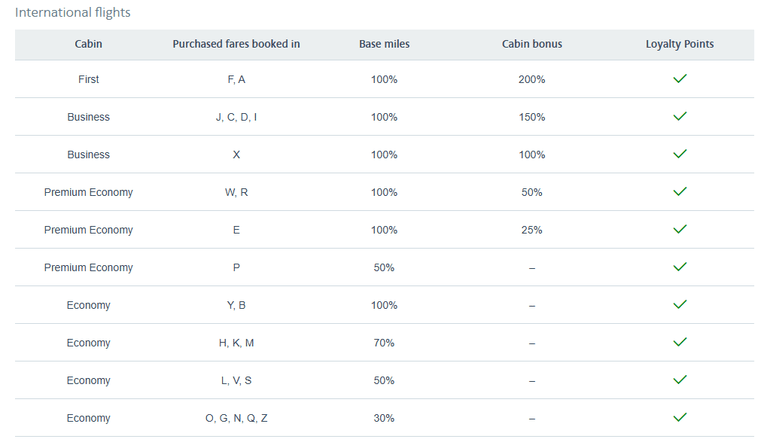
Some fares are ineligible to earn AAdvantage rewards entirely, such as the cheapest economy fares on Cathay Pacific, Malaysia Airlines and Hawaiian Airlines.
If you want to be sure you earn miles or you’re chasing airline elite status, look to avoid fare classes that offer a low return or none at all.
Upgrades
Fare class is often used to determine upgrade priority when other factors (like elite status) are equal. For example, United Airlines is more likely to upgrade you to business class from full-fare economy (Y fare) than from deeply-discounted economy (like K or G fares). Fare class may also dictate whether you’re eligible for a paid upgrade or upgrade award, as well as how much that upgrade will cost.
Lounge access
On some airlines, your fare class can impact whether you’re eligible for airport lounge access. For example, you can enter Alaska lounges when you fly first class on Alaska Airlines or Hawaiian Airlines flights over 2,000 miles, so long as you book in an eligible fare class (C, D, E, J, I, F, P, or A). You won’t have access if you’re flying Alaska Airlines on an upgrade award (U class).
Refundability
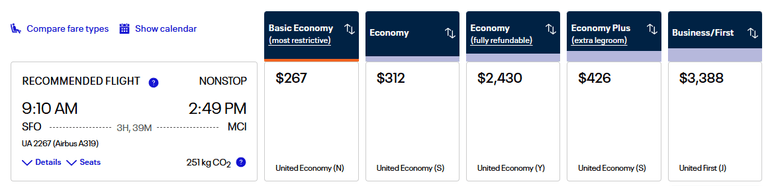
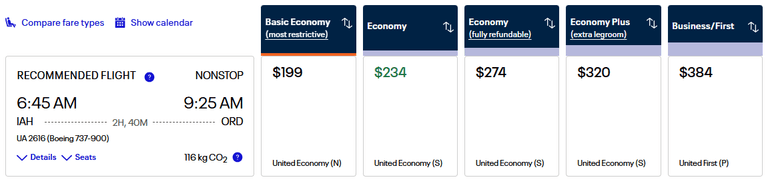
Fare class also dictates whether your ticket is fully refundable, partially refundable or non-refundable. Refundable fares are generally more expensive, and the price difference can be staggering. Among the United Airlines flight options shown below, a fully refundable economy (Y) fare costs nearly 8 times as much as a regular economy (S) fare.
How to determine your fare class
Some airlines display fare class plainly during the booking process, while others require a few extra clicks to find it. Here’s how you can track down fare class information on the websites of most major domestic carriers.
Alaska Airlines
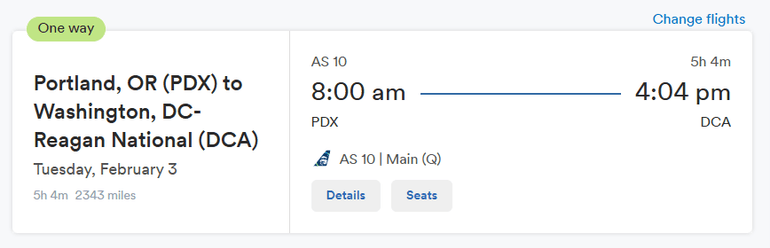
To view fare classes on Alaskaair.com, you’ll need to click through initial search results and add a specific fare to your cart. You’ll then see a summary of the fare you’ve selected, with the fare class listed just above the seat selection tool, as shown below.
American Airlines
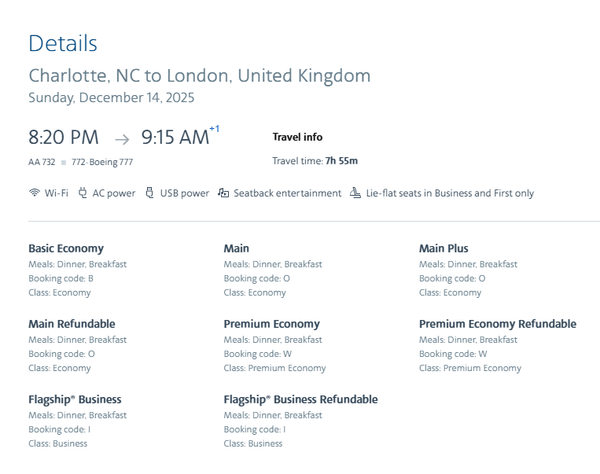
You can view available fare classes for American Airlines flights by clicking “Details” in search results on AA.com, and in later stages of the booking process. You’ll see the fare class listed as the “Booking Code” for each fare, as shown below.
Delta Air Lines
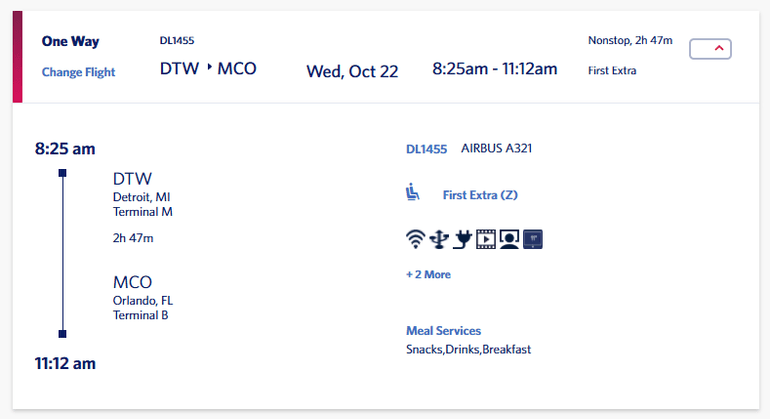
Delta’s website displays fare classes only after a fare is selected. You can see your fare class on the “Trip Summary” page by clicking the red arrow to expand the flight details.
Hawaiian Airlines
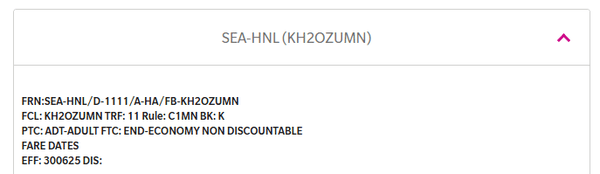
To see your fare class on Hawaiianairlines.com, you’ll need to select a fare and progress to the trip summary page. At the bottom of a page, you’ll see a link to “Fare Rules,” which brings up a lengthy description of your fare details. The fare class in this example (K) is shown both as the first letter of the fare basis code and at the end of the second line.
JetBlue
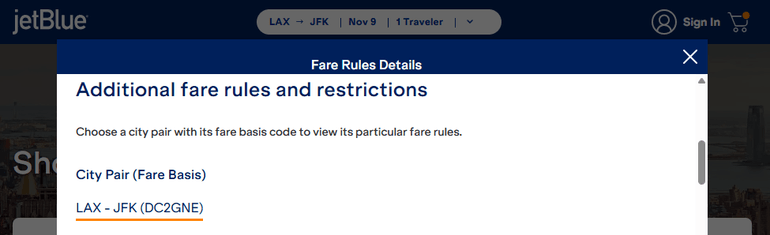
Once you select a fare on JetBlue.com, you’ll be presented with the “Shopping Cart” screen. Beneath the price summary, click the Fare restrictions link and scroll down on the pop-up window to the “Additional fare rules and restrictions” section. There you’ll find the city pair and fare basis code, the first letter of which is your fare class. In the example below, the fare class is D (for JetBlue Mint business class).
United Airlines
United.com displays fare classes in search results directly under each fare. The flight below shows fares in basic economy (N), deep-discounted economy (S), and deep-discounted business (P). Note that United Economy Plus doesn’t have its own fare class; instead, it’s effectively categorized as a regular economy fare with a surcharge for additional service.
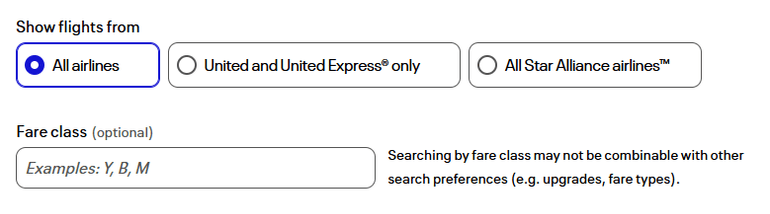
If you’re looking for fares in specific classes, you can use United’s advanced search to only show the fares you want.
Third-party bookings
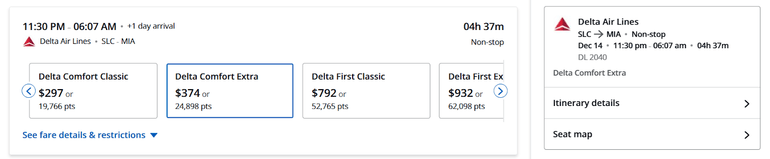
You don’t have to book directly with airlines to see fare classes. Some online travel agencies and other third parties also make detailed fare information available. For example, the Chase's travel portal lists fare classes once you select a fare.
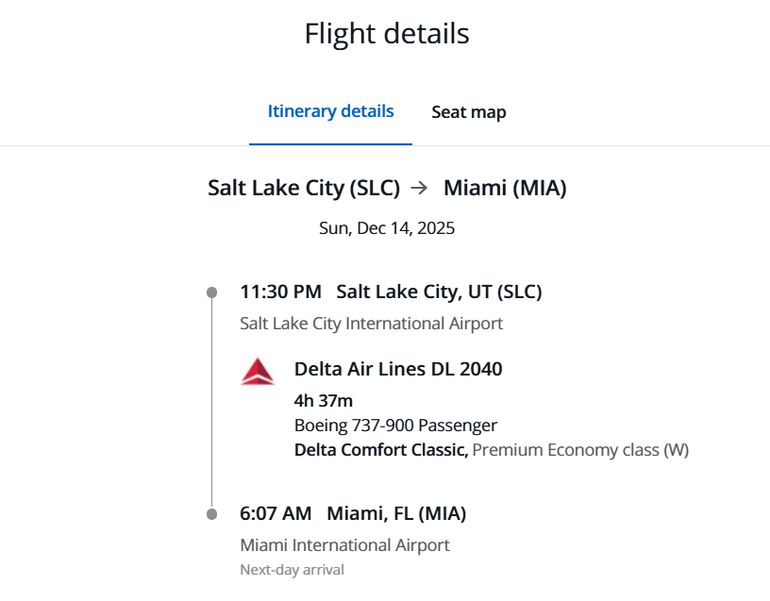
Clicking “Itinerary Details” on the right side of the screen pulls up a summary that includes the fare class (W in this case).
Be mindful about booking through an online travel agency that doesn’t specify fare class, especially one that doesn’t distinguish basic economy from regular economy. If you can’t tell the difference at booking, you may end up with a fare you don’t want.
Use ITA Matrix to search for specific fares
If you can’t get the fare information you need from the airline or online travel agency, you still have options. The ITA Matrix is an advanced flight search tool that displays fare class in its basic search results, making it easy to compare fare availability across multiple airlines at once. ITA Matrix also lets you set parameters like fare class, carrier, aircraft type and connecting airport.
To search for specific fare classes, click "Show Advanced Controls" on the ITA Matrix search, and enter the fare class in the “Extension Codes” box using the following format:
F bc=X
X is whatever fare class you’re searching for. If you’re looking for a full-fare business class ticket, for example, you’d use the extension code F bc=J.
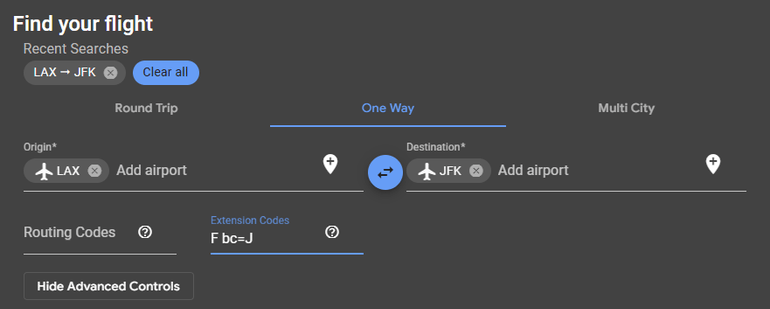
The ITA Matrix takes some getting used to, but once you learn how to enter codes, it’s a powerful (and free) tool for searching flight options with precision.
How to maximize your rewards
You want a travel credit card that prioritizes what’s important to you. Here are some of the best travel credit cards of 2026:
Flexibility, point transfers and a large bonus: Chase Sapphire Preferred® Card
No annual fee: Wells Fargo Autograph® Card
Flat-rate travel rewards: Capital One Venture Rewards Credit Card
Bonus travel rewards and high-end perks: Chase Sapphire Reserve®
Luxury perks: American Express Platinum Card®
Business travelers: Ink Business Preferred® Credit Card