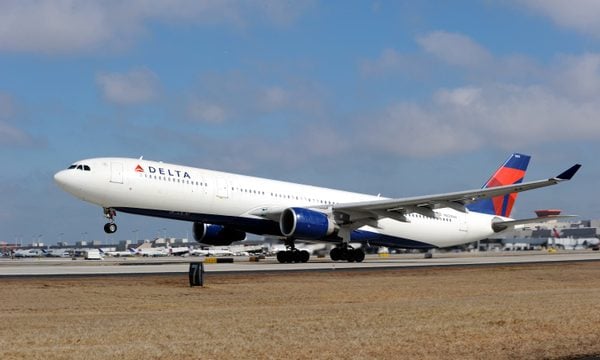





When you book flights with Delta Air Lines, it's important to pay attention to your fare class.
Most travelers will gloss over this single letter, usually displayed in parentheses during the booking process. This letter dictates how much your ticket ultimately costs, and the letter you see is determined by factors like real-time demand and route competition.
It's also why you might see different prices for seats in the exact same cabin, even when searching on the same day. To manage this backend math, Delta breaks down its cabins into specific fare classes, each designated by a single letter code.
However, in addition to the fare booking class, you'll also need to pay attention to the "travel experience" you purchase. While Delta has long offered basic economy fares, it started rolling out basic fares across all its cabins in July 2026. That means you can be flying in Delta One but have a Basic Business ticket. These fares are cheaper than non-basic fares, but come with fewer perks.
Here is what those codes actually mean for your wallet, your upgrades and your lounge access.

By signing up, you will receive newsletters and promotional content and agree to our Terms of Use and acknowledge the data practices in our Privacy Policy. You may unsubscribe at any time.
What are Delta fare classes?
A fare booking class — also known as a fare bucket — is one component of a fare basis code, a string of letters and numbers that tells airline computers exactly what rules apply to your ticket. At a single glance, an agent knows whether your ticket can be changed, if it is eligible for upgrades and how many miles it will earn.
For most flyers, understanding the fare booking class in conjunction with the selected travel experience is sufficient.
Fare booking classes
The cost of your ticket will depend on the fare booking class that is currently available. These are the fare booking classes Delta uses by cabin, ordered from most expensive to least expensive:
Delta One (business class): J, C, D, I, Z.
Delta Premium Select (premium economy): P, A, G.
Delta Comfort (extra-legroom economy): W, S.
Delta Main (economy): Y, B, M, H, Q, K, L, U, T, X, V.
Delta Main Basic (basic economy): E.
For example, a Delta One ticket with a J booking class will be significantly more expensive than a Z booking class. If only expensive booking classes are available, that flight is likely in high demand.
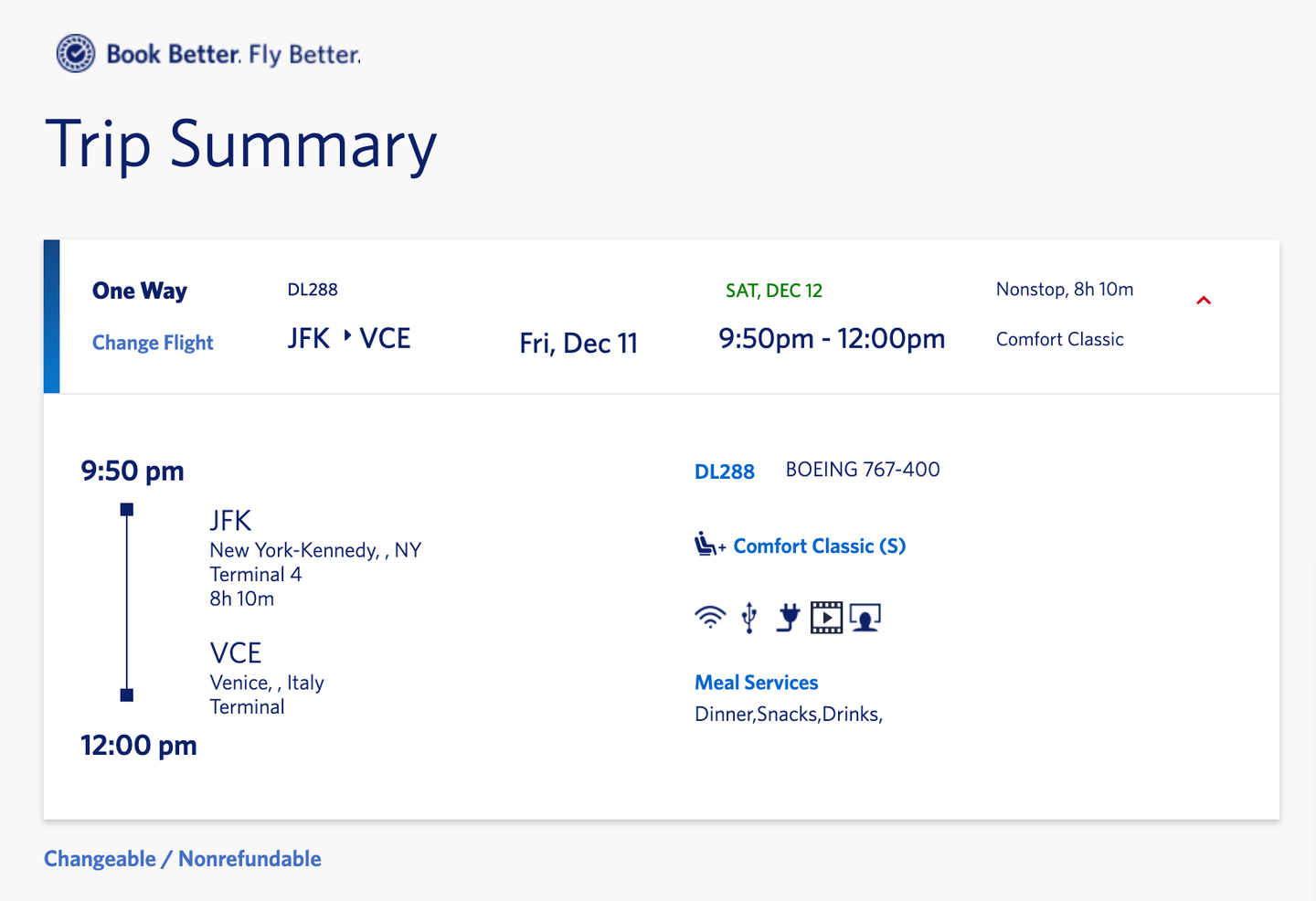
You can find the fare booking class — displayed as a single letter in parentheses — on the trip summary page after you've selected your flights during the booking process.
Travel experiences
In addition to the fare booking class, Delta requires customers to select a travel experience that will determine the perks assigned to the ticket.
There are three overarching "experiences" that Delta sells:
1. Basic fares (the bare-bones option)
Delta sells basic fares across all cabins, from Main to Delta One. These fares are branded as Delta Main Basic, Delta Comfort Basic, Delta First Basic, Delta Premium Select Basic and Basic Business (for Delta One). Some flights may not offer basic fares, and its availability often depends on the specific route and demand.
These basic fares are the cheapest option, but they come with several restrictions: no complimentary or paid upgrades, no complimentary seat selection, no changes or cancellations without paying a fee (from $99 for domestic economy fares to $500 for international long-haul business class), lower mileage earning rate, fewer checked bags and restricted lounge access.
Delta Main Basic is even more punitive, with no miles earned, no checked bags and no lounge access. Keep in mind that while Delta Main Basic has its own fare booking class (E), the other basic-branded fares do not have dedicated booking classes.
2. Classic fares (the standard option)
This is what you'd consider the standard fare, and it comes with the perks that people are typically used to. The available fares are Delta Main Classic, Delta Comfort Classic, Delta Premium Select Classic, Delta First Classic and Delta One Classic. These represent standard, non-refundable tickets that allow free seat selection, standard bag allowances, regular mileage earning rates, upgrade eligibility and lounge access, assuming you have the right credentials to get in.
You can change or cancel these tickets. While you won't get a refund to your original method of payment, you'll get a travel credit that can be used for another Delta booking.
3. Extra fares (the refundable option)
These are fully refundable fares across all cabin classes, carrying the highest priority for complimentary Medallion upgrades. They also come with a boosted mileage earning rate, although the increase in price generally isn't worth the extra miles you earn.
Why your Delta fare class and travel experience matters
1. You might lose access to lounges
All of Delta's basic fares come with restricted lounge access. Depending on your ticket, that can mean different things.
Starting January 19, 2027, Basic Business ticket holders will no longer have access to the Delta One Lounge. They also won't be able to use the dedicated Delta One check-in facilities.
As of that date, all basic ticket holders will not receive automatic access to Delta Sky Clubs by virtue of their ticketed cabin or Medallion elite status. To get in, you'll need to have other credentials, such as a Delta Sky Club membership or a credit card that includes Delta Sky Club access.
If you are flying in Delta Main Basic with an E booking class, you aren't able to access Delta lounges at all.
» Learn more: The best airline credit cards right now
2. It affects your place on the upgrade waitlist
Your position on the complimentary upgrade list is determined heavily by your fare booking class and your travel experience. Your spot on the waitlist is determined by your Medallion status, and then whether you purchased an Extra fare. Classic fares receive lower priority, while basic fares disqualify you from any upgrades. Assuming all things are equal, your fare booking class could be the tie-breaker that determines whether you get upgraded.
3. Your SkyMiles earning rates will differ
When you fly on a cash ticket, Delta will award you miles at a rate determined by your purchased travel experience as part of its Delta SkyMiles loyalty program:
Extra fares: Earnings start at 7 miles per $1 spent.
Classic fares: Earnings start at 5 miles per $1 spent.
Basic fares: Earnings start at 2 miles per $1 spent.
Main Basic fares: No miles are earned.
If eligible, you'll earn miles on the base fare and carrier-imposed surcharges. While general SkyMiles members earn at the above rates, Medallion elites earn extra miles per $1, as long as they aren't traveling in Delta Main Basic:
Silver Medallion: 2 extra miles per $1 spent.
Gold Medallion: 3 extra miles per $1 spent.
Platinum Medallion: 4 extra Miles per $1 spent.
Diamond Medallion: 6 extra miles per $1 spent.
4. Your ability to make changes will differ
If you're booked in Delta Main or Delta Comfort, you're eligible for confirmed changes to another flight on the same day as your original flight; however, the same fare booking class must be available. Those flying in premium cabins can score a same-day confirmed change as long as there is availability in the cabin on another flight.
You'll need to pay a $75 fee, unless you have Gold Medallion status or above or if you're traveling on an Extra fare.
Basic tickets are not eligible for same-day confirmed changes or same-day standby privileges.
Why booking class matters when traveling on Delta partners
Your fare booking class also determines how many miles and Medallion Qualification Dollars (MQDs) you'll earn when flying with Delta's SkyTeam partners, including Air France, KLM, Korean Air and Virgin Atlantic.
When booking a partner flight and crediting it to Delta SkyMiles, the amounts you earn are calculated as a direct percentage of the physical distance flown multiplied by a percentage directly tied to the partner's fare code.
For example, a full-fare business class ticket on Korean Air will net you 200% of miles flown. Conversely, booking a deeply discounted economy fare code on Vietnam Airlines might restrict your earnings to an abysmal 10% of miles flown and caps your MQD progress significantly.
Always audit the Delta partner earning charts before booking international SkyTeam itineraries.
Delta credit cards
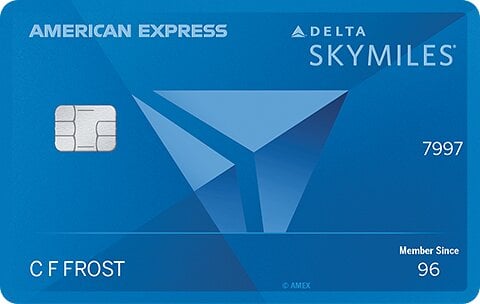
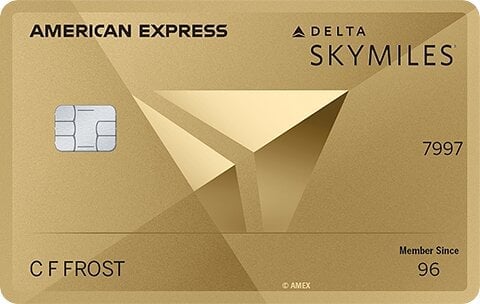
With basic fares now live across all cabins, carrying a Delta credit card can be a smart way to protect your lounge and baggage perks.
For example, the American Express Platinum Card® and the Delta SkyMiles® Reserve American Express Card include a number of Delta Sky Club access passes so you can relax and enjoy the lounge before your flight or between connections (unless you're on a basic economy fare). Terms apply.
Having a Delta card can also boost your stash of Delta miles, which can be used to book flights and upgrade tickets.
Top Delta cards
Annual fee
Welcome offer
» Learn more: Is a Delta card worth it?
(Top photo courtesy of Delta Air Lines)
How to maximize your rewards
You want a travel credit card that prioritizes what’s important to you. Here are some of the best travel credit cards of 2026:
Flexibility, point transfers and a large bonus: Chase Sapphire Preferred® Card
No annual fee: Wells Fargo Autograph® Card
Flat-rate travel rewards: Capital One Venture Rewards Credit Card
Bonus travel rewards and high-end perks: Chase Sapphire Reserve®
Luxury perks: American Express Platinum Card®
Business travelers: Ink Business Preferred® Credit Card