

Every time.
We believe everyone should be able to make financial decisions with confidence. While we don't cover every company or financial product on the market, we work hard to share a wide range of offers and objective editorial perspectives.
So how do we make money? Our partners compensate us for advertisements that appear on our site or when you click to or take an action on their website. This compensation helps us provide tools and services - like free credit score access and monitoring. With the exception of mortgage, home equity and other home-lending products or services, partner compensation is one of several factors that may affect which products we highlight and where they appear on our site. Other factors include your credit profile, product availability and proprietary website methodologies.
However, these factors do not influence our editors' opinions or ratings, which are based on independent research and analysis. Our partners cannot pay us to guarantee favorable reviews. Here is a list of our partners.
Best Credit Cards for Hilton Hotels of June 2026


Travelers who prefer Hilton Hotels can rack up more points by using the right credit card, both when booking at Hilton properties and when making purchases elsewhere. Hilton-branded credit cards are issued by American Express; the current lineup includes three cards for consumers and one for business travelers. There's also the option of using a non-Hilton card that allows you to transfer your points to Hilton.
| Credit card | Rating | Annual fee | Rewards rate | Intro offer | Learn more |
|---|---|---|---|---|---|
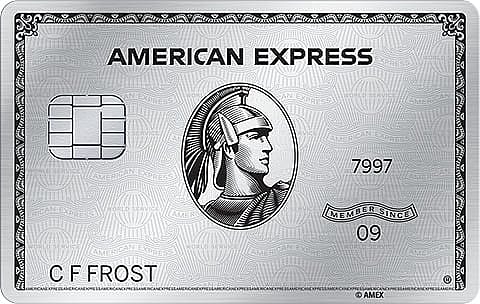 American Express Platinum Card® American Express Platinum Card®Apply Nowon American Express' website on American Express' website | Best for Point transfers and VIP perks | $895 | 1x-5x | As High As 175,000 Points. Find Out Your Offer. | Apply Nowon American Express' website on American Express' website |
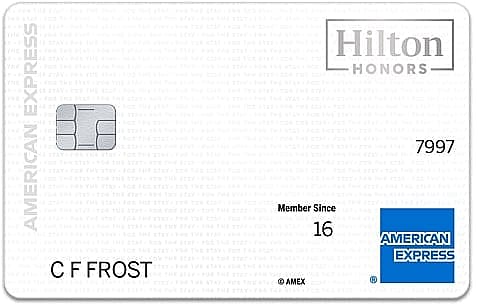 Hilton Honors American Express Card Hilton Honors American Express CardApply Nowon American Express' website on American Express' website | Best for No annual fee | $0 | 3x-7x | 100,000 Points + $100 Credit | Apply Nowon American Express' website on American Express' website |
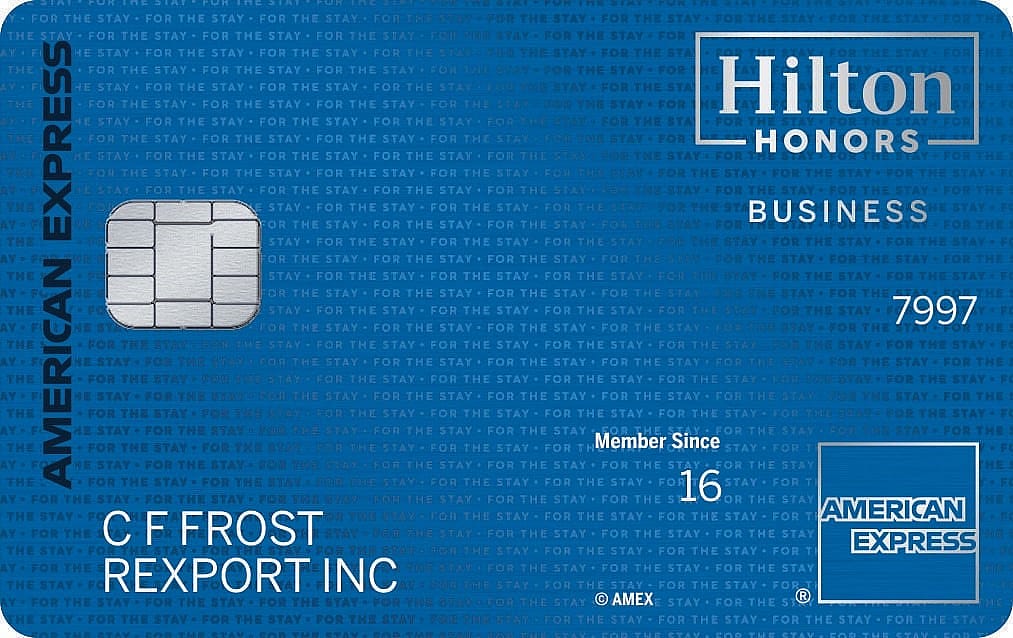 The Hilton Honors American Express Business Card The Hilton Honors American Express Business CardApply Nowon American Express' website on American Express' website | Best for Business travelers | $0 intro for the first year, then $195 | 3x-12x | 130,000 points | Apply Nowon American Express' website on American Express' website |
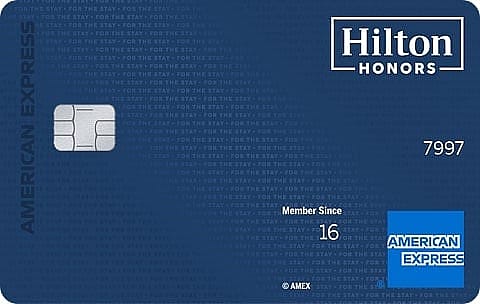 Hilton Honors American Express Surpass® Card Hilton Honors American Express Surpass® CardApply Nowon American Express' website on American Express' website | Best for Regular Hilton guests | $0 intro annual fee for the first year, then $150 | 3x-12x | 130,000 points | Apply Nowon American Express' website on American Express' website |
Our pick for: Point transfers and VIP perks
Apply Nowon American Express' websiteon American Express' websiteAnnual fee$895Rewards rate1x-5xPointsIntro offerAs High As 175,000 Points. Find Out Your Offer.APRSee Pay Over Time APRRecommended creditRewards breakdown
5xMembership Rewards® Points on flights purchased directly from airlines or through American Express Travel® on up to $500,000 on these purchases per calendar year.5xMembership Rewards® Points on prepaid hotel bookings through American Express Travel®, including Fine Hotels + Resorts® and The Hotel Collection bookings.1xMembership Rewards® Points on other purchases.Card details
- You may be eligible for as high as 175,000 Membership Rewards® points after you spend $12,000 in eligible purchases on your new Card in your first 6 months of Card Membership. Welcome offers vary and you may not be eligible for an offer. Apply to know if you’re approved and find out your exact welcome offer amount – all with no credit score impact. If you’re approved and choose to accept the Card, your score may be impacted.
- Get more for your travels with 5X Membership Rewards® points on all flights and prepaid hotel bookings through American Express Travel®, including Fine Hotels + Resorts® and The Hotel Collection bookings. You earn 5X points on flights purchased directly from airlines or through American Express Travel® on up to $500,000 on these purchases per calendar year.
- With over 1,550 airport lounges - more than any other credit card company on the market* - enjoy the benefits of the Global Lounge Collection®, over $850 of annual value, with access to Centurion Lounges, 10 complimentary Delta Sky Club® visits when flying on an eligible Delta flight (subject to visit limitations), Priority Pass Select membership (enrollment required), and other select partner lounges.* As of 07/2025.
- $200 Uber Cash + $120 Uber One Credit: With the Platinum Card® you can receive $15 in Uber Cash each month plus a bonus $20 in December when you add your Platinum Card® to your Uber account to use on rides and orders in the U.S when you select an Amex Card for your transaction. Plus, when you use the Platinum Card® to pay for an auto-renewing Uber One membership, you can get up to $120 in statement credits each calendar year. Terms apply.
- $300 Digital Entertainment Credit: Experience the latest shows, news and recipes. Get up to $25 in statement credits each month when you use your Platinum Card® for eligible purchases on Disney+, a Disney+ bundle, ESPN streaming services, Hulu, The New York Times, Paramount+, Peacock, The Wall Street Journal, YouTube Premium, and YouTube TV when you purchase directly from one or more of the providers. Enrollment required.
- $600 Hotel Credit: Get up to $300 in statement credits semi-annually on prepaid Fine Hotels + Resorts® or The Hotel Collection* bookings through American Express Travel® using the Platinum Card®. *The Hotel Collection requires a minimum two-night stay.
- $400 Resy Credit + Platinum Nights by Resy: Get up to $100 in statement credits each quarter when you use the Platinum Card® to make eligible purchases with Resy, including dining purchases at U.S. Resy restaurants. Enrollment required. Plus, with Platinum Nights by Resy, you can get special access to reservations on select nights at participating in demand Resy restaurants with the Platinum Card®. Simply add your eligible Card to your Resy profile to book and discover Platinum Nights reservations near you.
- $209 CLEAR+ Credit: CLEAR+ helps get you to your gate faster by using your face to verify you are you at 55+ airports nationwide. You can cover the cost of a CLEAR+ Membership* with up to $209 in statement credits per calendar year after you pay for CLEAR+ with your Platinum Card®. *Excluding any applicable taxes and fees. Subject to auto-renewal.
- $200 Airline Fee Credit: Select one qualifying airline and then receive up to $200 in statement credits per calendar year when incidental fees, such as checked bags and in-flight refreshments, are charged by the airline to the Platinum Card® Account. American Express relies on airlines to submit the correct information on airline transactions to identify incidental fee purchases. If you do not see a credit for a qualifying incidental purchase on your eligible Card after 8 weeks, simply call the number on the back of your Card. Qualifying airlines are subject to change. See terms & conditions for more details.
- Start your vacation sooner, and keep it going longer. When you book Fine Hotels + Resorts® through American Express Travel®, enjoy noon check-in, when available, and guaranteed 4PM check-out.
- $300 lululemon Credit: Enjoy up to $75 in statement credits each quarter when you use the Platinum Card® for eligible purchases at U.S. lululemon retail stores (excluding outlets) and lululemon.com. That’s up to $300 in statement credits each calendar year. Enrollment required.
- $155 Walmart+ Credit: Receive a statement credit* for one monthly Walmart+ membership (subject to auto-renewal) after you pay for Walmart+ each month with the Platinum Card®.* Up to $12.95 plus applicable local sales tax. Plus Ups not eligible.
- Whenever you need us, we're here. Our Member Services team will ensure you are taken care of. From lost Card replacement to statement questions, we are available to help 24/7.
- $895 annual fee.
- Terms Apply.
- View Rates & Fees
NerdWallet's take
Although it's not a Hilton-branded card, the American Express Platinum Card® earns points that can be transferred to Hilton, gives you automatic elite status with Hilton and is packed with perks that make travel easier and more comfortable. It's not cheap, though.
Read full reviewProsRewards: 5 points per dollar on flights booked directly with airlines or through American Express, on up to $500,000 in spending per year; 5 points per dollar on prepaid hotels booked on amextravel.com; 1 point per dollar on other purchases.
Points can be transferred to partner airlines and hotel programs, including Hilton. (Transfer rate: 1 AmEx point becomes 2 Hilton points.) Other options include redeeming for travel.
You get automatic Gold elite status with Hilton when you enroll.
Welcome offer: You may be eligible for as high as 175,000 Membership Rewards® Points after spending $12,000 in eligible purchases on your new Card in your first 6 months of Membership. Welcome offers vary and you may not be eligible for an offer. Terms apply.
Hundreds of dollars a year in travel, shopping, lifestyle and entertainment credits, including $200 a year for incidental fees on an airline you choose, as well as reimbursement for the application fee for TSA PreCheck or Global Entry.
Access to more than 1,500 airport lounges worldwide, including AmEx's Centurion Lounges and multiple partner networks.
Terms apply.
ConsNo two ways around it: The $895 annual fee is a considerable upfront commitment.
While the perks are lavish, the rewards you earn can be rather poor if you don’t spend a lot on travel.
Terms apply.
Our pick for: No annual fee
Apply Nowon American Express' websiteon American Express' websiteAnnual fee$0Rewards rate3x-7xPointsIntro offer100,000 Points + $100 CreditAPR19.49%-28.49% Variable APRRecommended creditRewards breakdown
7xPoints for each dollar of eligible purchases charged on your Card directly with a hotel or resort within the Hilton portfolio.5xPoints for each dollar of eligible purchases on your Card at U.S. restaurants.5xPoints for each dollar of eligible purchases on your Card at U.S. supermarkets.5xPoints for each dollar of eligible purchases on your Card at U.S. gas stations.3xPoints for all other eligible purchases on your Card.Card details
- Earn 100,000 Hilton Honors Bonus Points and a $100 Statement Credit after you spend $2,000 on eligible purchases on the Hilton Honors American Express Card within your first 6 months of Card Membership. Offer ends 7/29/26.
- No Annual Fee.
- Earn 7X Hilton Honors Bonus Points for each dollar of eligible purchases charged on your Card directly with a hotel or resort within the Hilton portfolio.
- Earn 5X Hilton Honors Bonus Points for each dollar of eligible purchases on your Card: at U.S. restaurants, at U.S. supermarkets, at U.S. gas stations.
- Earn 3X Hilton Honors Bonus Points for all other eligible purchases on your Card.
- Points don't expire while your Hilton Honors American Express Card is active and in good standing.
- No Foreign Transaction Fees. Enjoy international travel without additional fees on purchases made abroad.
- Whenever you travel more than 100 miles from home, Global Assist® Hotline is available for 24/7 emergency assistance and coordination services, including medical and legal referrals, emergency cash wires, and missing luggage assistance. Card Members are responsible for the costs charged by third-party service providers. Other terms and conditions apply.
- Apply with confidence. Know if you're approved for a Card with no impact to your credit score. If you're approved and you choose to accept this Card, your credit score may be impacted.
- Terms Apply.
- View Rates & Fees
NerdWallet's take
It lacks the perks of its higher-priced sibling cards, but the Hilton Honors American Express Card is a solid option for the occasional Hilton guest who wants to steadily earn points toward their next stay.
Read full reviewProsRewards: 7 points per dollar spent on eligible purchases with Hilton; 5 points per dollar at U.S. restaurants, U.S. supermarkets and U.S. gas stations; 3 points per dollar on other purchases.
Welcome offer: Earn 100,000 Hilton Honors Bonus Points and a $100 Statement Credit after you spend $2,000 on eligible purchases on the Hilton Honors American Express Card within your first 6 months of Card Membership. Offer ends 7/29/26. Terms Apply.
Automatic Hilton Honors™ Silver status. Benefits include a 20% bonus on Hilton Honors base points earned on stays and the fifth night free when you book a stay of five or more nights with points. (You can also move up to Hilton Honors™ Gold status after spending $20,000 on the card in a year.)
$0 annual fee.
Terms apply.
ConsUnlike many other hotel credit cards, this offer doesn't include an automatic free night, nor does it have a way to earn one through spending.
Terms apply.
Our pick for: Business travelers
Apply Nowon American Express' websiteon American Express' websiteAnnual fee$0 intro for the first year, then $195Rewards rate3x-12xPointsIntro offer130,000pointsAPR19.49%-28.49% Variable APRRecommended creditRewards breakdown
12xPoints on eligible purchases made directly with hotels and resorts within the Hilton portfolio.5xPoints on other purchases on the first $100,000 in purchases each calendar year (3X points thereafter).3xPoints on all other eligible purchases.Card details
- Limited Time Offer: Earn 130,000 Hilton Honors Bonus Points after you spend $8,000 in purchases on the Card within your first 6 months of card Membership. Offer ends 7/29/2026.
- Enjoy a $0 introductory annual fee for the first year, then $195.
- Get up to $60 in statement credits each quarter for purchases made directly with a property in the Hilton portfolio on your Hilton Honors American Express Business Card.
- Enjoy complimentary Hilton Honors™ Gold Status with your Hilton Honors Business Card. With Hilton Honors™ Gold Status, you can enjoy benefits at hotels and resorts within the Hilton Portfolio. As a Gold member, earn an 80% Bonus on all Base Points you earn on every stay.
- Earn 12X Hilton Honors Bonus Points on eligible purchases made directly with hotels and resorts within the Hilton portfolio.
- Earn 5X Hilton Honors Bonus Points on other purchases made using the Hilton Honors Business Card on the first $100,000 in purchases each calendar year, 3X Points thereafter.
- You may receive an upgrade to Hilton Honors™ Diamond Status through the end of the next calendar year if the total eligible purchases that you spend on your Card Account during a calendar year reach $40,000 or more.
- Terms apply.
- View Rates & Fees
NerdWallet's take
The Hilton Honors American Express Business Card offers a strong value proposition for business people on the go, with a high rewards rate, an annual statement credit (at Hilton properties) and automatic elite status with Hilton. (For other options, see our list of the best hotel cards for small business.)
Read full reviewProsRewards: 12 points per dollar spent on eligible purchases with Hilton; 5 points per dollar on non-Hilton purchases (up to $100,000 in spending annually); 3 points per dollar on other purchases.
Welcome offer: Limited Time Offer: Earn 130,000 Hilton Honors Bonus Points after you spend $8,000 in purchases on the Card within your first 6 months of card Membership. Offer ends 7/29/2026. Terms Apply.
Automatic Gold Elite status. Benefits include an 80% bonus on Hilton Honors base points earned on stays; complimentary breakfast and room upgrades (when available) at select hotels; and the fifth night free when you book a stay of five or more nights with points. (You can also move up to Diamond status after spending $40,000 on the card in a year.)
Terms apply.
ConsYou don't get an automatic annual free night.
There's a $0 intro for the first year, then $195 annual fee. This is higher than other cards in its class but can be deductible as a business expense. Still, it's something to consider if you don't travel enough to get your money back through the card's benefits.
Terms apply.
Our pick for: Regular Hilton guests
Apply Nowon American Express' websiteon American Express' websiteAnnual fee$0 intro annual fee for the first year, then $150Rewards rate3x-12xPointsIntro offer130,000pointsAPR19.49%-28.49% Variable APRRecommended creditRewards breakdown
12xPoints for each dollar of eligible purchases charged on your Card directly with hotels and resorts within the Hilton portfolio.6xPoints for each dollar of eligible purchases on your Card at U.S. restaurants.6xPoints for each dollar of eligible purchases on your Card at U.S. supermarkets.6xPoints for each dollar of eligible purchases on your Card at U.S. gas stations.4xPoints for each dollar of eligible purchases on your Card at U.S. Online Retail Purchases.3xPoints for all other eligible purchases on your Card.Card details
- Enjoy a $0 intro annual fee for the first year, then $150 and earn 130,000 Bonus Points after you spend $3,000 in purchases on the Card within your first 6 months of Card Membership. Offer ends 7/29/26.
- Enjoy complimentary Hilton Honors™ Gold status with your Card. Plus, spend $40,000 on eligible purchases on your Card in a calendar year and you can earn an upgrade to Hilton Honors Diamond status through the end of the next calendar year.
- Get up to $50 in statement credits each quarter for purchases made directly with a property in the Hilton portfolio on your Hilton Honors American Express Surpass® Card. That’s up to $200 in statement credits annually.
- Earn a Free Night Reward from Hilton Honors after you spend $15,000 on eligible purchases on your Card in a calendar year.
- Earn 12X Hilton Honors Bonus Points for each dollar of eligible purchases charged on your Card directly with a hotel or resort within the Hilton portfolio.
- Earn 6X Points for each dollar of purchases on your Card at U.S. restaurants, at U.S. supermarkets, and at U.S. gas stations.
- Earn 4X Points for each dollar on U.S. Online Retail Purchases.
- Earn 3X Points for all other eligible purchases on your Card.
- As a Hilton Honors American Express Surpass® Card Member, you can enroll to receive complimentary National Car Rental® Emerald Club Executive® status through the link on your American Express online account. After you’re enrolled, you can reserve a rental car by calling National Car Rental directly, using your travel service, or by booking online or through the National Car Rental mobile app. Terms apply.
- No Foreign Transaction Fees. Enjoy international travel without additional fees on purchases made abroad.
- Whenever you travel more than 100 miles from home, Global Assist® Hotline is available for 24/7 emergency assistance and coordination services, including medical and legal referrals, emergency cash wires, and missing luggage assistance. Card Members are responsible for the costs charged by third-party service providers. Other terms and conditions apply.
- Points don’t expire while your Hilton Honors American Express Surpass® Card is active and in good standing.
- $0 introductory annual fee for the first year, then $150.
- Apply with confidence. Know if you're approved for a Card with no impact to your credit score. If you're approved and you choose to accept this Card, your credit score may be impacted.
- Terms Apply.
- View Rates & Fees
NerdWallet's take
If you'll be staying at Hilton properties multiple times a year, the Hilton Honors American Express Surpass® Card easily pays for itself. You'll earn tons of points on everyday spending, enjoy automatic elite status and receive credits that can more than make up for the annual fee.
Read full reviewProsRewards: 12 points per dollar spent on eligible purchases with Hilton; 6 points per dollar at U.S. restaurants, U.S. supermarkets and U.S. gas stations; 4 points per dollar on U.S. online retail purchases; 3 points per dollar on other purchases.
Welcome offer: Enjoy a $0 intro annual fee for the first year, then $150 and earn 130,000 Bonus Points after you spend $3,000 in purchases on the Card within your first 6 months of Card Membership. Offer ends 7/29/26. Terms Apply.
$200 a year in statement credit for Hilton purchases with your card, awarded in $50 increments per quarter. This alone is enough to cover the annual fee.
Automatic Hilton Honors™ Gold status. Benefits include an 80% bonus on Hilton Honors base points earned on stays; complimentary breakfast and room upgrades (when available) at select hotels; and the fifth night free when you book a stay of five or more nights with points. (You can also move up to Hilton Honors™ Diamond status after spending $40,000 on the card in a year.)
Terms apply.
ConsUnlike some other hotel cards (including a few cheaper ones), this card doesn't give you an automatic free night each year, although you can earn a free night by putting $15,000 on the card in a year.
The annual fee is pricier than comparable cards from other hotel chains.
Terms apply.
More about our picks
Hilton Honors American Express Surpass® Card
Our pick for: Regular Hilton guests
If you're loyal to hotels under the Hilton umbrella, the Hilton Honors American Express Surpass® Card can more than pay for itself despite relatively low rewards-point values. You’ll be able to hold on to your automatic Hilton Honors™ Gold status as long as you’re a cardholder, making it easier to rack up rewards and earn free stays. Read our review.
Hilton Honors American Express Aspire Card
Our pick for: Dedicated Hilton loyalists
The Hilton Honors American Express Aspire Card comes with a steep annual fee, but its rich rewards (especially on travel and dining) and generous perks make it near-must for hardcore Hilton loyalists. Enjoy airline and resort credits, airport lounge access, automatic elite status, free weekend night awards and much more. Read our review.
Hilton Honors American Express Card
Our pick for: No annual fee
The Hilton Honors American Express Card earns bonus rewards on Hilton stays and in common everyday categories. You also get automatic Hilton Honors™ Silver status. Terms apply. Read our review.
American Express Platinum Card®
Our pick for: Point transfers and VIP perks
The American Express Platinum Card® isn't for everyone. The annual fee is among the highest on any card, and a significant chunk of the card's value lies in an array of travel, lifestyle, entertainment and shopping credits that might appeal to hardcore maximizers but can just look like work to those who are more laid-back. But "not for everyone" doesn't mean "not for anyone." Frequent travelers who enjoy VIP treatment and don't mind putting in some effort can easily make back the $895 annual fee. You can travel in style with extensive lounge access, a yearly airline credit that covers things like checked bag fees and upgraded seats, and credits toward prepaid bookings at select hotels. Plus, the card's statement credits for CLEAR+ and either TSA PreCheck or Global Entry can smooth your way through airport security. On top of its extensive travel benefits, cardholders also get benefits with Resy restaurants, Uber, Equinox, Lululemon, the Oura Ring and more. Note, though, that while the perks are extensive, the rewards are more limited. Some travel earns 5 points per dollar spent, everything else only earns 1 point per dollar. Enrollment required for many benefits; terms apply. Read our review of the American Express Platinum Card®.
» For higher spending rewards and a lower annual fee: American Express® Gold Card.
The Hilton Honors American Express Business Card
Our pick for: Business travelers
The Hilton Honors American Express Business Card is an outstanding small-business hotel credit card — if you frequent Hilton properties. The card features rich ongoing rewards, automatic elite status with Hilton and an annual statement credit for purchases at Hilton properties. But there's no annual free night award (a standard perk of hotel cards with annual fees) and AmEx scrapped the card's complimentary Priority Pass perk. Terms apply. Learn more and apply.
How much is a Hilton point worth?
NerdWallet values Hilton points at 0.4 cent each. This is drawn from real-world data, but it's not a maximized value. In other words, you should aim for award redemptions that offer 0.4 cent or more in value from your Hilton points.
Redemption options (beyond using your points at Hilton, of course) include transferring points to Hilton's airline partner programs and redeeming for car rentals or credit at Amazon.com, among others. For more analysis about the best and worst redemption choices, see NerdWallet's review of the Hilton Honors loyalty program.
Which hotel brands are part of Hilton?
Eighteen hotel brands belong to the Hilton portfolio. About 6,800 properties offer guests budget and luxury accommodation across six continents.
Hilton hotel brands
Canopy.
Conrad Hotels & Resorts.
Curio Collection.
DoubleTree.
Embassy Suites.
Hampton.
Hilton Garden Inn.
Hilton Grand Vacations.
Hilton Hotels & Resorts.
Home2 Suites.
Homewood Suites.
LXR Hotels & Resorts.
Motto.
Signia.
Tapestry Collection.
Tempo.
Tru.
Waldorf Astoria.
NerdWallet's guide to choosing a Hilton credit card
Frequent guests of the hotel brands in the Hilton group can bolster their rewards earnings by using a Hilton-branded credit card on Hilton stays and everyday purchases. Each card offers elite status, which, among other things, automatically allows booking five award nights for the price of four.
American Express offers three different Hilton personal credit cards — one with no annual fee, a midrange card and a premium card. Here's a look at those cards to help you choose the right Hilton Honors credit card for you.
The cheat sheet: Hilton Honors AmEx vs. Surpass vs. Aspire
The three cards in the Hilton consumer portfolio each target a different kind of customer. Before getting too far into the weeds, here's a quick overview of when each card might make sense for you:
Hilton Honors American Express Card: If you’re looking for a no-annual-fee sidekick card
With hotel cards, you might want a card that plays a supporting role, rather than one you use every day. In that case, the Hilton Honors American Express Card is your card. The $0-annual-fee card features a solid welcome offer, a robust ongoing rewards rate and automatic Hilton Honors™ Silver Elite status. (Terms apply.) And because the card doesn't charge an annual fee, you'll come out ahead on rewards no matter how often you use it.
Hilton Honors American Express Surpass® Card: If you want some perks, but not a huge annual fee
The Hilton Honors American Express Surpass® Card has a $0 intro annual fee for the first year, then $150 annual fee, which you can earn back with $200 a year (available at $50 per quarter) in statement credit for Hilton purchases. You can earn a free night reward when you spend more than $15,000 on your card in a calendar year. You'll also get automatic Hilton Honors™ Gold Elite Status, strong rewards on common everyday spending categories, and a large welcome offer. (Terms apply.) For folks who want perks without an outsize annual fee, it's a good fit.
Hilton Honors American Express Aspire Card: If you're willing to pay more to travel in style
Even with an annual fee of $550 a year, the Hilton Honors American Express Aspire Card could be a great deal for frequent travelers who stay at Hilton properties regularly. That’s because it comes with a complimentary night reward included each year (regardless of how much you spend), a $250 airline fee credit, a $250 Hilton resort credit, automatic Hilton Honors™ Diamond status and a bevy of other top-flight benefits. For travelers who can take advantage of all those perks, the card’s benefits far outweigh its annual fee. Terms apply.
The details: Hilton Honors AmEx vs. Surpass vs. Aspire
Now for a closer look at the specific details:
| Empty Table Header | |||
|---|---|---|---|
Annual fee | $0. | $0 intro annual fee for the first year, then $150. | $550. |
New cardholder offer | Earn 100,000 Hilton Honors Bonus Points and a $100 Statement Credit after you spend $2,000 on eligible purchases on the Hilton Honors American Express Card within your first 6 months of Card Membership. Offer ends 7/29/26. Terms Apply. | Enjoy a $0 intro annual fee for the first year, then $150 and earn 130,000 Bonus Points after you spend $3,000 in purchases on the Card within your first 6 months of Card Membership. Offer ends 7/29/26. Terms Apply. | Earn 150,000 Hilton Honors Bonus Points after you spend $6,000 in purchases on the Hilton Honors American Express Aspire Card in the first 6 months of Card Membership. Terms Apply. |
Points earned on Hilton purchases | 7x. | 12x. | 14x. |
Points earned on other spending |
|
|
|
Free night reward? | No. | Yes, after spending $15,000 in a calendar year. | Yes, one per year of card membership, plus another after spending $30,000 in a calendar year. |
Elite status | Automatic Hilton Honors™ Silver status. Earn Hilton Honors™ Gold status after spending $20,000 in a calendar year. | Automatic Hilton Honors™ Gold status. Earn Hilton Honors™ Diamond status after spending $40,000 in a calendar year. | Automatic Hilton Honors™ Diamond status. |
Fifth reward night free | Yes, with Hilton Honors Silver status. | Yes, with Hilton Honors™ Gold status. | Yes, with Hilton Honors™ Diamond status. |
Foreign transaction fees | No. | No. | No. |
Terms apply. | Terms apply. | Terms apply. |
Key difference: Bonus points at Hilton Hotels
When you use a Hilton-branded credit card to book stays at Hilton properties, you earn two different kinds of points — base points and bonus points. Base points are what you get simply for being a member of the Hilton Honors program; bonus points are what you get for using the card.
Hilton Honors members start out earning 10 base points per dollar spent on eligible Hilton purchases. If you have elite status — which comes automatically with a Hilton card — you earn additional points based on your status level:
At the Silver level, the bonus is 20% of base points. That's an extra 2 points per dollar spent, for a total of 12 per dollar.
At the Gold level, the bonus is 80% of base points. That's an extra 8 points per dollar spent, for a total of 18 per dollar.
At the Diamond level, the bonus is 100% of base points. That's an extra 10 points per dollar spent, for a total of 20 per dollar.
Points earned from the credit card come on top of those. So:
The Hilton Honors American Express Card earns 7 points per dollar at Hilton. Add that to the 10 base points plus the 2 points you get for the automatic Silver status that comes with the card, and you earn a total of 19 points per dollar spent with the card. (If you bump up to Hilton Honors™ Gold status, it becomes 25 points per dollar.)
The Hilton Honors American Express Surpass® Card earns 12 points per dollar at Hilton. Add that to the 10 base points plus the 8 points you get for the automatic Gold status that comes with the card, and you earn a total of 30 points per dollar spent with the card. (If you bump up to Hilton Honors™ Diamond status, it becomes 32 points per dollar.)
The Hilton Honors American Express Aspire Card earns 14 points per dollar at Hilton. Add that to the 10 base points plus the 10 points you get for the automatic HIlton Honors™ Gold status that comes with the card, and you earn a total of 34 points per dollar spent with the card.
Key difference: Hilton Honors elite status
The Hilton Honors American Express Card comes with low-tier Silver status for cardholders. Silver Hilton Honors members receive a 20% rewards bonus on stays and free bottled water at check-in. With this card, you have an option to upgrade to Hilton Honors™ Gold status by spending $20,000 in a calendar year. Terms apply.
Since Hilton Honors™ Silver status benefits are slim, you’d probably be better off going for the Hilton Honors American Express Surpass® Card if you want automatic perks for a low annual fee. The Hilton Honors American Express Aspire Card is notably the only hotel card that currently offers the highest level of elite status through a credit card. Terms apply.
The Hilton Honors American Express Surpass® Card offers cardmembers automatic Gold Elite status with Hilton. The benefits include an 80% rewards bonus on stays, upgrades (when available), complimentary breakfast (internationally) or a food and beverage credit (at U.S. hotels) and milestone bonuses. With this card, you can spend your way up to Hilton Honors™ Diamond status by charging $40,000 to your card in a calendar year. Terms apply.
The premium Hilton Honors American Express Aspire Card already comes with complimentary top-tier Hilton Honors™ Diamond Elite status, which offers 100% rewards bonus on stays, upgrades (when available), executive lounge access, premium Wi-Fi, 48-hour room guarantee and the ability to gift elite status. Terms apply.
Perks that are the same across cards
Fifth night free on award stays: The fifth-night free perk applies to reservations made with points only. Redeem four nights’ worth of points and receive a fifth night for no extra points. The benefit is available to all elite members of the Hilton Honors program. And because every card in the Hilton portfolio comes with some kind of status, you get the perk automatically.
No foreign transaction fees: Many credit cards charge a fee — typically around 3% — on purchases made outside the U.S., but you don’t have to worry about those fees when using any Hilton card abroad.
Terms apply.
Perks unique to the Aspire card
Annual $400 resort credit: Earn up to $400 back as a statement credit when you use the card at a participating Hilton resort.
Annual $169 CLEAR+ membership credit: $169 back as a statement credit when you use the card to purchase or renew CLEAR+ membership.
Annual $100 on-property credit: Earn up to $100 resort credit when you use the card to book two nights at participating Waldorf Astoria and Conrad hotels at hiltonhonorsaspirecard.com.
Terms apply.
• • •
Anya Kartashova , Elina Geller and Claire Tsosie contributed to this article.
To view rates and fees of the Hilton Honors American Express Card, see this page. To view rates and fees of the Hilton Honors American Express Surpass® Card, see this page. All information about the Hilton Honors American Express Aspire Card has been collected independently by NerdWallet. The Hilton Honors American Express Aspire Card is no longer available through NerdWallet. To view rates and fees of the American Express Platinum Card®, see this page. To view rates and fees of The Hilton Honors American Express Business Card, see this page.
How we choose the best credit cards
Our team of credit card experts has developed a rigorous methodology to determine how much value a card delivers and how it stacks up against its competitors.
400+
Cards reviewed

400+
Cards reviewed
NerdWallet’s experts have reviewed more than 400 cards, from the most popular options at the biggest banks to store cards to niche cards from startups and small issuers.
8
Categories scored

8
Categories scored
Credit cards are so diverse that properly rating them with a single formula is impossible. We’ve built eight rubrics, plus variations, so we can score each card on what matters.
50+
Data points analyzed

50+
Data points analyzed
Our ratings consider not just a card’s rates, fees, rewards and perks, but also how easy or hard it is to get that card, manage it and enjoy its advertised benefits.
Star rating categories
What you want out of, say, a cash back credit card is fundamentally different from what you’re looking for in a balance transfer card or a card for building credit. That’s why we have different scoring models that put weight on different features.
Cash back cards
General travel cards
Balance transfer cards
Branded airline cards
Branded hotel cards
Credit builder cards
College student cards
Small business cards
Cash back cards
Our formula looks at how much cash back you could expect to earn from typical household spending. We consider rewards rates and categories, bonus offers and the cash value of other benefits, as well as any annual fee. The rating is also influenced by the complexity of the rewards structure.

General travel cards
We consider how many points you could expect to earn from typical household spending, along with per-point values and redemption options. We add in the cash value of bonus offers and other benefits, subtract annual fees and other costs, and take into account the complexity of the rewards structure.

Balance transfer cards
Our balance transfer rubric calculates how much money a card could save you with a low or 0% interest rate. Primary factors include the length and structure of the introductory APR period and the balance transfer fee. We also consider long-term value, such as whether the card offers rewards.

Branded airline cards
We calculate how many miles you could expect to earn from typical household spending and what those miles are worth based on our valuations. We add in the cash value of bonus offers and perks such as free checked bags and lounge access, and we subtract annual fees and other costs.

Branded hotel cards
We calculate how many points you could expect to earn from typical household spending and what those points are worth based on our valuations. We add in the cash value of bonus offers and perks such as free nights and automatic elite status, and we subtract annual fees and other costs

Credit builder cards
Our rubric focuses on accessibility (such as whether a credit check is required), out-of-pocket costs (such as annual fees or minimum security deposits), credit-building features (such as bureau reporting and access to a free credit score) and upgrade options when you’re ready to move on.

College student cards
Our formula calculates the rewards you could expect to earn on spending typical for a college student and takes into account the cash value of bonus offers and other benefits. Accessibility to students without established credit is a key consideration, as is the effort required to manage the card.

Small business cards
Our star ratings criteria for small business credit cards are similar to those for consumer cards, although they account for potentially higher spending levels and higher credit limits, as well as rewards structures and bonus categories tailored specifically to entrepreneurs and business operators.

NerdWallet's Credit Cards team selects the best credit cards in various categories based on overall consumer value, as evidenced by star ratings, as well as their suitability for specific kinds of consumers. Factors in our evaluations include fees, promotional and ongoing APRs, and sign-up bonuses; for rewards cards, we consider earning and redemption rates, redemption options and redemption difficulty. Because different consumers can have markedly different needs, preferences and spending habits, we recognize that there is rarely a single credit card that is "best" for everyone. That's why this page includes a variety of options to suit an array of circumstances. Also, a single card is eligible to be chosen as among the "best" in multiple categories.
Our star ratings provide a quick way to compare credit cards. We assess the features of a card, score those features according to how they compare with other options on the market, and assign the card a rating of 1 to 5 stars based on those features. In general, a card that rates 4.5 stars will be a better value for more people than a card that rates 4.0 stars. However, the 4.0 card might be better than the 4.5 card for an individual consumer depending on that person’s circumstances. Further, ratings are only comparable within categories. If you're looking for rewards, for example, a 3.5-star cash back card will be of greater value than a 5.0-star balance transfer card or a 4.5-star credit-builder card. Star ratings are an important consideration in which cards appear on our "best" pages, but they are not the sole determining factor. Learn how NerdWallet rates credit cards.
