





The Bank of Missouri offers personal and business financial services to Missourians including mortgages, car loans and health savings accounts. Bank members may visit one of nearly 30 branches across Missouri in Ozark, Springfield and more.
But despite The Bank of Missouri’s sterling reputation as a trustworthy deposit institution, it issues some terrible credit cards that primarily target consumers with low credit scores. Overall, these cards hit you with a barrage of fees in exchange for very few perks. If you’ve been considering one of these credit cards, know that there are better options — even if you have poor credit (credit scores of 629 or lower), or no credit at all.
Here’s an overview of The Bank of Missouri’s credit cards, as well as some superior alternatives.
Credit cards issued by The Bank of Missouri
The Bank of Missouri issues close to 20 credit cards as of October 2024. Some of them are in partnership with Continental Finance and Concora Finance, companies that provide customer service to cardholders. The Bank of Missouri’s roster of cards includes:
- Build credit card.
- First Phase credit card.
- Matrix credit card.
- Ollo credit card (no longer available).
- Ness credit card (no longer available).
- Sofi World Elite credit card.
- Today credit card.
Some of these cards are nearly identical to each other.
Aspire credit card
Depending on your creditworthiness, applicants may qualify for the Aspire Mastercard or the Aspire Cash Back Rewards Card. The latter earns up to 3% cash back in qualifying categories and 1% on everything else. However, both credit cards have several pricey fees and a minimum APR of nearly 30% (as of this writing), which can easily cancel out any value from rewards if you're carrying a balance month to month.
The Aspire cards have an annual fee, which can be as high as $175 in the first year. After the first year, you’ll pay up to $49 just to hold the card. On top of the annual fee, there’s a monthly account maintenance fee that kicks in after the first year ranging from $5 to $15. ($60 to $180 annually). If you want an additional card to give to an authorized user, that’ll cost $19. The bank also assesses a $2 charge every time you receive a paper statement.
Alternative pick: The Discover it® Secured Credit Card is one of our top picks for those who want to build or rebuild their credit. After paying the security deposit of at least $200, you’ll get access to a card with a $0 annual fee; a $0 monthly fee; a $0 credit limit increase fee (yep, that's sadly a thing among some of the other cards on this list); a $0 foreign transaction fee; and even no late fee on your first late payment. This card even earns rewards. If you're eligible, you can eventually get your deposit back when you upgrade to an unsecured credit card with the issuer or close the account.
🤓Nerdy Tip
The Aspire credit card and the Fortiva credit card, also issued by The Bank of Missouri, have similarly exorbitant fees. First Access and Total Visa credit cards
Of the cards issued by The Bank of Missouri, the First Access and Total Visa credit cards may be the most alike. Neither card should be celebrating that distinction. As of this writing, both cards have an APR of almost 36%. Both of them also feature a $75 annual fee in the first year, then $48 thereafter; an $8.25 monthly fee after the first year; and an initial credit limit of only $300.
In either case, you'll have to wait at least a year to be considered for a credit limit increase. But if that happens, you may also be charged a percentage of that increase, which is ludicrous.
But wait, there’s more: Both cards charge an outlandish $95 “program fee” that must be paid within the first 60 months of account opening. If you don’t pay it, you can’t use the credit card. Very few issuers impose a fee to open an account. Heck, some issuers give you a virtual card number so that you can use the card right after approval. By contrast, The Bank of Missouri will express ship the First Access or Total Visa cards to your home — for a $35 fee.
You can earn 1% cash back on purchases made with the First Access and Total Visa cards, but that rewards rate isn’t high enough to recoup their fees. Plus, both cards make you wait six months after account opening to redeem your rewards.
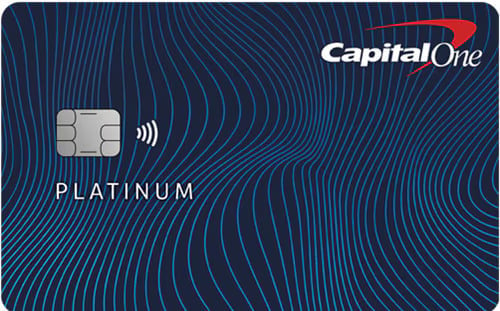
Alternative pick: The Capital One Platinum Secured Credit Card is a great option for those who want a secured card but worry about putting up hundreds of dollars for a security deposit. It's possible to qualify for a $200 credit limit with a deposit of $49, $99 or $200. Capital One also lets you pay down the security deposit in increments of $20, with the full amount due 35 days after card approval.
Destiny Mastercard® and Milestone® Mastercard®
The Destiny Mastercard®, which is serviced by Concora, is an unsecured credit card for those who are looking to establish or repair a credit history. However, as with many such unsecured products, this card is expensive to carry. There’s an annual fee of $175 in the first year, and then $49 after that. Plus, after the first year, there’s a $12.50 monthly fee, which adds up to $150 per year.
You can find many superior and less costly credit cards aimed at those with no credit or poor credit (credit scores of 629 or lower), especially if you're able to put down a deposit for a secured credit card. Unlike the fees you'll pay for holding the Destiny Mastercard®, a security deposit is eventually refundable.
The Milestone® Mastercard® is a nearly identical fee-harvester: As of this writing, the card's annual fee is $175 in the first year, then $49. See Terms. After the first year, you’ll also owe a $12.50 monthly maintenance fee. And if you exceed your credit limit — which may be easy to do, as the maximum credit line on the Milestone® Mastercard® is $700 — you’ll be assessed an overlimit fee up to $41. That fee is particularly notable considering that most issuers don’t charge overlimit fees anymore.
Verve credit card
If you get the Verve card, you’ll start with an initial credit limit of either $300, $500, $750 or $1,000. The credit limit you’re assigned determines the fees you’ll pay to use the card. For a measly $300 credit limit, you’ll owe a $75 annual fee in the first year, then $99, plus a $12.50 monthly fee that begins after the first year. You won’t pay a monthly fee if you get a $750 or $1,000 credit limit; instead, you’ll have an absurd $125 annual fee. The worst option is probably the $500 credit limit, which comes with a $125 annual fee and a $12.50 monthly fee due after the first year.
Some of these fees are charged upon account opening and immediately reduce the amount of available credit. If you got a $300 credit limit, you’d really only have access to $225 because of the $75 annual fee. Not until you pay off the annual fee will the credit limit be restored to its full amount.
Similar to the First Access and Total Visa cards, the Verve card makes you wait at least 13 months before getting a credit limit increase — and you may have to pay for the bigger credit line.
Alternative pick: Yet again, see the aforementioned Discover it® Secured Credit Card, which dispenses with most of these unreasonable fees and has a clear upgrade path to a better card from Discover when you're ready.
🤓Nerdy Tip
The Verve card is a close cousin of the FIT card and Cerulean card. All three are issued by The Bank of Missouri and serviced by Continental Finance. Other similarities include an astronomical APR (nearly 36%, as of January 2025), costly annual fees and a $30 fee if you want an additional credit card.Explore more on