




The Federal Reserve influences mortgage rates, but doesn't set them. On Sept. 16, 2026, the central bank raised the federal funds rate by 25 basis points, or a quarter of a percentage point, to a range of 3.75% to 4%.
After taking a “wait and see” approach, the central bankers determined inflation is troublesome enough for them to intervene. Inflation remains above the Fed's 2% target and has accelerated in recent months, fueled in part by higher oil prices from the Iran war. A rate hike aims to bring inflation down by making it more expensive to borrow money.
Mortgage rates are influenced by many elements, including the inflation rate, the pace of job creation, and whether the economy is growing or shrinking. The Federal Reserve's monetary policy is a factor, too, and is set by the Federal Open Market Committee.
What the Federal Reserve does
The Federal Reserve is the nation's central bank. It guides the economy with the twin goals of encouraging job growth while keeping inflation under control.
The FOMC pursues those goals through monetary policy: managing the supply of money and the cost of credit. Its main monetary policy tool is the federal funds rate, which is the interest rate that banks charge one another for short-term loans. Although there's no such thing as "federal mortgage rates," the federal funds rate influences interest rates for longer-term loans, including mortgages.
The FOMC meets eight times a year, roughly every six weeks, to adjust monetary policy. Its next scheduled meeting is Oct. 27-28.
The Federal Reserve, mortgage rates and the economy
Mortgage rates respond to a variety of economic signals. Among the most important factors are the availability of jobs, along with how fast prices are rising — two things the Fed doesn’t directly control, but aims to keep in balance by setting monetary policy.
The labor market has remained surprisingly resilient, giving the Fed room to focus on inflation. Hiring rebounded in August, while unemployment remains relatively low.
Right now, inflation is the Fed's bigger challenge. It was already running above the central bank's 2% target before renewed fighting in Iran sent oil prices sharply higher. Because energy costs ripple through the economy, more expensive oil can push up the cost of everything from manufacturing to shipping, adding to inflationary pressure.
Do mortgage rates follow Fed rates?
The Fed and the mortgage market move like dance partners: Sometimes the Fed leads, sometimes the mortgage market leads, and sometimes they dance on their own.
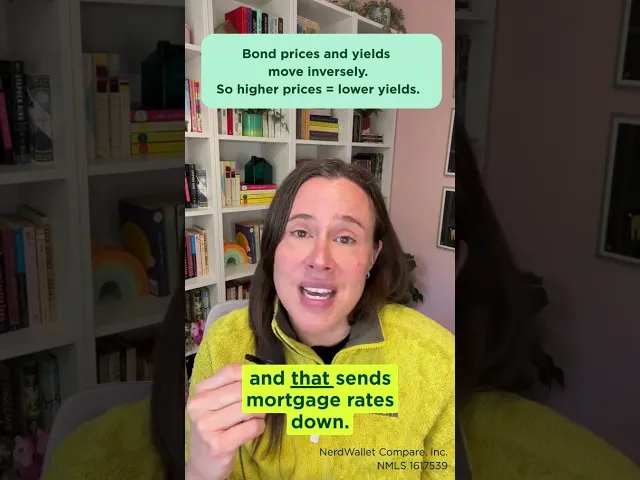
September’s hike marks the first time the Fed has raised its benchmark rate since July 2023. But an increase to the federal funds rate doesn’t mean mortgage rates will go up by the same amount, or even right away. Since mortgage markets saw the Fed rate hike coming, most lenders already priced it in.
As inflation pressures mount, the Fed is likely to raise rates again before the end of the year — it’s just a question of when. That will keep upward pressure on mortgage rates for the time being. Most futures markets are currently pricing in another rate hike for December, but another increase is still a possibility at the Fed’s October 27-28 meeting.
If the Fed’s intervention keeps inflation from getting worse, mortgage rates could eventually come down. But if inflation stays high, mortgage rates may remain elevated, too.
DATA: What's the Homebuying Climate this month?
NerdWallet's Homebuying Climate Index puts a familiar weather label on how favorable conditions are for home buyers.
For September, our analysis puts the Climate Index at 53.5 out of 100, keeping the index in Partly Cloudy territory for the 50th straight month.
Read more about the factors affecting this month's index to gauge how they might affect your homebuying plans.
Federal funds rate and HELOCs
Although there's merely an indirect link between mortgage rates and the federal funds rate, the Fed does have a direct influence on the rates charged on home equity lines of credit, which typically have adjustable rates.
Interest rates on HELOCs are linked to the Wall Street Journal prime rate, which is the base rate on corporate loans by the largest banks. The prime rate, in turn, moves with the federal funds rate.
Prime Rate, Effective 12/11/25
Current prime rate — last changed Sept. 2026 | Prime rate last week | Prime rate in the past year — low | Prime rate in the past year — high | Projected median prime rate for 2026 |
|---|---|---|---|---|
7.00% | 7.00% | 6.75% | 7.50% | 7.10% |
🤓 Kate on Rates, 10/22/26