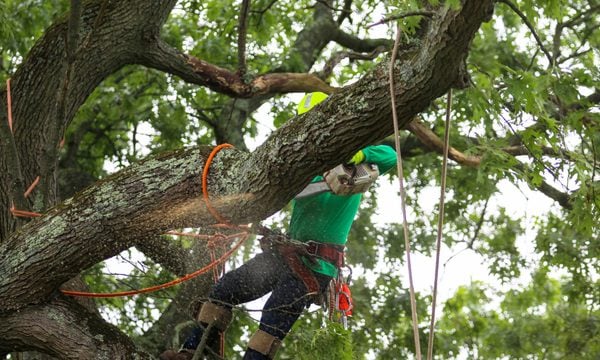




Tree trimming costs $460 on average, typically ranging from about $200 to $760. Trimming a very small tree can run as little as $75, and a very tall one more than $1,800. Tree trimming is generally done to remove branches that cause aesthetic or safety issues.
If you’ve got a small tree that needs trimming — and the canopy is no higher than eye level — trimming could be a good DIY project. If you need to get up on a ladder, or if the branches are too heavy for you to lift, this is a job for a pro. You should also leave any tree projects involving branches near power lines to the utility company.
When you can DIY your tree trimming
You may be able to take a DIY approach to trimming your trees, particularly a light trim on a very small tree. If you do trim your own trees, be sure not to overlook these important areas:
Permits. Permits aren’t usually required for tree maintenance, but if you’re also removing trees, you may need a permit. It’s always a good idea to check local ordinances before starting extensive tree work.
HOA requirements. If your community has an HOA, check in with it to determine who owns the tree and to make sure your tree-trimming plan complies with HOA rules and guidelines.
Utility line laws. If a tree is growing close to power lines, this isn’t a DIY job – or even a job for a private tree professional. Your local utility should handle these cases. Report the overgrown tree to your utility company so they can safely trim the trees away from live wires.
Insurance. Tree professionals typically carry the necessary insurance to cover any possible injuries and property damage that happen during the tree trimming. If you’re doing this work yourself, it makes sense to see if your personal medical, homeowners and liability insurance policies protect you from these types of accidents.
When to find a tree a trimming professional
More extensive trimming on larger trees is dangerous work. There’s a risk of falls, as well as branches falling on cars, people or houses. And Improper trimming and overcutting can also harm your tree’s health or even kill it.
In these situations, it’s worth calling around to find a company to help.
What to know if you're leaning toward DIY
If you decide to trim your own trees:
Familiarize yourself with basic trimming methods and tree anatomy.
Have a clear plan for what you’ll cut.
Never remove more than a quarter of the tree’s canopy.
» MORE: How much a new roof costs
Tree trimming cost factors
One major cost factor for tree trimming is the height of the tree you need trimmed. Here’s what you can expect to pay for small, medium and tall trees.
Tree height | Average cost | Examples of trees |
|---|---|---|
Under 30 feet. | $250 to $700. | Crab apple, crepe myrtle, lilac. |
30 to 60 feet. | $600 to $1200. | Willow (young), Bradford Pear, fruit-bearing cherry, palm. |
Over 60 feet. | $1,000 to $2,500+. | Pine, ash, fir, elm, cypress, oak, maple. |
Some other factors affecting the cost of a tree trimming include:
Time of year. You may have to pay more during the high season for trimming, which runs from late fall to early spring. There’s a good reason to schedule your tree trimming during the high season though. It’s healthier for the tree to be trimmed (or pruned) when the weather is cold enough for the tree to be dormant.
Number of trees. If you have multiple trees that need to be trimmed on the same property, you may be able to get a volume discount.
Geographic location. Some regions of the country have a higher cost of living than others, and this is reflected in the price of tree trimming.
Accessibility. The location of the tree on your property, the type of trunk it has and whether a structure is in the way (such as a fence or your house) all affect the amount and difficulty of labor involved in the job. Additionally, if the soil is rocky, muddy or otherwise impedes equipment, this can also affect the price.
Tree health. If your tree is also experiencing disease, fungus, infestation or other health issues, the increased labor and safety precautions may raise your trimming price.
Things to consider when planning a tree trimming
Trimming is important maintenance for trees; however, different types of trees require different trimming schedules:
Younger trees need to be trimmed more often, usually every two to three years.
Mature trees typically only need to be trimmed about every three to five years.
Certain types of trees require more trimming than others. For example, fruit trees of any age require annual pruning, while evergreen trees require minimal trimming.
Rather than stick to a strict schedule, inspect your trees once a year for signs that they may need a trim soon, such as:
Evidence of insect infestation, disease or tree cankers.
Tree has become strangely shaped or grown too large.
Crossed branches.
Too much shade.
Brittle, dead branches.
Proximity to structures.
Branches too close to electrical lines.
Tree is leaning more than 15 degrees.
Time of year is another important consideration. For the health of your trees, it’s best to trim during the colder months, after all the leaves have fallen and before any new leaves have grown in.
Trimming when trees are dormant helps reduce the risk of insect infestation because in the warmer months, pests or diseases can quickly attack the tree at the cut lines. Trimming in the colder months can also help the tree come back stronger in the spring.
What Reddit users say about tree trimming
Reddit is an online forum where users share their thoughts in “threads” on various topics. The popular site includes plenty of discussion on financial subjects like home improvement, so we sifted through Reddit forums to get a pulse check on how users feel about whether tree trimming is worth it. People post anonymously, so we cannot confirm their individual experiences or circumstances.
Reddit users who have had their trees trimmed say it’s worth the money to have a tree trim done right. One user mentioned that regular tree trimming is an investment that adds to overall property value. Another user said that they have their trees professionally trimmed every few years, and expressed regret that a botched DIY trim is slowly killing one of their beautiful trees.
Frequently asked questions
What’s the difference between tree trimming and tree pruning?
Tree trimming removes only branches that are causing an aesthetic or safety issue, while tree pruning is done to maintain and improve the overall health and productivity of the tree. Both services are part of regular tree maintenance to keep your trees healthy, safe and attractive. Tree trimming and tree pruning typically cost a similar amount.
What signs of insect infestation should I look for when inspecting my tree for trimming?
Here are a few signs that insects have made a home in your tree:
Cracked or peeling bark.
Sticky residue.
Holes in the tree’s branches or trunk.
Major leaf loss or damage.
Visible insects.
Birds, animals or other insects suddenly taking an interest in the tree.
If my tree has grown too tall, can I just have the top cut off?
Topping might seem like an easy solution, but it’s actually one of the most harmful things you can do to your tree.
This drastic cutting can:
Starve the tree.
Invite insect infestation.
Risk sunburn of the wood, leading to cankers, branch death and wood splitting.
Cause wood decay in wounded areas.
Increase risk of limb failure, leading to broken and falling branches.
A more responsible way to deal with an overgrown tree is to hire a certified arborist to evaluate and properly prune the tree.