


Even though insurance costs are on the rise, you could still save hundreds of dollars by taking a little time to shop around and compare car insurance rates. In our October 2026 analysis, NerdWallet found that drivers could overpay for car insurance by as much as $2,391 per year by not comparing rates.
Shopping around could also help you find the company with the best rates for you at that moment. Insurance companies change their rates regularly, so the policy that was the best deal a while back — or even just a few months ago — may not be your best option anymore. And because car insurance companies set their prices differently for every driver, the cheapest insurer for your friend or family member might not be the cheapest for you.
Find the cheapest car insurance rates near you
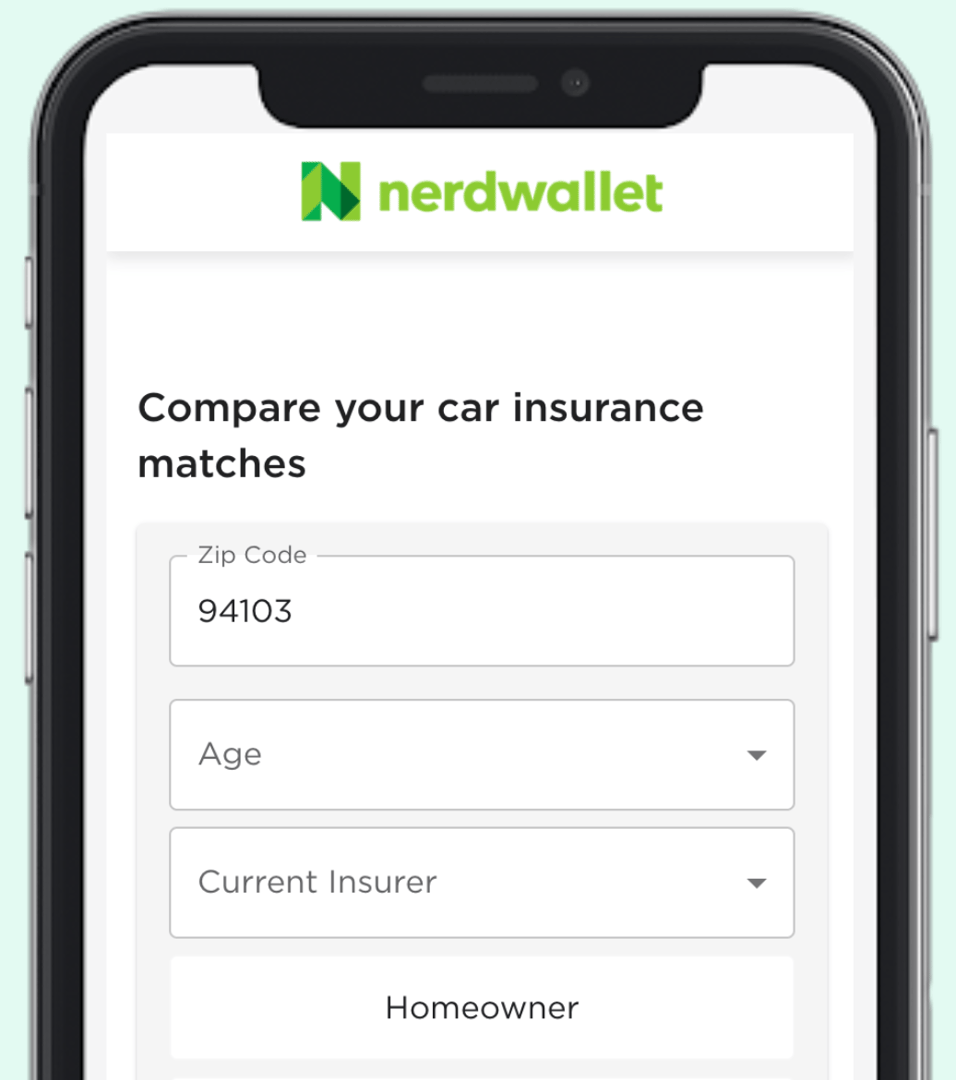
NerdWallet’s rate comparison tool can show you just how much rates vary and which carriers tend to have the cheapest rates for drivers in your area. When you get a quote through NerdWallet, that quote is specific to you. We recommend comparing quotes from a few companies to make sure you get the best deal.
Shopping for car insurance with NerdWallet
We help you get car insurance quotes in a few quick steps:
Tell us a bit about you and your driving history.
Give us the basics about your vehicle.
See if you're eligible for discounts.
We use what we know about carriers and what they offer to show good matches for you. From there you can get a personalized quote.
In all, the process takes just a few minutes.
Where can you find the best car insurance quotes?
NerdWallet’s team of editors found that Travelers has the best car insurance rates among large insurers, on average, according to our October 2026 analysis. But it’s more complicated than just looking for the cheapest price. Three factors could determine which quotes are best for you.
Cost. Car insurance rates are different at every company, which is why we recommend getting more than one quote. Travelers has the best rates for good drivers at $1,652 per year for a full coverage policy, but those same drivers pay an average of $4,042 a year for comparable coverage from Farmers.
Coverage. The best car insurance quotes are for the coverage you actually need. Often the low-low rates you see displayed are only for your state’s minimum coverage amounts, which usually pay only for damage you cause to other drivers. Most people actually need more. For example, a full coverage policy — which typically includes liability, comprehensive and collision coverage — will pay for damages you cause to others in an accident as well as damage to your own vehicle.
Quality. The company with the best quotes for you should combine affordable coverage with a dependable, time-tested reputation for excellent customer service.
NerdWallet regularly analyzes millions of car insurance rates to show you estimates of what you might pay in different scenarios and for different levels of coverage. We can help you see which companies may have the best car insurance rates for you, though the insurer with the best rates for you won’t necessarily have the best rates for everyone.
Since rates change so much from person to person, the more detail you provide insurers about your driving record, your car and the other drivers in your household, the more personalized your quotes will be. Then you can compare quotes to see which company has the best rate for you.
"Shopping around for car insurance goes slowly if you visit each insurer's website or call them one by one, and you could miss out on the lowest rate. It’s smarter to work with a broker or independent agent, or to consult a comparison site that can show you several rates at once."
—Andrew Hurst, licensed property & casualty insurance professional and lead writer at NerdWallet
How to compare car insurance quotes
Here are a few steps we recommend if you want to make sure you’re getting a good deal.
1. Check coverage limits, deductibles and features
When you compare quotes, check that all the offers have the same coverage amounts and deductibles (the part you pay for future claims). Then look for any optional features available, such as roadside assistance or accident forgiveness, and decide if they are worth the extra cost.
For example, let’s imagine three auto insurance quotes, all with the same coverage limits and deductible.
Company A: $2,000/year for standard coverage.
Company B: $2,025/year for standard coverage, plus decreasing deductibles.
Company C: $2,250/year for standard coverage, plus decreasing deductibles and accident forgiveness.
Company A offers the lowest price, but Company B reduces your collision deductible by $50 every six months that you don’t have an accident. And while Company B reduces your collision deductible, Company C does the same but also won’t raise your rates for the first accident you have.
Any of these companies could be the right choice. Only you can decide if extra levels of financial security are worth the increased costs.
2. Research the companies
Pay attention to an insurance company’s complaint records and customer satisfaction scores. If a company earns few complaints from its customers, that might indicate that a company will be easy to work with if you have to file a claim. We included this sort of information in our auto insurance reviews for every company that we rated.
3. Consider the whole package
If you’re shopping for another policy along with your auto insurance, like a home or renters policy, you should make sure you’re happy with the price and coverage being offered. Although bundling can offer discounts and convenience, you may find better prices or coverage options when you get your policies from two separate companies.
Where to get car insurance quotes
There are three main ways to shop for car insurance, each with pros and cons. You can get car insurance quotes from:
You can call insurance companies one by one, or visit each of their websites to get quotes.
We understand that can be an intimidating task, so we created lists of the best car insurance companies and the cheapest car insurance companies to help you find what you need.
Pros
- You can reach out to as many companies as you’d like, whether that’s big-name insurers like State Farm or smaller options like a regional insurer that does business in your city or state.
- You can often customize your coverage options online to see how they impact your quote.
Cons
- Requires making multiple phone calls or entering your information over and over again.
- Some companies only sell policies through independent agents.
Comparison sites let you shop with multiple companies at once. (Yes, NerdWallet offers its own comparison tool to help you do this.)
After you enter some basic information about yourself and your vehicle, comparison sites will match you with one or more insurance companies. Keep in mind that you may need to visit each company’s website to get your final price and start a policy.
Pros
- Saves you time by shopping with several companies at once.
- Ideal for users who want to buy online instead of making phone calls.
- Comparison sites generally pass some of your information on to the insurer, so you don’t have to type it all in again.
Cons
- Depending on your circumstances, you may not see as many options as you want.
- Expect follow-up phone calls or emails, as comparison sites often share your personal information with the insurers.
A final option is to work with an independent insurance agent or insurance broker. This is often a local professional who will take your information by phone or in person, then shop around for insurance on your behalf.
An agent or broker may be a good fit for people with complicated insurance needs. Some examples would be if you have a spotty driving history, or if you’re trying to get quotes for multiple cars as well as a house and an umbrella policy.
Pros
- Often has access to smaller regional insurers that may not offer online quotes.
- Saves you time by comparing rates for you.
- Can answer questions and give personalized guidance.
Cons
- May require a phone call or in-person meeting.
- Your options are limited to insurance companies the agent or broker works with.
- Brokers may charge a fee.
What you need to get car insurance quotes
When you’re shopping for car insurance, you’ll want to gather some key info first. You’ll need these details for all the drivers and vehicles in your household:
Drivers
Date of birth.
Occupation and marital status.
Driver's license number.
Accidents or traffic violations in the past five years.
Vehicles
Year, make and model.
Vehicle identification number (VIN).
Mileage.
Year purchased.
Current insurer (if applicable).
If you’re shopping for other policies along with car insurance — like homeowners or renters insurance — make sure you also have information about those things.
Coverage amounts
The default limits you’ll see in an online car insurance quote may not match the coverage you want to buy. So before you shop, decide how much car insurance you need.
Auto policy limits are split into three categories, often listed like “25/50/15”. In that example, here’s what each number refers to:
25
Your policy will pay up to $25,000 for the injuries of each person involved in one accident.
50
Your policy will pay no more than $50,000 for injuries in one accident, no matter how many people are injured.
15
Your policy will pay up to $15,000 to repair or replace damaged property in one accident.
You can typically customize your quote by adjusting the limits of your liability coverage, but you’ll still have to meet your state’s minimum insurance requirements. You can also add coverage types like comprehensive and collision coverage.
If you’re happy with your current policy, grab your most recent car insurance declaration page and refer to it when choosing limits for a new policy.
How personal factors impact car insurance rates


Insurers set prices based on many factors and driver characteristics. Sometimes that can make finding affordable car insurance harder — which makes comparing rates that much more important.
This table shows the national average rates for some of the biggest auto insurers in the country. The rates are for full coverage car insurance for a 35-year-old driver with a clean driving record.
| Travelers | $1,652 | $138 |
| State Farm | $1,985 | $165 |
| GEICO | $2,020 | $168 |
| Progressive | $2,277 | $190 |
| Nationwide | $2,663 | $222 |
| USAA* | $1,587 | $132 |
| American Family | $2,832 | $236 |
| Allstate | $3,210 | $267 |
| Farmers | $4,042 | $337 |
*USAA is available only to military families, veterans and some federal employees.
Below, you'll find rates for a range of profiles to show how different driver characteristics impact what you might have to pay for insurance.
Rates for 20-, 40- and 60-year-old drivers
Your age can have a big impact on your car insurance rates. Teens pay the most, with rates typically decreasing once you hit your 30s and going up again in your 70s.
Our rate analysis showed that in 43% of ZIP codes, the company with the cheapest rates for 20-year-old drivers is not the cheapest option for their 35-year-old counterparts.
At the other end of the age spectrum, in 24% of ZIP codes, 70-year-old drivers will come out ahead by picking an insurer that isn’t the cheapest company for 35-year-olds.
Below are rates from the nation's largest insurers, broken up into different age groups. All rates shown are for drivers with a clean record and good credit.
The average cost of car insurance for 20-year-old drivers is $4,722 a year for full coverage or $1,333 for minimum coverage.
| Allstate | $7,518 | $1,559 |
| American Family | $5,201 | $1,629 |
| Farmers | $8,435 | $2,841 |
| GEICO | $3,778 | $979 |
| Nationwide | $6,000 | $2,331 |
| Progressive | $3,833 | $1,067 |
| State Farm | $4,378 | $1,316 |
| Travelers | $3,411 | $1,058 |
| USAA* | $3,439 | $747 |
*USAA is available only to military families, veterans and some federal employees.
At 40, drivers can expect to pay $2,289 a year, on average, for full coverage car insurance or $632 for minimum coverage.
| Allstate | $3,181 | $804 |
| American Family | $2,801 | $802 |
| Farmers | $3,993 | $1,228 |
| GEICO | $2,001 | $490 |
| Nationwide | $2,600 | $935 |
| Progressive | $2,140 | $625 |
| State Farm | $1,964 | $567 |
| Travelers | $1,572 | $514 |
| USAA* | $1,495 | $340 |
*USAA is available only to military families, veterans and some federal employees.
For 60-year-old drivers, the average cost of car insurance is $2,029 a year for full coverage or $588 for minimum coverage.
| Allstate | $2,937 | $763 |
| American Family | $2,562 | $760 |
| Farmers | $3,382 | $1,059 |
| GEICO | $1,854 | $478 |
| Nationwide | $2,166 | $841 |
| Progressive | $1,810 | $586 |
| State Farm | $1,765 | $512 |
| Travelers | $1,399 | $485 |
| USAA* | $1,296 | $313 |
*USAA is available only to military families, veterans and some federal employees.
Rates for drivers after an accident, DUI or speeding ticket
Having a DUI, at-fault accident or speeding ticket on your record can cause your rates to go up — or even double. If this is you, it’s still worth shopping around and comparing quotes because savings may be available. But because every insurer evaluates risk differently, the cheapest auto insurance companies for a driver with a clean record may be a more expensive option for someone with a recent ticket.
In our March 2026 analysis, we identified the cheapest auto insurance company in each of 34,482 ZIP codes for a driver with a spotless driving record. We then compared that to the cheapest company in the same ZIPs for drivers with a speeding ticket, an at-fault accident or a DUI.
For someone insured by the cheapest auto insurance company in a given ZIP code, we found that:
Comparing quotes could save them money 29% of the time after a speeding ticket.
Shopping around could help them find cheaper rates 41% of the time after an at-fault accident.
Getting the cheapest rate may require switching insurers in 61% of cases after a DUI.
Below are rates from the nation's largest insurers, broken up to focus on different driving records. All rates shown are for 35-year-old drivers with good credit.
The average cost of full coverage car insurance after an at-fault crash is $3,524 a year.
| Allstate | $3,210 | $5,018 |
| American Family | $2,832 | $3,677 |
| Farmers | $4,042 | $6,051 |
| GEICO | $2,020 | $3,510 |
| Nationwide | $2,663 | $4,226 |
| Progressive | $2,277 | $3,416 |
| State Farm | $1,985 | $2,565 |
| Travelers | $1,652 | $2,274 |
| USAA* | $1,587 | $2,258 |
*USAA is available only to military families, veterans and some federal employees.
The average cost of full coverage car insurance after a recent DUI is $4,437 a year.
| Allstate | $3,210 | $4,631 |
| American Family | $2,832 | $3,690 |
| Farmers | $4,042 | $7,540 |
| GEICO | $2,020 | $4,760 |
| Nationwide | $2,663 | $5,531 |
| Progressive | $2,277 | $3,122 |
| State Farm | $1,985 | $3,147 |
| Travelers | $1,652 | $2,783 |
| USAA* | $1,587 | $3,056 |
*USAA is available only to military families, veterans and some federal employees.
The average cost of full coverage car insurance for a driver with a speeding ticket is $3,028 a year.
| Allstate | $3,210 | $3,989 |
| American Family | $2,832 | $3,355 |
| Farmers | $4,042 | $4,980 |
| GEICO | $2,020 | $2,751 |
| Nationwide | $2,663 | $3,412 |
| Progressive | $2,277 | $3,007 |
| State Farm | $1,985 | $2,266 |
| Travelers | $1,652 | $2,127 |
| USAA* | $1,587 | $1,924 |
*USAA is available only to military families, veterans and some federal employees.
Rates for drivers with poor credit
Your credit history is one of the largest factors affecting your car insurance rate. In states where it's allowed, carriers use credit history to determine how likely you are to file a claim.
The difference can be startling. Our March 2026 analysis found that in 48% of U.S. ZIP codes, the cheapest company for drivers with poor credit isn’t the same as the most affordable option for those with good credit.
California, Hawaii and Massachusetts don't allow insurers to use credit when determining car insurance rates.
The rates below are for 35-year-olds with a clean driving record and full coverage car insurance.
| Allstate | $3,210 | $4,824 |
| American Family | $2,832 | $4,178 |
| Farmers | $4,042 | $7,750 |
| GEICO | $2,020 | $2,910 |
| Nationwide | $2,663 | $3,992 |
| Progressive | $2,277 | $3,822 |
| State Farm | $1,985 | $7,791 |
| Travelers | $1,652 | $2,786 |
| USAA* | $1,587 | $2,868 |
*USAA is available only to military families, veterans and some federal employees.
Rates in each state
Because insurance regulations and cost of living vary from state to state, where you live can have a big impact on your car insurance rates. Click on your state in the map below to see the cheapest auto insurance companies in your area.
If you’d like to see an even more accurate number, you can estimate your own costs with our car insurance calculator.
Frequently asked questions
You can compare car insurance on NerdWallet, by going directly to insurer websites or by working with an agent.
You’re more likely to pay higher rates for car insurance if you’ve had a recent at-fault accident or DUI, you live in an urban area or you have poor credit, among other factors. However, even the best drivers often see rates go up as insurers try to keep pace with rising costs. For more information, see Why Is My Car Insurance So High?
Start by reading NerdWallet’s analysis of the cheapest car insurance, and then compare rates online from companies that offer the cheapest rates in your state. You can also work with an independent agent, who can get quotes from a variety of insurers. See how to get the cheapest car insurance rates.
It depends. If you don’t want to do the work yourself, you can contact an independent insurance agent. They’ll be able to pull quotes from multiple insurers on your behalf, so you can compare each company to see which is best for you. You can also try using an online comparison site to shop with several insurers at once.
The best insurance companies offer great customer service, a variety of coverage types to choose from, plus plenty of discounts and perks. You can read NerdWallet’s roundup of the best car insurance in the country to see our top picks.
A car insurance rate is a projection of how certain characteristics might affect what a driver pays, based on publicly available data about how insurers set their prices.
A car insurance quote is an estimate of what you might pay for an auto policy, based on the vehicle and driver information you provide to an insurance company.
A car insurance premium is determined once the insurer gathers even more information about you. It's the actual price you'll pay when the policy is issued.
The prices on this page are the medians of thousands of rates provided by Quadrant Information Services and analyzed by NerdWallet's editorial team.
NerdWallet writers are subject matter authorities who use primary, trustworthy sources to inform their work, including peer-reviewed studies, government websites, academic research and interviews with industry experts. All content is fact-checked for accuracy, timeliness and relevance. You can learn more about NerdWallet's high standards for journalism by reading our editorial guidelines.
- 1.U.S. Bureau of Labor Statistics. Databases, Tables & Calculators by Subject. Accessed Mar 4, 2026.
Ratings methodology
NerdWallet’s auto insurance ratings reward companies for customer-first features and practices. Our editorial team determines the ratings, based on weighted averages of scores for categories we believe highlight the best auto insurers.
Financial strength (30%): Insurers should be secure enough to reliably pay out claims, whether there is a recession or a series of natural disasters.
Consumer complaints (30%): Insurers should have a good track record with current customers, particularly compared to insurance companies of a similar size.
Ease of use (20%): Insurers should provide the information drivers need to get the right coverage and manage their policy whether they’re using a desktop or mobile device.
Affordability (20%): Insurers should offer coverage at a fair price for drivers of different ages, in different locations and with different driving histories.
We also consider J.D. Power’s customer satisfaction surveys, which include responses from thousands of consumers about their experience with insurance companies.
These ratings are a guide, but we encourage you to shop around and compare insurance quotes to find the best rate for you. NerdWallet does not receive compensation for any reviews or ratings.
Read our editorial guidelines and full ratings methodology for auto insurance for more information.
Average rates methodology
NerdWallet's editorial team analyzed rates in October 2026 based on public filings obtained by pricing analytics company Quadrant Information Services. We examined rates for men and women for all ZIP codes in all 50 states and Washington, D.C.
In our analysis, “good drivers” had no moving violations on record; a “good driving” discount was included for this profile. Our “good” and “poor” credit rates are based on credit score approximations and do not account for proprietary scoring criteria used by insurance providers.

35 years old
Single. Male or female.

2023 Toyota Camry LE
12,000 annual miles driven.

Good driving record and credit
No moving violations.
"Good driving" discount applied.
Good credit-based insurance score.
Bodily injury liability coverage
$100,000 per person. $300,000 per crash.
Property damage liability coverage
$50,000 per crash.
Uninsured motorist bodily injury coverage
$100,000 per person. $300,000 per crash.
Collision coverage
With a $1,000 deductible.
Comprehensive coverage
With a $1,000 deductible.
We used the same assumptions for all other driver profiles, with the following exceptions:
For driver ages, we analyzed rates for drivers aged 20, 30, 40, 50, 60 and 70 in addition to our base driver profile of a 35-year-old.
For drivers with minimum coverage, we adjusted the numbers above to reflect only the minimum coverage required by law in the state.
We changed the credit tier from “good” to “poor” as reported to the insurer to see rates for drivers with poor credit. In states where credit isn’t taken into account, we only used rates for “good credit.”
For drivers with one at-fault crash, we added a single at-fault crash costing $10,000 in property damage.
For drivers with a DUI, we added a single drunken-driving violation.
For drivers with a ticket, we added a single speeding violation for driving 16 mph over the speed limit.
In states where required, minimum additional coverages were added. Some policies include additional coverage at the insurer’s discretion.
We used a 2023 Toyota Camry LE in all cases and assumed 12,000 annual miles driven.
Insurer complaints methodology
NerdWallet's editorial team examined complaints received by state insurance regulators and reported to the National Association of Insurance Commissioners in 2021-2023. To assess how insurers compare to one another, the NAIC calculates a complaint index each year for each subsidiary, measuring its share of total complaints relative to its size, or share of total premiums in the industry.
To evaluate a company’s complaint history, our editorial team calculated a similar index for each insurer, weighted by market shares of each subsidiary, over the three-year period. NerdWallet conducts its data analysis and reaches conclusions independently and without the endorsement of the NAIC. Ratios are determined separately for auto, home (including renters and condo) and life insurance.