SBA 7(a) loans — the most popular of the U.S. Small Business Administration loans — can be a good option for business acquisitions, offering competitive interest rates and long repayment terms.
How much do you need?
Why use an SBA loan to buy a business?
SBA 7(a) loans are the most flexible type of SBA loan and can be used for a variety of purposes, including buying a business. But they won’t be a great fit for everyone looking to acquire a business. Here are some reasons why an SBA loan may or may not make sense for you:
Consider an SBA 7(a) loan if you: | Skip an SBA 7(a) loan if you: |
|---|---|
Need a large loan amount. SBA 7(a) loans are available in loan amounts of up to $5 million. | Don’t have a strong personal credit score. While the credit requirements of an SBA loan are often more reachable than those of a bank loan, they’re still on the higher end. If you don’t have good credit, consider an online business lender that reports on-time payments to credit bureaus. That way you can build business credit. |
Prefer long repayment terms. These loans have repayment terms of up to 10 years for most uses of the funds. However, if you’re using the loan to purchase real estate, then terms may extend up to 25 years. | Aren’t prepared to offer collateral. SBA lenders typically ask you to put up physical assets to secure the loan. You and any other owner with a 20%+ stake must also sign a personal guarantee, which puts your personal assets on the line. |
Want competitive interest rates. (Who doesn’t?) SBA loan rates are subject to maximums set by the SBA. Currently, SBA 7(a) variable loan rates range from 10% to 13.5%. | Require funds quickly. The SBA 7(a) loan process can take anywhere from a month to a few months (or longer if real estate is involved) before you see funds in your account. |
Are decently qualified but not enough so for a traditional bank loan. Although you’ll need good credit and multiple years in business to get an SBA loan, these loans are typically easier to qualify for than standard bank loans. | Are buying a business that falls into an SBA excluded category. The SBA publishes a list of businesses that are not eligible for its loans. If the business you’re acquiring fits one of these categories, you’ll be automatically disqualified from an SBA loan. |
Like the security of a government guarantee. The SBA guarantees 85% of your loan if it’s up to $150,000 and 75% if it’s more than $150,000. This security makes lenders less hesitant to work with small businesses. | |
Want a limit on the fees you’re charged. While the SBA permits certain “reasonable” fees, such as packaging fees and collateral appraisals, it strictly prohibits SBA lenders from charging processing, origination, application, brokerage and similar fees. |
» If you want to consider other options: Read our breakdown of the best business acquisition loans.
💡 Nerdy insight
Part of the 7(a) loan program, SBA Express loans can also be used for business acquisitions. Although these loans have smaller funding maximums (up to $500,000), they are faster to fund — as lenders can approve applications without submitting to the SBA.
Who can use an SBA loan to buy a business?
The SBA refers to a business acquisition as a “change of ownership,” which includes the purchase of an existing business or an increased ownership share in your current business. You can use an SBA 7(a) loan for ownership changes in the following scenarios:
New ownership
A small business purchases 100% of the ownership interest in another business.
An individual who is not an existing owner purchases 100% of the ownership interest in the business.
A small business acquires another small business through an asset purchase.
An Employee Stock Ownership Plan (ESOP) or equivalent trust purchases a controlling interest (51% or more) in the employer small business.
Existing ownership
One or more current owners purchases the entire interest of another current owner, resulting in 100% ownership of the business by the remaining owner(s).
The SBA also requires that any change of ownership promotes the development and/or preserves the existence of the business.

with NerdWallet Small Business
How do I qualify for an SBA acquisition loan?
To qualify for an SBA business acquisition loan, you’ll need to meet eligibility criteria from the SBA as well as your lender.
General SBA loan requirements
First, you’ll need to meet general SBA loan requirements, including:
You must be a for-profit business.
You must be located and doing business in the U.S. or its territories.
You must be operating in an eligible industry.
You must be a small business, as defined by the SBA.
You need to have tried to find other forms of financing before turning to an SBA loan.
As a business owner, you must have invested time and money into the business.
SBA business acquisition loan requirements
When an SBA loan is used to purchase a business or buy out partners, the SBA also requires one of the following, depending on which applies to your situation:
You’re an outside buyer purchasing an existing business: You’ll need to put in at least 10% of the total cost from your own funds. Say, for example, the business you’re buying costs $1 million. You’ll need to put $100,000 of your own money in, and the SBA loan will cover the rest. This includes all costs required to complete the change of ownership, regardless of the source of funds.
You’re an existing co-owner buying out a partner(s): If you already own part of the business you’re purchasing, you can borrow up to 100% of the buyout cost — no cash of your own required. But to do so, the following must be true:
You’ve been actively running the business and have owned the same or a larger share of it for at least the last two years.
The business doesn’t already have a ton of debt. Specifically, the business balance sheets for the most recently completed fiscal year and current quarter must reflect a debt-to-worth ratio of no greater than 9:1 prior to the change in ownership. Put plainly, the business can’t owe more than $9 for every $1 of value it owns.
If you can’t prove both of these, the remaining owners must put in 10%, similar to the new buyer stipulation.
SBA loan underwriting requirements
SBA lenders, typically banks and credit unions, set their own minimum qualifications but generally use the following criteria to evaluate loan applications:
Personal credit history
You’ll need to have good credit to qualify for an SBA loan. Lenders will usually want to see a personal credit score of 650 or higher. Strong credit signals to a lender that you have a record of reliably taking on debt and paying it off on time. The stronger your credit history, the likelier your loan application will be considered.
Time in business
Most SBA lenders require that you have at least two years in business. You should have an established company or be looking to buy an established company to qualify for a business acquisition loan. This proves to the lender that you or the business you’re purchasing have staying power. About 32% of small businesses fail within the first two years, according to the U.S. Small Business Administration Office of Advocacy. So the more time in business you can show, the stronger your application profile will be to a lender.
Business finances
Lenders want to see that you have strong business finances that show your ability to repay the loan, including annual revenue and cash flow projections. The lender will also want to see your financial history to ensure that you can responsibly manage the business acquisition while taking on new debt.
Collateral
SBA 7(a) loans are almost always secured with collateral. This offers the lender some protection of the money borrowed. If you end up not being able to pay off your loan, which means it goes into default, then the lender can take the assets you pledged as collateral to recover the remaining debt. Real estate, equipment and inventory can all be used as forms of collateral.
How do I apply for an SBA business acquisition loan?
If you think an SBA loan is a good fit for your business acquisition, you’ll want to start the application process by finding a lender. Here’s the list of steps we recommend following to find an SBA lender:
Start your search with a local bank or credit union in your area. These are likely to offer you the most favorable interest rates and terms, especially if you have a preexisting relationship with them.
Use the Lender Match tool on the SBA’s website. With Lender Match, you submit some basic information about your business and in two days, you receive an email with possible lender matches.
Consider NerdWallet’s list of the best SBA lenders, which ranks the top banks issuing SBA 7(a) loans by approval number and average loan size. You can even see which bank is the biggest SBA lender in your state.
Once you’ve found a lender, you’ll be able to work on preparing and submitting your application. Although the required documentation can vary from lender to lender, you’ll typically need to provide the following:
SBA business acquisition loan documents
SBA Form 1919, Borrower Information Form.
SBA Form 413, Personal Financial Statement.
SBA Form 148, Unconditional Guarantee (or the lender’s equivalent).
A current business valuation.
An analysis detailing how the change of ownership will promote the development and/or preserve the existence of the business.
Business asset or stock purchase agreement.*
Seller’s financial information.
Standard business loan documents
Business financial statements (balance sheets, profit and loss statements, cash flow projections).
Ownership and affiliations.
Business certificate or license.
Loan application history.
Income tax returns.
Resumes for each business owner.
Business overview and history.
Business lease.
Existing debt schedule, if applicable.
Collateral information.
*An asset purchase agreement itemizes each specific business asset, along with its value, that’s transferring to your ownership. With an asset purchase, you buy all the physical aspects of the business (equipment, inventory, branding, etc.) but not the entity itself. A stock purchase agreement covers shares and transfer of ownership. It means you’re buying the entity in its entirety, including any legal or regulatory issues and undisclosed debt. For this reason, stock purchase agreements require more due diligence on the part of the lender — which increases the necessary documentation and potentially adds time to the process.
After you’ve submitted your application, you’ll wait for approval. If your SBA lender is a Preferred Lending Partner (PLP), you may receive a decision faster — as these lenders can make credit decisions without sending applications through the SBA. Overall, time to funding typically ranges from 30 to 90 days.

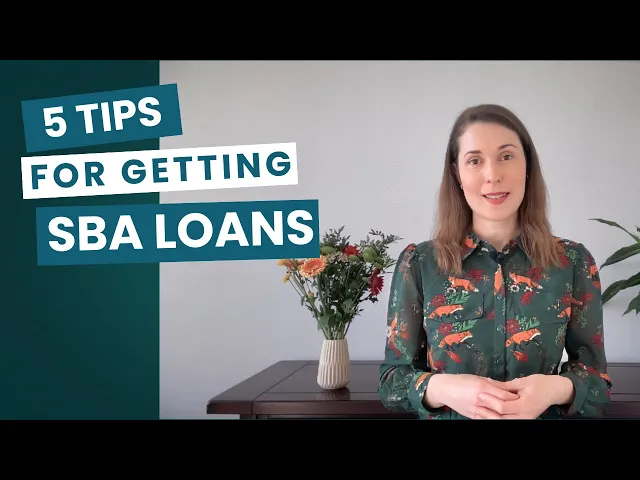
Next steps
If you're ready to get an SBA loan for your business acquisition: Learn how to apply for an SBA loan.
If you’re thinking of buying into a franchise: Check out our list of the best franchise loans.
Can an SBA loan be used to buy a business?
How long does it take to get an SBA loan to buy a business?
Can you use an SBA 504 loan for business acquisition?
Article sources
- 1.U.S. Small Business Administration. Lender and Development Company Loan Programs SOP 50 10 7. Accessed Jun 19, 2026.
- 2.U.S. Small Business Administration. Lender and Development Company Loan Programs. Accessed Jun 19, 2026.
- 3.The Office of Advocacy. Frequently Asked Questions About Small Business. Accessed Jun 19, 2026.