Good business credit unlocks better loan rates, supplier terms and insurance premiums. You can build business credit in a matter of months — here's how.
1. Get an EIN
Start by applying for an EIN, or employer identification number, from the IRS. This is an identification number for your business, and you’ll use it to file taxes.
Sole proprietors can use their Social Security number instead of an EIN to file taxes. But an EIN shows that your business is its own entity.
Then, open a business bank account and use it for all your business income and expenses. This isn’t formally part of building business credit, but it’s an important part of managing your business finances.
2. Apply for a DUNS number
A DUNS number also identifies your business. This nine-digit number is issued by Dun & Bradstreet, one of the most widely used business credit bureaus.
You might already have a DUNS number if another business has reported your activity to D&B. You can check on D&B’s website. If you don’t have one yet, it’s free to apply.
» MORE: How to get a DUNS number
3. Open a business credit card
A business credit card can help you quickly build business credit. Approval is based on personal credit history, and you need a FICO score of 670 or higher for most business cards. If your score is below that, try a secured business card.
Make on-time payments and keep your credit utilization under 30% to build your business credit. Missing payments will hurt your business credit score — and could hurt your personal score, too.
What credit bureaus do business cards report to?
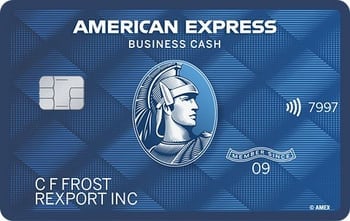
Most small-business cards report activity to at least one business credit bureau, but some issuers keep specifics close to the vest. American Express told NerdWallet that it reports to D&B, Equifax and Experian, for example. U.S. Bank reports to D&B.
4. Establish tradelines
Set up trade credit with the vendors you work with, such as your water or office supplies distributor. Try to set up several tradelines. You’ll need at least three trade references for Dun & Bradstreet to generate a PAYDEX score.
If your supplier doesn’t report payments to Dun & Bradstreet, you can manually submit them to D&B for a fee. Inclusion isn't guaranteed, though. The supplier may not respond or D&B may not verify the data
5. Pay creditors on time — or early
Payment history is the most important factor in determining your business credit score. While on-time payments are good, early payment is even better. Dun & Bradstreet assigns its highest PAYDEX scores to companies that pay early.
Failing to pay your business debts can haunt your business credit report for years. Experian keeps bankruptcies on business credit reports for nearly a decade. Tax liens, judgments and collections can remain for almost seven years.
If a satisfied lien still appears on your report, contact the lender and have them file the documents needed to remove it.
Starting Small: A newsletter to get your business off the ground
Subscribe for grant opportunities, product recommendations and no-nonsense advice from the Nerds.
6. Monitor your business credit reports
Check your business credit scores to ensure all tradelines are accounted for. Keep in mind that not all lenders report to business credit bureaus. Merchant cash advances typically don't, for instance.
If you spot any errors on your report, such as incorrect negative marks or misspelled addresses, report them to the respective business credit bureau.
You can’t freeze your business credit. So it’s important to monitor it for signs of identity theft, like tradelines or inquiries you don’t recognize.
Try to check your D&B business credit monthly. The free report includes what ranges your credit scores are in, a summary of legal events and a tally of recent credit inquiries. That should alert you to any potential fraud. One-off credit reports from Experian and Equifax cost around $50.
Your business banking account might have some credit monitoring tools. For example, Bank of America business customers can see two D&B credit scores for free. Lili users get an introductory price ($18 per month) for credit building and monitoring.
If you want to keep a closer eye on things, you can pay for business credit monitoring services through companies like Experian and Nav. In general, these services cost several hundred dollars per year. If you regularly make deals with new suppliers or business partners, actively monitoring your credit may be worth the investment.
7. Consider a business credit building service
If you don’t have any suppliers that report to business credit bureaus, consider a business credit builder service instead. These companies issue you a monthly bill. When you pay it on time, they report it to business credit bureaus as a tradeline. They may also report other recurring payments, like utility bills. In general, these services cost $20 to $50 per month.
Some, like Nav Prime, offer business and personal tradelines. That means you can work on both types of credit at the same time.
If you go this route, proceed with some caution. There aren’t many regulations on credit-building services, so check online reviews to see if other business owners feel like they got their money’s worth. Make sure you fully understand the impact of a product as well — like whether your credit will take a hit when you stop paying for the service.
8. Build your personal credit too
Your personal credit generally doesn’t impact your business credit. But it can still affect your ability to get business financing.
That includes:
Issuers mostly base business credit card approvals on your personal credit score.
Your personal credit score affects your FICO SBSS score, which is a factor in getting an SBA 7(a) small loan ($500,000 or less).
Most business loan applicants use a combination of their personal and business credit .
If your personal credit score is in the bad or fair range (FICO scores of 669 or below), make a plan for building your credit. You can work on both personal and business credit at the same time.
Building your personal credit is similar to building your business credit. You need to borrow money and pay it back on time. In general, the more consistent you are paying lenders, the stronger your credit history will be.


What is business credit?
How do you build business credit fast?
Article sources
- 1.How to Get a D-U-N-S Number. Dun & Bradstreet. Accessed Sep 2, 2025.
- 2.Experian. Understanding business credit. Accessed Aug 26, 2025.
- 3.Fed Small Business. 2020 Report on Employer Firms: Based on the 2019 Small Business Credit Survey. Accessed Aug 26, 2025.