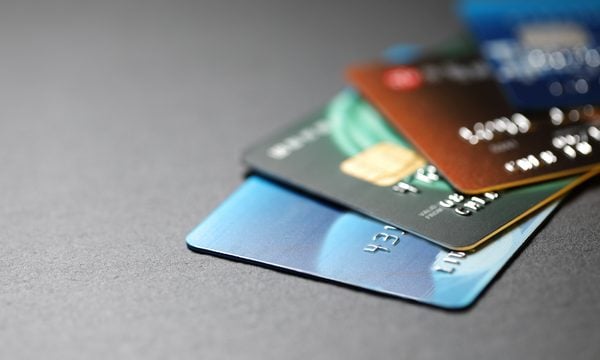





Being environmentally conscious involves a series of choices that add up over time: the reusable water bottle, the public transit commute, the trip to the consignment store instead of the department store. But how we pay for everything we buy has an impact, too. In recent years, eco-friendly credit cards have emerged as a way to make one more thoughtful choice.
These cards may donate to green causes, help you offset your carbon footprint or even be made out of recycled, biodegradable or reclaimed materials. But a credit card that is "good" for the environment is a tricky premise. For one thing, many major banks, some of which issue these cards, invest in fossil fuels.
Plus, credit cards make it easy to buy more stuff, and the very act of consumption contributes to climate change in myriad ways. After all, that online purchase doesn’t just magically appear at your front door. The items you buy get manufactured, packaged, shipped, delivered in trucks ... you get the idea.
So do eco-friendly credit cards make a difference? What other actions can you take to make a difference when it comes to your own consumption habits?


What makes a credit card 'eco-friendly'?
Eco-friendly credit cards aim to help the environment in a few major ways:
Using more sustainable materials to make the cards
There’s a noticeable push to move away from “first-use” plastic in credit cards and toward plastics that previously served some other purpose, like recycled PVC (polyvinyl chloride, the difficult-to-recycle material that cards are traditionally made from) and plastics recovered from oceans.
Still, any plastic use, even if it’s recycled or reclaimed, can be problematic, according to Katie O’Hara, conservation manager at the Loggerhead Marinelife Center in Juno Beach, Florida.
“Anything made from recycled or reclaimed ocean plastics is not truly recyclable or sustainable," she said in an email. "When plastics are recycled, they degrade, releasing nano and microparticles into the water used to recycle them. Plastic cannot be reused more than once or twice, and when it is recycled it’s still harmful to the environment.”
Even if plastic finds a second life as a credit card, it will still find its way back to the landfill eventually. O’Hara recommends opting for metal credit cards, which are more durable and easier to recycle.

Donating to specific causes
There are many worthwhile environmental charities that are doing important work all over the world, and they need help. And by “help,” what they really need is money.
“Environmental nonprofit organizations are heavily reliant on donations, and the donations they receive through eco-friendly credit cards can be a financial lifeline for them,” said Marc Lewis, former executive editor of EcoWatch, an environmental news and product review site, in an email in 2021.
So if you want to use a credit card that helps raise money toward a cause you care about, go for it. But don’t fall into the trap of thinking using the card more often equals a healthier planet. “It’s hard to measure if these donations truly offset the massive carbon footprint from the credit card purchases of TVs, smartphones, new furniture and other resource-intensive consumer goods,” Lewis said.
An alternative is simply donating directly to charities. Cash always fits, but you can even donate points and miles from rewards credit cards, as well as from airline and hotel loyalty programs.
Offering carbon offsets
With carbon offsets, you essentially help fund an environmentally friendly project somewhere in the world, negating the carbon footprint of your own action. In recent years, a few carbon-offsetting credit cards have come to market. They partner with organizations that offset the carbon footprint of your purchases through reforestation efforts and other means. Some even track the carbon footprint of your purchases, helping you to make more informed buying decisions.
Anything that helps you think about the impact of your purchases is a good thing. Carbon offsets themselves can also help, though data on the effectiveness of different offset programs is murky. If you choose a credit card that offers carbon offsets, look into the organizations they support so you can see how much of an impact you can make. Also, it’s tempting to buy more when each tap of the card does something good for the environment, but, again, buying more stuff is generally not ideal for the environment.

What card issuers can do: Ditch the physical card altogether
Enough new credit cards are produced every year to circle the Earth three times, according to Doug Heske, CEO of Newday Impact Investing, a platform that allows users to invest in ESG portfolios. (ESG stands for environmental, social and governance.) But we already have the technology that will reduce demand for physical cards.
Perhaps in part because of the COVID-19 pandemic, contactless and mobile payment use picked up momentum around the world. A 2021 Visa study found that 85% of consumers expect digital options when they shop in person, including contactless credit cards, mobile payment apps and mobile wallets. And if contactless payment options are what customers want, card issuers and merchants will eventually deliver by allowing consumers to opt in to receiving physical cards instead of automatically mailing them.
“We’re in this bridge period between what was and what will be,” Heske says. “My experience, and the conversation I’ve had with major providers, is that everyone’s moving in that direction. It’s going to be consumer-driven.”
What consumers can do: Make small choices that add up
Just because something is plastic doesn’t mean you can simply drop it in the recycling bin and pat yourself on the back. What’s considered “recyclable” can depend on the rules of your region’s recycling program.
Credit cards are difficult to recycle in part because of their chips and magnetic stripes, according to Debbie Prenatt, market manager, sustainability, at M. Holland Co., a plastics distribution company. Companies like TerraCycle offer a way to mail in your old cards for recycling. TerraCycle’s Zero Waste Pouch costs $48, but you can save money by sharing the cost, and the pouch, with friends who also want to safely dispose of their cards.
And if you haven’t yet tried that mysterious wallet app on your phone, add a credit card or two and try it the next time you shop at a merchant that accepts that type of payment.
Of course, a huge part of cutting back on plastic waste is simply using less of it. Prenatt adds another “R” to “reduce, reuse, recycle” — refuse.
“If you get takeout, do you need plastic utensils? Or can you wait until you’re home and use a metal fork? That’s how you refuse,” she says. “Unfortunately, if you want to do better, you have to do the work as an individual.”