We believe everyone should be able to make financial decisions with
confidence. While we don't cover every company or financial product on
the market, we work hard to share a wide range of offers and objective
editorial perspectives.
So how do we make money? Our partners compensate us for advertisements that
appear on our site. This compensation helps us provide tools and services -
like free credit score access and monitoring. With the exception of
mortgage, home equity and other home-lending products or services, partner
compensation is one of several factors that may affect which products we
highlight and where they appear on our site. Other factors include your
credit profile, product availability and proprietary website methodologies.
However, these factors do not influence our editors' opinions or ratings, which are based on independent research and analysis. Our partners cannot
pay us to guarantee favorable reviews. Here is a list of our partners.
Is a 750 Credit Score Good or Bad?
A 750 score is very good and higher than the American average. You'll get among the very best rates on loans and credit cards.
Lauren Schwahn is a writer at NerdWallet who covers credit scoring, debt, budgeting and money-saving strategies. She contributed to the "Millennial Money" column for The Associated Press and managed a team of writers producing content for the series. Her work has also been featured by USA Today, MSN, The Washington Post and more. Lauren has a bachelor’s degree in history from the University of California, Santa Cruz. She is based in San Francisco.
Amrita Jayakumar is a former staff writer at NerdWallet and, later, a freelance contributor to the site. She has covered personal loans and consumer credit and debt, among other topics, and wrote a syndicated column about millennials and money. Previously, she was a reporter at The Washington Post. Her work has appeared in the Miami Herald and USA Today. Amrita has a master's degree in journalism from the University of Missouri.
Amanda Barroso, Ph.D., is a writer and content strategist helping consumers navigate budgeting, credit building and credit scoring. Before joining NerdWallet, Amanda wrote about demographic trends at the Pew Research Center and earned a Ph.D. from The Ohio State University.
Her work has been featured by the Associated Press, Washington Post and Yahoo Finance.
Pamela de la Fuente is a managing editor of NerdWallet's personal finance content. She leads budgeting, money-making, consumer credit and and debt coverage.
Ask her and her talented team about why credit scores matter, how to save money on your grocery bill, finding the right side hustle, how to protect your identity for free and more.
Previously, she led taxes and retirement coverage at NerdWallet.
Pamela joined NerdWallet after working at companies including Hallmark Cards, Sprint Corp. and The Kansas City Star. She has been a writer and editor for more than 20 years.
Pamela is a thought leader in content diversity, equity, inclusion and belonging, and finds ways to make every piece of content conversational and accessible to all.
She is a graduate of the Maynard Institute's Maynard 200 program, and the National Association of Black Journalists Executive Leadership Academy. She is a two-time winner of the Kansas City Association of Black Journalists' President's Award. She was also founding co-chair of NerdWallet's Nerds of Color employee resource group.
Updated
How is this page expert verified?
NerdWallet's content is fact-checked for accuracy, timeliness and
relevance. It undergoes a thorough review process involving
writers and editors to ensure the information is as clear and
complete as possible.
A 750 credit score is considered very good and above the average score in America.
The average FICO 8 credit score was 715 as of September 2025, according to FICO. The average VantageScore 3.0 was 697 as as of February 2026.
Your credit score helps lenders decide if you qualify for products like credit cards and loans, and your interest rate. A score of 750 puts you in a strong position.
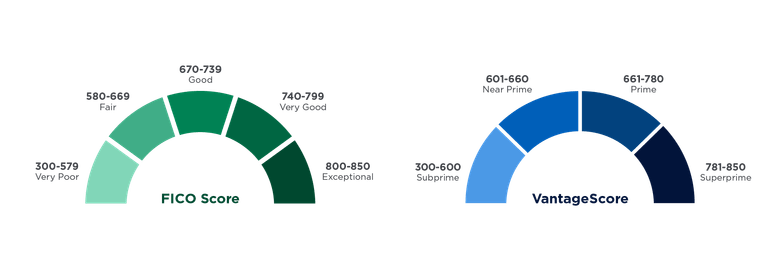
A 750 credit score can help get you the best rates on loans and credit cards
When your score is 750, you’re in a strong position to qualify for most financial products and get among the very best rates on them. A 750 credit score is considered excellent on commonly used FICO and VantageScore scales.
There are some exceptions; a high score by itself isn't always enough. The length of your credit history and how much debt you carry relative to your income also matter.
Meet MoneyNerd, your weekly news decoder
So much news. So little time. NerdWallet's new weekly newsletter makes sense of the headlines that affect your wallet.

You’ll find solid financing options with a 750 credit score. The average credit score was 753 for a new-car loan but 689 for a used-car loan in the fourth quarter of 2025, according to a report from credit bureau Experian
. The average auto loan rate for borrowers with a 750 credit score was 6.27% for a new car and 9.98% for a used car.
Can I buy a house with a 750 credit score?
A 750 credit score is well above the minimum credit score needed to buy a house, by most lenders’ standards. You are likely to qualify for the lowest interest rates on a mortgage.
How to safeguard your 750 credit score
You already practice good credit habits, but there are ways to safeguard your score and possibly take it higher:
Consider setting up automatic payments. A single late payment can knock as much as 100 points off your credit score. If you haven’t set up automatic payments, consider doing so to avoid the risk of missing a payment.
Keep an eye on your credit utilization. The lower your credit card balances are compared with your credit limits, the better it is for your score.
While you may be determined to move your score up to 800 or higher to qualify for the best terms and rates, remember that 750 is above the good credit score threshold and will help get you great offers.
NerdWallet writers are subject matter authorities who use primary,
trustworthy sources to inform their work, including peer-reviewed
studies, government websites, academic research and interviews with
industry experts. All content is fact-checked for accuracy, timeliness
and relevance. You can learn more about NerdWallet's high
standards for journalism by reading our
editorial guidelines.