At 5 p.m., my phone locks me out. No scrolling on Instagram or adding things to my Amazon cart. No late-night look at the Target app. Instead, I’m with my kids on the couch — keeping money in my bank account.
In February, I started an experiment: I used a Brick device to block social media and shopping apps from 5 to 9 p.m. on weekdays — the time when I’m logged off work for the day, my kids are home from school and the chaos of my home is at its peak.
I wanted to reclaim this time to be more present with my kids and make it a little harder for me to mindlessly spend. Whatever I saved during the month would go toward three goals: my family’s first Disney trip, a boost to our emergency fund and a spring home project.
The results were promising: I cut my personal spending by $300 compared with the previous month. I put it all in our sinking funds, rather than let it slip away toward impulse purchases.
Adding friction made it harder to mindlessly spend
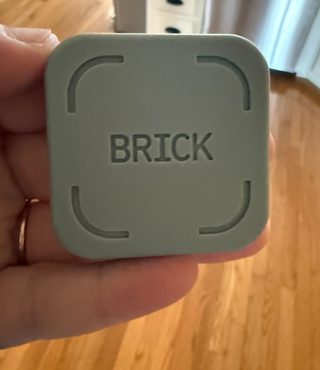
“Friction maxxing” is a trend that’s gaining traction in 2026 — and it’s all about adding intentional obstacles to your routines so you’re less likely to act on impulse.
For my experiment, my method was using a Brick, which is a small digital device that lets you block apps on your phone to set boundaries around your time and attention. The extra effort it takes to physically tap your phone on the Brick to unlock it is meant to keep you honest about your intentionality goals.
“Creating the friction is going to help just interrupt a cycle of action that you may not even recognize that you're doing,” says Aja Evans, a financial therapist and licensed mental health counselor in the New York City area.
“What you're trying to do is get yourself out of that immediate dopamine cycle, the excitement of purchase,” Evans says.
I didn’t go completely phone-free. I set up the Brick so I could still browse news and listen to music. I just wanted the Brick to be a digital barrier between me and easy purchases.
As the month progressed, I realized how much of my spending was tied to exposure. Limiting the time I spent on social media and shopping apps lessened the temptation to spend. I also engaged more with my hobbies, spent more focused time with my family and found my stress levels decreasing, if only slightly.
» MORE: See your expenses and income in one place on NerdWallet’s app.
🤓 Meet MoneyNerd,
your budget's new bestie
NerdWallet's twice-weekly newsletter offers practical, no-fluff guidance to help you spend smarter, save more, and make confident money decisions. Delivered free to your inbox.
Three mindset shifts I didn’t expect
It didn’t take long for me to realize deprivation by device isn’t what will keep me going. It’s about smaller shifts that lead to bigger changes in habit.
Browsing in stores lost its charm
One afternoon, I had an hour alone and wandered into TJ Maxx. In the past, browsing the aisles felt like a treat. This time, it wasn’t even fun. I picked things up, looked at price tags, and mostly just saw … stuff. Nothing I needed or would meaningfully improve my life.
I walked out empty-handed and didn’t feel deprived. It started to feel like I was rewiring my brain, shifting from the quick hit of a purchase to something more lasting.
Having a hard number gave life to my savings goals
I also realized how motivating it is to have a savings goal tied to a specific amount. In the past, I’ve had goals to “save more” without clear finish lines that made it easy to lose momentum. Our Disney trip, by contrast, has a real price tag, and working toward it makes the trade-offs feel purposeful and achievable.
“Knowing what that money is going for is motivating,” Evans says. “It does give you that dopamine of anticipation, that excitement of like, ‘Oh, we're seeing progress.’”
Friction is a redirection, not restriction
The third surprising realization is that this experiment didn’t feel very restrictive. Maybe because I knew I could always disable the Brick if I wanted — but I rarely did.
“You don't necessarily need extreme hacks to control your spending, but instead, you need more guardrails,” says Naima Bush, a certified financial planner in Alexandria, Virginia.
After a few days of using the Brick, trading hours of scrolling for family time and hobbies felt like a better use of my time — and it got easier.
The Brick was just a tool that helped rewire my habits. Rather than reach for my phone, I began to build new routines and gained more control over my money and attention.
Small ways to add friction to your spending routines
Evans says the key is being aware of your spending triggers so you can create friction that is personalized for your life. Here are some ideas for you:
Cut social media time
How much is Instagram and TikTok really doing for you?
Whether we like it or not, a lot of it is marketing and lifestyle ads, Evans says.
“And without realizing it, we are clicking the link in bio and … buying it up.”
Detox your inbox
Evans recommends “doing a digital cleanse around your email.”
Promotional emails from your favorite brands can add temptation. Assess how many ads you’re getting each day and start clicking "unsubscribe" to clear the clutter and protect your wallet.
Add to cart, then wait
Both experts say that if you think you want to buy something, add it to your cart and then walk away. Come back in a day, a week or a month and see how you feel. Still want it now? Then consider purchasing it — or, if you can wait, add it to a note on your phone for an upcoming birthday or holiday.
Delete digital payment information
If you have to get off the couch to get your credit card, you’re probably less likely to buy something impulsively.
Bush joked that “maybe we need to go ‘old school’ and, like, put our credit cards in the freezer.”
Maybe disabling Apple Pay is the modern day equivalent?
How I’m keeping the experiment going
The month is over but I’ve kept “bricking” my phone during peak evening hours. My husband, inspired by my progress, is using my Brick, too, and the combined savings is adding up quickly, which is helping us offset rising prices nearly everywhere, especially at the grocery store and gas pump.
I can already sense some old habits creeping in with the change of seasons — like the urge to buy new spring clothes.
I’m just trying to remember: My goal isn’t perfection. I just want to create enough friction between me and the apps to keep my spending intentional. And for now, that small shift feels more sustainable than any strict no-spend rule ever did.
🤓 Meet MoneyNerd,
your budget's new bestie
NerdWallet's twice-weekly newsletter offers practical, no-fluff guidance to help you spend smarter, save more, and make confident money decisions. Delivered free to your inbox.