

No U.S. airlines offer free checked bags to all passengers on domestic or short-haul international itineraries. Instead, there are special carve-outs for certain premium cabins or travelers with elite status. And if you're traveling on a long-haul international itinerary, you generally get one or two checked bags for free.
Here are some ways to get free checked bags.
» Learn more: The main airline fees that are hard to avoid

Subscribe to our free TravelNerd newsletter for inspiration, tips and money-saving strategies, delivered straight to your inbox.
By signing up, you will receive newsletters and promotional content and agree to our Terms of Use and acknowledge the data practices in our Privacy Policy. You may unsubscribe at any time.
Use the right credit card
One of the cheapest ways to save on checked bag fees is through the right credit card. There’s no need to buy a premium cabin ticket if what’s in your wallet can support your checked bag fees. Most major airline credit cards can get these fees waived for you and other people traveling with you on the same reservation. These are some of the most popular:
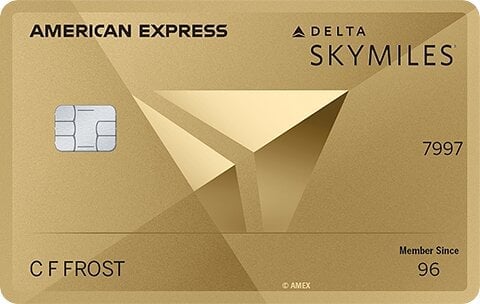
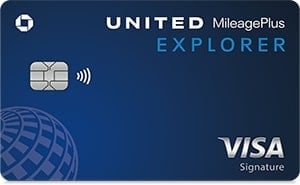
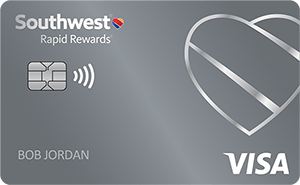
Airline cards with baggage fee perks


Annual fee
$0 intro for the first year, then $150.
$0 intro for the first year, then $150.
$99, waived for the first 12 months.
$99.
$95.
Checked bag benefit
First checked bag free for you and up to eight others on your reservation. Second checked bag free for the primary cardholder. Terms apply.
First checked bag free for you and a companion traveling on your reservation.
First checked bag free for you and up to four others traveling on your reservation.
First checked bag free for you and up to eight others traveling on your reservation.
First checked bag free for you and up to six others traveling on your reservation.
Use airline elite status perks
Buying a premium cabin ticket will often do the trick, but if you are loyal enough to the same airline or affiliated airline alliance, you can also check bags for free. These carriers have free baggage perks for elite status members, although it may vary based on elite status tier:
- Alaska: All Atmos Rewards status holders are eligible for free checked bags (the amount varies based on their status level).
- Delta: Silver, Gold, Platinum and Diamond Medallion members get waived baggage fees on the first bag up to eight companions traveling on the same reservation.
- American: Gold, Platinum, Platinum Pro and Executive Platinum AAdvantage members can check as many as three bags for free depending on membership level with American. And elite status members with a partner airline or from the Oneworld alliance have similar privileges.
- JetBlue: Mosaic TrueBlue members can check two bags on their flight for free.
- United: Premier Silver, Premier Gold, Premier Platinum and Premier 1K Mileage Plus members have excellent bag benefits (even if in basic economy) because they can check as many as three bags without charge depending upon their membership level. Star Alliance Gold members also enjoy extra baggage allowance when traveling on United.
What about free carry-on bags?
Carry-on bags are usually free, but not always.
Often, basic economy fares don't include overhead baggage space. So that suitcase you always fly with may have to be checked when traveling on some airlines.
These airlines allow free carry-on bags, even in basic economy:
- Alaska Airlines: All travelers can bring one carry-on bag in the cabin plus one personal item that fits under the seat for free.
- Hawaiian Airlines: All travelers can bring one carry-on bag in the cabin plus one personal item that fits under the seat at no extra cost. Carry-on bags must not exceed 25 pounds.
- Delta Air Lines: All passengers can bring one carry-on bag plus one personal item without paying extra fees. Personal items can be a purse, small backpack, briefcase, laptop bag or a bag of similar size.
- American Airlines: All passengers can bring one carry-on bag plus one personal item at no extra charge. Personal items have a particular size limit not to exceed 8 x 14 x 18 inches.
- JetBlue Airlines: All passengers can bring one carry-on bag plus one personal item at no extra cost. Personal items cannot be larger than 17 x 13 x 8 inches.
These airlines allow free carry-on bags, but with restrictions:
- United Airlines: All passengers except those booking a basic economy fare can bring one free carry-on bag on board and one personal item at no extra cost. Personal items must not exceed 17 x 10 x 9 inches; for basic economy, these items must fit underneath the seat in front of you or a $75 fee at the gate will be imposed. Basic economy passengers can, however, bring a carry-on bag when traveling “to South America, across the Atlantic or to international destinations across the Pacific.”
- Frontier Airlines. This budget airline only permits a personal item without charge. Other passengers have to purchase a carry-on bag to take into the cabin. Some of the carrier’s bundled fares include both a free carry-on bag and a free checked bag.
🤓Nerdy Tip
Carry-on bags, including wheels and handles, on any U.S. airline must not exceed 22 x 14 x 9 inches. Many airlines make exceptions for things like garment bags, musical instruments and other fragile items that may be larger than the carry-on bag sizer. It is still best to check with your airline in advance.To view rates and fees of the Delta SkyMiles® Gold American Express Card, see this page.
How to maximize your rewards
You want a travel credit card that prioritizes what’s important to you. Here are some of the best travel credit cards of 2026:
- Flexibility, point transfers and a large bonus: Chase Sapphire Preferred® Card
- No annual fee: Wells Fargo Autograph® Card
- Flat-rate travel rewards: Capital One Venture Rewards Credit Card
- Bonus travel rewards and high-end perks: Chase Sapphire Reserve®
- Luxury perks: American Express Platinum Card®
- Business travelers: Ink Business Preferred® Credit Card
Explore more on