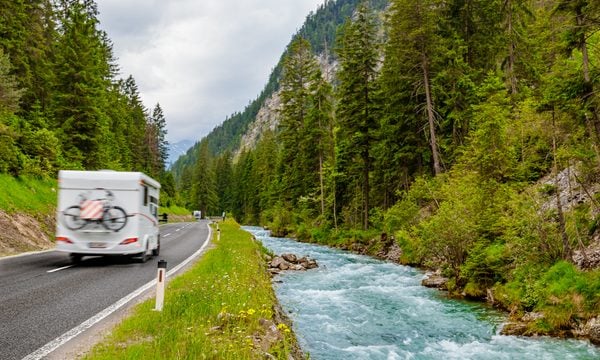

From the towering mountains of North Cascades and underwater ecosystem of Biscayne to the geothermal marvels of Yellowstone and vast dunes of White Sands, the national parks encompass some of the best of what the U.S. has to offer.
However, national park entrance fees can be expensive — the most popular parks charge up to $35 per vehicle for U.S. residents. And starting in 2026, nonresidents will face significantly higher fees. Fortunately, the National Park Service still offers fee-free days to U.S. residents throughout the year.
Whether you're planning a vacation on a budget or just want to save a few bucks, on these dates U.S. residents can hike, swim or simply enjoy the views without the usual entrance fee. Here are the free national park days in 2026, plus some other tips and tricks to save money at national parks throughout the rest of the year.
Free national park days in 2026 (U.S. residents only)
The National Park Service has announced eight fee-free days in 2026 exclusively for U.S. residents. Note that nonresidents will still need to pay entrance fees on these days.
Here are the dates when U.S. residents can visit any national park without paying a fee:
- Feb. 16, 2026: President's Day.
- May 25, 2026: Memorial Day.
- June 14, 2026: Flag Day/President Trump's birthday.
- July 3–5, 2026: Independence Day weekend.
- Aug. 25, 2026: 110th Birthday of the National Park Service.
- Sept. 17, 2026: Constitution Day.
- Oct. 27, 2026: Theodore Roosevelt's birthday.
- Nov. 11, 2026: Veterans Day.
Major changes to national park passes in 2026
Starting Jan. 1, 2026, the National Park Service is implementing significant changes to how park passes work:
Digital passes now available
All America the Beautiful passes will be available digitally through Recreation.gov. You can purchase and use your pass instantly, store it on your mobile device, and link it to a physical card if you prefer.
America-first pricing structure
The most significant change affects nonresidents. While U.S. residents will continue to pay $80 for an annual pass, nonresidents will now pay $250. Additionally, nonresidents without an annual pass will pay a $100 per person fee at 11 of the most visited national parks, on top of the standard entrance fee.
National parks that charge a $100 fee to nonresidents
- Acadia National Park.
- Bryce Canyon National Park.
- Everglades National Park.
- Glacier National Park.
- Grand Canyon National Park.
- Grand Teton National Park.
- Rocky Mountain National Park.
- Sequoia & Kings Canyon National Parks.
- Yellowstone National Park.
- Yosemite National Park.
- Zion National Park.
Expanded motorcycle access
Great news for motorcycle riders: America the Beautiful passes will now cover two motorcycles per pass, making national park adventures more accessible for riders and families who travel on two wheels.
Other ways to gain free entrance to national parks
These eight days a year aren't the only way to score free entrance to the national parks. Here are some other ways to gain access for free year-round.
Show your military ID
Whether you're active military or a veteran, you can get a free annual pass to enter the national parks. A Military Annual Pass is for those currently serving in a branch of the U.S. armed forces and their dependents.
Starting in 2026, you can obtain your pass digitally through Recreation.gov or pick one up in person at a park. You'll need to present proof of eligibility (such as a military ID or other valid form of identification).
Veterans with a valid ID and Gold Star Families (with a valid voucher) can get a free Military Lifetime Pass. Obtain one at a federal recreation site or through Recreation.gov.
Subscribe to our free TravelNerd newsletter for inspiration, tips and money-saving strategies, delivered straight to your inbox.
By signing up, you will receive newsletters and promotional content and agree to our Terms of Use and acknowledge the data practices in our Privacy Policy. You may unsubscribe at any time.
Visit with a fourth-grader
One way to gain free access to national parks in 2026 is to go with a fourth-grade student. To obtain the pass, you must have a valid paper voucher from the Every Kid Outdoors website (a digital copy on a phone won't cut it). When presented at a national park property, it can be exchanged for a free 4th Grade Pass, which will grant the student and their family entry to the parks for the entire school year plus the following summer.
Starting in 2026, the 4th Grade Pass will also be available digitally through Recreation.gov.
Show proof of permanent disability
Those who can show proof of permanent disability, along with citizenship or residency, can get a free lifetime Access Pass to enter all national recreation areas. Starting in 2026, you can apply for this pass digitally through Recreation.gov, in person at a park, or by mail. It also has the added benefit of offering discounts of up to 50% on some park-operated amenities like camping and interpretive services.
Log those volunteer hours
If you're passionate about volunteering, you may want to consider doing so at participating Interagency Pass Program federal agencies, which include the National Park Service, Bureau of Land Management, U.S. Fish and Wildlife Service, U.S. Forest Service, Bureau of Reclamation and U.S. Army Corps of Engineers.
Once you rack up 250 volunteer hours (over one or several years), you can pick up a free annual pass.
These national parks are always free
Not all national parks charge entrance fees — many are free year-round for both U.S. residents and nonresidents.
National parks that are fee-free all the time include:
- Biscayne National Park.
- Channel Islands National Park (ferry tickets required).
- Congaree National Park.
- Cuyahoga Valley National Park.
- Gates of the Arctic National Park.
- Gateway Arch National Park.
- Glacier Bay National Park.
- Great Basin National Park.
- Great Smoky Mountains National Park.
- Hot Springs National Park.
- Katmai National Park.
- Kenai Fjords National Park.
- Kobuk Valley National Park.
- Lake Clark National Park.
- Mammoth Cave National Park.
- New River Gorge National Park.
- North Cascades National Park.
- Redwood National Park.
- Voyageurs National Park.
- Wind Cave National Park.
- Wrangell-St. Elias National Park.
Keep in mind that while these parks don't charge entrance fees, you may still encounter other costs like camping fees, tour fees, parking fees, or ferry/boat tickets depending on the park and activities you choose.
For example, if you want to see the caves at Great Basin, Mammoth Cave or Wind Cave national parks, you'll need to pay a fee to join a tour. The same goes for riding the elevator to the top of Gateway Arch.
» Learn more: The cheapest ways to rent an RV for a month
Other ways to save money on a national park pass
- Buy an annual pass: If you plan to visit more than two or three national parks in a year that charge an entrance fee, it may be worth it to purchase an annual pass. At $80 for U.S. residents, if you visit three parks that charge $30 entrance fees, the pass will save you money.
- Load up the car: Many parks charge an entrance fee "per vehicle," not per person. That means your entrance fee or annual pass covers everyone in a single vehicle, so consider carpooling to save money. At parks that charge "per person," four adults are covered by an annual pass, but more than that will be charged the per-person rate.
- Go with a senior: If you or someone you know is over the age of 62, a lifetime pass costs $80 or an annual pass costs $20 — an excellent value for U.S. residents.
- Check for timed entry and reservation requirements: Several of the more popular parks require timed entry reservations during parts of the year or to visit specific areas of the park. These often need to be purchased in advance, so check before you go to make sure you won’t be turned away when you arrive.
Visiting the National Parks for free in 2026
Entrance fees for U.S. residents at the most expensive parks cost $35 per private vehicle, and you can put up to 15 people in one van. Motorcycles get a slight discount at $30 — and now two motorcycles are covered under annual passes. For pedestrians entering on foot or bike, the entrance fee is $20. All of those admission fees cover seven consecutive days.
Popular parks like Grand Canyon and Acadia National Park in Maine follow this pricing structure. But visit those parks (or any others) on one of the resident-only free days in 2026 to avoid that fee entirely.
How to maximize your rewards
You want a travel credit card that prioritizes what’s important to you. Here are some of the best travel credit cards of 2026:
- Flexibility, point transfers and a large bonus: Chase Sapphire Preferred® Card
- No annual fee: Wells Fargo Autograph® Card
- Flat-rate travel rewards: Capital One Venture Rewards Credit Card
- Bonus travel rewards and high-end perks: Chase Sapphire Reserve®
- Luxury perks: American Express Platinum Card®
- Business travelers: Ink Business Preferred® Credit Card
Explore more on