Tokyo is served by two massive airports: Tokyo-Haneda Airport, which has been Tokyo's domestic airport, and Tokyo-Narita International Airport, initially built as the international airport. However, both are now used for international flights from the United States.
Here's what Japan-bound travelers need to know about Tokya-Haneda Airport versus Tokyo-Narita.
» Learn more: The best travel credit cards right now
About Tokyo-Narita International Airport
Opened in 1978, Tokyo-Narita was built to become Tokyo's international airport after residents complained about the aircraft noise from the more central Tokyo-Haneda airport.
Since Tokyo-Haneda resumed regularly scheduled international flights in 2010, Tokyo-Narita functions more as a connecting airport.
» Learn more: ANA vs. JAL: Which is better?
Routes and airlines
As of May 2024, Tokyo-Narita airport has 83 airlines with flights to 115 airports in 44 countries. Japan-based All Nippon Airways (ANA) operates the most routes from Narita with flights to 28 destinations. Japan Airlines (JAL) is just behind ANA with 26 routes.
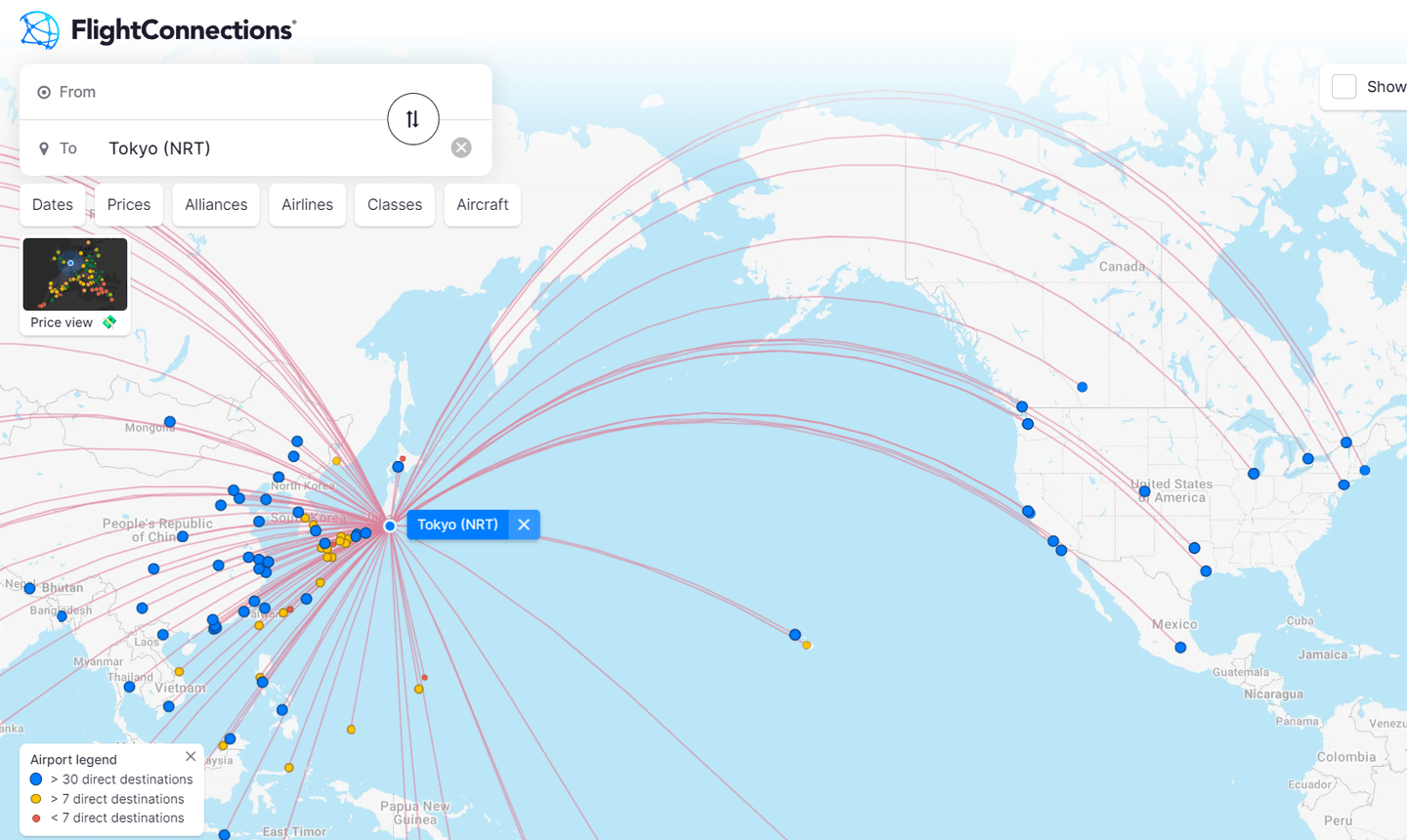
Surprisingly, United Airlines has eight total routes to Tokyo-Narita — five from the mainland U.S. and three to other Asian destinations.
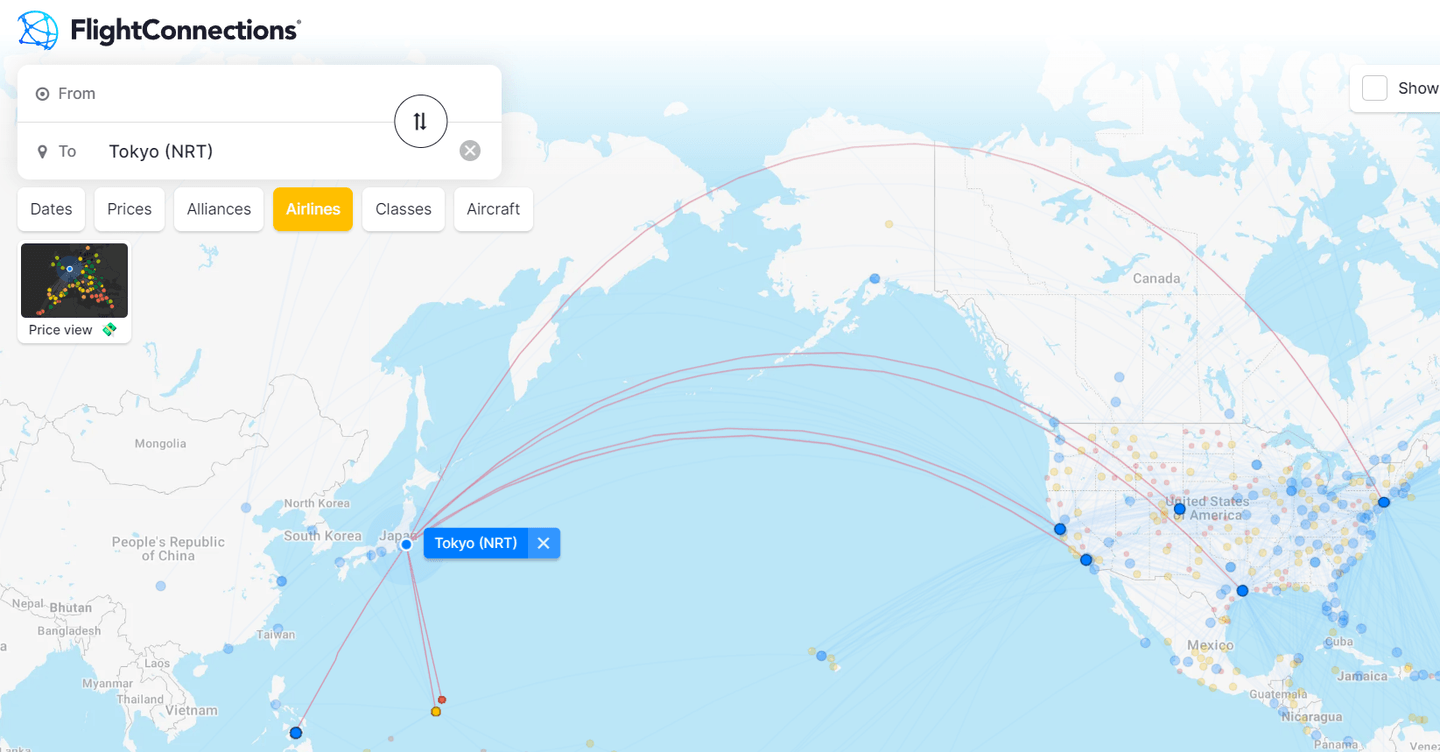
U.S.-based travelers can currently fly direct to Tokyo-Narita from 13 different airports:
Boston: Japan Airlines.
Chicago: ANA.
Dallas-Fort Worth: American Airlines.
Denver: United Airlines.
Honolulu: ANA, Hawaiian Airlines, Japan Airlines and ZIPAIR.
Houston: United Airlines.
Kailua-Kona: Japan Airlines (seasonal).
Los Angeles: ANA, Japan Airlines, Singapore Airlines, United Airlines and ZIPAIR.
Newark: United Airlines.
San Diego: Japan Airlines.
San Francisco: ANA, Japan Airlines, United Airlines and ZIPAIR.
San Jose: ZIPAIR (seasonal).
Seattle: Japan Airlines.
» Learn more: 6 best airlines to fly to Japan
Transportation options
Geographically speaking, it's a stretch to consider Narita airport as part of Tokyo. The airport is located near a small city called Narita and is approximately 36 miles from the Imperial Palace at the center of Tokyo. Travelers have several options to bridge that distance, including trains, buses and private cars.
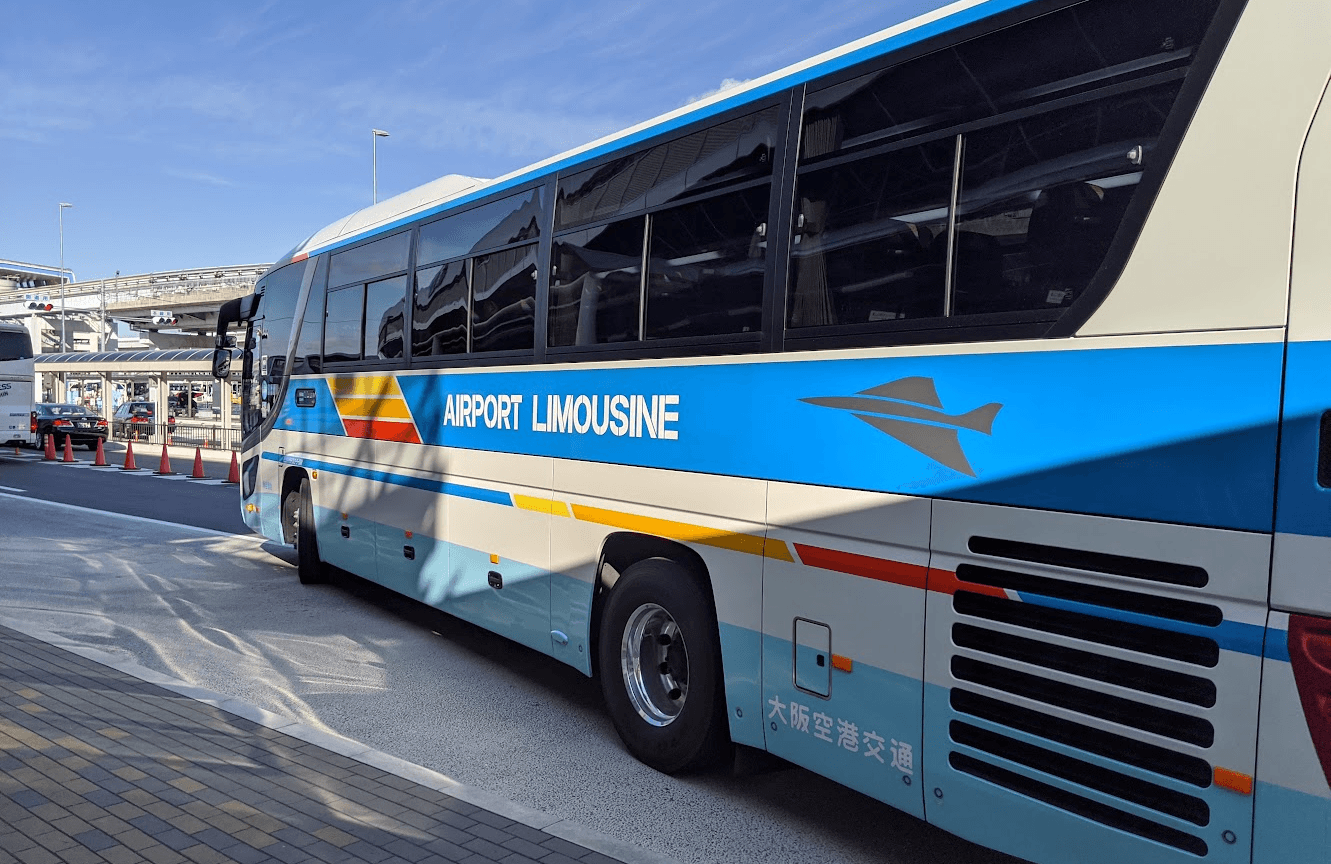
Generally, the most affordable yet comfortable way is by the "limousine bus." It's important to note that these aren't your typical city buses. Airport bus companies use luxury coaches with luggage storage underneath the passenger cabin. Some buses even have free Wi-Fi for the journey. Plus, taking the bus directly to your neighborhood may save you the hassle of connecting within Tokyo to get where you want to go.
Bus companies operate over a dozen routes from Tokyo-Narita to neighborhoods throughout the Tokyo metroplex — and even to Tokyo-Haneda.

By signing up, you will receive newsletters and promotional content and agree to our Terms of Use and acknowledge the data practices in our Privacy Policy. You may unsubscribe at any time.
Airport Limousine Bus reports operating over 1,200 departures daily between Tokyo-Narita and Tokyo-Haneda Airport. Discounted rates for international tourists start at around $12 (1,900 yen) each way.
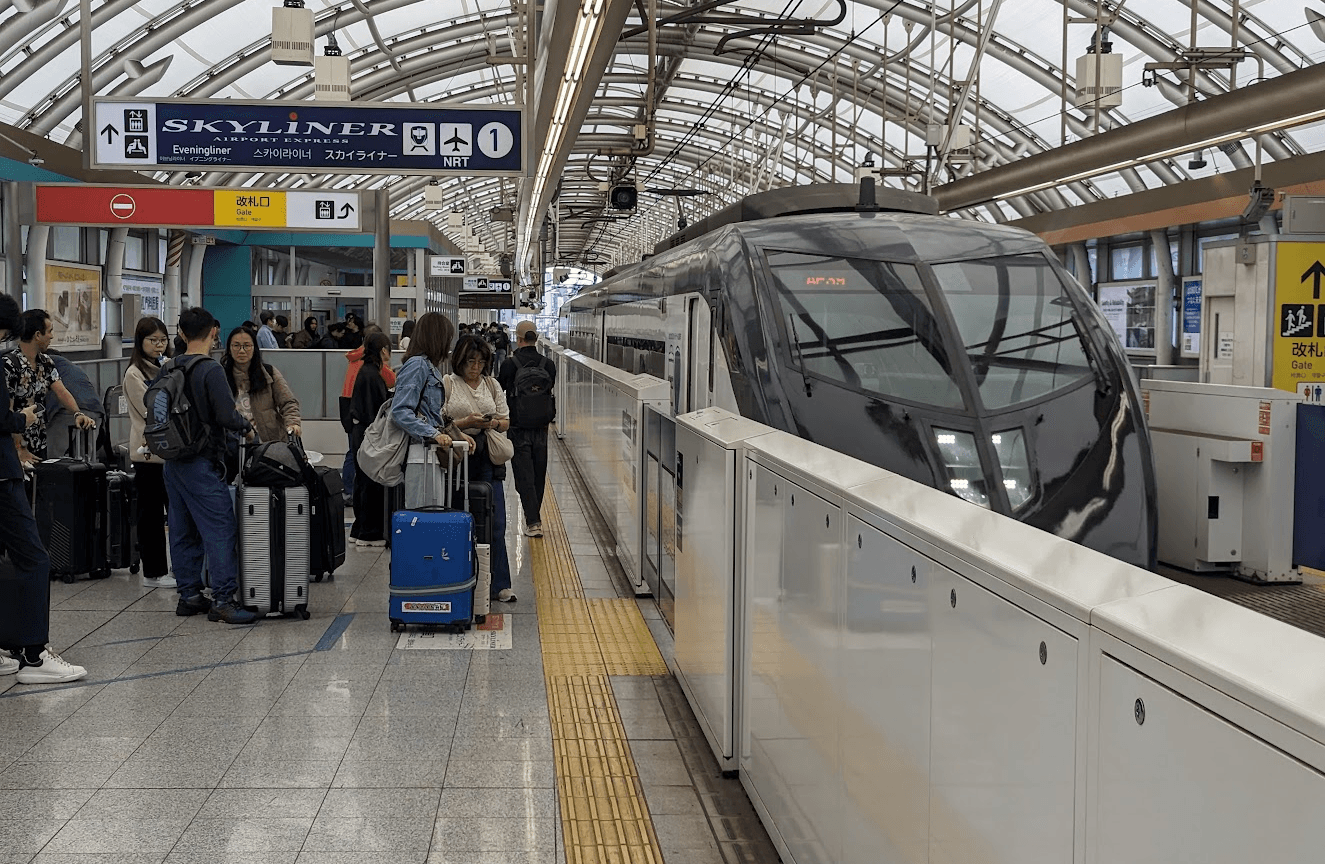
Alternatively, you can take one of several rail options into Tokyo including:
Narita Express: The fastest way direct to Tokyo Station. Rates start around $20 (3,070 yen) each way or use your Japan Rail Pass to take the Narita Express at no extra cost.
Keisei Skyliner: A fast and comfortable express train to northern Tokyo (Nippori or Ueno) with reserved seating. Tickets purchased online cost around $15 (2,310 yen).
Keisei Line: General subway cars which are slow and don't have reserved seating — but are typically the cheapest option. For example, a fare from Tokyo-Narita to Asakusa costs around $7 (1,100 yen) — or cheaper if you use an IC card.
While you could take a taxi or rideshare from Tokyo-Narita into the city, this is an extremely costly option. As I write this article from Tokyo-Narita Airport, an Uber into the city currently costs around $186 (29,040 yen) one-way.
About Tokyo-Haneda Airport
Tokyo-Haneda is Tokyo's longest-serving airport, having opened in 1931 as Tokyo Haneda Airfield. The airport transitioned to primarily servicing domestic flights when Tokyo-Narita opened in 1978, but with growing demands for air travel, an international terminal was opened at Tokyo-Haneda in 2010.
The airport's proximity to Tokyo is the main reason why airlines battle over the opportunity to fly into Tokyo-Haneda, the fifth busiest airport in the world as of 2023 with over 78 million passengers.
Routes and airlines
As of May 2024, 44 airlines operate flights from Tokyo-Haneda Airport to 101 airports across 25 countries. As Tokyo's main domestic airport, you can fly from Tokyo-Haneda to 50 destinations across Japan. ANA has 73 routes from Tokyo-Haneda while Japan Airlines operates 59 routes.
Now that Tokyo-Haneda has resumed international flights, Delta Air Lines (six routes), United (six routes), and American Airlines (three routes) operate flights between the U.S. and Tokyo-Haneda.
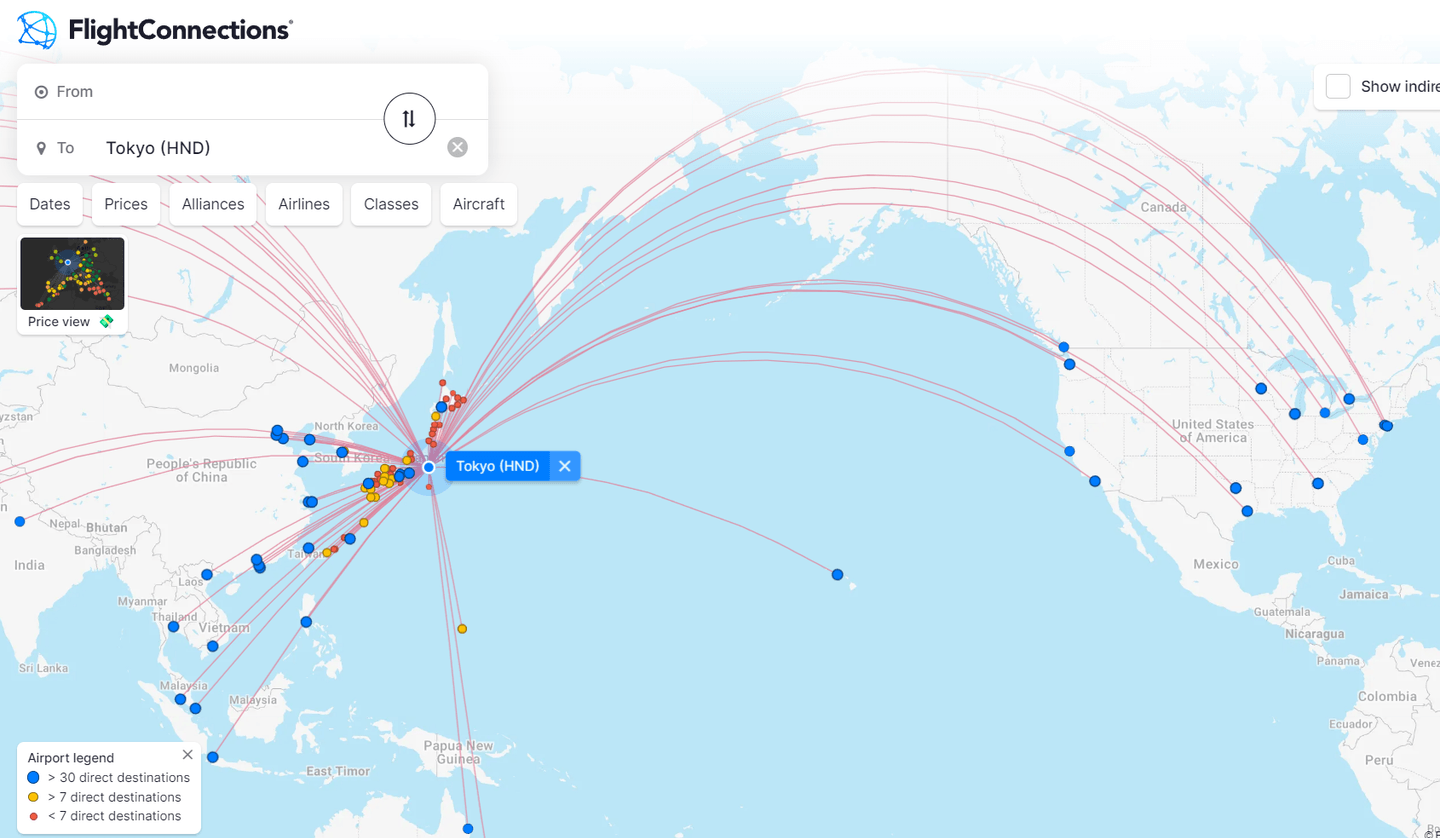
U.S.-based travelers can currently fly direct to Tokyo-Haneda from 13 different airports:
Atlanta: Delta.
Chicago-O’Hare: ANA, Japan Airlines and United Airlines.
Dallas-Fort Worth: American Airlines and Japan Airlines.
Detroit: Delta.
Honolulu: ANA, Delta, Hawaiian Airlines and Japan Airlines.
Houston: ANA.
Los Angeles: American Airlines, ANA, Delta, Japan Airlines and United Airlines.
Minneapolis: Delta.
Newark: United Airlines.
New York-JFK: American Airlines, ANA and Japan Airlines.
San Francisco: ANA, Japan Airlines and United Airlines.
Seattle: ANA and Delta.
Washington-Dulles: ANA and United Airlines.
» Learn more: ANA First Class lounge at Tokyo-Haneda review
Transportation options
Tokyo-Haneda is located just south of the center of Tokyo. Travelers can travel from Tokyo-Haneda to their final destination in Tokyo via train, monorail, bus or private car.

Airport limousine buses operate dozens of routes from Tokyo-Haneda to neighborhoods around Tokyo, again making this a convenient and affordable option to get to your final destination. Fares depend on the route but start at around $6 (1,000 yen). As there are so many routes, check the departure boards for the bus stop assigned for your route.
Two train lines connect Tokyo-Haneda with the city:
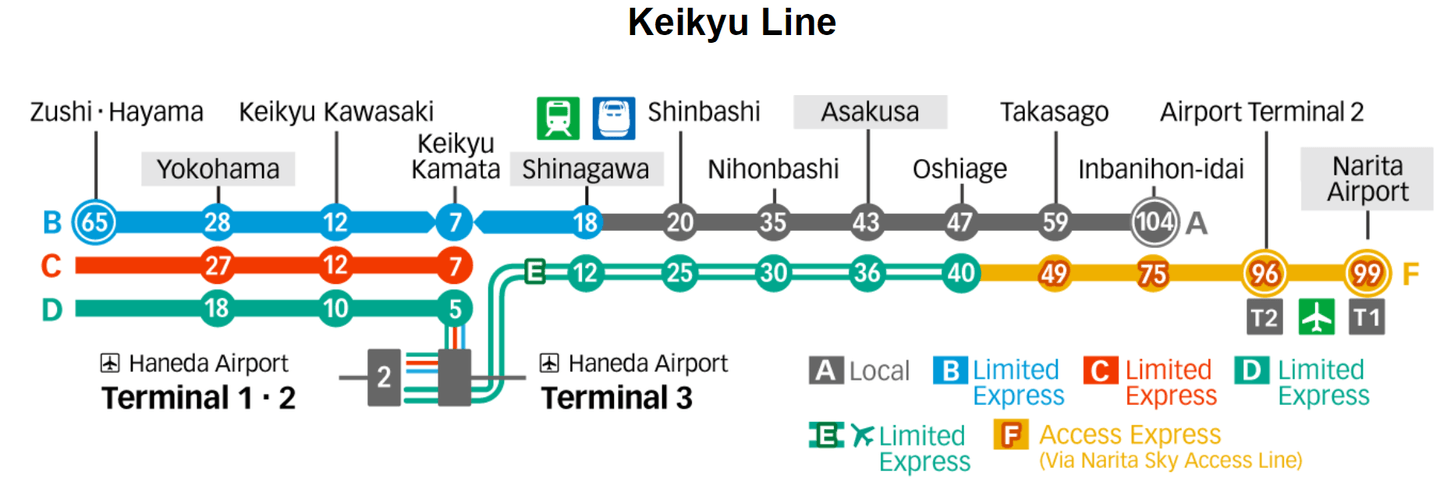
Keikyu Line: This expansive train line serves destinations throughout central Tokyo and even out to Tokyo-Narita airport via the Narita Sky Access line. Choose your train carefully as local trains will take much longer than "express" and "rapid-limited express" trains which skip over intermediate stops.
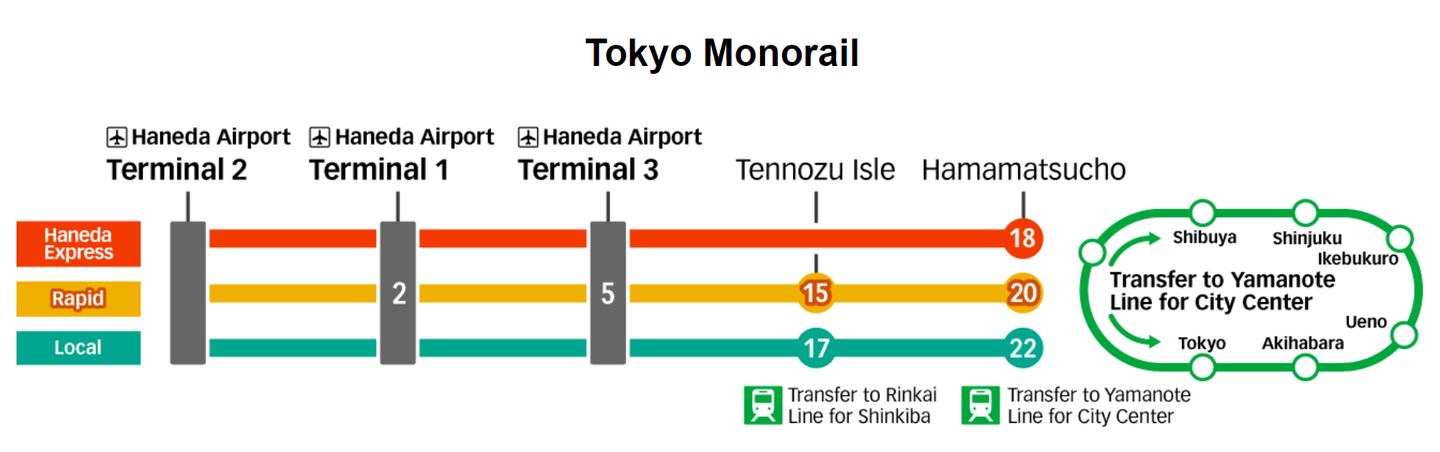
Tokyo Monorail: Take this single-tracked train for a scenic route to Hamamatsucho. Then connect to the circular JR Yamanote line to get to destinations across the city.
Since Tokyo-Haneda is much closer to the city, taking a taxi or rideshare is more affordable than Tokyo-Narita. However, taking a private car may not be faster than taking a train.
At the time of writing, a journey from Tokyo-Haneda to Asakusa Station takes 38 minutes by train at a cost of around $4 (599 yen) versus an Uber taking 45 minutes and costing around $62 (9,640 yen).
» Learn more: Should you tip in Japan?
Should you fly into Haneda Airport vs. Narita?
All things equal, flying into Tokyo-Haneda is going to be the better option for most travelers visiting Tokyo. The airport is closer to the city center and has more than double the limousine bus options to neighborhoods around the city. Plus, Haneda's proximity means getting into the city is cheaper, whether you choose rail, bus or private car.
However, all factors typically aren't equal.
If you live in Boston, Denver or San Jose, California, a nonstop flight into Tokyo-Narita can be preferable to connecting to fly into Tokyo-Haneda. Or, award availability may only be available on routes into Tokyo-Narita and not Tokyo-Haneda. While Narita isn't central to the city, it's certainly worth flying into to pay fewer miles.
How to maximize your rewards
You want a travel credit card that prioritizes what’s important to you. Here are some of the best travel credit cards of 2026:
Flexibility, point transfers and a large bonus: Chase Sapphire Preferred® Card
No annual fee: Wells Fargo Autograph® Card
Flat-rate travel rewards: Capital One Venture Rewards Credit Card
Bonus travel rewards and high-end perks: Chase Sapphire Reserve®
Luxury perks: American Express Platinum Card®
Business travelers: Ink Business Preferred® Credit Card