You’ve earned the credit card welcome bonus, racked up enough points for an award ticket and are ready to cash in. But what’s the best way to book your award flight? Should you use your credit card’s booking platform or transfer those points to an airline frequent flyer program? Which way will make those hard-earned points go the furthest? And how do you know which option offers the best deal?
We’ll help you figure out the ins and outs of when to use credit card points and when to transfer to an airline frequent flyer program so you can get the most out of all those points and miles.
To transfer or not to transfer
General travel credit cards often give you a couple of ways to book award travel: by using points to erase travel-related purchases or by booking through a dedicated portal. But some major credit card programs also allow you to transfer your points directly to airline frequent flyer programs to book flights.
Here's a look at some of the well-known transferable rewards programs:
Chase Ultimate Rewards®: Select cards, including the Chase Sapphire Preferred® Card and Chase Sapphire Reserve® credit card, allow you to transfer your points to 10 airline transfer partners, all at a 1:1 ratio. Points can also be redeemed through Chase's travel portal, though the value you get there has changed significantly (more on that below).
American Express Membership Rewards: All Membership Rewards cards, including American Express Platinum Card® and the American Express® Gold Card, can transfer points to AmEx's airline partners. What's more, the card issuer has one of the deepest benches of any program, with 17 airline transfer partners, most at a 1:1 ratio.
Citi ThankYou Points: Most credit cards in the ThankYou family offer access to transfer partners, but you'll get the best transfer ratios on cards like the Citi Strata Premier® Card and the Citi Strata Elite℠ Card. Citi has 14 airline transfer partners.
Capital One Miles: Cards like the Capital One Venture Rewards Credit Card, Capital One VentureOne Rewards Credit Card - Miles Boost and the Capital One Venture X Rewards Credit Card offer access to the card issuer's 16 airline transfer partners, most at a 1:1 ratio.
Wells Fargo Rewards: With the Wells Fargo Autograph® Card and Wells Fargo Autograph Journey℠ Card, you can transfer your points to seven airline transfer partners — all at a 1:1 ratio — with more likely on the way.

By signing up, you will receive newsletters and promotional content and agree to our Terms of Use and acknowledge the data practices in our Privacy Policy. You may unsubscribe at any time.
The benefits of transferring points
Transferring takes more effort, but it's often where the real value hides. Here's why it's worth considering.
Unlock significantly better value
The biggest reason to transfer is that the right partner redemption can get you far more than 1 cent per point, especially on premium cabin international flights.
For example, we looked at a one-way flight from Los Angeles to Hong Kong and compared what it would cost to book the trip with United MileagePlus miles or Chase Ultimate Rewards® points — United Airlines is a Chase transfer partner.
Here's a look at what United Airlines offered for the date we picked:
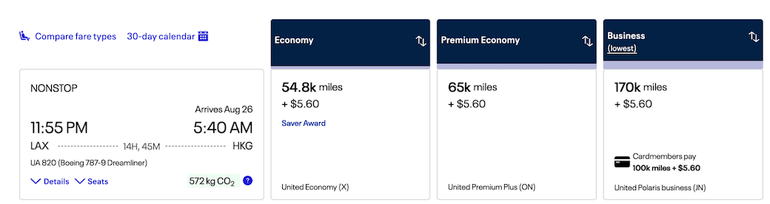
For an economy fare, you'll pay 54,800 miles and $5.60 for taxes and fees. The cost for a business class fare is a little more than triple that at 170,000. For people who want to enjoy a better flight experience without forking over business-class miles, premium economy is a good middle ground at 65,000 miles.
Now, if you were to book that same flight using Chase's travel portal, here's what you'd get:
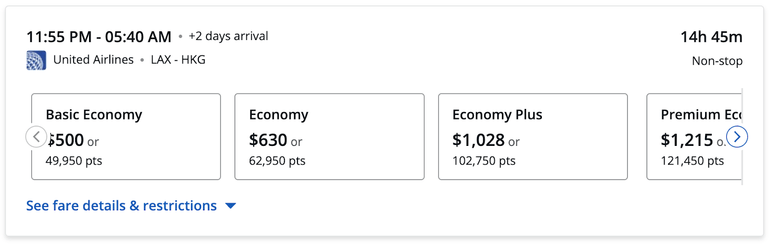
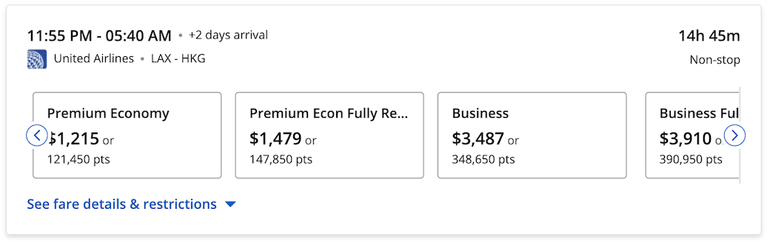
As you can see, pricing is cheaper across the board with United, making it better in this scenario to transfer your points.
While the gap isn't huge for standard economy, it widens quickly and significantly for better classes. In particular, a seat in business class would cost you a minimum of 348,650 miles — more than twice what you'd pay if you transferred your miles to United instead.
Top off a balance that's just short
If you're a few thousand miles away from an award flight, transferring just enough points to close the gap is often smarter than paying cash for the ticket outright.
It's also worth knowing that many programs let you transfer in increments as small as 1,000 points, so you don't have to move your entire balance — just what you need to get over the finish line.
Keep your miles alive
Many airline loyalty programs expire miles after a period of inactivity. American Airlines AAdvantage, for example, will wipe your balance after 24 months without qualifying account activity.
Transferring even a small number of credit card points into the account typically resets that clock, potentially saving you from losing miles you've spent months or years accumulating.
Several major programs, including Delta SkyMiles, United MileagePlus, Southwest Rapid Rewards and JetBlue TrueBlue, have no expiration policy at all. So, make sure you understand an airline's policy before moving points.
The benefits of not transferring points
Booking through your card's travel portal is the low-effort option — and in some cases, it's genuinely the smart one. Here's why it can work in your favor.
Transfer math doesn't always work in your favor
While it's possible to get outsize value when transferring points, it won't always happen. For example, we looked at another United flight from Los Angeles to Bangkok, Thailand, to compare fares.
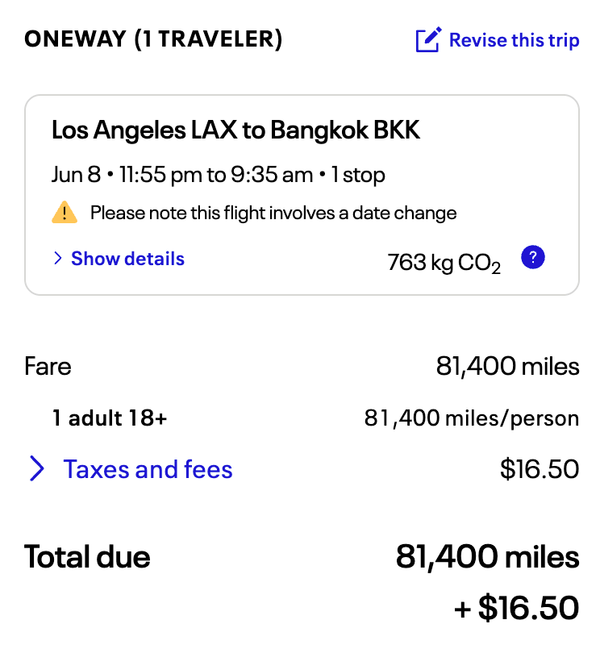
If you were to transfer your Ultimate Rewards points to United, it'd cost you 81,400 miles plus $16.50 in taxes and fees. For that same route, booking your flight through Chase's travel portal would cost you just 56,440 points.
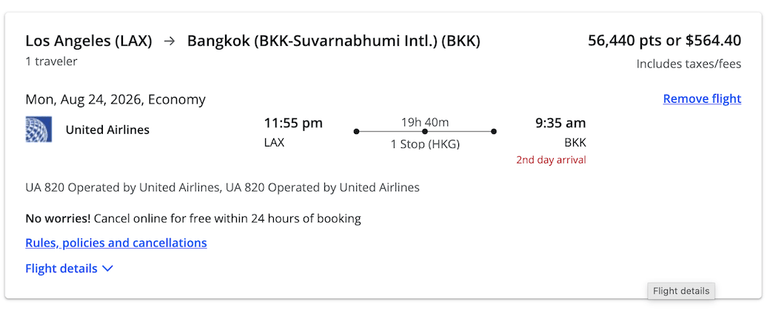
It's also important to note that Chase Ultimate Rewards® offers a variable portal redemption system called Points Boost, where select flights and hotels can be worth up to 2 cents per point, depending on which card you have, rather than the standard 1 cent.
This replaces the old program, which allowed Sapphire Preferred and Sapphire Reserve cardholders to reliably get 1.25 to 1.5 cents per point on any travel booking through Chase, respectively. But, if you opened either card before June 23, 2025, points earned before October 26, 2025, can still be redeemed at those old rates through October 26, 2027.
Fewer restrictions
Booking through a portal feels more like buying a regular ticket because it essentially is one. You can book any available seat without worrying about award inventory or blackout dates.
Also, since the airline sees it as a paid booking, you'll still earn frequent flyer miles for the trip on top of the points you're already spending.
Taxes and fees are covered
Airline award tickets almost always come with taxes and fees that must be paid in cash at checkout. Depending on the airline and destination, those charges can add up fast.
Carriers like British Airways are notorious for piling on fuel surcharges that can run hundreds of dollars even on a "free" award ticket. With portal bookings, those charges are folded into the total points price, so you're not reaching for your wallet either way.
» Learn more: How to redeem Chase Ultimate Rewards®
Shop around before you book
One of the biggest advantages of holding a general travel credit card is flexibility, and that flexibility compounds when you diversify your rewards across multiple programs — including transferable rewards and frequent flyer miles.
If you're earning points with, say, both a Chase Ultimate Rewards® card and a Delta SkyMiles card, you've got multiple ways to price out the same flight before committing to anything.
That matters because the same flight can look completely different depending on which currency you use to book it. A route that costs a lot of miles through one program might be a bargain through another — and sometimes your card's travel portal beats them both.
Checking all your options before transferring takes time, but it can make a significant difference in how far your points go.
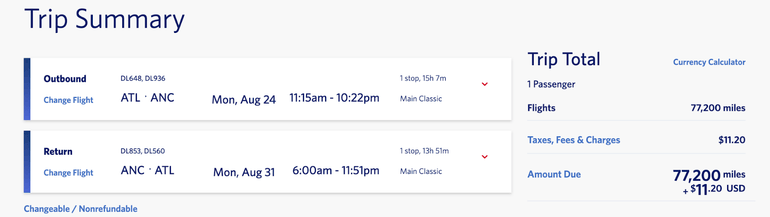
For example, we looked at a few different options for a flight from Atlanta, Georgia, to Anchorage, Alaska.
Because Atlanta is a hub for Delta Air Lines, it's a natural first choice. For our particular dates, the flight would cost you 77,200 miles plus $11.20 in taxes and fees.
In contrast, booking those same dates with Delta through Chase Ultimate Rewards® would cost you 124,070 points.
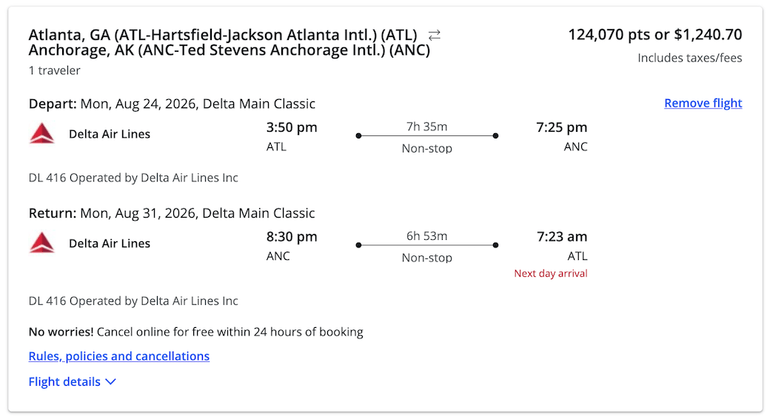
Because Delta isn't a Chase partner, you wouldn't be able to transfer your Ultimate Rewards points to take advantage of the lower cost.
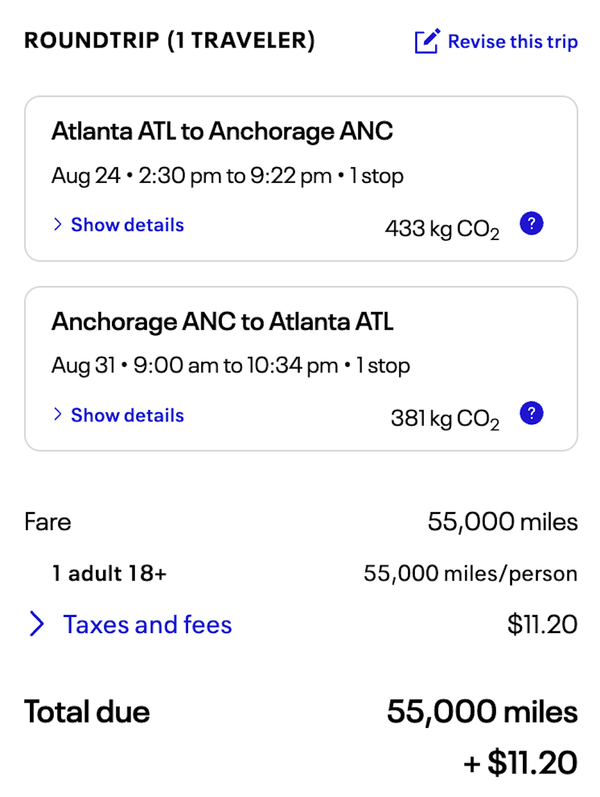
But before you go with Delta, taking one more step could get you the savings you're looking for. For example, we checked the same dates for United Airlines, and we were rewarded with an even lower price of 55,000 miles plus $11.20.
» Learn more: How to redeem Chase Ultimate Rewards®
Pay attention to transfer ratios
Not all transfers are created equal, and the ratio your card offers can make or break the math. Most major programs transfer to airline partners at a 1:1 ratio, but there are notable exceptions.
American Express, for example, transfers to JetBlue TrueBlue at a 5:4 ratio, meaning 1,000 Membership Rewards points only nets you 800 TrueBlue points. Capital One is even less favorable on that same transfer, coming in at 5:3 — so 1,000 miles becomes just 600 TrueBlue points.
When you're already losing value in the transfer, it becomes much harder to come out ahead on the redemption side. So, always check the ratio before committing, because once your points move to an airline program, there's no getting them back.
The bottom line
There's no universal rule for when to use your card's portal versus transferring to a frequent flyer program. The right answer depends on your card, the airline, the route and the redemption. What doesn't change is the process: compare first, transfer second, and never move points to an airline program before you've confirmed the flight you want is actually available. Once those points are gone, they're gone.
How to maximize your rewards
You want a travel credit card that prioritizes what’s important to you. Here are some of the best travel credit cards of 2026:
- Flexibility, point transfers and a large bonus: Chase Sapphire Preferred® Card
- No annual fee: Wells Fargo Autograph® Card
- Flat-rate travel rewards: Capital One Venture Rewards Credit Card
- Bonus travel rewards and high-end perks: Chase Sapphire Reserve®
- Luxury perks: American Express Platinum Card®
- Business travelers: Ink Business Preferred® Credit Card
Explore more on
Article sources
NerdWallet writers are subject matter authorities who use primary,
trustworthy sources to inform their work, including peer-reviewed
studies, government websites, academic research and interviews with
industry experts. All content is fact-checked for accuracy, timeliness
and relevance. You can learn more about NerdWallet's high
standards for journalism by reading our
editorial guidelines.