To board a flight, you'll need a license or state-issued ID card that meets federal “Real ID” requirements. You can tell whether your state ID is a Real ID by looking for a gold or black star in the upper right-hand corner. IDs and driver's licenses labeled as "Enhanced" in the top right corner with the image of a U.S. flag are also compliant.
Here are some examples of Real IDs with the star:
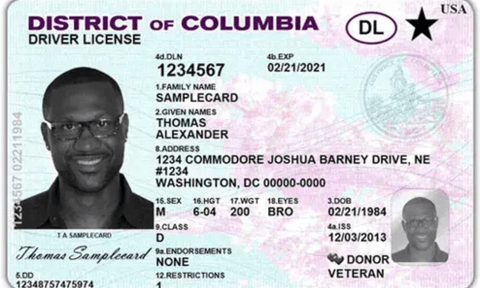
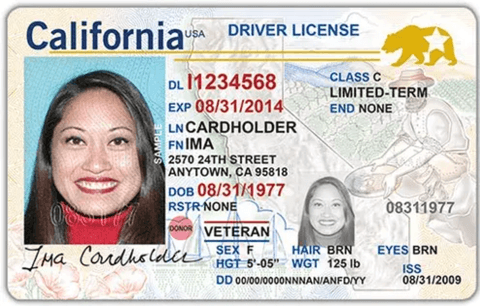
If you don’t see the star or the word "Enhanced," and you haven’t yet visited your state DMV to get an upgraded license, you aren’t necessarily barred from flying. There are other ID options available, including passports, military IDs and other federally issued or approved documents.
Here’s what travelers need to know about Real ID and other identification alternatives.

By signing up, you will receive newsletters and promotional content and agree to our Terms of Use and acknowledge the data practices in our Privacy Policy. You may unsubscribe at any time.
What is the Real ID?
Real IDs are driver’s licenses and ID cards that meet the federal government’s updated security standards. They allow individuals to board commercial flights and access secured federal facilities like military bases and federal courthouses.
Congress passed a law requiring Real IDs in 2005, but the implementation date was pushed back multiple times. Those delays are over. Effective May 7, 2025, TSA is enforcing the use of Real ID-compliant driver’s licenses and state-issued ID cards. Transportation Security Administration agents will verify IDs at airport security checkpoints.
Travelers under the age of 18 do not need a Real ID if traveling with a companion with an acceptable form of identification.
4 ID alternatives for flying if you don’t have a Real ID
Getting your Real ID can be time-consuming. It requires an in-person visit to the DMV and multiple supporting documents. If you choose not to upgrade your state driver’s license or identification card to a Real ID, or simply won’t have a Real ID ready for an upcoming domestic trip, the TSA accepts several alternatives.
1. U.S. passport or passport card
A U.S. passport is accepted as ID for boarding domestic commercial flights. A U.S. passport card, which is typically used for travel to and from Canada, Mexico, Bermuda and the Caribbean, also qualifies.
If you need to get a new passport, give yourself 10 weeks of lead time. According to the State Department, as of April 2025, it takes four to six weeks to process a passport application, plus up to two weeks for shipping. If you need a passport for fast-approaching travel, you can pay extra for expedited processing, which takes two to three weeks, and one- to two-day shipping.
If you need a passport for fast-approaching domestic or international travel, you can pay $60 for expedited processing and $21.36 for the 1- to 2-day return shipping.
2. Trusted Traveler Program card
Travelers who are enrolled in a Department of Homeland Security Trusted Traveler Program can use their program card as identification for domestic routes. Accepted trusted traveler program cards include Global Entry, NEXUS, SENTRI and FAST.
Note that TSA PreCheck members do not receive an ID card, so TSA PreCheck members are not exempt from showing a Real ID. CLEAR+, a membership that lets participants verify their identity through an eye or fingerprint scan, also does not qualify as an accepted alternative to a Real ID.
Some travel credit cards can help you cover the cost of Global Entry or NEXUS applying for these trusted traveler programs by offering a statement credit for the fees.
Cards that reimburse Global Entry fees
Delta SkyMiles® Platinum American Express Card. Enrollment required.
Delta SkyMiles® Reserve American Express Card. Enrollment required.
Marriott Bonvoy Brilliant® American Express® Card. Enrollment required.
American Express Platinum Card®. Enrollment required.
Terms apply.
Applying for these programs isn’t usually a fast process, though. It requires an online application and in-person appointment.
3. Foreign passport
If you have a passport from another country, it is also accepted as identification for commercial flights.
4. Specialized credentials
The TSA also accepts the following approved IDs when flying domestically:
U.S. military ID (including military-issued dependent IDs).
Permanent resident card.
Tribal identification card.
Veteran health identification card.
State-issued enhanced driver’s license from Michigan, Minnesota, New York, Vermont or Washington.
Border crossing card.
Homeland Security Presidential Directive 12 personal identity verification card (HSPD-12 PIV).
Canadian driver’s license.
Canadian Indian and Northern Affairs card.
Transportation Worker Identification Credential (TWIC).
USCIS Employment Authorization Card (I-766).
Merchant Mariner Credential.
What if you don’t have a Real ID at the airport?
If you arrive at the airport without a Real ID or an acceptable alternative form of identification, you might still be able to get through security. You'll need to undergo additional screening to confirm your identity, though.
You'll have to pay a $45 access fee to use TSA's alternative ID verification system, called TSA Confirm.ID, which allows you to prove your identity by answering questions. The fee covers a 10-day travel period. Travelers who need this service should expect delays, according to the TSA.
How to maximize your rewards
You want a travel credit card that prioritizes what’s important to you. Here are some of the best travel credit cards of 2026:
Flexibility, point transfers and a large bonus: Chase Sapphire Preferred® Card
No annual fee: Wells Fargo Autograph® Card
Flat-rate travel rewards: Capital One Venture Rewards Credit Card
Bonus travel rewards and high-end perks: Chase Sapphire Reserve®
Luxury perks: American Express Platinum Card®
Business travelers: Ink Business Preferred® Credit Card