



Travel costs year-over-year remain elevated, with high airfares continuing to be the primary driver behind the increase.
Average U.S. travel costs are 9% higher compared to this time in 2025, according to NerdWallet's Travel Price Index, which combines data from individual travel categories tracked by the Bureau of Labor Statistics' (BLS) Consumer Price Index, such as airfares, lodging, meals and rental cars.
Airfare costs are up 23.4% over the past year, while the cost of eating out and entertainment is up 3.4% and 2.6%, respectively. Lodging prices are also up year-over-year, with a 2.9% increase. To help put those numbers in perspective, overall prices for the past 12 months through August 2026 rose 3.4% before seasonal adjustment, according to BLS data.
While prices are significantly higher based on the data versus last year, travelers can still take advantage of some smart moves to reduce the price of their next trip. Check out our money-saving travel suggestions below.

By signing up, you will receive newsletters and promotional content and agree to our Terms of Use and acknowledge the data practices in our Privacy Policy. You may unsubscribe at any time.
Travel costs today vs. pre-pandemic
The Travel Price Index shows a 9% change in travel prices from August 2026, the same rate we saw last month.
Relative to pre-pandemic prices, August 2026 travel costs are up 22% versus August 2019 (the last full equivalent month before the 2020 COVID-19 pandemic). That's still lower than the 30.5% price increase across all items over the same period.
Not every product experiences inflation at the same rate — especially when it comes to travel. Some trips might actually be more or less expensive than in the past, depending on if you're driving versus flying, if you’re staying in a hotel and whether it involves a rental car.
To help you better understand how travel prices have changed, NerdWallet homed in on five categories:
Airfare.
Car rentals.
Food away from home.
Hotels.
Movies, theaters and concerts.
NerdWallet then compared those costs to prices from one month and one year earlier.
And to broaden the perspective, the data also compares today’s prices to prices 10 years ago. Here’s what today’s travel prices look like:
How airfares have changed
When comparing August 2026 prices to August 2025, U.S. airfares are up by 23.4% — a significant increase.
But here's a glimmer of optimism: Airfares are down slightly over the past month, perhaps hinting that airfares have reached their top and are correcting back down.
If you zoom out, the outlook is not as bleak: Compared to prices 10 years ago, airfares are up by 15.6%. Meanwhile, the prices for all items tracked by BLS are up 38.9% over that same period.
How airfare prices have changed | ||
|---|---|---|
August 2026 vs. July 2026 (MoM) | Down 0.5%. | |
August 2026 vs. August 2025 (YoY) | Up 23.4%. | |
August 2026 vs. August 2016 (Change over the past 10 years) | Up 15.6%. | |
So if airfares haven't grown as quickly over the past decade, why do they feel so high? There are a few reasons, including unbundling, which allows airlines to advertise lower fares (often in the form of basic economy seats that offer few frills). Both Delta Air Lines and United Airlines have also introduced differentiated fares for their premium products, as carriers seek to boost their revenues.
Those low base fares typically come with upcharges in the form of ancillary fees to check bags, to guarantee an aisle seat or to secure early boarding. Those extra prices are not captured in this data — despite still impacting travel budgets.
Airline CEOs have pointed out in recent months that airfares have not risen at the pace of overall inflation since the pandemic, a sign that prices will continue to remain high. Spirit Airlines' abrupt shutdown in May 2026 didn't help things either, since airlines have more pricing power to charge higher fares when there's less competition.
How hotel room rates have changed
Average U.S. hotel and motel room rates are up by 2.9% over the past year. Travelers can generally expect to pay more for the same hotel room this year than they did last year.
Compared to 10 years ago, travelers may be feeling a greater pinch, as hotel room rates are up 17.4% over the past decade. However, that's still less than the 38.9% increase across all items.
How lodging prices have changed | ||
|---|---|---|
August 2026 vs. July 2026 (MoM) | Up 0.3%. | |
August 2026 vs. August 2025 (YoY) | Up 2.9%. | |
August 2026 vs. August 2016 (Change over the past 10 years) | Up 17.4%. | |
How rental car prices have changed
High rental car prices were one of the biggest stories of pandemic-era travel. Since then, prices have come down — although they remain much higher compared to before the pandemic.
Rental car prices are down 4.8% compared to the year prior. Just realize that a long roadtrip isn't necessarily a cheap vacation, given the higher cost of gas.
How car rental prices have changed | ||
|---|---|---|
August 2026 vs. July 2026 (MoM) | Down 4.8%. | |
August 2026 vs. August 2025 (YoY) | Up 3.5%. | |
August 2026 vs. August 2016 (Change over the past 10 years) | Up 18.6%. | |
How restaurant prices have changed
Food prices consistently rise nearly every month, and in August 2026, the cost of food away from home was up 3.4% versus a year prior.
The cost of dining out has increased dramatically in the past decade, with August 2026 prices 50.9% higher than what they were 10 years ago. That's higher than the 38.9% inflation rate across all items, meaning restaurant prices have risen more than many other categories of goods.
How restaurant prices have changed | ||
|---|---|---|
August 2026 vs. July 2026 (MoM) | Up 0.3%. | |
August 2026 vs. August 2025 (YoY) | Up 3.4%. | |
August 2026 vs. August 2016 (Change over the past 10 years) | Up 50.9%. | |
How the price of movies, theaters and concerts has changed
Tickets for movies, theaters and concerts are rising at a slower pace than the average rate of inflation over the past year. That could suggest a re-prioritization of budgets as Americans face rising costs elsewhere in their spending.
How the prices of movies, theaters and concerts have changed | ||
|---|---|---|
August 2026 vs. July 2026 (MoM) | Down 0.6%. | |
August 2026 vs. August 2025 (YoY) | Up 2.6%. | |
August 2026 vs. August 2016 (Change over the past 10 years) | Up 37.3%. | |
Smart money move: Use travel rewards cards to book
Paying for travel with points and miles versus cash isn’t as daunting a task as it may seem. Frequent flyer miles and hotel points can be accrued not just for recurring travel, but through other outlets as well. Credit card rewards and welcome bonuses can be one of the most popular ways to accrue a big stash of points for a lot less effort than living your life out of a suitcase.
In addition, travel credit cards can offer various money-saving perks, like:
Savings on checked bags.
Cash back credits that can offset the annual fee.
Here are some of the best credit cards that offer travel-related statement credits.
Top travel cards

Annual fee
Rewards earn rate
• 8 points per $1 spent on all travel booked through Chase.
• 4 points per $1 spent on bookings directly through an airline or hotel.
• 3 points per $1 spent on dining, takeout and eligible delivery worldwide.
• 1 point per $1 spent on all other purchases.
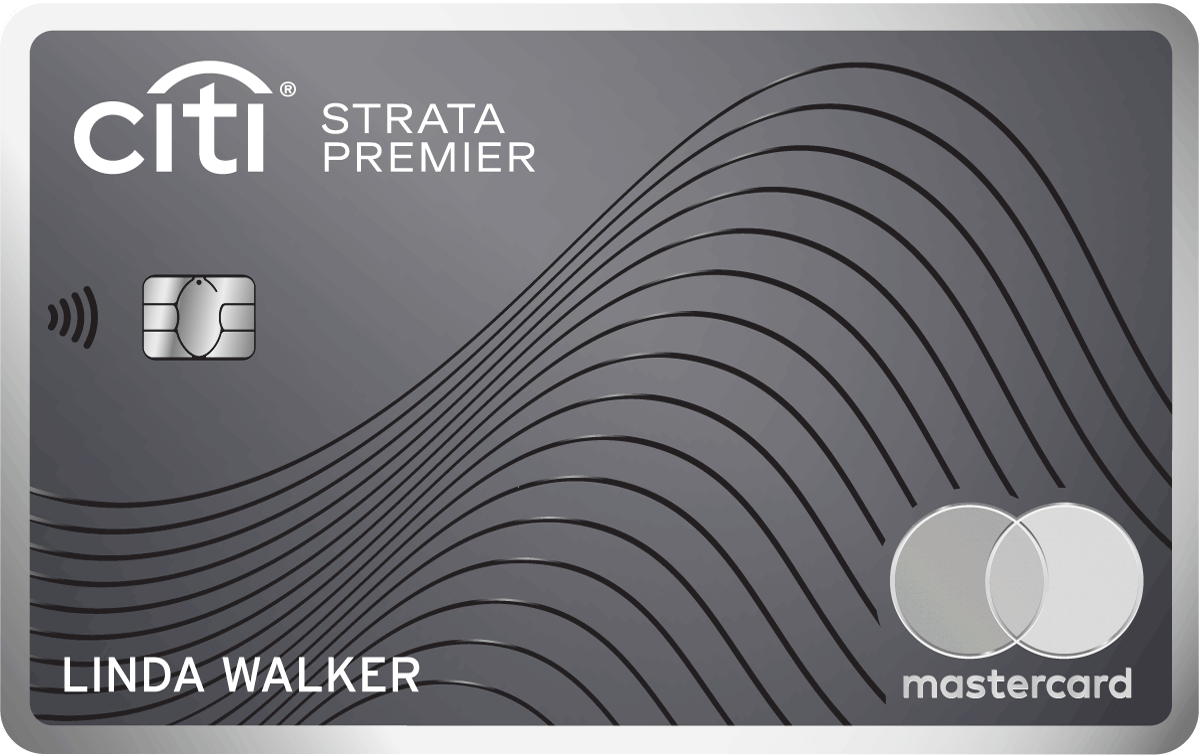
• 10 ThankYou® points per $1 spent on hotels, car rentals and attractions booked through Citi's travel portal.
• 3 points per $1 on air travel and other hotel purchases.
• 3 points per $1 on supermarkets.
• 3 points per $1 on gas stations and EV charging stations.
• 3 points per $1 on restaurants.
• 1 point per $1 on all other purchases.
Still not sure?
If you’re planning 2026 travel…
If you’re building your next vacation budget based on how much you've spent in the past, you might need to factor in spending more on all the categories that are trending up in price. But you can still save on travel with a little planning.
When it comes to airfare, you might be better off booking those flights sooner rather than later. Booking tickets with airline points and miles can also be a great way to save. Keep in mind that while basic fares are cheaper, they come with additional restrictions that may be costly in case your plans change.
To avoid the costs of eating out, head to local grocery stores — which can be a fun activity on its own — or pack snacks from home. Ahead of your flight, head to an airport lounge. Many credit cards have partnerships with airport lounge networks (Priority Pass is a popular one) where you can typically expect complimentary snacks and drinks.
By signing up, you will receive newsletters and promotional content and agree to our Terms of Use and acknowledge the data practices in our Privacy Policy. You may unsubscribe at any time.
Methodology
NerdWallet conducted an analysis of the Bureau of Labor Statistics’ Consumer Price Index data released by the U.S. Department of Labor, which was most recently updated in September 2026 and measures prices of items like travel, groceries and cars. Some prices change more than others.
Keep in mind, this data is based on August 2026 information, even though it is released in September 2026. Prices you see may have increased or decreased compared to this data, because it lags one month behind. Due to the government shutdown in 2025 that prevented the collection and release of October 2025 data, we used September 2025 data instead for any month-over-month or year-over-year percent change calculations involving October 2025 data.
And even within the realm of travel, some expenses might go up, while others might go down.
The NerdWallet Travel Price Index combines data from the Consumer Price Index, weighted by the estimated spending in each category, which is based on 2019 travel expenditure data from the BLS.
Here are the spending categories considered, and how heavily each was weighted:
Flights: 36%.
Car rental: 6%.
Lodging: 30%.
Food: 21%.
Entertainment: 7%.
How to maximize your rewards
You want a travel credit card that prioritizes what’s important to you. Here are some of the best travel credit cards of 2026:
Flexibility, point transfers and a large bonus: Chase Sapphire Preferred® Card
No annual fee: Wells Fargo Autograph® Card
Flat-rate travel rewards: Capital One Venture Rewards Credit Card
Bonus travel rewards and high-end perks: Chase Sapphire Reserve®
Luxury perks: American Express Platinum Card®
Business travelers: Ink Business Preferred® Credit Card