









When shopping for a vehicle, it helps to understand the main types of cars available. While there are several car body styles, most buyers choose among three big categories: sedans, SUVs and trucks.
Each type has unique advantages for space, cost and performance. On top of that, you’ll also find multiple size classes and the option to go with a gas, hybrid or electric powertrain.
This guide breaks it all down so you can match the right car type to your lifestyle and budget.
Did you know...
For fuel economy purposes, the Environmental Protection Agency (EPA) classifies sedans as minicompact, subcompact, compact, midsize or large (full-size) based on interior passenger and cargo volume. The EPA classifies SUVs and trucks as small or standard based on vehicle weight and how much they can carry. But in auto manufacturer marketing, you may still see SUVs and trucks called subcompact, compact, midsize and full-size.About sedans
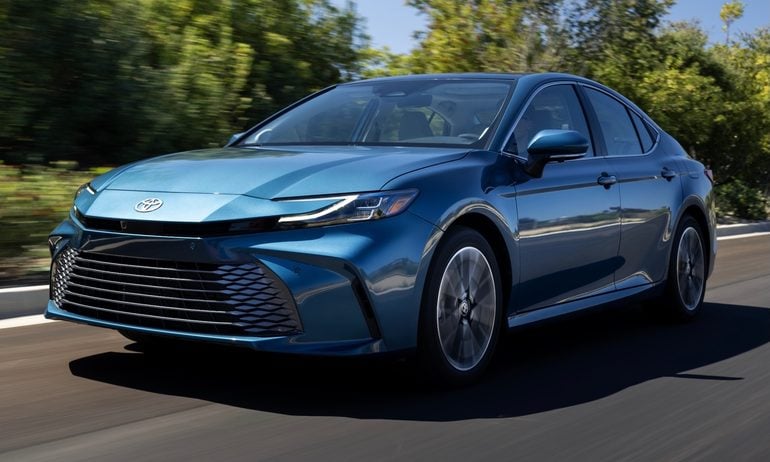
Sedans have been around for more than 100 years, and they continue to be a practical and popular choice for many drivers. They’re passenger cars with four doors and three distinct areas — the hood and a trunk that’s separate from the passenger area.
Key benefits
- Fuel efficiency. Sedans typically deliver better fuel efficiency due to their smaller size, lighter weight and sleek design.
- Comfort and handling. Because of their design, sedans tend to provide a smooth and comfortable ride. They’re usually easier to handle, making them ideal for commuting.
- Safety. With a lower center of gravity, sedans are less likely to roll over than an SUV. Also, their ease of handling can be beneficial when trying to avoid a crash.
Variations
Hatchbacks and coupes are often called sedans, and all are passenger cars, but technically each one is different.
- Hatchbacks. Hatchbacks have a “two-box” structure, with one area for the engine and a combined area for passengers and cargo. Hatchbacks have a rear door that opens upward for cargo flexibility.
- Coupes. The differences between a coupe (pronounced coop) vehicle and sedan are size and a slight design variation. Coupes have less than 33 cubic feet of interior space, while sedans have 33 cubic feet or more. Coupes have a sloping roofline that gives them a sporty appearance.
Cost considerations
Sedans are available with lower starting prices and ownership costs compared to SUVs or trucks. Some sedan base models have an MSRP below $25,000. However, some luxury sedans have sticker prices well above $100,000. Because of their efficiency, sedans can also save on long-term fuel costs.
» MORE: Buying a sedan
About SUVs
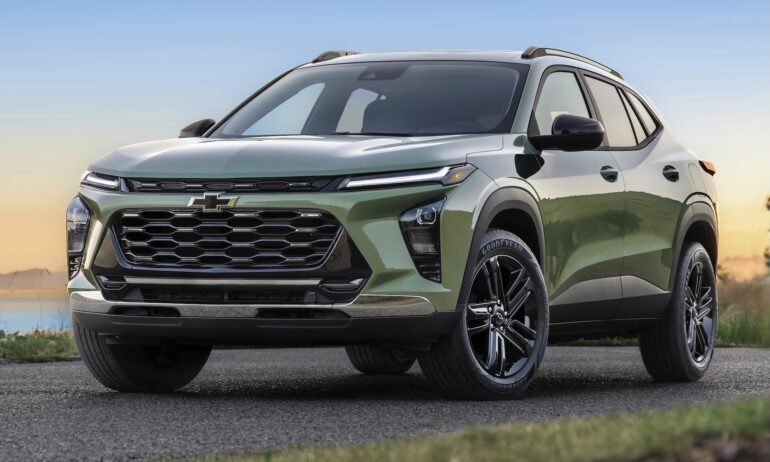
Sport utility vehicles (SUVs) account for over half of all vehicle sales. They offer extra passenger and cargo space, versatility for commuting and off-road use, typically high safety ratings and hauling/towing capability.
Key benefits
- Roomy interior. SUVs have two or three rows of seating and can accommodate up to eight (in some cases nine) passengers. This makes them ideal for families, carpooling and road trips.
- Hauling. With an enclosed cargo area, fold-down seats and flexible configurations, SUVs are ideal for transporting items like groceries or luggage.
- Versatility. SUVs have car-like handling and suspension, making them great for everyday driving, and some models also offer light off-roading and towing capability.
Variations
- Crossover SUVs. Built on a car-like frame, crossovers combine sedan-like handling with the space of an SUV.
- Traditional SUVs. Built on truck frames, these SUVs deliver more rugged performance and towing strength.
- Crossover vs. traditional. You’ll often hear automakers refer to SUVs that fit the traditional SUV definition as “crossovers.”
Cost considerations
SUVs range widely in price. Compact crossovers typically start in the low $30,000s, while midsize SUVs run from about $35,000 to $50,000. Larger, full-size SUVs and luxury models can climb well above $60,000. They generally cost more to fuel than sedans but offer added space and flexibility.
» MORE: SUV buying guide
About pickup trucks
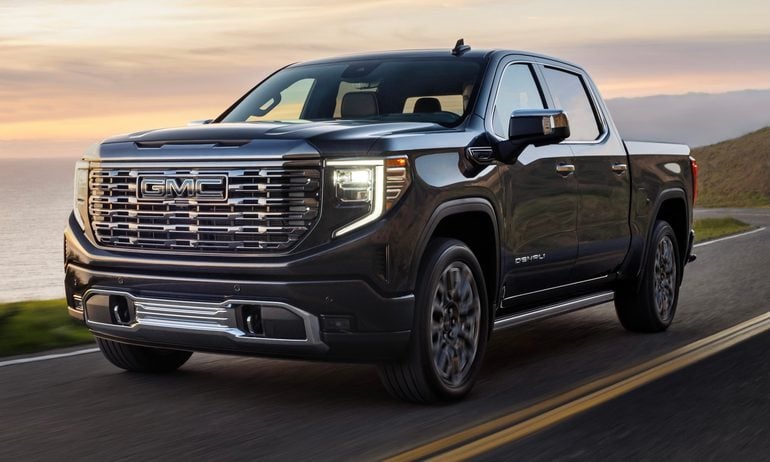
Pickup trucks have traditionally been associated with hauling, towing and handling tough jobs, but they’re increasing in popularity as family vehicles. Truck manufacturers use their own terminology to describe cab configurations (the passenger area), but pickup trucks basically come with either two or four doors and with or without back seats.
Key benefits
- Towing power. Trucks excel for towing, from small trailers to boats or campers. Some full-size models can tow over 13,000 pounds when properly equipped.
- Durability. Built for heavy-duty performance, some models are built specifically for extreme off-roading. Trucks also tend to hold their value well and have strong resale value.
- Open bed. Trucks, unlike other vehicle types, allow for transporting oversized items like furniture, appliances, lumber or landscaping materials.
Variations
- Light duty vs. heavy duty. Light-duty trucks, like the Chevrolet Silverado 1500, are built for everyday hauling, towing and personal use. Heavy duty trucks, like the Silverado 3500HD, have a stronger frame, bigger engines and higher towing and payload limits, making them better for demanding work or commercial use.
- Short, standard, long bed. Truck beds come in three common lengths. Short beds (around 5 feet 8 inches) are easier to park and maneuver; standard beds (about 6.5 feet–6.5) balance utility with maneuverability; long beds (around 8 feet) maximize hauling space but make the truck harder to handle in tight spaces.
» MORE: Buying a pickup truck
Cost considerations
Trucks often cost more than sedans or compact SUVs. Prices usually start in the $30,000 range and can exceed $70,000 for heavy-duty or luxury trims. Their long-term ownership costs can be higher due to fuel consumption and maintenance.
Gas, electric and hybrid options
No matter which body style you choose — sedan, SUV or truck — you’ll likely find it in gas, electric (EV) or hybrid form. Here are some key points for each.
Gasoline vehicles
- Gasoline-powered vehicles, also called ICE or internal combustion engine vehicles, are usually the least expensive upfront.
- Costs vary by size class — sedans are the cheapest to fuel, while SUVs and trucks consume more gas.
- Long-term fuel costs are more compared to hybrids or EVs, but advantages are the ease of finding gas stations and filling the tank faster.
Hybrid vehicles
- Hybrid vehicles combine a gas engine with an electric motor to improve fuel efficiency, especially in city driving.
- Traditional hybrids (HEVs) don’t plug in and recharge the battery through the gas engine and regenerative braking. Plug-in hybrids (PHEVs) have a larger battery and can plug in to charge, allowing for limited all-electric driving before switching to gas.
- They typically cost more than gas-only models but can save money over time through reduced fuel use.
- Maintenance costs are similar to gas cars, though replacing hybrid batteries down the line can be expensive. However, the anticipated life of a hybrid battery is at least 10 years and 100,000 to 150,000 miles.
Electric vehicles
- EVs run solely on battery power, meaning you don’t spend on gasoline and enjoy lower maintenance costs since there are fewer moving parts.
- They have a higher upfront price, but in some cases this can be offset with local, state and utility company incentives.
- Charging is usually cheaper than fueling with gas, but you could have upfront costs of installing a home charger or difficulty finding a public charger.
- EV range, or how far the vehicle can go on a single charge, has improved significantly in recent years, with some high-end models able to travel more than 400 miles.
» MORE: A guide to buying an EV
Choosing the right car for you
When deciding between a sedan, SUV or truck — and whether to go gas, hybrid or electric — consider these factors:
- Price tag. Sedans are often the most affordable, while trucks and SUVs tend to cost more. Hybrids and EVs may be pricier upfront but save money over time.
- Lifestyle. Sedans are well-suited to commuting and city driving. SUVs work well for families, transporting and outdoor adventurers. Trucks are ideal if you regularly tow or haul large or heavy items.
- Fueling needs. Gas cars are convenient because fuel is widely available. Hybrids maximize fuel efficiency while providing gas backup. EVs are the most eco-friendly option, but since they rely only on charging, they work best for shorter commutes or daily driving.
Sedans, SUVs and trucks each offer unique benefits. Sedans are affordable and efficient, SUVs are versatile and spacious, and trucks provide unmatched power and utility. Pairing these options with your choice of gas, hybrid or electric powertrain can help you find the best vehicle type for you.
Frequently Asked Questions
What car type is the most affordable?
Sedans are generally the most affordable car type, with starting prices in the mid $20,000s. SUVs and trucks usually cost more, though compact crossovers and smaller trucks offer budget-friendly options.
What types of cars can be electric or hybrid?
Most car body styles — including sedans, SUVs, and trucks — are available in gas, hybrid or electric versions. Hybrids combine gas engines with electric motors for better fuel economy, while EVs run only on battery power.
What’s the difference between subcompact, compact, midsize and full-size cars?
These terms describe a car’s size class, based on interior passenger and cargo space. Subcompact cars are the smallest and easiest to maneuver, while compact cars offer a little more room at an affordable price. Midsize cars strike a balance between comfort and cost, and full-size cars are the largest, with maximum interior space and features but usually higher prices and fuel use.
Explore more on