

Every time.
We believe everyone should be able to make financial decisions with confidence. While we don't cover every company or financial product on the market, we work hard to share a wide range of offers and objective editorial perspectives.
So how do we make money? Our partners compensate us for advertisements that appear on our site or when you click to or take an action on their website. This compensation helps us provide tools and services - like free credit score access and monitoring. With the exception of mortgage, home equity and other home-lending products or services, partner compensation is one of several factors that may affect which products we highlight and where they appear on our site. Other factors include your credit profile, product availability and proprietary website methodologies.
However, these factors do not influence our editors' opinions or ratings, which are based on independent research and analysis. Our partners cannot pay us to guarantee favorable reviews. Here is a list of our partners.
Best Credit Union Credit Cards


Credit unions are member-owned cooperatives whose mission is to help the communities they serve succeed financially. Profits that a bank might distribute to its shareholders or owners are instead returned to members in the form of better interest rates and fees. As a result, some credit unions offer better credit cards than you might find at a bank, depending on what you're looking for.
To get a credit card from a credit union, you must be a member. You can usually qualify based on where you live, work or worship, or if you have a qualifying relative. If you don't meet the standard eligibility requirements, some credit unions allow you to join by donating to a partner organization.
Our pick for: Travel
Annual fee$95Rewards rate1.5x-4xPointsIntro offer50,000pointsRegular APR17.99% Variable APRRecommended credit scoreRewards breakdown
4xPoints on travel for PenFed Honors Advantage Members.3xPoints on travel categories for everyone else.1.5xPoints on all other purchases.Card details
- Earn more everywhere you go!
- 50,000 Bonus Points when you spend $3000 in the first 90 days
- 4X Points on all Travel categories for PenFed Honors Advantage Members
- 3X Points on all Travel categories
- 1.5X Points on all other purchases
- Annual Fee: $95
- Purchase Variable APR: 17.99%
- Enjoy a $120 statement credit towards Global Entry or $85 credit towards TSA PreCheck® every 4 years when you charge either program’s fee to your PenFed Pathfinder® card.
NerdWallet's take
The PenFed Pathfinder® Rewards Visa Signature® Card offers premium travel perks without the added cost. With its generous rewards rate, you can also rack up points toward your next vacation.
Read full reviewProsThis credit card's travel perks and features can help put your travel goals into action. Cardholders earn 3 points per $1 spent on travel purchases and 1.5 points per $1 spent on all other purchases. If you’re part of the PenFed Honors Advantage program, you get a slightly higher rate of 4 points per $1 spent on travel-related purchases. The card's rich welcome offer can defray some of your travel costs. You can earn 50,000 bonus points after spending $3,000 in purchase transactions within the first 90 days of account opening. And its two noteworthy perks — a $100 annual air travel credit and a statement credit to cover the application fee for TSA Precheck or Global Entry programs — can provide ongoing value.
ConsYou must be a PenFed credit union member to qualify for this credit card. Everyone is eligible to join, but it will require a few extra steps such as submitting an application and opening a PenFed savings account with a $5 deposit.
Our pick for: Bad credit
Annual fee$0Rewards rateN/AIntro offerN/ARegular APR15.00%, Variable APRRecommended credit scoreCard details
- Could help with building or rebuilding your credit – with responsible use
- No annual, balance transfer, foreign transaction, or cash advance fees
- Fraud notifications and the ability to freeze/unfreeze your credit card
- Great Visa benefits on travel, live music, and more
NerdWallet's take
The DCU Visa® Platinum Secured Credit Card is an excellent credit-building tool. It reports to all three major credit bureaus (TransUnion, Equifax and Experian, companies that gather the information used to calculate your credit scores). It also offers the chance to upgrade to a regular Digital Federal Credit Union credit card if you keep up a good payment history.
Read full reviewProsThere's no limit on how much you can deposit, and, therefore, no limit on your credit line. With a good payment history, you can eventually get that deposit back and possibly upgrade to a regular DCU credit card within a year. Your payment history — a key component in your credit scores — will be reported to the bureaus that compile credit reports.
ConsThough there's no maximum deposit, there's a very high minimum of $500 — much higher than what other secured cards require. Plus, you’ll have to qualify for membership at Digital Federal Credit Union. You can get that deposit back eventually, but you’ll have to part with it for at least a year.
Our pick for: Cash back with no annual cost
Annual fee$0Rewards rate1.5%-2%CashbackIntro offer$100Regular APR17.99% Variable APRRecommended credit scoreRewards breakdown
2%Cash Back on all purchases for PenFed Honors Advantage Members.1.5%Unlimited Cash Back 1.5% on all purchasesCard details
- Earn Cash Back for Everyday Purchases.
- No Caps. No Limits. No Gimmicks.
- 2% Cash Back on all purchases for PenFed Honors Advantage Members.
- 1.5% Cash Back on all purchases made with your card.
- $100 Bonus Offer Statement Credit When you spend $1,500 in the first 90 days.
- 0% Balance Transfers Promo APR for 12 months, 3% fee applies to each transaction. Subject to credit approval. 0% introductory APR for 12 months on balance transfers made in the first 90 days after account opening. After that, the APR for the unpaid balance and any new balance transfers will be a non-variable rate of 17.99%. A 3% balance transfer fee applies to each transfer. This transaction is subject to credit approval. If you take advantage of this balance transfer, you will immediately be charged interest on all purchases made with your credit card unless you pay the entire account balance, including balance transfers, in full each month by the payment due date.
- Annual Fee: $0.
- Purchase Variable APR: 17.99%
NerdWallet's take
This card's ongoing rewards make it a valuable pick for PenFed members, especially if you can qualify for the 2% rate, which puts it among the best in class.
Read full reviewProsThe PenFed Power Cash Rewards Visa Signature® Card holds a lot of value for a $0-annual-fee card. It offers an unlimited 1.5% cash back on all purchases. (If your checking account or military status qualifies you for the Honors Advantage program, that rate rises to 2%.) There's also a solid bonus for new cardholders.
ConsMembership is required to qualify for the PenFed Power Cash Rewards Visa Signature® Card. Even though it’s easy to join, it still requires a few extra steps. You’ll have to submit an application and make a $5 deposit into a PenFed savings account to join.
Our pick for: Everyday purchases
Annual fee$0Rewards rate1x-3xPointsIntro offer20,000pointsRegular APR14.15%-18.00%, Variable APRRecommended credit scoreOur pick for: Travel with current or former military status
Annual fee$95Rewards rate1x-4xPointsIntro offer50,000pointsRegular APR15.74%-18.00%, Variable APRRecommended credit score
Compare the Best Credit Union Credit Cards
| Credit card | Rating | Annual fee | Rewards rate | Intro offer | Learn more |
|---|---|---|---|---|---|
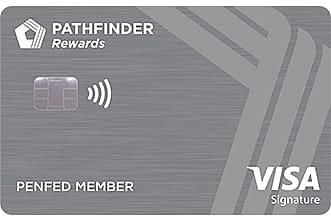 PenFed Pathfinder® Rewards Visa Signature® Card PenFed Pathfinder® Rewards Visa Signature® Card | Best for Travel | $95 | 1.5x-4x | 50,000 points | |
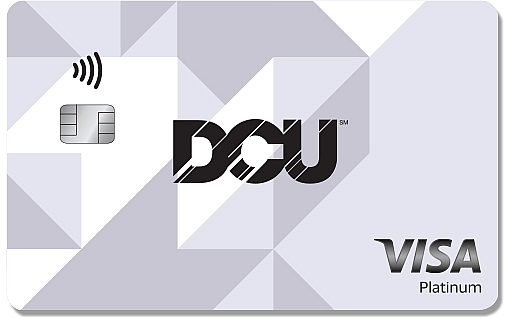 DCU Visa® Platinum Secured Credit Card DCU Visa® Platinum Secured Credit Card | Best for Bad credit | $0 | N/A | N/A | |
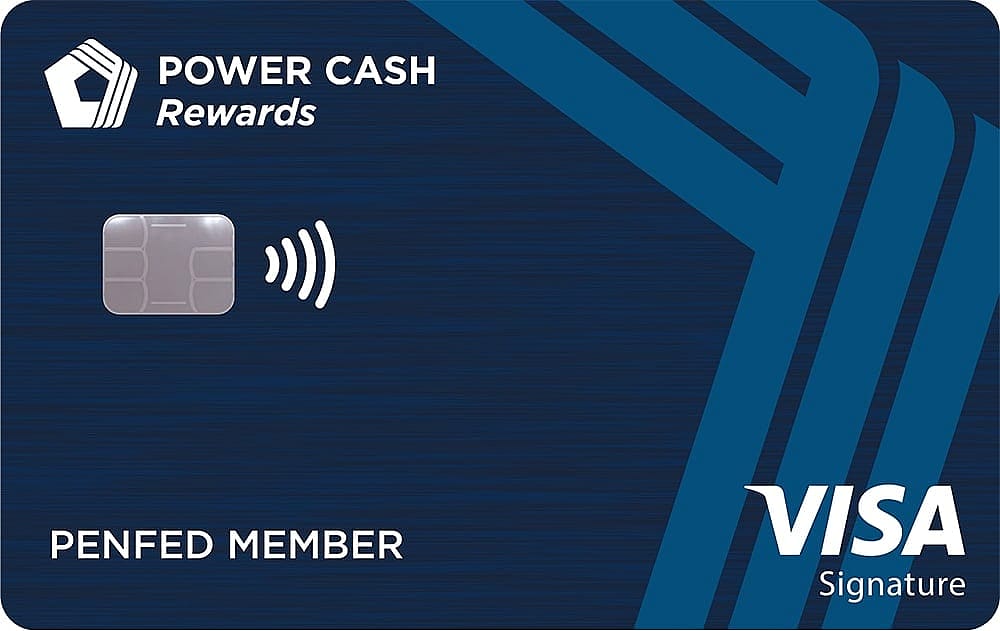 PenFed Power Cash Rewards Visa Signature® Card PenFed Power Cash Rewards Visa Signature® Card | Best for Cash back with no annual cost | $0 | 1.5%-2% | $100 | |
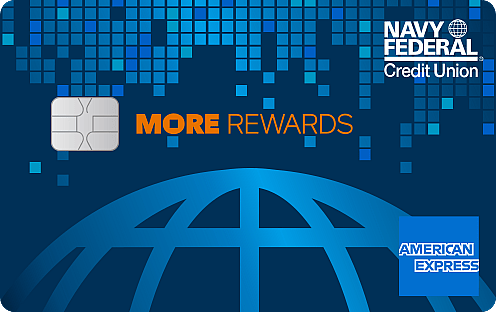 Navy Federal Credit Union® More Rewards American Express® Credit Card Navy Federal Credit Union® More Rewards American Express® Credit Card | Best for Everyday purchases | $0 | 1x-3x | 20,000 points | |
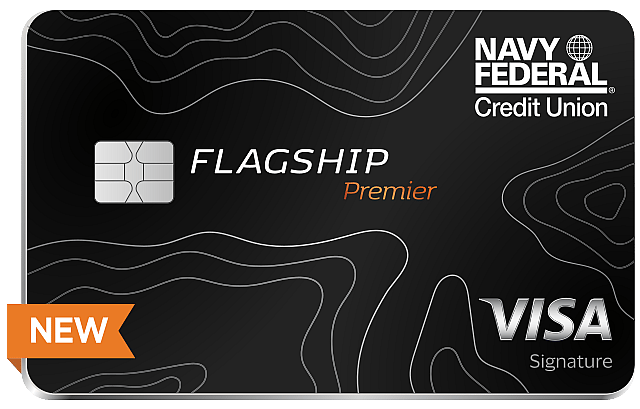 Navy Federal Credit Union® Flagship Premier Visa Signature® Credit Card Navy Federal Credit Union® Flagship Premier Visa Signature® Credit Card | Best for Travel with current or former military status | $95 | 1x-4x | 50,000 points |
More about our picks
PenFed Pathfinder® Rewards Visa Signature® Card
Our pick for: General purpose travel rewards
The PenFed Pathfinder® Rewards Visa Signature® Card is a good travel card that pivots to a potentially great one if you qualify for the issuer's Honors Advantage loyalty program. First of all, the rewards rates of 3X on travel and 2X on dining get bumped up to 4X and 3X, respectively, for Honors Advantage members. All other purchases earn 1.5X points, which is 50% higher than what you get for non-bonus spending on most cards. The card also tosses in some valuable credits. However, the points aren't as flexible or valuable as those offered by some other issuers. And since PenFed is a credit union, you have to be a member to get the card. That isn't terribly restricted, but it's still a hoop to jump through. Qualifying for Honors Advantage, which is what really unlocks the standout value of this card, is another complication. Military members are automatically in; everyone else needs to have an eligible checking account. That might be more paperwork than you want to deal with. Read our review of the PenFed Pathfinder® Rewards Visa Signature® Card.
» For more flexible rewards points: Chase Sapphire Preferred® Card
Aspire Platinum Rewards Mastercard®
Our pick for: Balance transfers
With debt, the Aspire Platinum Rewards Mastercard® is a decent match to pay off a balance over a short term. It offers a $0 annual fee, a 0% intro APR period and a low balance transfer fee. Terms apply. Membership at Aspire Federal Credit Union is required to be eligible for this card. It's easy to join with a few extra steps. Read our review.
DCU Visa® Platinum Secured Credit Card
Our pick for: Bad credit
The DCU Visa® Platinum Secured Credit Card has long been a NerdWallet favorite because it's the rare secured card that charges minimal fees (no annual fee, no foreign transaction fee, no cash advance fee, no balance transfer fee) and doesn't default to charging the highest possible interest rate (its APRs as of 2026 range from 15% to 18%). A big reason for that is where it comes from: a credit union rather than a commercial bank. Credit unions exist to serve their members rather than shareholders. Speaking of which, to get this card, you must be a member of Digital Federal Credit Union, which may be more hassle than you want to deal with. Another thing to consider is the card's $500 minimum deposit. That's significantly higher than what most secured cards require. But with that much of a credit limit, it also allows you to use this card more like a regular credit card, with less worry about hitting your limit. Read our review of the DCU Visa® Platinum Secured Credit Card.
» For a lower credit limit and no interest: Current Build Card
PenFed Power Cash Rewards Visa Signature® Card
Our pick for: Cash back with no annual cost
The PenFed Power Cash Rewards Visa Signature® Card offers 1.5% cash back on all purchases, the gold standard among flat-rate credit cards. Some PenFed members may qualify for more rewards. Honors Advantage program members get an additional 0.5% back, bringing their cash-back earnings rate up to 2%. Read our review.
Navy Federal Credit Union® More Rewards American Express® Credit Card
Our pick for: Everyday purchases
It's easy to rack up rewards on everyday purchases with the Navy Federal Credit Union® More Rewards American Express® Credit Card. It offers 3 points per dollar spent on groceries, gas, dining and transit. All other purchases earn 1 point per dollar spent. You’ll have to be a Navy Federal Credit Union member to qualify. Membership is typically limited to current or former members of the military, Department of Defense employees, or their qualifying family members. Read our review.
Navy Federal Credit Union® Flagship Premier Visa Signature® Credit Card
Our pick for: Travel with current or former military status
The Navy Federal Credit Union® Flagship Premier Visa Signature® Credit Card offers statement credits that can offset its $95 annual fee, as well as rich rewards on travel expenses (and a broad definition of what falls under that category). But it's not as generous as some other travel cards at this price point, and in any case, you’ll have to be a Navy Federal Credit Union member to qualify. Membership is typically limited to current or former members of the military, Department of Defense employees, or their qualifying family members. Read our review.
How we choose the best credit cards
Our team of credit card experts has developed a rigorous methodology to determine how much value a card delivers and how it stacks up against its competitors.
400+
Cards reviewed

400+
Cards reviewed
NerdWallet’s experts have reviewed more than 400 cards, from the most popular options at the biggest banks to store cards to niche cards from startups and small issuers.
8
Categories scored

8
Categories scored
Credit cards are so diverse that properly rating them with a single formula is impossible. We’ve built eight rubrics, plus variations, so we can score each card on what matters.
50+
Data points analyzed

50+
Data points analyzed
Our ratings consider not just a card’s rates, fees, rewards and perks, but also how easy or hard it is to get that card, manage it and enjoy its advertised benefits.
Star rating categories
What you want out of, say, a cash back credit card is fundamentally different from what you’re looking for in a balance transfer card or a card for building credit. That’s why we have different scoring models that put weight on different features.
Cash back cards
General travel cards
Balance transfer cards
Branded airline cards
Branded hotel cards
Credit builder cards
College student cards
Small business cards
Cash back cards
Our formula looks at how much cash back you could expect to earn from typical household spending. We consider rewards rates and categories, bonus offers and the cash value of other benefits, as well as any annual fee. The rating is also influenced by the complexity of the rewards structure.

General travel cards
We consider how many points you could expect to earn from typical household spending, along with per-point values and redemption options. We add in the cash value of bonus offers and other benefits, subtract annual fees and other costs, and take into account the complexity of the rewards structure.

Balance transfer cards
Our balance transfer rubric calculates how much money a card could save you with a low or 0% interest rate. Primary factors include the length and structure of the introductory APR period and the balance transfer fee. We also consider long-term value, such as whether the card offers rewards.

Branded airline cards
We calculate how many miles you could expect to earn from typical household spending and what those miles are worth based on our valuations. We add in the cash value of bonus offers and perks such as free checked bags and lounge access, and we subtract annual fees and other costs.

Branded hotel cards
We calculate how many points you could expect to earn from typical household spending and what those points are worth based on our valuations. We add in the cash value of bonus offers and perks such as free nights and automatic elite status, and we subtract annual fees and other costs

Credit builder cards
Our rubric focuses on accessibility (such as whether a credit check is required), out-of-pocket costs (such as annual fees or minimum security deposits), credit-building features (such as bureau reporting and access to a free credit score) and upgrade options when you’re ready to move on.

College student cards
Our formula calculates the rewards you could expect to earn on spending typical for a college student and takes into account the cash value of bonus offers and other benefits. Accessibility to students without established credit is a key consideration, as is the effort required to manage the card.

Small business cards
Our star ratings criteria for small business credit cards are similar to those for consumer cards, although they account for potentially higher spending levels and higher credit limits, as well as rewards structures and bonus categories tailored specifically to entrepreneurs and business operators.

NerdWallet's Credit Cards team selects the best credit cards in various categories based on overall consumer value, as evidenced by star ratings, as well as their suitability for specific kinds of consumers. Factors in our evaluations include fees, promotional and ongoing APRs, and sign-up bonuses; for rewards cards, we consider earning and redemption rates, redemption options and redemption difficulty. Because different consumers can have markedly different needs, preferences and spending habits, we recognize that there is rarely a single credit card that is "best" for everyone. That's why this page includes a variety of options to suit an array of circumstances. Also, a single card is eligible to be chosen as among the "best" in multiple categories.
Our star ratings provide a quick way to compare credit cards. We assess the features of a card, score those features according to how they compare with other options on the market, and assign the card a rating of 1 to 5 stars based on those features. In general, a card that rates 4.5 stars will be a better value for more people than a card that rates 4.0 stars. However, the 4.0 card might be better than the 4.5 card for an individual consumer depending on that person’s circumstances. Further, ratings are only comparable within categories. If you're looking for rewards, for example, a 3.5-star cash back card will be of greater value than a 5.0-star balance transfer card or a 4.5-star credit-builder card. Star ratings are an important consideration in which cards appear on our "best" pages, but they are not the sole determining factor. Learn how NerdWallet rates credit cards.
