





Frequent flyers need a credit card, but so do infrequent flyers. The question for many who take to the skies is whether an airline-branded credit card is a good fit for them. If so, which one? If not, what kind of credit card should they be using?
Choosing an airline credit card starts by looking at your flying habits. If you're loyal to one airline — or you could be loyal to one airline — then it's natural to look at that airline's branded card offerings. But if you spread your business among multiple airlines — or you want to retain the ability to do so — you may be better served with a card that offers flexible benefits.
On this page, we'll look at both options: Branded credit cards for major airlines and general-purpose travel credit cards that have special appeal to frequent fliers. For more options, including our top picks for no-annual-fee branded airline card and premium branded airline card, see our full roundup of the best airline credit cards.
Top airline-branded credit cards
Annual fee
- $0 intro for the first year, then $150
- $0 intro for the first year, then $150
- $229
- $95
Reward rate
- 1x-3xmiles
- 1x-2xmiles
- 1x-4xpoints
- 1x-3xpoints
Top general travel cards for frequent flyers

Annual fee
- $95
- $95
- $895
- $0
Reward rate
- 1x-5xpoints
- 1x-5xpoints
- 1x-5xpoints
- 1x-3xpoints
BRANDED CREDIT CARDS FROM MAJOR AIRLINES
Major airlines offer branded credit cards for different types of travelers. Each carrier has a flagship card designed to appeal to the broadest swath of the flying public, which is where we usually recommend people start. Most airlines also have a high-end "club" card that gets you into the airline's airport lounges. Some have a no-annual-fee option. And in the past few years, more airlines have been rolling out middle-tier cards with better benefits (and higher fees) than their flagship cards without the VIP perks of the club cards.
Here are some good cards from each major airline:
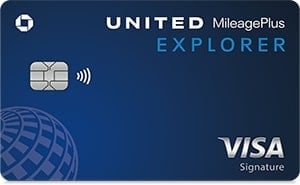
United℠ Explorer Card: Good for United Airlines
Citi® / AAdvantage® Globe™ Mastercard®: Good for American Airlines
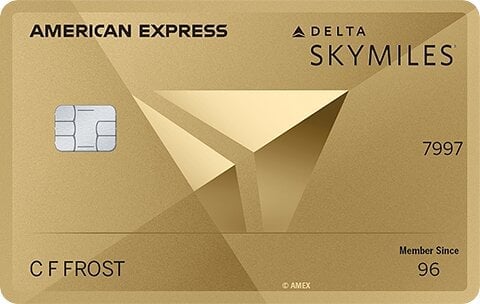
Delta SkyMiles® Gold American Express Card: Good for Delta Air Lines
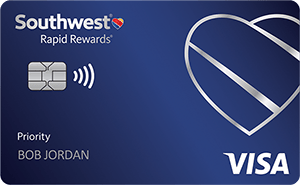
Southwest Rapid Rewards® Priority Credit Card: Good for Southwest Airlines
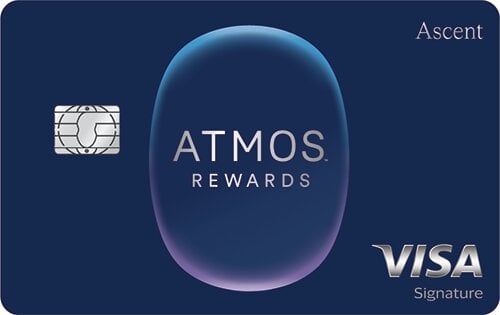
Atmos™ Rewards Ascent Visa Signature® credit card: Good for Alaska Airlines
JetBlue Plus Card: Good for JetBlue Airways
United℠ Explorer Card
Good for United Airlines
NerdWallet rating: 4.9 out of 5 stars.
Annual fee: $0 intro for the first year, then $150.
Why the United℠ Explorer Card is our pick for United Airlines: It's not a high-roller card that gives you unlimited access to airport lounges or automatic upgrades to first class. But it comes loaded with perks you won't find in other airline cards in its class. Of course you get a free checked bag, priority boarding and bonus miles on purchases made with the airline. But you also get lounge passes, a statement credit for TSA PreCheck®, Global Entry or Nexus, primary rental car coverage and more. If you fly United even occasionally, you should be able to get strong value out of this card.
Rewards:
3 miles per $1 spent on purchases from United.
2 miles per $1 spent on restaurant purchases.
2 miles per $1 spent on hotel accommodations purchased directly with the hotel.
1 mile per $1 spent on all other purchases.
Bonus offer: Earn 70,000 bonus miles after you spend $3,000 on purchases in the first 3 months your account is open. Plus, earn 10,000 bonus miles when you add an authorized user in the first 3 months your account is open.
See our pros and cons for the United℠ Explorer Card
Pros:
Two one-time-use passes for the United Club per year.
First checked bag free for you and a companion.
Primary rental car coverage.
Global Entry, TSA PreCheck or NEXUS credit every four years.
Priority boarding.
Statement credits for rideshare, rental cars and hotel stays (see review for details).
No foreign transaction fee.
Cons:
Has annual fee.
A lot of statement credits to keep track of.
Some perks aren’t available unless you hit a certain spending threshold.
Other United Airlines options
United Gateway℠ Card ($0 annual fee): An annual fee is simply going to be a non-starter for some people. This is an option for those who don't travel very often and just want an airline card that earns miles at a steady clip between occasional trips.
United Quest℠ Card ($350 annual fee): This is a solid middle option for those who fly United a lot but aren't interested in a pricey lounge membership. It earns more miles and offers more perks than the airline’s basic cards. The annual fee is higher, too, but there's a credit that offsets much of it.
United Club℠ Card ($695 annual fee): You get unlimited access to the airline's airport lounges for less than the price of a stand-alone membership, along with free checked bags (two per person!) and a great rewards rate for United purchases.
» LEARN MORE: Full review of the United℠ Explorer Card
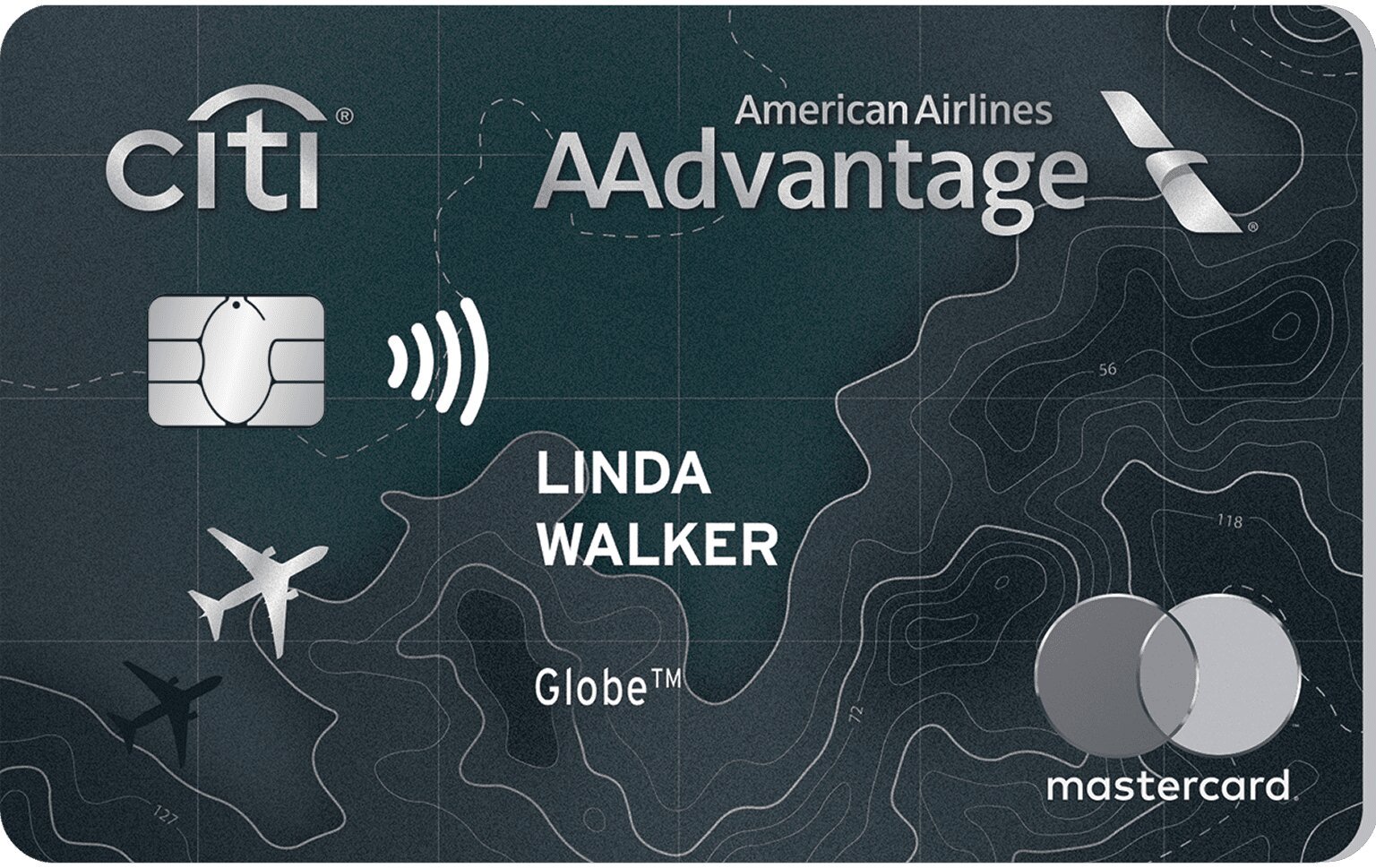
Citi® / AAdvantage® Globe™ Mastercard®
Good for American Airlines
NerdWallet rating: 4.8 out of 5 stars.
Annual fee: $350.
Why the Citi® / AAdvantage® Globe™ Mastercard® is our pick for American Airlines: If you're flying American regularly, it's worth taking a step up from the airline's mass-market card and enjoying the perks of the Citi® / AAdvantage® Globe™ Mastercard®. Those perks include richer rewards on travel, four lounge passes a year, a variety of spending credits and the card's headline feature: a companion certificate every card anniversary, which is good for a single round-trip qualifying domestic flight in the main cabin. The certificate alone can be enough to offset the annual fee.
Rewards:
6 miles per $1 spent on eligible AAdvantage Hotels bookings.
3 miles per $1 spent on eligible American Airlines purchases.
2 miles per $1 spent on restaurants, including takeout and delivery.
2 miles per $1 spent on eligible Rides and Rails purchases, including taxis, rideshares and public transit.
1 mile per $1 spent on all other purchases.
Bonus offer: Earn 60,000 American Airlines AAdvantage® bonus miles after $4,000 in purchases in the first 3 months of account opening.
See our pros and cons for the Citi® / AAdvantage® Globe™ Mastercard®
Pros:
Companion certificate every card anniversary. Terms apply.
4 Admirals Club Globe Passes each year, valid for 24 hours.
Various statement credits: Global Entry or TSA PreCheck application fee credit; up to $100 in statement credits on in-flight purchases; up to a $100 annual "Splurge Credit" on eligible purchases; up to a $240 annual Turo credit. Terms apply.
Checked bag benefit.
Priority boarding.
Flight Streak bonus of 5,000 Loyalty Points after flying four qualifying American Airlines flights, up to 15,000 Loyalty Points each status qualifying year.
Cons:
Elevated annual fee.
The companion certificate isn't free; you'll still owe $99 plus taxes and fees.
Some of the card's credits are niche or difficult to use. You can't use the "Splurge Credit" toward American Airlines flights, for instance.
Other American Airlines options
American Airlines AAdvantage® MileUp® Card ($0 annual fee): For occasional but loyal American Airlines flyers, this card offers a cost-effective way to earn miles on everyday purchases.
Citi® / AAdvantage® Platinum Select® World Elite Mastercard® ($0 intro annual fee for the first year, then $99, as of January 2026): Between the sign-up bonus, extra miles on some everyday purchases and cardholder perks like a free checked bag, this card offers excellent value if you frequently fly American.
Citi® / AAdvantage® Executive World Legend Mastercard® ($695 annual fee): For road warriors wanting access to American Airlines' Admirals Club lounges, the annual fee on this card could actually be considered a bargain.
Delta SkyMiles® Gold American Express Card
Good for Delta Air Lines
NerdWallet rating: 4.5 out of 5 stars.
Annual fee: $0 intro for the first year, then $150.
Why the Delta SkyMiles® Gold American Express Card is our pick for Delta Air Lines: This was the first airline card in its class to push its annual fee above $100, which took some of the luster off the Gold. With multiple competitors having now joined it at that higher price point, we can view it in a less-harsh light. For frequent Delta flyers who don't want to shell out hundreds of dollars more per year for one of the airline's higher-end cards, this is a solid option with bonus rewards in major spending categories, a generous checked bag benefit and a good bonus offer. Terms apply. Still, it lacks some of the perks you might expect to find on a card in its class, such as a credit for TSA PreCheck® or Global Entry.
Rewards:
2 miles per $1 spent on Delta purchases
2 miles per $1 spent at restaurants worldwide (plus takeout and delivery in the U.S).
2 miles per $1 spent at U.S. supermarkets.
1 mile per $1 spent on all other eligible purchases.
Terms apply.
Welcome offer:
As High As 80,000 Bonus Miles + Earn a $250 Statement Credit after you spend $3,000 in purchases on your new Card within the first 6 months of Card Membership. You may not be eligible for the maximum welcome offer amount. Offer ends 11/04/2026. Terms Apply.
See our pros and cons for the Delta SkyMiles® Gold American Express Card
Pros:
First checked bag free for you and up to eight other passengers on the same reservation. Cardholder gets a second free bag on domestic flights.
Priority boarding.
$100 annual credit toward a prepaid hotel stay or vacation rental booked through delta.com.
No foreign transaction fee.
Terms apply.
Cons:
Has annual fee.
No lounge access.
No Global Entry, TSA PreCheck or NEXUS credit.
Terms apply.
Other Delta Air Lines options
Delta SkyMiles® Blue American Express Card ($0 annual fee): This card could be a good fit for someone who doesn't travel that often and just wants to earn miles at a steady clip between occasional trips.
Delta SkyMiles® Platinum American Express Card ($350 annual fee): You'll pay more for this card than for the airline's basic card, but you'll also get more — much more, including an annual companion certificate upon renewal that can more than make up for the fee.
Delta SkyMiles® Reserve American Express Card ($650 annual fee): If you spend a lot of time on Delta flights — or in airports waiting to board Delta flights — this card could be well worth its sizable annual fee, thanks to its airport lounge access and an annual companion certificate upon renewal that's good even in first class.
Southwest Rapid Rewards® Priority Credit Card
Good for Southwest Airlines
NerdWallet rating: 3.9 out of 5 stars.
Annual fee: $229.
Why the Southwest Rapid Rewards® Priority Credit Card is our pick for Southwest Airlines: The dramatic shift in Southwest's operating model has made the airline's branded credit cards more valuable than ever, and this card has the best perks within the portfolio. The airline now charges for checked bags, but this card can get you around that fee. Southwest is also transitioning from open boarding to assigned seating, but this card gives you boarding benefits. You also get a strong welcome offer, a big anniversary bonus, a boost toward the Southwest Companion Pass and A-List status, and other benefits.
Rewards:
4 points per $1 spent on Southwest purchases.
2 points per $1 spent at gas stations.
2 points per $1 spent at restaurants.
1 point per $1 spent on all other purchases.
Bonus offer: Earn 60,000 bonus points after spending $2,000 on purchases in the first 3 months from account opening.
See our pros and cons for the Southwest Rapid Rewards® Priority Credit Card
Pros:
Free checked bag for cardholder and up to eight additional passengers on the same reservation.
7,500 points every anniversary.
10,000 Companion Pass-qualifying points boost per calendar year.
25% discount on in-flight purchases.
Seat selection and upgrade privileges.
Priority boarding.
25% back on in-flight purchases.
Earn elite status through spending.
No foreign transaction fee.
Cons:
Has annual fee.
No lounge access.
No Global Entry, TSA PreCheck® or NEXUS credit.
Southwest serves only a limited number of international destinations in Latin America and the Caribbean.
Other Southwest Airlines options
Southwest Rapid Rewards® Plus Credit Card ($99 annual fee): Southwest doesn't have a no-annual-fee card, so this is the airline's lowest-cost card, but the benefits aren't too much of a step down from the higher-priced Premier.
Southwest Rapid Rewards® Premier Credit Card ($149 annual fee, as of January 2026): This card is a decent middle ground — elevated earnings on Southwest purchases and a bigger anniversary bonus compared with the Plus card, but still cheaper than the Priority card.
Atmos™ Rewards Ascent Visa Signature® credit card
Good for Alaska Airlines
NerdWallet rating: 5 out of 5 stars.
Annual fee: $95.
Why the Atmos™ Rewards Ascent Visa Signature® credit card is our pick for Alaska Airlines: This card, tied to the joint rewards program of Alaska Airlines and Hawaiian Airlines, is about as close to a no-brainer as you can get if you're a regular traveler on Alaska (or if you can be). The standout feature is the Companion Fare that you can unlock each year with a relatively low amount of spending. Toss in free checked bags and a handful of other perks, and you're likely to come out ahead. Keep in mind, though, that Alaska's operations are concentrated mostly on the West Coast, so this card just isn't going to be an option for a lot of people.
Rewards:
3 points per $1 spent on eligible Alaska Airlines and Hawaiian Airlines purchases.
2 points per $1 spent on gas, EV charging and local transit, which includes ridesharing, trains, tolls and ferries.
2 points per $1 spent on cable and streaming services.
1 point per $1 spent on all other purchases.
Bonus offer: Get 50,000 bonus points and a $99 Companion Fare (plus taxes and fees from $23) with this offer. To qualify, spend $1,500 or more on purchases within the first 90 days of opening your account.
See our pros and cons for the Atmos™ Rewards Ascent Visa Signature® credit card
Pros:
Get a Companion Fare for as little as $122 each account anniversary after you spend $6,000 or more on purchases in the prior anniversary year. Terms apply.
No foreign transaction fee.
First checked bag free on Alaska Airlines and Hawaiian Airlines flights for you and up to six other passengers on the same reservation.
Priority boarding.
Cons:
Has annual fee.
Alaska flies to fewer destinations than major carriers like United and Delta.
No complimentary lounge access, though the card does offer a discount on an Alaska Lounge+ Membership.
No Global Entry, TSA PreCheck® or NEXUS credit.
Other Alaska Airlines options
Atmos™ Rewards Summit Visa Infinite® credit card ($395 annual fee): It has a hefty annual fee, but Alaska’s premium card also boasts unique features, including a versatile Global Companion Award. You also get lucrative bonus categories, lounge access and more.
JetBlue Plus Card
Good for JetBlue Airways

NerdWallet rating: 4.3 out of 5 stars.
Annual fee: $99.
Why the JetBlue Plus Card is our pick for JetBlue Airways: JetBlue loyalists will quickly discover that this card is a great deal. Beyond its generous rewards rates and introductory bonus, cardholders receive a bundle of benefits, including an ongoing annual point deposit that helps make up for a good chunk of the annual fee. Plus, every $1,000 you spend on the card earns one "tile" toward the 50 needed for elite Mosaic status with the airline. Other perks include free checked bags, priority boarding and redemption bonuses when redeeming points for flights.
Rewards:
6 points per $1 spent on purchases made directly with JetBlue Airways.
2 points per $1 spent at restaurants.
2 points per $1 spent at grocery stores.
1 point per $1 spent on all other purchases.
Bonus offer: Earn 60,000 bonus points after spending $1,000 on purchases and paying the annual fee in full, both within the first 90 days, with the JetBlue Plus Card.
See our pros and cons for the JetBlue Plus Card
Pros:
First checked bag free for you and up to three traveling companions.
5,000 bonus TrueBlue points after every account anniversary.
Annual $100 statement credit on a JetBlue Vacations package of $100 or more.
50% discount on eligible in-flight purchases.
10% points rebate when you redeem rewards.
No foreign transaction fee.
Cons:
Has annual fee.
No Global Entry, TSA PreCheck® or NEXUS credit.
JetBlue's footprint is fairly limited, so this isn't a good option for everyone.
Other JetBlue Airways options
JetBlue Card ($0 annual fee): There's no yearly cost to carry the card. But you'll get no free checked bags, and the sign-up bonus won't get you very far.
JetBlue Premier Card ($499 annual fee): The card's benefits can, in theory, help offset its annual fee — but it'll take some work to extract that value.
» LEARN MORE: Full review of the JetBlue Plus Card
GENERAL-PURPOSE TRAVEL CARDS FOR FREQUENT FLYERS
The biggest downside to using a general-purpose travel credit card to book flights rather than an airline-branded card is the lack of carrier-specific perks. Free checked bags and priority boarding are pretty much standard on airline cards with annual fees, and these cards may also offer lounge access (either full or limited), in-flight discounts, certificates for free or discounted travel, and more.
On the other hand, general-purpose cards don't lock you into a single carrier. They typically earn bonus rewards on flights with any airline, and their points offer more flexibility. Here's a sampling of general-purpose travel cards with particular appeal for frequent air travelers.
Chase Sapphire Preferred® Card: Good for flexible redemption and a big bonus
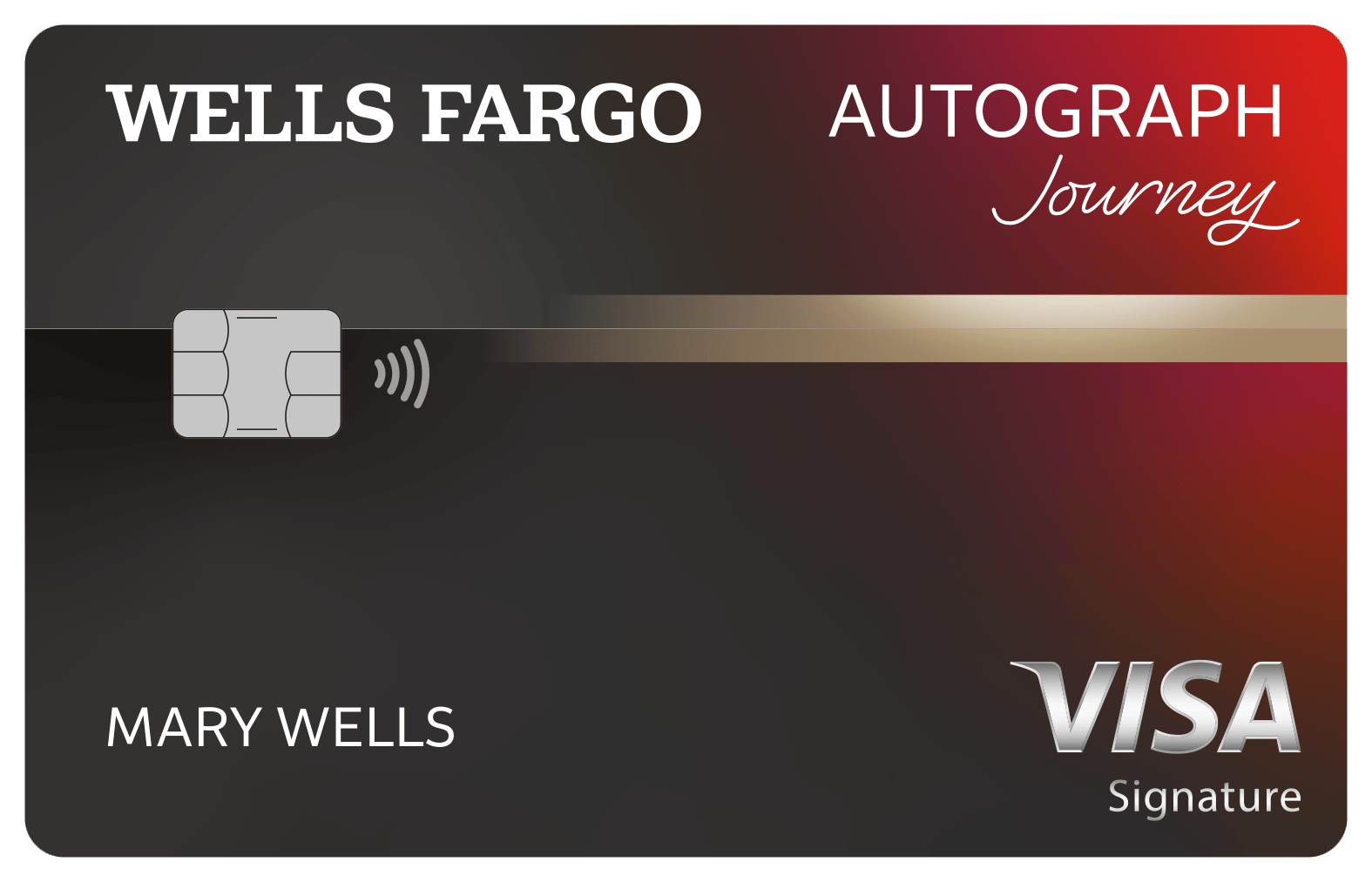
Wells Fargo Autograph Journey® Card: Good for booking with any airline
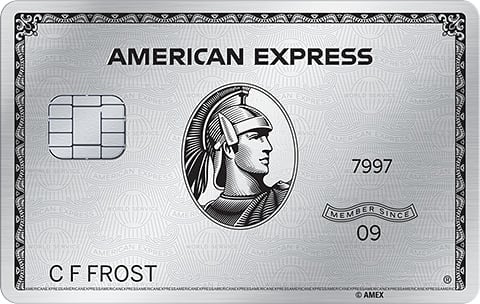
American Express Platinum Card®: Good for VIP perks
Wells Fargo Autograph® Card: Good for no annual fee
Chase Sapphire Preferred® Card
Good for flexible redemption and a big bonus
NerdWallet rating: 4.7 out of 5 stars.
Annual fee: $95.
Why the Chase Sapphire Preferred® Card is our pick for flexible redemption and a big bonus: It's not a branded airline credit card, but it can deliver almost as much value. It earns elevated rewards in popular spending categories, and you can pool your points with rewards earned on other Chase credit cards, such as the Freedom series of cash back cards. Points can be redeemed for travel purchased through Chase or transferred to one of more than a dozen partner airline and hotel loyalty programs. Those partners include major airlines like United, Southwest, JetBlue, British Airways and Air France/KLM, as well as major hotel chains such as Marriott and Hyatt. Meanwhile, the card's strong sign-up bonus starts you off on a good foot. This card might not have everything you're looking for, but it's got an awful lot for the price.
Rewards:
5 points per $1 spent on all travel purchased through Chase.
3 points per $1 spent on dining (including eligible delivery services and takeout).
3 points per $1 spent on gas/EV charging.
3 points per $1 spent on select streaming services.
3 points per $1 spent on online grocery purchases (not including Target, Walmart and wholesale clubs).
3 points per $1 spent on vacation rentals through services like Airbnb and Vrbo.
2 points per $1 spent on travel not purchased through Chase.
1 point per $1 spent on other purchases.
Through September 2027: 5 points per $1 spent on Lyft.
Bonus offer: Earn 75,000 bonus points after you spend $5,000 on purchases in the first 3 months from account opening.
See our pros and cons for the Chase Sapphire Preferred® Card
Pros:
Large bonus offer.
Up to $100 annual credit on hotel stays purchased through Chase.
Up to $120 credit every four years for TSA PreCheck, Global Entry or Nexus.
Primary rental car coverage.
Multiple transfer partners.
No foreign transaction fee.
Cons:
Has annual fee.
No lounge access.
No airline-specific perks like free checked bags or priority boarding.
» LEARN MORE: Full review of the Chase Sapphire Preferred® Card
Wells Fargo Autograph Journey® Card
Good for booking with any airline
NerdWallet rating: 4.5 out of 5 stars.
Annual fee: $95.
Why the Wells Fargo Autograph Journey® Card is our pick for booking with any airline: This is a general-purpose travel card that rewards you like a branded airline card. Many general-purpose credit cards try to steer you toward their own booking portals by offering higher reward rates for flights purchased there. The Wells Fargo Autograph Journey® Card doesn't play that game. You earn 4 points per dollar on flights booked directly with airlines. It's offers an even higher rate on bookings directly with hotels. An annual airfare credit takes a big bite out of the fee, and there's a good bonus offer, too.
Rewards:
4 points per $1 spent on airfare booked directly with the airline.
5 points per $1 spent on hotels booked directly with the hotel.
3 points per $1 on other travel and dining purchases.
1 point per $1 spent on all other qualifying purchases.
Bonus offer: Earn 60,000 bonus points when you spend $4,000 in purchases in the first 3 months – that’s $600 toward your next trip.
See our pros and cons for the Wells Fargo Autograph Journey Card
Pros:
Excellent rewards on hotels, airfare and dining.
Several redemption options including transfers to travel partners.
$50 annual airfare credit (mInimum $50 purchase required).
No foreign transaction fee.
Cons:
Has annual fee.
Limited transfer partners.
Unlike several competing cards, it doesn't offer a credit for Global Entry, TSA PreCheck® or NEXUS.
No airline-specific perks like free checked bags or priority boarding.
» LEARN MORE: Full review of the Wells Fargo Autograph Journey® Card
American Express Platinum Card®
Good for VIP perks
NerdWallet rating: 5 out of 5 stars.
Annual fee: $895.
Why the American Express Platinum Card® is our pick for VIP perks: It's not cheap, but this card comes with a long, long list of benefits that ultimately rival what you find on the top-of-the-line cards from the airlines themselves. You get rich rewards on flights booked directly with airlines or through AmEx. The lounge access is unmatched — including American Express' own Centurion Lounges, Delta Sky Clubs when flying that airline, and several other networks. And there are thousands of dollars in credits, including for things like TSA PreCheck/Global Entry, CLEAR+ and incidental airline fees. (Terms apply; enrollment required for many benefits.) Redemption options for points include travel booked through AmEx or transferring them to airline and hotel partners like Delta, Marriott and Hilton.
Rewards:
5 points per $1 spent on flights booked directly with airlines or through American Express, on up to $500,000 spent per year.
5 points per $1 spent on prepaid hotels booked through American Express.
1 point per $1 spent on all other purchases.
Terms apply.
Bonus offer: You may be eligible for as high as 175,000 Membership Rewards® Points after spending $12,000 in eligible purchases on your new Card in your first 6 months of Membership. Welcome offers vary and you may not be eligible for an offer. Terms apply.
See our pros and cons for the American Express Platinum Card®
Pros:
High rewards rate for airline and hotel bookings.
Extensive airport lounge access.
Hundreds of dollars a year in travel, entertainment, lifestyle and shopping credits (see our review for full rundown).
Multiple redemption options including transfers to travel partners.
Terms apply.
Cons:
The annual fee is one of the highest around, even if you get a lot for it.
Since it's not a branded airline card, you won't get free checked bags (although you could use your airline fee credit for bag fees; enrollment required).
» LEARN MORE: Full review of the American Express Platinum Card®
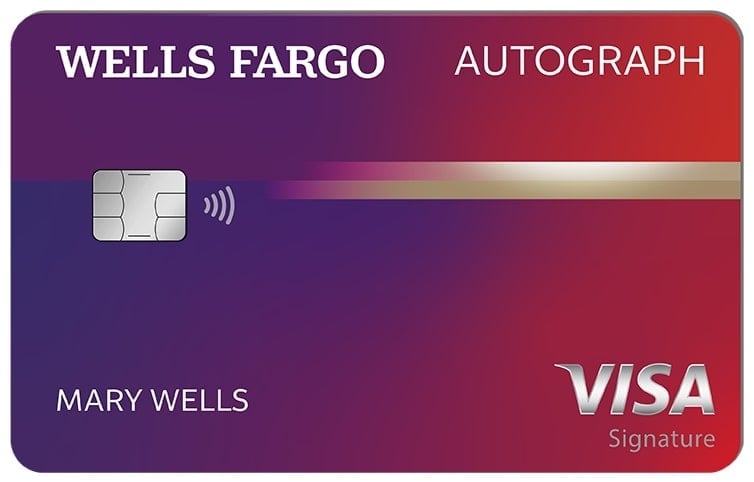
Wells Fargo Autograph® Card
Good for no annual fee
NerdWallet rating: 4.5 out of 5 stars.
Annual fee: $0.
Why the Wells Fargo Autograph® Card is our pick for no annual fee: As discussed, the biggest drawback to booking flights with a general-purpose credit card instead of a branded airline card is that you don't get perks like free checked bags or priority boarding. But no-annual-fee airline cards generally don't give you those things either. So if you’re dead-set against paying a fee, consider a card that offers flexible rewards across multiple categories. That’s the Wells Fargo Autograph® Card, chosen as the top no-annual-fee travel card in the 2026 NerdWallet Best-Of Awards. You earn triple points with airlines, on other travel and transit, at restaurants and gas stations, and in other categories.
Rewards:
3 points per $1 spent at restaurants.
3 points per $1 spent on travel and transit.
3 points per $1 spent at gas stations (and electric vehicle charging stations).
3 points per $1 spent on popular streaming services.
3 points per $1 spent on select phone plans.
1 point per $1 spent on other purchases.
Bonus offer: Earn 20,000 bonus points when you spend $1,000 in purchases in the first 3 months - that's a $200 cash redemption value.
See our pros and cons for the Wells Fargo Autograph® Card:
Pros:
Triple points on multiple popular spending categories.
Redeem rewards for travel, gift cards or statement credits, or transfer them to one of Wells Fargo’s travel partners.
Unlike most other travel cards, this one has an intro APR period.
Cell phone protection.
$0 annual fee.
Cons:
Lacks the perks of more premium travel cards that do charge annual fees.
Transfer partner options are limited and don’t include U.S. airlines.
» LEARN MORE: Full review of the Wells Fargo Autograph® Card
The information about the Citi® / AAdvantage® Platinum Select® World Elite Mastercard® has been collected by NerdWallet and has not been reviewed or provided by the issuer or provider of this product or service. For rates and fees of the Delta SkyMiles® Gold American Express Card, please visit American Express' rates and fees page. To view rates and fees of the American Express Platinum Card®, see this page.