

The Chase Freedom Flex® and the U.S. Bank Cash+® Visa Signature® Card are comparable, competitive players in the 5%-back arena.
Both $0-annual-fee cards earn 5% cash back in bonus categories you opt into each quarter, on top of ongoing bonus rewards on certain everyday spending — so both are also fairly complicated cards. The difference boils down to your spending habits: Do you spend fairly predictably, or do you prefer customization? It may also depend on your redemption plans and whether travel is in your future.
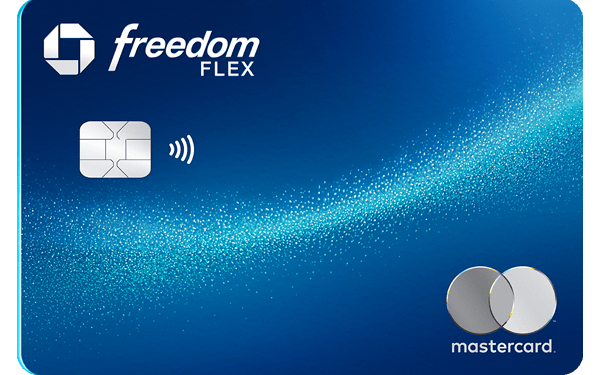
With the Chase Freedom Flex®, quarterly 5% categories are determined by the issuer, and you don't get to see them until a couple of weeks before they go into effect. But they tend to be broad and useful — previous categories have included things like gas, home improvement stores and Amazon.com. Its sign-up bonus is eye-popping, and on an ongoing basis, it's a reliably rich and versatile card for foodies and travelers. It is likely the better pick for most.
The U.S. Bank Cash+® Visa Signature® Card is more flexible when it comes to 5% category choices. The card lets you pick two 5% bonus categories from a list (see below), and it boasts a higher combined quarterly spending cap — but that list of 5% categories is narrower. In terms of ongoing rewards, the card may be better for grocery stores, but less competitive on dining.
Here’s how to decide which card is right for you.
How the cards compare

Annual fee
Sign-up bonus
Cash-back rewards
- 5% cash back on your first $2,000 in combined eligible net purchases ($100 per quarter) on two categories you choose.
- 5% cash back on prepaid air, hotel and car reservations booked directly in the Rewards Center.
- 2% cash back on your choice of one everyday category, like gas stations, EV charging stations or grocery stores.
- 1% cash back on all other eligible net purchases.
- 5% cash back in quarterly bonus categories on up to $1,500 in combined spending each quarter.
- 5% back on travel booked through Chase.
- 3% cash back at restaurants, including takeout and eligible delivery services.
- 3% cash back on drugstore purchases.
- 1% cash back on all other purchases.
APR
Balance transfer fee
Foreign transaction fee
Still not sure?
Per the table above, in addition to 5% rotating bonus categories, both cards offer an ongoing bonus tier on other spending. The U.S. Bank Cash+® Visa Signature® Card earns 2% back on an "everyday" category of your choice (gas/EV charging, groceries or dining). The Chase Freedom Flex® features a richer 3% back on dining and drugstores, along with 5% on travel booked via Chase — but no opportunity to "choose" in this tier.
For the U.S. Bank Cash+® Visa Signature® Card, each quarter you can choose two of the following 12 possible 5%-back categories:
Full list of 5% categories on the U.S. Bank Cash+
Fast food.
Home utilities.
TV, internet and streaming.
Department stores.
Cell phone providers.
Electronics stores.
Sporting goods stores.
Movie theaters.
Gyms/fitness centers.
Furniture stores.
Ground transportation.
Select clothing stores.
» MORE: Full review of the Chase Freedom Flex®
» MORE: Full review of the U.S. Bank Cash+® Visa Signature® Card
Why the Chase Freedom Flex® wins out for most
Broader, more straightforward bonus categories
The Chase 5% bonus category historically has included things like restaurants, gas, home improvement stores, wholesale clubs, Amazon.com and more. And beyond that, Chase Freedom Flex® also features rich, fixed bonus categories in several popular categories.
You don't get to choose what categories are featured, but they're typically broad enough that you can realize a benefit from them.
Chase Freedom® and Chase Freedom Flex® bonus rewards categories for 2026 | ||
|---|---|---|
Q1 (Jan. 1-March 31) |
| |
Q2 (April 1-June 30) |
| |
Q3 (July 1-Sept. 30) |
| |
Q4 (Oct. 1-Dec. 31) |
| |
The U.S. Bank Cash+® Visa Signature® Card lets you choose your 5% categories, but overall your options are narrower, sometimes down to specific inventory. For example:
"Fast food," but not all restaurants.
"Ground transportation," but not all travel.
"Movie theaters," but not all forms of entertainment.
"Furniture stores," but not home improvement stores.
"Select" clothing stores, but not every one you can think of.
The U.S. Bank Cash+® Visa Signature® Card does earn 2% back in an "everyday" category of your choice, and those are more general and inclusive (grocery stores, gas stations/EV charging stations, and restaurants). But will you remember that fast food is a 5% category, while fine dining is a potential 2% category?
More flexible rewards
With the Chase Freedom Flex®, you can redeem your rewards for cash back (at the rate of a penny per point) as statement credit or as a direct deposit to an eligible Chase account. But you can also redeem for:
Gift cards (1 cent per point).
Travel booked via Chase (1 cent per point).
Amazon purchases (0.8 cent per point).
And if you have another Chase Ultimate Rewards®-earning card — like the Chase Sapphire Preferred® Card or the Chase Sapphire Reserve® — you can move any points you earn with the Flex to those cards and then redeem those rewards for travel booked via Chase at higher redemption values.
Redemption options for the U.S. Bank Cash+® Visa Signature® Card are more limited. You can opt for statement credit, but if you want actual "cash back" you'll need to deposit rewards into an eligible account with U.S. Bank. If you have at least $20 in rewards, you can also redeem for a U.S. Bank Rewards gift card, but only in $5 increments.
» MORE: What is the 'Chase trifecta'?
Where the U.S. Bank Cash+® Visa Signature® Card shines
Rewards customization
Unlike the Chase Freedom Flex®, the U.S. Bank Cash+® Visa Signature® Card offers more control of your rewards: Each quarter, you can activate and select which two 5% bonus categories you want and which “everyday” category will earn an unlimited 2% cash back.
The card’s 2% back isn't as rich as what the Chase Freedom Flex® offers on dining and drugstores (3% back), but because you can choose your own categories (and know what they are all year), you can better align the card with your usual spending habits.
By comparison, the 5% bonus categories of the Chase Freedom Flex® are chosen by Chase each quarter. You won’t know what they are until they are announced, and that can make it difficult to plan your spending.
Higher spending cap
Each quarter, the U.S. Bank Cash+® Visa Signature® Card earns you 5% back on up to $2,000 in combined bonus category spending. That's a higher quarterly spending cap than the $1,500 limit of the Chase Freedom Flex®.
If you were to max out the former's 5% bonus category by spending $2,000 each quarter, you'd earn a cool $400 a year in cash back. Comparatively, maxing out the bonus categories on the Chase Freedom Flex® each quarter can earn you $300 a year.
Of course, this excludes both cards’ additional cash-back categories and welcome offers.
Neither card is for the faint of heart
Both the Chase Freedom Flex® and the U.S. Bank Cash+® Visa Signature® Card suffer from the same primary drawback: They are complicated. Not only do you have to remember to activate your rewards every three months, but you also have to keep track of quarterly and ongoing categories.
For the U.S. Bank Cash+® Visa Signature® Card specifically, you’ll have to keep track of which two categories you're earning 5% back on, and which of the cash-back categories you’ll get 2% on. This can get confusing as you go about your day-to-day spending, especially since the card's 5% categories aren't as general or broad.
Rewards maximizers will find either card a viable and lucrative fit. But there are definitely simpler and lower-maintenance cash-back credit cards out there.